

Intrinsically Safe News
Flameproof (Ex d) Explained | ATEX & IECEx Guide | ISS
Flameproof equipment refers to an apparatus designed to ensure that internal ignition within a flammable atmosphere will not transmit outside the protective enclosure. In other words, flameproof equipment prevents the ignition of surrounding flammables in the hazardous area. Flameproof is a preferred protection method when electrical equipment potentially contains high energy arcing or sparking components in standard operation. Furthermore, these high-energy components form explosions that are difficult to avoid.
Flameproof is one of many explosion protection techniques extensively used for light fittings, JBs, and motors in hazardous areas. Moreover, the IEC certifies protective equipment and the local IS (Intrinsically Safe) standards govern usage.
Flameproof Certification
To be certified as an explosion or flameproofed protection, the enclosure must be strong enough to contain explosive reactions. Additionally, certified protection must withstand the internal pressures generated without fracturing or distorting to prevent propagation. Products undergo testing for flame and explosion protection, like several actual explosions within simulated environments, to become officially certified.
The terms ‘explosion-proof’ and ‘flameproof’ are often interchangeable. Although there are subtle differences, engineers and the safety market generally use both terminologies to refer to the same thing. For instance, a piece of electrical equipment designed for use in a hazardous area through a heavy-duty enclosure.
Enclosures
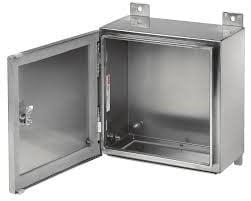
The purpose of enclosures is to protect the surrounding environment outside by enclosing sparks or explosions within itself. And, the protective enclosure itself must also be heat resistant to high degrees so that fires do not escape the barrier. Thus, flameproof casing serves as a safety measure to prevent malfunctioning equipment from generating sparks and igniting any external flammable gases in hazardous environments.
Flameproof Compared to Other Ex Protection Methods
Flameproof (Ex d) is one of several explosion protection concepts defined in the IEC 60079 series, and it is not interchangeable with the others — each is suited to different equipment and applications:
- Ex d (Flameproof): Contains an internal explosion within the enclosure, as described above. Common for motors, junction boxes, and lighting with higher-energy components.
- Ex e (Increased Safety): Reduces the risk of arcs, sparks, and hot surfaces through design margins rather than containment — used for terminal boxes, squirrel-cage motors, and luminaires without normally-arcing parts.
- Ex i (Intrinsic Safety): Limits the electrical energy in a circuit so it cannot generate a spark or thermal effect capable of ignition, even under fault conditions. Typical for instrumentation, sensors, and portable devices.
- Ex p (Pressurization): Keeps flammable gas out of an enclosure by maintaining a positive internal pressure of protective gas — used for larger equipment such as control panels and analyzer houses.
A single piece of equipment may combine methods (e.g., a flameproof motor with an increased-safety terminal box), which is reflected in its certification marking.
Gas Groups and Temperature Class for Flameproof Equipment
Under IEC 60079-0, flameproof equipment is also rated for a gas group — IIA, IIB, or IIC — which reflects the ease of ignition and explosion pressure of the specific gas or vapor it is certified for. IIC is the most stringent group, covering gases like hydrogen and acetylene, and equipment certified IIC is also suitable for IIB and IIA atmospheres. As with other protection methods, flameproof equipment also carries a temperature class (T1–T6) stating its maximum surface temperature, which must stay below the autoignition point of the gases present at the site.
Reading a Flameproof Certification Marking
A flameproof product’s nameplate follows a standardized format under IEC 60079-0, for example: Ex d IIB T4 Gb. This states the protection method (d — flameproof), the gas group (IIB), the temperature class (T4), and the Equipment Protection Level (Gb — high protection, suitable for Zone 1). Matching every element of this marking to the site’s hazardous area classification is part of confirming a product is correctly specified, not just generically “explosion proof.”
FAQs About Flameproof Equipment
Is flameproof the same as explosion-proof?
The terms are commonly used interchangeably in North America, where “explosion-proof” (per NEC/UL) and “flameproof” or Ex d (per IEC/ATEX) describe the same underlying principle — containing an internal ignition rather than preventing it. The certification schemes and testing standards differ by region, so equipment certified under one system is not automatically certified under the other.
Why can’t flameproof enclosures be opened while powered?
Opening a flameproof enclosure while energized exposes any internal sparking components directly to the surrounding atmosphere, defeating the containment principle the certification relies on. Standard practice, per IEC 60079-14, is to de-energize and follow the site’s permit procedures before opening.
Can a flameproof enclosure be modified or drilled on site?
Unauthorized modification — including drilling additional cable entries — can compromise the flame-path tolerances the enclosure was tested and certified to, and typically voids the certification. Additional entries should be added by the manufacturer or a certified repair facility.
To learn more about Explosion Proof Enclosure or any other Intrinsically Safe, Flameproof, or Hazardous Area products, please contact our experts at: www.IntrinsicallySafestore.com or give us a call at 832-699-6726