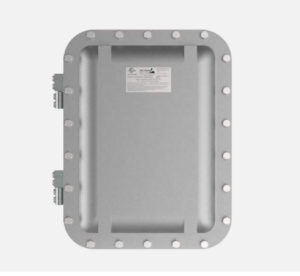
What is a Class 1 Division 1 Enclosure?
A Class 1 Division 1 enclosure, commonly known as an explosion-proof junction box, is a highly specialized housing designed to provide maximum safety in the most hazardous industrial environments. The designation is defined by the National Electrical Code (NEC) and breaks down as follows:
- Class 1: Indicates the presence of flammable gases, flammable liquid-produced vapors, or combustible liquid-produced vapors.
- Division 1: Specifies that these hazardous substances are present continuously, intermittently, or periodically under normal operating conditions.
The primary function of a C1D1 enclosure is not to be airtight but to contain an internal explosion. Should electrical components within the box spark and ignite the hazardous atmosphere that has seeped inside, the enclosure is engineered to withstand the force of the resulting explosion. Its robust construction and precisely machined flame paths cool and vent the hot gases, preventing them from igniting the surrounding external atmosphere and causing a catastrophic event.
Key Features of C1D1 Explosion-Proof Enclosures
Class 1 Division 1 enclosures are built to exacting standards to ensure they perform their critical safety function without fail. Key features include:
- Robust Construction: Typically manufactured from cast aluminum or stainless steel, these enclosures feature thick walls and reinforced bodies designed to withstand the extreme pressures of an internal detonation without rupturing.
- Precision Flame Paths: The integrity of an explosion-proof enclosure relies on its flame path. This is the narrow, carefully machined gap between the lid and the body (or along the threads of a screw-on cover). This path allows hot gases from an internal explosion to escape but cools them below the ignition temperature of the external hazardous atmosphere before they exit.
- Certified Compliance: Every C1D1 enclosure must carry certifications from recognized bodies like UL, CSA, ATEX, or IECEx. This certification verifies that the product has been rigorously tested and meets the stringent requirements for use in specified hazardous locations (e.g., Class I, Groups B, C, D).
- Environmental Sealing: In addition to being explosion-proof, these junction boxes often carry NEMA ratings (such as NEMA 4X, 7, 9) or IP ratings, indicating their level of protection against environmental factors like water ingress, dust, and corrosion.
Choosing the Right Enclosure: Key Considerations
Selecting the correct C1D1 enclosure is critical for both safety and operational reliability. Consider the following factors:
- Material Selection: Cast aluminum is a common choice for its balance of strength, weight, and corrosion resistance. For environments with harsh chemicals or saltwater exposure, stainless steel offers superior durability and longevity.
- Size and Internal Configuration: The enclosure must provide adequate space for all internal components, including terminal blocks, relays, and power supplies, while allowing for proper wiring and heat dissipation. Consider enclosures with options for internal mounting panels or DIN rails.
- Hazardous Gas Group: Ensure the enclosure is rated for the specific gas group (A, B, C, or D) present in your facility. Group B (hydrogen) requires more stringent flame path tolerances than Group D (propane), for example.
- Conduit Entries: Determine the required number, size, and location of conduit entries. It is highly recommended to order enclosures with factory-installed entries to ensure the certification and explosion-proof integrity are maintained.
Common Applications for Class 1 Division 1 Junction Boxes
These essential safety components are deployed across a wide range of industries where flammable atmospheres are a constant operational reality. Common applications include:
- Oil and Gas Operations: Found on drilling rigs, offshore platforms, and in refineries to house control wiring for pumps, motors, and instrumentation.
- Chemical Processing Plants: Used to protect electrical connections and control devices in areas where flammable solvents, chemicals, and gases are manufactured or stored.
- Paint and Finishing Facilities: Deployed in spray booths and mixing rooms to prevent the ignition of flammable paint vapors and solvents.
- Wastewater Treatment Facilities: Installed in areas where methane and other flammable gases can accumulate as a byproduct of decomposition.
- Pharmaceutical and Distillery Operations: Used in environments where flammable alcohol vapors are present during manufacturing and processing.
Frequently Asked Questions about C1D1 Enclosures
What is the difference between Class 1 Division 1 and Class 1 Division 2?
The key difference is the likelihood of the hazard being present. In a Division 1 location, flammable gases or vapors exist under normal operating conditions. In a Division 2 location, these hazards are only present under abnormal conditions, such as a container leak or equipment failure. C1D1 requirements are therefore more stringent.
Can I drill my own entry holes in an explosion-proof enclosure?
It is strongly advised against. Field drilling or modifying an explosion-proof enclosure will void its certification. The process of creating entries must be done in a controlled manner to maintain the integrity of the flame path and the overall enclosure. Always order enclosures with the required entries pre-drilled by the manufacturer or a certified shop.
Are ‘explosion-proof’ and ‘intrinsically safe’ the same?
No, they are two different methods of protection. Explosion-proof (Ex d) equipment is designed to contain an internal explosion. Intrinsically Safe (Ex i) systems prevent explosions by limiting the electrical and thermal energy of a circuit to a level below that which can ignite a specific hazardous atmosphere. They are fundamentally different safety concepts.
Does a NEMA 7 rating mean an enclosure is for Class 1 Division 1?
Yes, a NEMA 7 rating specifically designates an enclosure for use in indoor Class 1, Groups A, B, C, or D hazardous locations, which aligns with the requirements for C1D1 explosion-proof applications. However, you must always verify the complete marking on the product to ensure it matches the specific Class, Division, and Group of your hazardous environment.