Intrinsically Safe Products
Bartec SP9EX1 Cam Version vs Unibose UCAM Zone 0 Camera: Compared
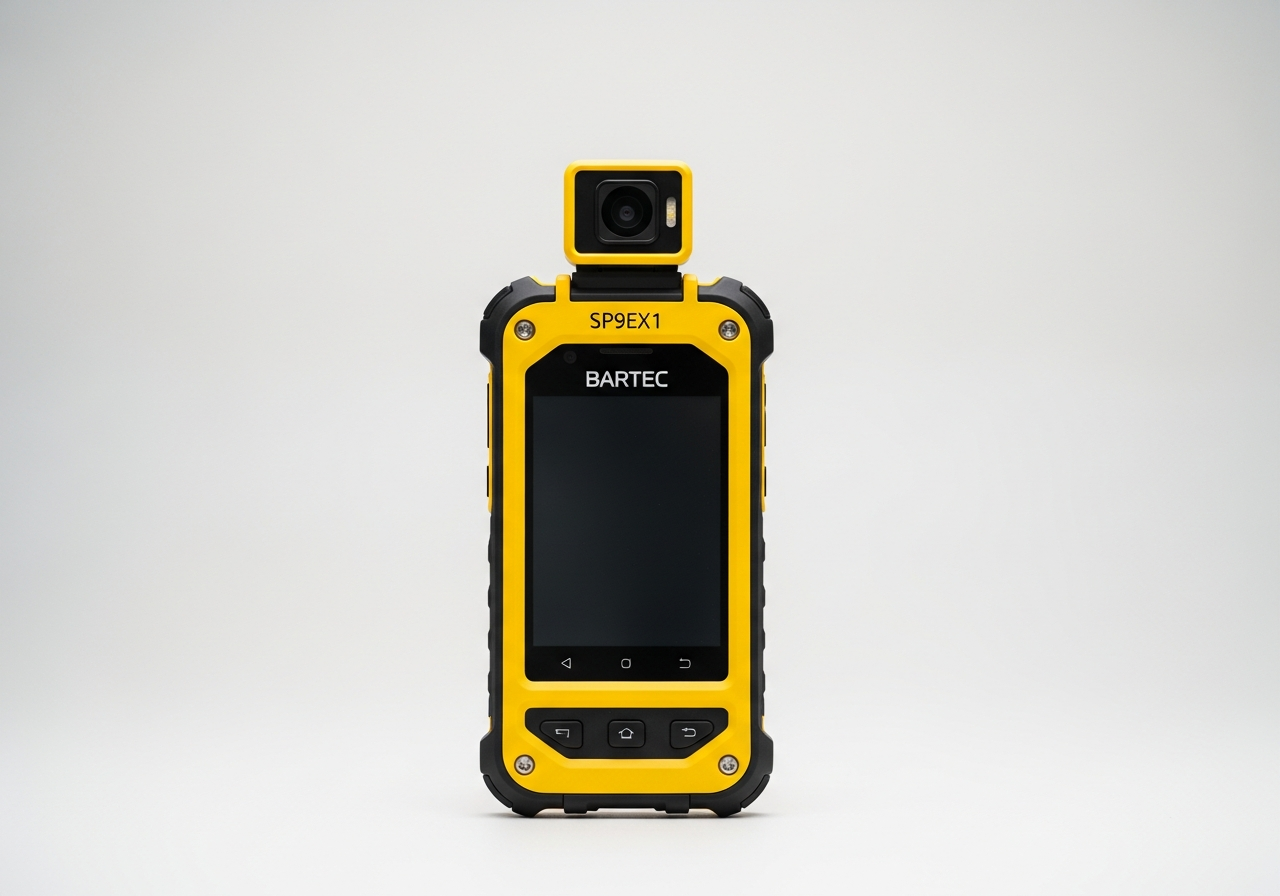
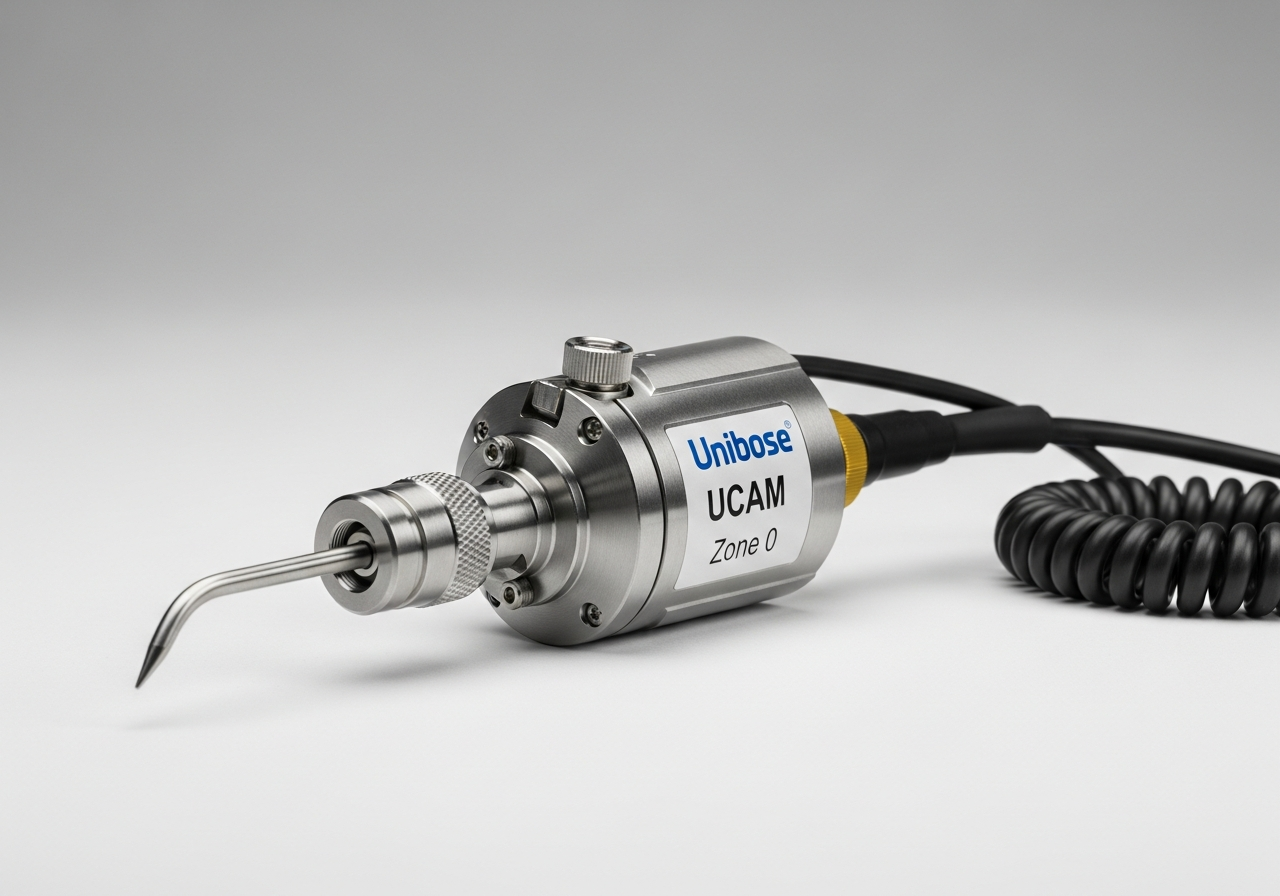
Zone 0 intrinsically safe cameras are certified for environments with the highest-risk classification for potentially explosive gas atmospheres, but “Zone 0 certified” doesn’t mean “does the same job.” The Bartec SP9EX1 Cam Version is a full Android smartphone — ATEX Zone 0/1, IECEx, and NEC/CEC Class I Division 1 certified, IP68 sealed — with an emphasized 48MP rear camera module, built for a worker who needs to call, scan, and photograph from one handheld device. The Unibose UCAM Zone 0 is something else entirely: a tethered inspection camera with a stainless steel probe head and a cable that runs up to 100 meters, built to see inside a tank, vessel, or confined space no person can safely enter. Both carry Zone 0 certification. Only one of them can look where a human can’t stand.
To learn more about different types of Zone 0 cameras, read our guide on Intrinsically Safe Inspection Cameras: Pricing, and Sensor Options.
Two Different Protection Concepts Under IEC 60079-11
IEC 60079-11 defines the “ia” level of intrinsic safety protection as the tier required for Equipment Protection Level Ga — the level ATEX Directive 2014/34/EU assigns to Category 1 equipment approved for Zone 0, where an explosive atmosphere is present continuously or for long periods. The Bartec SP9EX1 line carries exactly that marking, ATEX II 1G Ex ia IIC T4 Ga, alongside IECEx and NEC/CEC Class I Division 1 Groups A-D — putting the Cam Version, built on that same certified platform, inside Zone 0. The Unibose UCAM Zone 0 carries an equivalent II 1G Ex ia IIC T4 Ga marking under its own TÜV certificate (TUV CY 24 ATEX 0207053 X). Both devices meet the same protection concept required to enter the same zone — the difference is what each one is actually built to do once it’s in there.
Core Specifications: Bartec SP9EX1 (Cam Version) vs. Unibose UCAM Zone 0
- Certification: Bartec SP9EX1 (base line) — ATEX Zone 0/1 (II 1G Ex ia IIC T4 Ga), IECEx, NEC/CEC Class I Division 1 Groups A-D. Unibose UCAM Zone 0 — ATEX Zone 0 (II 1G Ex ia IIC T4 Ga), certificate TUV CY 24 ATEX 0207053 X.
- Imaging and form factor: Bartec SP9EX1 (Cam Version) — full Android smartphone, 48MP rear / 8MP front camera, 5G/4G, GPS, NFC. Unibose UCAM Zone 0 — tethered inspection probe, VGA 640×480 (PAL, 50fps), cable up to 100m, 62-lumen integrated LED lighting.
- IP rating: Bartec SP9EX1 — IP68 (base-line spec; not independently confirmed for the Cam variant). Unibose UCAM Zone 0 — IP68.
- Price: Bartec SP9EX1 (Cam Version) — $2,694.60 USD. Unibose UCAM Zone 0 — from $7,776.00 USD (varies by cable length and accessories).
Which One Solves Your Actual Problem
The 48MP-vs-VGA resolution gap looks lopsided on paper, but it’s misleading — these two devices aren’t competing for the same job, so raw image quality isn’t the deciding factor:
- Choose the Bartec SP9EX1 Cam Version if you need to photograph a valve, a leak, or an asset tag that’s directly accessible to the operator, and you want communication, scanning, and documentation on one Zone 0/1-rated device.
- Choose the Unibose UCAM Zone 0 if you need to see inside a tank, vessel, duct, or any confined space that a person cannot safely enter — no smartphone, regardless of certification, solves that problem.
- Budget accordingly: the Unibose starts at roughly three times the Bartec’s price, reflecting its stainless steel housing and long-cable Zone 0 sealing rather than image sensor quality.
- If your inspection program needs both direct documentation and remote confined-space access, plan for both devices rather than expecting one to cover the other’s use case.
Recommended Products for Zone 0 Intrinsically Safe Cameras: Bartec SP9EX1 Cam Version vs. Unibose UCAM
The following products from our catalog are certified for use in hazardous areas and directly relevant to this guide:
| Product Category | Rating / Certification | Link |
|---|---|---|
| Intrinsically Safe Digital Camera | ATEX Zone 0/1 (II 1G Ex ia IIC T4 Ga) · IECEx · NEC/CEC C1D1 | Shop Now |
| Intrinsically Safe Digital Camera | ATEX Zone 0 (II 1G Ex ia IIC T4 Ga) | Shop Now |
Shop Certified Intrinsically Safe Cameras
Browse the full Intrinsically Safe Digital Camera category for more Zone 0-rated documentation and inspection options.
FAQs
Can I use a smartphone-style camera like the Bartec SP9EX1 for Zone 0 tank inspections?
The Bartec SP9EX1 line holds certifications, such as ATEX Zone 0/1, which are required for equipment intended for use in Zone 0 environments. A site’s specific safety procedures and risk assessment must always determine the final suitability of any equipment for a given task. But it’s a handheld Android phone with an emphasized camera — 48MP rear, 8MP front — not a remote device, so it can only document what the operator can physically see and reach.
What’s the difference between a Zone 0 documentation camera and a tethered inspection camera?
The Bartec SP9EX1 Cam Version is a handheld smartphone-camera for photographing what the operator can directly access. The Unibose UCAM Zone 0 uses a cable up to 100 meters to route a VGA probe camera into spaces the operator cannot enter — tanks, vessels, confined spaces — providing remote visual access rather than handheld photography.
Why does the Unibose UCAM Zone 0 cost so much more than a Zone 0-rated smartphone camera?
The UCAM starts at $7,776.00 versus $2,694.60 for the SP9EX1 Cam Version, reflecting a different product category entirely: a stainless steel housing, a Zone 0/IP68-rated cable system extending to 100 meters, and a purpose-built tethered probe — engineering a general-purpose handheld phone doesn’t need.
Is VGA resolution enough for a tethered hazardous-area inspection camera?
The Unibose UCAM’s 640×480 VGA resolution is modest next to the Bartec SP9EX1’s 48MP sensor, but for remote confined-space or tank inspection the priority is reliable real-time visual access through a long Zone 0-rated cable, not high-resolution stills — a common trade-off in this tethered-camera category.
Is the Bartec SP9EX1 actually a camera, or just a phone with a good camera?
The SP9EX1 Cam Version is built on Bartec’s SP9EX1 Android smartphone platform (ATEX Zone 0/1, IECEx, NEC/CEC Class I Division 1, IP68) with the camera module emphasized. It’s a multi-function handheld device — calls, apps, and data alongside photos — unlike the Unibose UCAM, a single-purpose tethered inspection camera with no phone functionality at all.
Chat for a QuoteCall: 832-699-6726
Conclusion
Both the Bartec SP9EX1 Cam Version and the Unibose UCAM Zone 0 clear the same certification bar — ATEX Zone 0, a certification for environments with the highest-risk classification for potentially explosive gas atmospheres — but they were never built to compete with each other. The SP9EX1 is a full Android smartphone that happens to document what its operator can see. The UCAM is a purpose-built tethered probe that documents what no operator should ever try to see in person. Define the problem first — direct visual documentation or remote confined-space inspection — and the choice between these two Zone 0-rated devices makes itself.