

Intrinsically Safe Knowledge Base
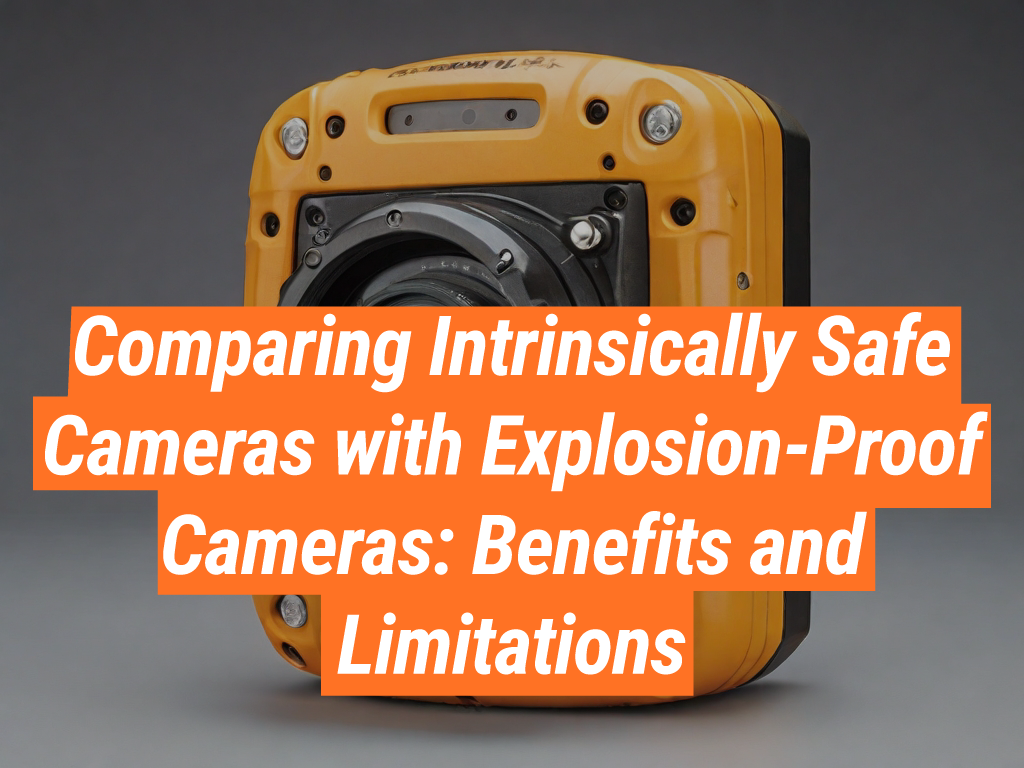
Intrinsically Safe vs Explosion-Proof: Benefits & Limits
Welcome to Intrinsically Safe Store, your one-stop-shop for all your safety equipment needs. We are dedicated to providing you with the most reliable and up-to-date information on safety equipment. In this article, we will be comparing intrinsically safe cameras with explosion-proof cameras, discussing their benefits and limitations. We invite you to explore our wide range of certified cameras to find a model that fits your specific Zone or Division requirements.
Understanding Intrinsically Safe Cameras
Intrinsically safe cameras are designed to operate safely in hazardous areas where flammable gases, vapors, or dust may be present. They are engineered to limit the electrical and thermal energy available for ignition, ensuring that they cannot cause an explosion even under fault conditions.
Benefits of Intrinsically Safe Cameras
- When used according to their certification and site safety procedures, they are designed not to be an ignition source, often allowing for more flexible installation compared to explosion-proof systems.
- They are lightweight and portable, making them easy to use in various environments.
- They offer high-quality images and videos, which can be crucial for inspections and monitoring.
Limitations of Intrinsically Safe Cameras
- They may not offer the same level of functionality as standard cameras due to safety restrictions.
- They can be more expensive than regular cameras due to the specialized technology and materials used.
Understanding Explosion-Proof Cameras
On the other hand, designers create explosion-proof cameras to contain an explosion within the device and prevent it from igniting the surrounding atmosphere. They typically house these cameras in a robust casing that can withstand an internal explosion.
Benefits of Explosion-Proof Cameras
- They provide a high level of protection in explosive environments.
- They are durable and can withstand harsh conditions.
- They offer high-resolution imaging for detailed inspection and monitoring.
Limitations of Explosion-Proof Cameras
- They are typically heavier and bulkier than intrinsically safe cameras.
- They can be more expensive due to the robust materials and design used.
What Changed? Recent Developments in Hazardous Area Cameras
The technology for hazardous area cameras is constantly evolving. Modern certified cameras now often feature significantly improved sensor technology, offering higher resolutions (up to 4K), superior low-light performance, and thermal imaging capabilities. This allows for more detailed inspections and enhanced safety monitoring.
Furthermore, connectivity and software integration have seen major advancements. Many new models include options for Power over Ethernet (PoE) for simplified installation, as well as wireless capabilities. Onboard analytics and AI-powered software are also becoming more common, enabling features like automated threat detection, asset tracking, and predictive maintenance alerts directly from the camera.
While the fundamental safety principles remain, standards are continuously updated to address new technologies. Staying current with the latest versions of ATEX and IECEx standards is crucial to ensure compliance and take advantage of the latest safety and performance features available.
Updated Comparison of Current Options
To better illustrate the differences, here is a side-by-side comparison of the two protection concepts:
| Feature | Intrinsically Safe (IS) Cameras | Explosion-Proof (XP) Cameras |
|---|---|---|
| Protection Method | Limits energy (voltage/current) to prevent sparks or hot surfaces. | Contains any internal explosion within a robust, heavy-duty enclosure. |
| Typical Certification | Common Certifications: Certified for specific Zones (e.g., Zone 0, 1, or 2) or Classes/Divisions (e.g., Class I, Div 1) depending on the equipment’s level of protection (e.g., ‘ia’, ‘ib’, or ‘ic’). An ‘ia’ protection level is required for Zone 0. | Common Certifications: Certified for Zone 1 or 2, and Class I, Division 1 or 2. This protection method is most common in Zone 1 / Div 1 applications. |
| Size & Weight | Lightweight, compact, and often designed for portability. | Heavy, bulky, and typically requires fixed mounting. |
| Installation & Maintenance | Simpler wiring. Can often be maintained live with proper procedures. | Requires armored cables, heavy-duty conduits, and power-down for all service. |
| Total Cost of Ownership | While the component price of an IS device can be high, the total installed cost is often lower than explosion-proof systems. | XP systems require expensive armored conduits, glands, and specialized labor, leading to a higher total cost of ownership. |
| Best For | Typical Applications: Mobile inspections and use in areas requiring the highest levels of safety, including Zone 0 or Class I, Div 1, provided the equipment carries the specific certification for that environment (e.g., ATEX/IECEx level ‘ia’). | Fixed surveillance, high-power applications (e.g., PTZ), and harsh physical environments. |
Choosing Between Intrinsically Safe and Explosion-Proof Cameras
The choice between intrinsically safe and explosion-proof cameras largely depends on the specific requirements of your environment. If portability and ease of use are important, an intrinsically safe camera may be the best choice. However, if you need a camera that can withstand harsh conditions and provide high-resolution images for fixed monitoring, an explosion-proof camera may be more suitable.
Frequently Asked Questions
Can an explosion-proof enclosure be opened for maintenance in a hazardous area?
No. An explosion-proof enclosure must never be opened while it is powered in a hazardous area. All maintenance must be performed in a designated safe area or only after the hazardous area has been completely declassified and verified as safe by a qualified professional.
Are all intrinsically safe cameras approved for Zone 0?
Not necessarily. The approved Zone is determined by the specific certification level of the device. A camera rated for Zone 1 is not safe for use in Zone 0, where an explosive atmosphere is continuously present. Always verify the device’s ATEX/IECEx rating matches your area’s classification.
Does an “explosion-proof” rating mean the camera is indestructible?
No. The term “explosion-proof” signifies that the enclosure is designed to contain an internal ignition event, preventing it from igniting the external atmosphere. It does not imply that the camera is immune to severe external physical damage, which could compromise the enclosure’s integrity and its safety function.
What’s the main difference in cost between the two types?
While the component price of an IS device can be high, the total installed cost is often lower than explosion-proof systems. XP systems require expensive armored conduits, glands, and specialized labor, leading to a higher total cost of ownership.
Conclusion
In conclusion, both intrinsically safe and explosion-proof cameras offer unique benefits and have certain limitations. It’s crucial to understand these factors to make an informed decision based on your specific needs. At Intrinsically Safe Store, we offer a wide range of both intrinsically safe and explosion-proof cameras. We invite you to talk to a hazardous-area specialist for personalized guidance on choosing the right camera for your needs.