Intrinsically Safe Products
Intrinsically Safe Cameras: ATEX & C1D1 Certified (2026)
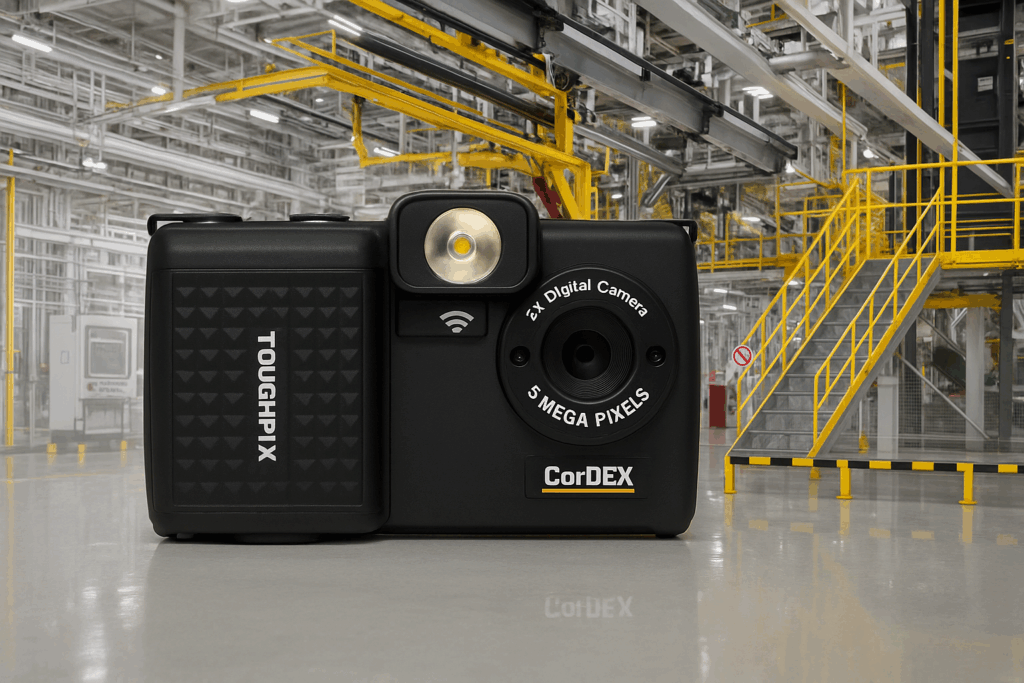
In hazardous work environments such as oil rigs, chemical plants, and mining operations, safety isn’t optional—it’s critical. Visual inspection and real-time communication are essential, but conventional electronics pose a risk. That’s where intrinsically safe cameras come in. In this guide, we highlight the best intrinsically safe camera options available today, comparing features, certifications, and use cases to help you choose the right solution for your industrial needs.
Why a Standard Camera is a Major Risk in Hazardous Areas
Using a standard smartphone or digital camera in an explosive atmosphere is a serious violation of safety protocols. These devices are not designed to control their electrical and thermal energy. A simple action, like the camera’s flash firing, the battery creating a small spark, or even electrostatic discharge from its casing, can provide the ignition source needed to trigger a catastrophic explosion in the presence of flammable gas, vapor, or dust.
The core danger lies in the uncontrolled energy within consumer electronics. Every component, from the processor to the power circuit, generates heat and electrical currents that exceed the safe limits for hazardous locations. This is why investing in certified equipment isn’t just a matter of compliance—it’s a fundamental requirement for protecting personnel and assets. Intrinsically safe cameras are purpose-built to reduce this ignition risk to an acceptably safe level, preventing the device from becoming an ignition source under both normal and fault conditions.
Why Choose an Intrinsically Safe Camera?
What Makes a Camera Intrinsically Safe?
An intrinsically safe camera is engineered to operate in explosive environments without igniting gases or dust. These cameras limit electrical and thermal energy output, meeting stringent international safety standards.
Such cameras are critical in ATEX Zones 0, 1, or 2 and North American Class I, Division 1 or 2 areas, where explosive atmospheres are a constant risk.
These devices are particularly vital during inspections, maintenance, and incident documentation in confined spaces or high-risk zones. The built-in safety ensures workers can operate without compromising site protocols.
Browse our full catalog of ATEX and IECEx Certified Cameras →
Key Certifications to Look For
-
ATEX (EU Directive 2014/34/EU) – Zone 0, 1, 2 compliance
-
IECEx (International Standard) – Global certification aligned with ATEX
-
CSA/UL (North America) – Certifications to NEC standards for Class/Division hazardous locations
-
INMETRO (Brazil) – Other regional certifications may also be required
Certifications not only guarantee device safety but streamline regulatory compliance and procurement.
How to Choose the Right Certification (ATEX vs. IECEx vs. NEC)
Understanding the certification landscape is crucial for compliance. While these standards share the same goal—preventing explosions—they apply to different jurisdictions and have different technical requirements. Choosing a camera with the wrong certification can lead to non-compliance, project delays, and significant safety risks.
ATEX (Atmosphères Explosibles)
ATEX is the mandatory legal framework for equipment used in potentially explosive atmospheres within the European Union. It classifies hazardous areas into Zones (0, 1, 2 for gases/vapors and 20, 21, 22 for dusts). If your operations are in the EU, ATEX certification is non-negotiable. The marking will clearly state the specific Zone the device is approved for.
IECEx (International Electrotechnical Commission System)
IECEx is an international certification system accepted in over 30 countries worldwide. It streamlines global trade by providing a single, harmonized set of standards. An IECEx certificate demonstrates that a camera meets international safety benchmarks, making it a preferred choice for multinational corporations seeking to standardize equipment across different regions. It uses the same Zone classification system as ATEX, and many products carry dual ATEX and IECEx certification.
NEC / UL / CSA (North America)
In the United States and Canada, the National Electrical Code (NEC) defines hazardous locations using a Class, Division, and Group system. Class I refers to flammable gases or vapors, and Division 1 indicates that these hazards are present under normal operating conditions. A camera certified by a Nationally Recognized Testing Laboratory (NRTL) like UL or CSA for Class I, Division 1 (C1D1) is the North American classification for environments with a similar risk profile to ATEX/IECEx Zone 1. Always verify the specific Class and Division ratings match your site’s requirements.
Key Features to Evaluate in an Intrinsically Safe Camera
Beyond the mandatory safety certifications, the practical functionality of a camera determines its value in the field. A successful deployment depends on matching the device’s technical specifications, durability, and user interface to the specific demands of your work environment. Evaluating these features ensures you invest in a tool that enhances productivity and safety, rather than hindering it.
Certification & Compliance
Ensure devices are explicitly labeled for your zone or division classification—typically ATEX Zone 1 or Class I Division 1.
Look for certifications from recognized testing bodies like UL, CSA, or TÜV to boost confidence in safety credentials.
Technical Specs
-
Resolution: At least 5–8 MP and 1080p HD video
-
Lighting: Infrared or low-light capabilities for dim conditions
-
Battery Life: Minimum 6 hours or field-replaceable batteries
-
Durability: Look for a high IP rating for dust and water ingress protection, such as IP54 for basic protection or IP67/IP68 for environments requiring submersion resistance
Some models include thermal imaging, dual-camera functionality, and wireless data streaming via Wi‑Fi or LTE.
Learn more about cameras designed for Zone 1 and Class 1 Div 1 applications.
Ease of Use in Industrial Settings
-
Glove-friendly buttons
-
Verify the camera’s certified operating temperature range and Temperature Class (T-rating) to ensure it is safe for the ambient temperatures at your site.
Price vs. Performance
Factor in total cost of ownership—higher upfront costs may pay off via reduced downtime, detailed inspection evidence, and integrated features like AR or live support.
Comparison Table: Top IS Cameras at a Glance
Here is a direct comparison of the standout models available now on the Intrinsically Safe Store, designed to help you quickly identify the best fit for your operational needs.
| Camera Model | Certifications | Features | Use Cases | Camera Type |
|---|---|---|---|---|
| Cenegex DCx13-3 | ATEX Zone 2/22 | 13 MP resolution, digital capture | Inspection photography and documentation | Digital handheld |
| BARTEC SP9EX1 Smartphone (Cam Version) | Intrinsically safe | Rugged Android smartphone, integrated camera | Digital workflows, live support, and field photos | Smart device / Handheld |
| ATEX Zone 0 Inspection Camera | ATEX Zone 0 | Stainless steel, integrated LED light | Confined space and maximum-risk inspection | Inspection camera |
| Kaixuan KX-EX2000PSB2 | Explosion-proof | Rugged dome structure, CCTV monitoring | Real-time process supervision and security | Dome CCTV camera |
| IVC AMZ-HD41-3 | Explosion-proof | High-definition CCTV, high-durability housing | Continuous surveillance on oil rigs and chemical plants | Fixed CCTV camera |
Need help selecting the right camera for your zone? Get expert advice on camera selection for your specific zone →
Best Choice for:
- Inspection Photography & Documentation: Cenegex DCx13-3
- Digital Workflows & Live Support: BARTEC SP9EX1 Smartphone (Cam Version)
- Zone 0 Missions & Confined Spaces: ATEX Zone 0 Inspection Camera
- Real-time Process Supervision: Kaixuan KX-EX2000PSB2 (Dome CCTV)
- Continuous Surveillance: IVC AMZ-HD41-3 (Fixed CCTV)
The Best Intrinsically Safe Cameras of 2026: Reviewed
Cenegex DCx13-3
An ATEX Zone 2/22 certified digital camera designed specifically for field operators who need reliable, high-resolution documentation. It features a powerful 13 MP sensor that captures crisp, detailed digital stills, making it the perfect direct replacement for traditional handheld inspection cameras. Its straightforward interface allows for quick operation in hazardous environments where efficient photo logging and equipment status reporting are required. [Request a Quote for the Cenegex DCx13-3]
BARTEC SP9EX1 Smartphone (Cam Version)
The SP9EX1 represents the modern shift toward multi-functional, intelligent devices in hazardous areas. It is an intrinsically safe, rugged Android smartphone featuring an integrated high-performance camera system. Instead of carrying a standalone camera, field workers can use this device to capture high-quality photos, manage digital workflows, and stream live video to remote experts for real-time support. It is the ultimate all-in-one tool for modern digitalized field operations.
ATEX Zone 0 Inspection Camera
When operations demand entry into the absolute highest-risk environments, this dedicated inspection system is one of the few certified for ATEX Zone 0. Built with a rugged stainless steel body and an integrated LED light ring, it is specifically engineered to navigate dark, volatile, and confined spaces like fuel tanks or chemical reactors. It delivers reliable visual clarity where continuous explosive hazards are a constant threat.
Kaixuan KX-EX2000PSB2 (Dome CCTV)
For continuous area monitoring and safety oversight, this explosion-proof dome camera is an industry standard. Housed in a heavy-duty, ignition-protected enclosure, it is designed to prevent any internal electrical spark from contacting volatile ambient gases. It provides constant, real-time process supervision and security monitoring, allowing facility managers to keep a close eye on critical zones without exposing personnel to high-risk areas.
IVC AMZ-HD41-3 (Fixed CCTV)
Engineered for permanent installation in the most unforgiving industrial landscapes, this high-definition, fixed IP camera is fully explosion-proof. It features a high-durability housing built to withstand extreme weather, heavy vibration, and corrosive elements. It is the go-to continuous surveillance workhorse for heavy sectors like oil rigs, refining plants, and marine environments where automated, crystal-clear visual monitoring is non-negotiable.
Want to compare all available models in one place? Compare specs and request quotes for all camera models →
Get Expert Help Choosing Your Certified Camera
Navigating the specifications, certifications, and features of intrinsically safe cameras can be challenging. Making the right choice is critical for both compliance and operational efficiency. Our team of hazardous area specialists is available to provide a complimentary consultation, helping you assess your specific needs and recommend the ideal camera solution for your environment and budget.
Frequently Asked Questions about Hazardous Area Cameras
What does “intrinsically safe” mean for cameras?
The device is designed to prevent any spark or thermal emission capable of ignition. Internal circuits and housing ensure safe operations in explosive environments.
Can these cameras work in Zone 0 hazardous areas?
Only specialized models like the iCAM502 Auto Focus are approved for continuous-hazard (Zone 0) areas. Most cameras are Zone 1 certified.
How do ATEX and IECEx certifications differ?
ATEX is mandatory in the EU; IECEx is an international standard recognized beyond Europe. Both validate explosion-safe use, but IECEx simplifies global deployment.
Are there wireless intrinsically safe cameras available?
Yes—the Ecom Cube 800 supports active video streaming and remote support via Wi‑Fi/LTE, ideal for connected field operations.
How long do these camera batteries last?
Battery life ranges from 4 to 10 hours, depending on use-case and camera type. Models typically include field-replaceable batteries or charging docks.
Can intrinsically safe cameras record audio?
Some models include built-in mics with explosion-proof housings. Always check product specifications before purchase.
Industry Benchmarks & Safety Stats
-
75% of offshore rigs mandate ATEX-certified inspection tools
-
$1.2 billion global intrinsically safe equipment market (2023, MarketsAndMarkets)
-
30% incident reduction with body-worn cameras (NIOSH study)
-
98% uptime in AR-assisted camera trials in refineries
-
Up to 50% faster incident response using real-time video in hazardous zones
Conclusion
Selecting the best intrinsically safe camera requires matching certifications, features, and usability to your environment. Whether you need rugged durability, thermal insight, AR-enabled assistance, or continuous Zone 0 approval, the store’s lineup delivers certified, dependable options for every scenario.
These cameras empower your teams to operate safer, document more effectively, and collaborate in real time—even in the most hazardous settings.