


Intrinsically Safe Knowledge Base
Mastering the Certification Process for Intrinsically Safe Flashlights
When it comes to safety in hazardous environments, every detail matters. This includes the type of flashlight used. At Intrinsically Safe Store, we understand the importance of providing reliable, certified intrinsically safe flashlights. But what does it mean when we say a flashlight is intrinsically safe, and what does the certification process involve? Let’s delve into these questions.
What are Intrinsically Safe Flashlights?
Designers engineer intrinsically safe flashlights to operate safely in hazardous environments where flammable gases, vapors, or dust may be present. They design these flashlights to prevent ignition of these substances, thereby reducing the risk of explosions and fires.
The Importance of Certification
A rigorous certification process must be undergone for a flashlight to be considered intrinsically safe. This process ensures that the flashlight meets specific safety standards and can safely operate in hazardous environments. Without this certification, there’s no guarantee that the flashlight is truly intrinsically safe.
The Certification Process
The certification process for intrinsically safe flashlights involves several key steps:
- Design and Engineering: The flashlight must be designed and engineered to prevent ignition of flammable substances. This often involves using low-energy electrical and thermal outputs.
- Testing: The flashlight undergoes rigorous testing to ensure it can operate safely in various hazardous environments. This includes rigorous tests by a certified body, such as spark ignition tests (to ensure no spark can ignite an explosive atmosphere, even under fault conditions), and maximum surface temperature tests to assign a specific ‘T-rating’.
- Documentation: Detailed documentation is required to demonstrate that the flashlight meets all necessary safety standards. This includes technical drawings, user manuals, and test reports.
- Inspection: An independent third-party organization inspects the flashlight and its documentation to verify that it meets all safety requirements.
- Certification: If the flashlight passes inspection, it receives certification as an intrinsically safe device.
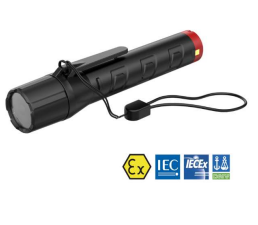
Standards for Intrinsically Safe Flashlights
Intrinsically safe flashlights must meet specific safety standards. These standards vary by country and region, but some of the most common include the European ATEX directive, the International IECEx system, and the North American Class/Division system. These standards result in a specific marking on the product, which includes its approved location (e.g., Class I Div 1 or Zone 0), the specific explosive atmospheres it’s safe for (Gas/Dust Group), and its maximum surface temperature (T-Class). Matching this full marking to your site’s requirements is critical for compliance.
Why Choose Certified Intrinsically Safe Flashlights?
When you choose a certified intrinsically safe flashlight, you ensure that you are getting a product that has undergone rigorous testing and has proven to operate safely in hazardous environments. This can provide peace of mind and help protect your team from potential accidents.
What’s Changed in Flashlight Certification and Technology?
The landscape of intrinsically safe technology is not static. Standards are periodically updated, and advancements in technology bring more efficient and reliable products to market. Key changes in recent years include:
- Advancements in LED Technology: Modern intrinsically safe flashlights almost exclusively use high-efficiency LEDs. This provides brighter, more consistent light output with significantly lower energy consumption and heat generation compared to older incandescent or halogen bulbs, which is a critical factor for safety.
- Improved Battery Systems: The development of safer, certified rechargeable battery packs (like Li-ion and NiMH) has led to more powerful and convenient flashlights. These systems incorporate multiple safety circuits to prevent overcharging, short-circuiting, and thermal runaway, all of which are essential for use in explosive atmospheres.
- Evolving Standards: Certification bodies like ATEX and IECEx regularly review and update their standards to address new technologies and safety findings. This means a flashlight certified today has been tested against the most current and stringent safety protocols.
Updated Comparison of Current Options
When selecting a modern intrinsically safe flashlight, several factors beyond certification are important. Here is a comparison of key features available in today’s market:
| Feature | Description | Importance in Hazardous Areas |
|---|---|---|
| Light Source | High-efficiency Light Emitting Diodes (LEDs) are now the standard, offering high lumens with low heat. | Minimizes surface temperature, a critical ignition risk factor. Offers longer lifespan and greater durability than fragile filament bulbs. |
| Power Source | Options include approved disposable alkaline batteries or integrated, certified rechargeable battery packs. | Only specific battery types and models are approved for use. Using unapproved batteries voids the certification and creates a significant explosion risk. |
| Beam Type | Focused spot beams for long-distance inspection or wide flood beams for illuminating a work area. | Matching the beam to the task enhances both safety and efficiency, ensuring proper visibility without creating glare. |
| Ingress Protection (IP) Rating | Indicates the level of protection against dust and water (e.g., IP67 is dust-tight and waterproof). | Ensures the internal electronics are sealed from conductive dust or moisture, which could cause a short circuit and a spark. |
Frequently Asked Questions (FAQs)
What is the main difference between an intrinsically safe and an explosion-proof flashlight?
An intrinsically safe flashlight is designed to be incapable of producing a spark or thermal energy sufficient to ignite a hazardous atmosphere. An explosion-proof flashlight is built into a heavy enclosure designed to contain an internal explosion and prevent it from igniting the surrounding atmosphere. Intrinsic safety is a preventative approach, while explosion-proof is a containment approach.
Can I use any brand of batteries in my certified flashlight?
No. The certification of an intrinsically safe flashlight is tied to the a href=”https://intrinsicallysafestore.com/contact-us/”>talk to a hazardous area lighting specialist.