Intrinsically Safe Knowledge Base
ATEX vs IECEx: Key Differences and How to Comply
Navigating the requirements for equipment in hazardous areas can be a complex process, especially when dealing with international standards. A frequent point of confusion for engineers, safety managers, and procurement specialists is the distinction between ATEX and IECEx certification. While both systems aim to ensure that equipment is safe for use in potentially explosive atmospheres, they have different origins, scopes, and legal implications. Understanding the nuances of ATEX vs IECEx certification is not just a matter of compliance but a critical step in ensuring workplace safety and facilitating international trade. This guide will break down the key differences and similarities, helping you determine the right certification for your specific application and geographical location.
Understanding the Core Concepts of ATEX and IECEx Certification
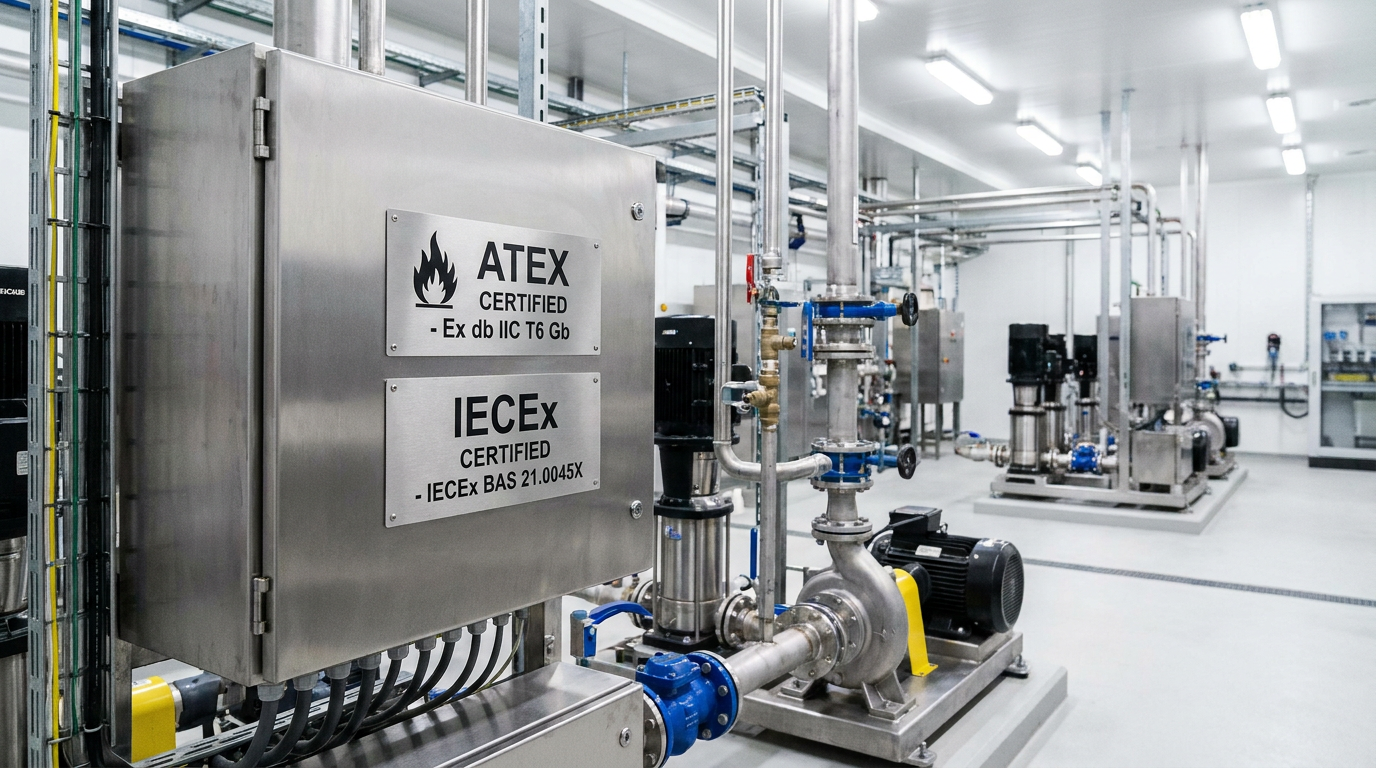
ATEX and IECEx are two of the most widely recognized certification standards for equipment used in hazardous areas. The primary goal of both is to prevent explosions by ensuring that electrical and non-electrical equipment is designed and manufactured to a high level of safety. Both systems use the internationally recognized IEC 60079 series of standards as the technical basis for equipment design, testing, and assessment. This ensures equipment will not be a source of ignition in an environment with flammable gases, vapors, mists, or combustible dusts. ATEX is a legal requirement in the European Union, while IECEx is an international certification scheme that is gaining global acceptance. The choice between ATEX vs IECEx certification often depends on where the equipment will be used and the specific legal and commercial requirements of that region.
Key Features & Benefits of ATEX and IECEx
Both certification schemes offer distinct advantages that contribute to safety, compliance, and market access. While they share the common goal of explosion prevention, their features cater to different regulatory and commercial needs.
Benefits of ATEX Certification
- Mandatory EU Market Access: ATEX is a legal prerequisite for selling equipment in the European Union and European Economic Area. Compliance with Directive 2014/34/EU ensures unrestricted access to this significant market.
- Comprehensive Scope: The directive covers not only electrical equipment but also mechanical equipment and protective systems, providing a holistic safety framework for all potential ignition sources.
- Manufacturer’s Responsibility: For lower-risk equipment (Category 3), ATEX allows for self-certification, which can streamline the process and reduce costs for manufacturers targeting less hazardous environments.
Benefits of IECEx Certification
- Global Recognition: IECEx acts as an international “passport” for equipment. A single IECEx certificate is recognized in member countries worldwide, simplifying the process of obtaining national certifications and facilitating global trade.
- Increased Confidence: Unlike ATEX, IECEx requires every product to undergo third-party testing and certification by an approved IECEx Certification Body (ExCB). This rigorous, standardized process provides a high level of confidence to end-users regarding product safety and conformity.
- Public Transparency: All IECEx certificates are publicly available on the IECEx website. This transparency allows anyone to verify the certification status and details of a product instantly, enhancing trust and simplifying procurement. Many multinational corporations now specify IECEx certified equipment to ensure consistent safety standards across all their international sites.
Need Help Classifying Your Hazardous Area?
Understanding ATEX and IECEx compliance starts with accurate zone classification. Access our comprehensive technical guide to properly classify your hazardous areas, whether using the international Zone system or the North American Division system.
Key Differences Between ATEX and IECEx
While both certifications share a common goal, their approach, legal standing, and global recognition have some important distinctions. Here are the main differences you need to be aware of:
- Legal Framework: ATEX is a mandatory legal requirement for any equipment sold within the European Union. It is based on EU Directive 2014/34/EU. IECEx, on the other hand, is a voluntary international certification scheme. It is not law in itself, but it is often used as the basis for national regulations in many countries.
- Geographical Scope: ATEX is specific to the EU. Any product placed on the market in the EU must have the CE and ATEX markings. IECEx is recognized globally and is becoming the de facto standard for international trade in hazardous area equipment.
- Certification Process: The ATEX certification process can sometimes involve a self-certification route for equipment in lower-risk categories (Category 3). In contrast, IECEx requires all equipment to be certified by an independent, third-party certification body (ExCB). This makes the IECEx scheme generally more stringent in its certification process.
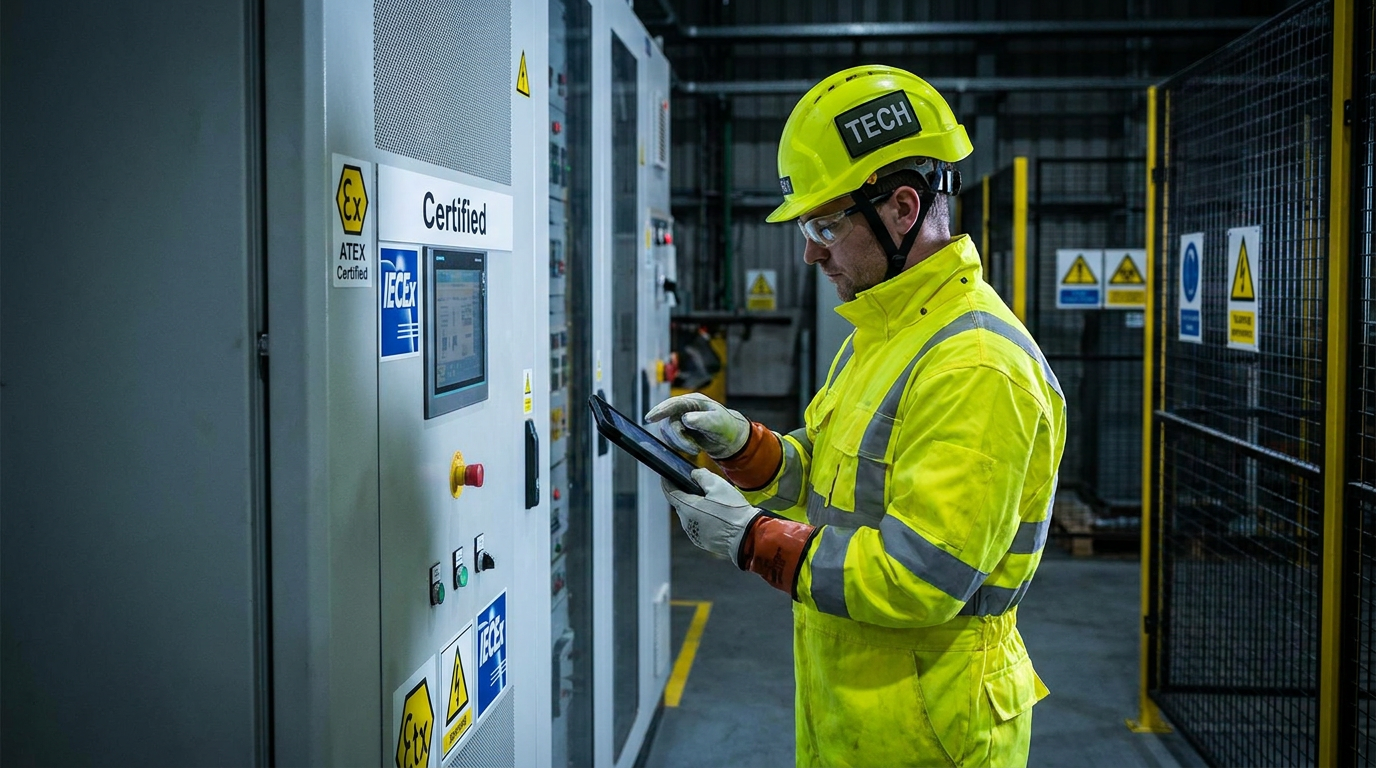
- Documentation and Marking: ATEX requires a Declaration of Conformity from the manufacturer, and the equipment must be marked with the CE logo, the Ex symbol, and the specific ATEX coding. IECEx issues a Certificate of Conformity, and the equipment is marked with the IECEx logo and coding. The markings are similar but distinct.
Delving Deeper: The Certification Process and Documentation
Beyond the legal and geographical differences, the administrative and technical pathways to certification also vary. Understanding these processes is key for manufacturers seeking compliance and for end-users verifying the equipment’s credentials.
The ATEX Certification Path
For ATEX, the process hinges on the equipment category, which is determined by the level of risk in the intended hazardous area. The manufacturer must compile a Technical File containing design specifications, risk assessments, and test results. For higher-risk equipment (Categories 1 and 2), a Notified Body must be involved to conduct an EU-Type Examination. The manufacturer must also establish a quality assurance system, typically certified as a Quality Assurance Notification (QAN), to oversee production. Finally, the manufacturer issues an EU Declaration of Conformity, takes responsibility for the product’s compliance, and affixes the CE and Ex markings.
The IECEx Certification Path
The IECEx scheme is more standardized. Every product must be certified by an approved IECEx Certification Body (ExCB) and tested by an IECEx Testing Laboratory (ExTL). The process involves submitting the equipment for rigorous testing against relevant IEC standards (like the IEC 60079 series). The results are compiled into an IECEx Test Report (ExTR). The manufacturer’s quality system is also audited, resulting in a Quality Assessment Report (QAR). If both are successful, an online IECEx Certificate of Conformity (CoC) is issued and made publicly available, providing a transparent and globally recognized proof of compliance.
Dual Certification: A Strategy for Global Operations
Because the underlying technical standards (IEC/EN 60079 series) for both ATEX and IECEx are largely harmonized, achieving dual certification is a common and efficient strategy for manufacturers. The testing data from an IECEx Test Report (ExTR) can often be used to support the ATEX certification process, significantly reducing redundant testing and costs. For multinational corporations, specifying dual-certified equipment simplifies procurement, standardizes safety protocols across global facilities, and ensures flexibility in asset deployment between EU and non-EU sites.
How to Choose the Right Certification
Selecting the correct certification depends heavily on your target market and operational footprint. Here are some guidelines to help you decide:
- If your equipment is intended for use exclusively within the European Union, ATEX certification is mandatory.
- If you are exporting to or operating in multiple countries, IECEx certification provides a more widely accepted international passport for your products.
- For maximum global reach, many manufacturers choose to obtain both ATEX and IECEx certifications. The testing and assessment processes are very similar, so achieving dual certification is often a cost-effective strategy.
Recommended Products for ATEX and IECEx Applications
The following products from our catalog are certified for use in hazardous areas and directly relevant to this guide:
| Product Category | Rating / Certification | Link |
|---|---|---|
| ATEX Zone 1 Rated Equipment | ATEX Zone 1 | Shop Now |
| IECEx Rated Equipment | IECEx | Shop Now |
Request a Quote for Certified Equipment
Talk to a Specialist: 832-699-6726
Frequently Asked Questions
What is the main difference between ATEX and IECEx?
The main difference is that ATEX is a legal requirement for products sold in the EU, while IECEx is an international, voluntary certification scheme. ATEX is law in Europe; IECEx is a standard that can be adopted by any country.
Can I use an IECEx certified product in the EU?
Not automatically. An IECEx certified product must also have ATEX certification to be legally sold and used in the European Union. However, the testing for both is very similar, so many products carry dual certification.
Is ATEX or IECEx better?
Neither is inherently “better”; they serve different purposes. ATEX is a legal necessity for the EU market. IECEx is more of a global “passport” for equipment, facilitating international trade and acceptance. The “better” certification depends on your target market.
What does the ‘Ex’ symbol mean on equipment?
The ‘Ex’ symbol, enclosed in a hexagon, indicates that the equipment is certified as explosion-proof and is safe to use in potentially explosive atmospheres. It is a common marking for both ATEX and IECEx certified products.
How do I know if I need ATEX or IECEx certified equipment?
You need to assess the location where the equipment will be installed. If it’s within the EU, you must use ATEX-certified equipment. For other regions, check local regulations. Many countries accept IECEx, and it is often the preferred standard for multinational companies. As per IEC 60079, a thorough risk assessment of the hazardous area is always the first step.
Find the Right Certified Product for Your Application
Browse our selection of ATEX and IECEx certified equipment to find the perfect fit for your zone or division. Eliminate compliance risks and ensure maximum operational safety.
Conclusion
In summary, both ATEX and IECEx certifications are crucial for ensuring safety in hazardous environments. The three main takeaways are: ATEX is a legal requirement for the EU, IECEx is a voluntary international standard, and the choice between them depends on your market and operational needs. For businesses operating globally, pursuing dual certification is often the most efficient path. By understanding these key distinctions, you can make informed decisions that enhance safety, ensure compliance, and streamline international commerce. Ultimately, a clear grasp of ATEX vs IECEx certification is essential for anyone involved in the specification, purchase, or use of equipment in hazardous areas.