Intrinsically Safe Products
IS Flashlights: Rechargeable vs. Disposable Batteries (2026 Guide)
When selecting equipment for hazardous locations, every component must be carefully considered. For portable lighting, the choice of power source is especially critical. Deciding between rechargeable vs disposable battery is flashlight models for intrinsically safe (IS) environments requires balancing cost, performance, and compliance. The right battery affects your budget, your team’s safety, and their operational readiness. Using the wrong battery type will compromise the flashlight’s certification, potentially introducing an ignition source into a volatile atmosphere. This guide covers the key factors to help you select the right battery system for your specific operational needs and safety protocols in 2026.

Understand the Certification Process
Before choosing a battery, ensure you understand the rigorous testing and certification required for any intrinsically safe flashlight.
Understanding Power Sources in Hazardous Environments
In hazardous areas, the primary concern is preventing ignition. Intrinsically safe equipment is designed to limit the electrical and thermal energy to a level below that which can ignite a specific hazardous atmospheric mixture. This principle extends directly to the batteries. Per standards like UL 913, any battery used in an IS-certified device must be specifically approved as part of that device’s certification. You cannot swap in a standard consumer battery, even if it fits. The certification process evaluates the battery’s construction, internal protection circuits, and its behavior under fault conditions to ensure it cannot produce a spark or overheat. This means the choice between rechargeable and disposable batteries is about selecting a complete certified system, not just the individual battery cells.
The Case for Rechargeable Batteries in IS Flashlights
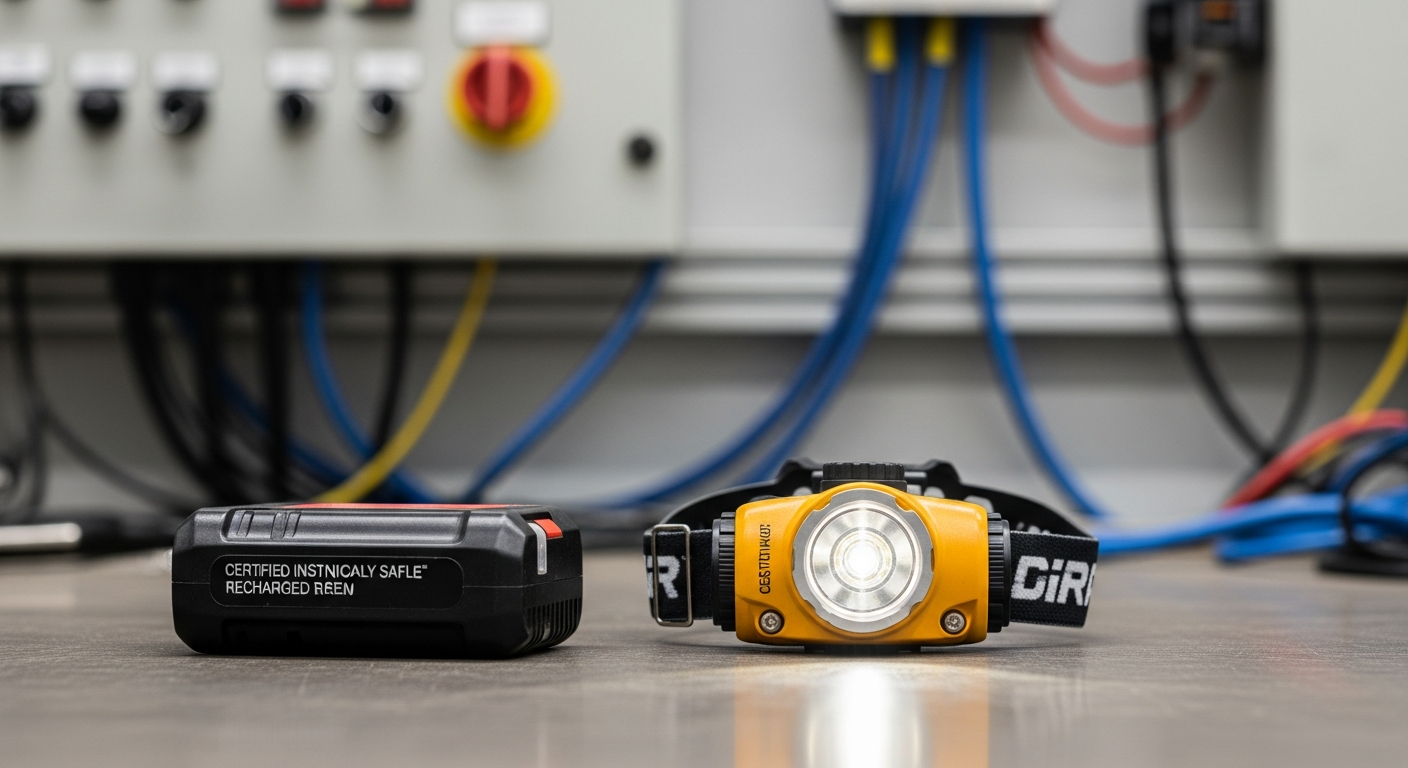
Rechargeable batteries, typically Lithium-Ion (Li-ion), are a common choice in industrial settings due to their long-term benefits. Although the initial purchase price is higher, the advantages can outweigh the cost over the lifespan of the equipment.
- Long-Term Cost Savings: A single rechargeable battery can be charged hundreds of times, eliminating the recurring cost of purchasing and stocking disposable batteries. This results in a significantly lower total cost of ownership over several years.
- Consistent Performance: Rechargeable batteries often provide a more stable voltage output throughout their discharge cycle, meaning the flashlight maintains a consistent brightness for longer. Disposable batteries, in contrast, tend to see a gradual dimming as they are depleted.
- Reduced Environmental Impact: By reusing batteries, you reduce hazardous waste. This aligns with corporate sustainability goals and reduces the logistical burden of special disposal procedures required for industrial batteries.
- Operational Efficiency: A centralized charging station system ensures that fully charged batteries are always available at the start of a shift. This eliminates downtime caused by searching for replacement disposables and reduces the risk of a worker entering a hazardous area with a low-power flashlight.
When Disposable Batteries Are a Better Fit
Despite the advantages of rechargeables, disposable batteries like Alkaline or Lithium are still a necessary choice for many applications. Their specific characteristics make them the practical choice for operational scenarios where charging infrastructure isn’t feasible.
- Extended Shelf Life: High-quality disposable batteries, particularly lithium types, can be stored for up to 10 years with minimal power loss. This makes them perfect for emergency kits, infrequently used equipment, or remote locations where reliability after long periods of storage is essential.
- No Charging Infrastructure Required: For mobile teams, field operations, or facilities without the space or electrical capacity for charging stations, disposables offer a simple grab-and-go solution. There is no dependency on a power grid or charging cycle management.
- Lower Upfront Investment: The initial cost of a disposable-powered flashlight and a stock of replacement batteries is considerably lower than purchasing rechargeable units and their corresponding charging systems. This can be a key factor for projects with tight initial budgets.
- Immediate Readiness: A dead flashlight can be brought back to full power in seconds simply by swapping the batteries. There is no waiting for a multi-hour charging cycle, which is a critical advantage in emergency response or time-sensitive maintenance tasks.
Recommended Products for Intrinsically Safe Lighting
The following products from our catalog are certified for use in hazardous areas and directly relevant to this guide:
| Product Category | Rating / Certification | Link |
|---|---|---|
| Intrinsically Safe Flashlights | For Class I Div 1 & ATEX Zone 0 Environments | Shop Now |
| Intrinsically Safe Rechargeable Cap Lamps | ATEX / IECEx | Shop Now |
Shop Certified IS Flashlights
Ensure compliance and safety with our wide range of certified intrinsically safe flashlights for any hazardous environment.
Frequently Asked Questions
What makes a flashlight battery intrinsically safe?
An intrinsically safe battery is not a standalone product but part of a certified system. The flashlight’s internal circuitry and the battery’s construction work together to limit energy output, preventing sparks or high temperatures that could ignite a flammable atmosphere. The battery itself often includes redundant protection circuits.
Can I use any brand of rechargeable battery in my IS flashlight?
No. You must only use the specific battery model and brand listed in the flashlight’s user manual and certification documents. Using an unapproved battery, even if it fits, voids the intrinsic safety certification and creates a severe safety risk.
How does extreme temperature affect battery performance?
Extreme cold can significantly reduce the effective capacity and voltage of both disposable and rechargeable batteries, leading to shorter runtimes. Extreme heat can accelerate battery degradation and, in worst-case scenarios, pose a safety hazard. Always operate flashlights within their specified temperature range.
Are there significant cost savings with rechargeable batteries over time?
Yes, typically. While the initial investment in rechargeable flashlights and chargers is higher, the total cost of ownership is often much lower because you avoid the recurring expense of purchasing and disposing of hundreds or thousands of disposable batteries over the device’s life.
What is the typical lifespan of a rechargeable IS flashlight battery?
The lifespan of a certified rechargeable battery is specified by the manufacturer and can often be several hundred charge cycles. Always refer to the product’s technical data sheet for precise performance specifications.
Chat for a Quote Call: 832-699-6726
Choosing between rechargeable and disposable batteries for intrinsically safe flashlights comes down to your specific operational needs. Rechargeable systems generally offer lower long-term costs, consistent performance, and less waste, making them well-suited for routine, high-frequency use. Disposable batteries offer immediate readiness, a long shelf life, and no reliance on charging infrastructure, which is essential for emergency kits and remote operations. The best choice depends on a clear assessment of your facility’s workflow, budget, and safety protocols. Weighing these factors will help you select the correct rechargeable vs disposable battery is flashlight system for your hazardous environment.