Intrinsically Safe Products
Devices You Need for Emergency Evacuation in Hazardous Environments
Emergency evacuation protocols in hazardous environments are a critical part of workplace safety—especially in industries such as oil and gas, petrochemicals, mining, and manufacturing. In these zones, where flammable gases, vapors, or dust are present, the use of standard electrical equipment can be extremely dangerous. This is where intrinsically safe for emergency evacuation devices come in.
Intrinsically safe devices are designed to operate without producing sparks or heat sufficient to ignite hazardous materials. In emergency scenarios, they help ensure reliable evacuation without introducing additional risks. This article explores the most essential intrinsically safe devices you need to support emergency evacuation efforts, with a focus on lighting, beacons, alarms, and signage.
What Does “Intrinsically Safe for Emergency Evacuation” Mean?
Intrinsically safe equipment is designed to operate safely in explosive atmospheres by limiting the electrical and thermal energy available. These devices are engineered to:
-
Prevent sparks during normal operation or fault conditions
-
Remain cool to avoid igniting gases or vapors
-
Comply with international standards like ATEX, IECEx, and UL
In evacuation scenarios, these tools ensure that guiding lights, alarms, and signage continue to operate without increasing the risk of explosions.
What Certifications Ensure Intrinsic Safety?
When selecting evacuation devices for hazardous environments, verifying proper certification is crucial. Key certifications include:
| Certification | Description | Region |
|---|---|---|
| ATEX | EU directive for explosive atmospheres (Zones 0, 1, 2) | Europe |
| IECEx | International standard for explosive environments | Global |
| UL Class I, Div 1 & 2 | U.S. standard for electrical safety in hazardous locations | North America |
| CSA | Canadian Safety Association’s hazardous location standards | Canada |
These certifications ensure the product has been tested and proven safe under specified hazardous conditions.
Why Are Intrinsically Safe Emergency Lights Critical?
In a power outage or incident, visibility becomes essential for orderly evacuation. Explosion-proof emergency lighting:
-
Illuminates evacuation routes
-
Highlights exits
-
Operates even during system failures via battery backup
These lights are built to withstand impact, corrosive environments, and explosive atmospheres.
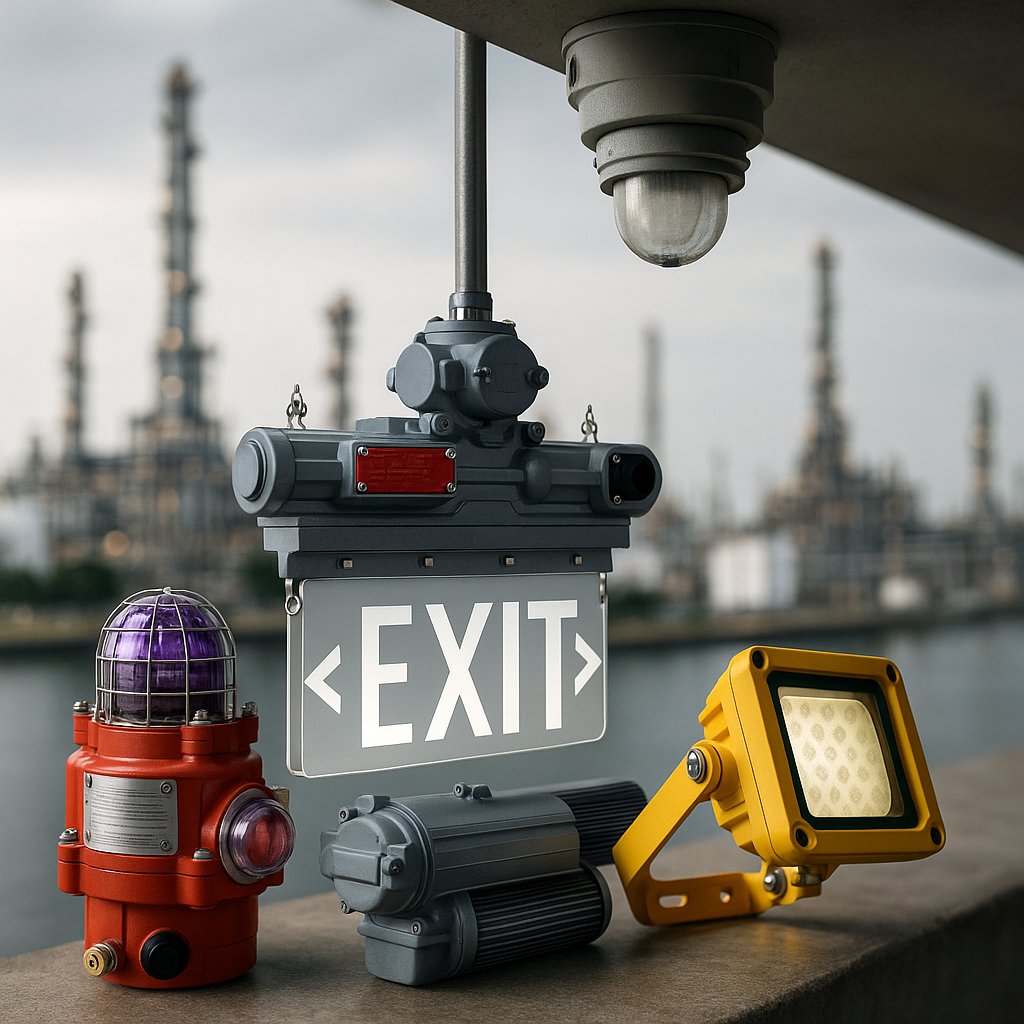
Recommended Intrinsically Safe Emergency Lighting Devices
Top Products from Intrinsically Safe Store
| Product | Certifications | Type | Features | Price |
|---|---|---|---|---|
| James Industry Exit Light J Series | UL, ATEX | Exit Light | Clear EXIT signage, rugged build, Class I Div 1 safe | $1,135.38 |
| FB2LEDX 120–240 Fireball Warning Light | UL | Warning Light | Quad-color LED beacon, high visibility | $808.99 |
| 371LEDX-120 Commander Rotating Beacon | UL | Rotating Light | High-intensity rotation for wide-area visibility | $2,065.00 |
| Tomar BExBGL Status Light | ATEX, UL | Multi-mode Beacon | Flashing LED for status/emergency indicators | $1,343.72 |
| CRESSA CSEXM2 25W–63W Explosion-Proof Light | IECEx | Floodlight | Wide-beam illumination, multiple wattage options | $607.50 |
| James Industry V Series Exit Sign | UL | Exit Light | Slim-profile, explosion-proof construction | $296.92 |
How to Choose the Right Emergency Device for Your Facility?
Choosing the right evacuation equipment starts with hazard analysis. Key considerations include:
-
Hazardous Zone Rating: Know if your area is ATEX Zone 1, Zone 2, or UL Class I Div 1/2.
-
Type of Evacuation Path: Long corridors need floodlighting; stairwells need visible exit signs.
-
Power Backup Requirements: Ensure devices offer at least 90 minutes of emergency runtime.
-
Mounting Location: Surface, wall, and ceiling mounts provide different angles of visibility.
-
Alerting Mode: Choose visual (strobe/beacon), audible (alarm), or dual-mode indicators.
What Types of Intrinsically Safe Visual Indicators Are Available?
Flashing LED Lights
Used to grab attention immediately in low-visibility situations.
Rotating Beacons
Provide 360° alert coverage—ideal for open or large industrial spaces.
Status Lights
Color-coded signals to indicate zone status (safe, evacuation, danger, etc.).
Why Use Certified Exit Signage?
Exit signage may seem simple, but in a hazardous environment, it must:
-
Resist corrosion and sparks
-
Stay illuminated during emergencies
-
Be clearly visible in low-light and smoky conditions
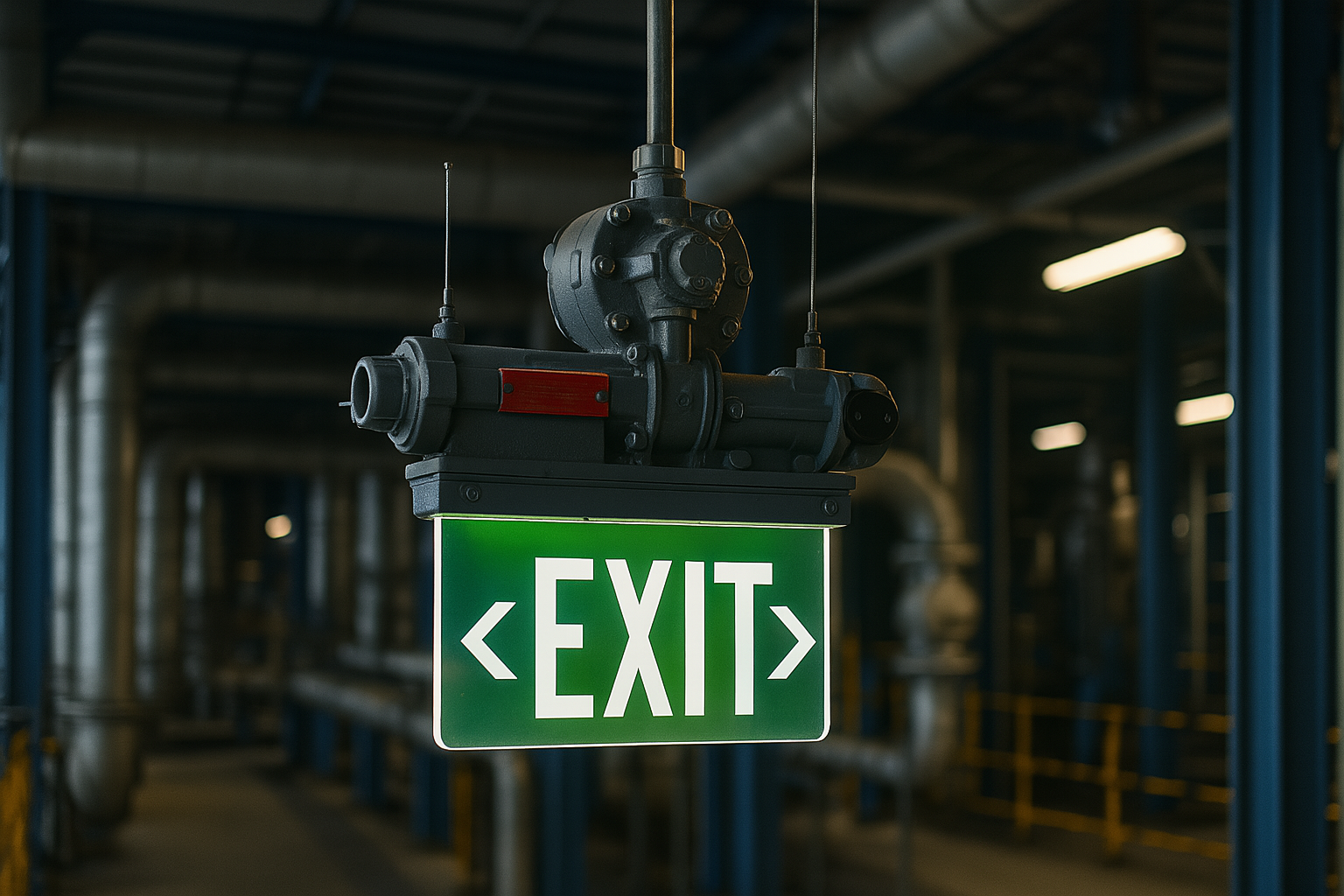
The James Industry Exit Light J Series and V Series offer these capabilities with verified certifications.
Frequently Asked Questions
What makes a device “intrinsically safe” for evacuation?
It must be certified to operate without causing ignition in explosive atmospheres, even if damaged or malfunctioning. This includes limitations on heat and electrical energy.
Are backup batteries mandatory?
Yes. Emergency evacuation devices should run independently from the main power supply for at least 90–120 minutes. Always verify runtime specs in the product datasheet.
Can I use any LED light in hazardous zones?
No. Only lights that are explosion-proof or intrinsically safe (with proper certification) are legal and safe for use in hazardous classified areas.
What’s the difference between Class I Div 1 and Div 2?
-
Div 1: Hazardous materials are present under normal operating conditions.
-
Div 2: Hazardous materials are present only in abnormal situations.
Choose devices accordingly.
How many lights are required for emergency evacuation?
This depends on facility layout, lighting levels, and escape route complexity. Refer to OSHA and NFPA 101 for minimum illumination requirements.
Best Intrinsically Safe Emergency Lights by Use Case
| Use Case | Best Product | Why |
|---|---|---|
| Petrochemical Facility | 371LEDX-120 Commander Beacon | Long-range rotating alert visible in large open areas |
| Refinery or Tank Farm | FB2LEDX Fireball Light | Bright, color-coded strobe signals for rapid response |
| Control Room Exit | James J Series Exit Light | Reliable, clearly marked path to exit |
| Underground Mine | Tomar BExBGL Light | Rugged and multi-mode, fits confined space needs |
| Warehouse/Fabrication Shop | CRESSA CSEXM2 Flood Light | Broad area illumination with safe heat management |
Safety Stats: The Cost of Improper Evacuation Gear
| Statistic | Source |
|---|---|
| 72% of industrial accident fatalities involved inadequate emergency lighting | OSHA Annual Report |
| Explosion-related incidents in hazardous environments cost over $2 billion annually | National Safety Council |
| Facilities with certified intrinsically safe systems reduce injury risk by 80% | UL Hazard Prevention Guide |
These figures highlight the importance of investing in certified equipment to not only protect workers but also reduce liability and operational disruption.
Conclusion
Having the right intrinsically safe equipment in place is not just a regulatory requirement—it’s a life-saving necessity. Whether you’re guiding workers through a darkened refinery or alerting personnel in an explosive-prone storage facility, intrinsically safe for emergency evacuation devices provide the reliability and safety your environment demands.
By selecting lights, alarms, and signage that are fully certified for your hazardous zone, you ensure that your team can evacuate quickly, calmly, and without incident.