Intrinsically Safe Products
Choosing an Explosion Proof PTZ Camera for Marine Environments
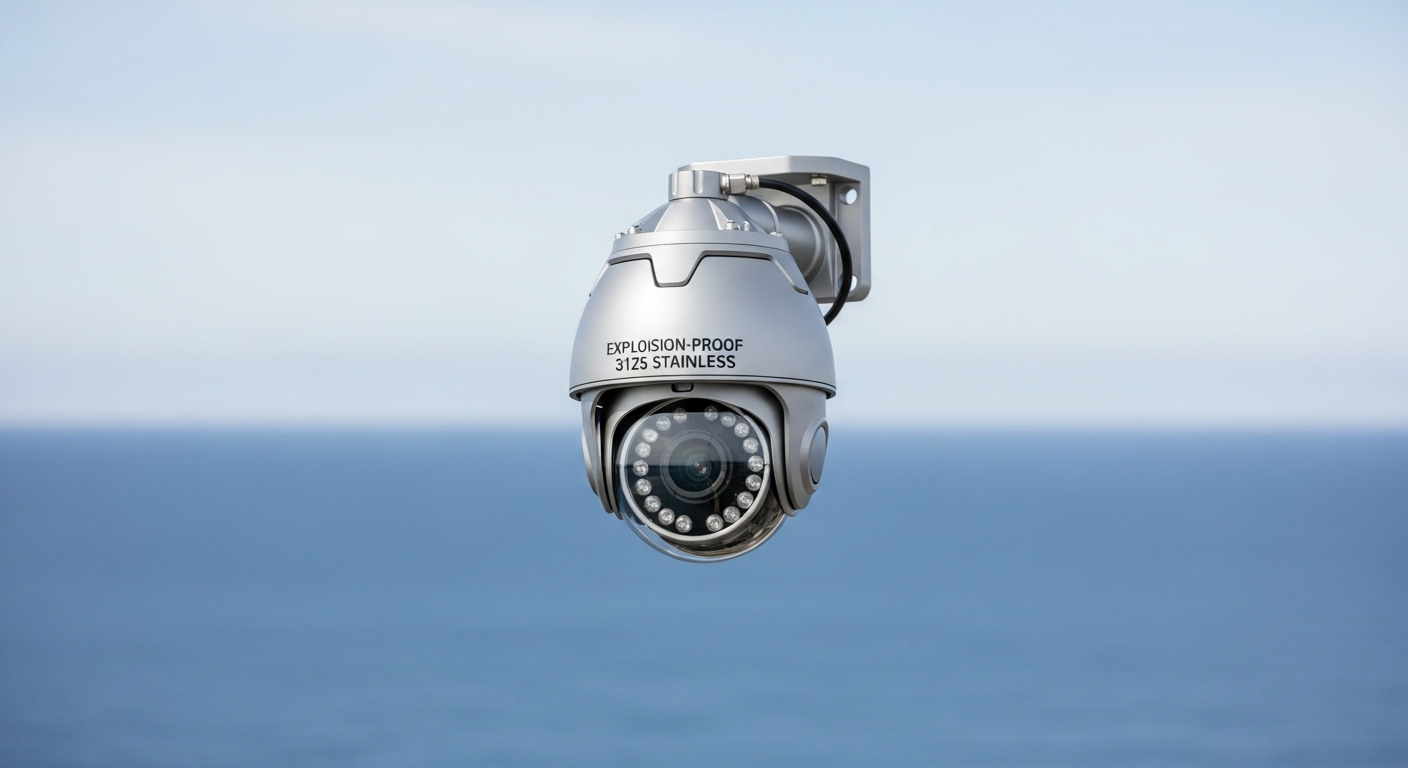
A camera for a marine environment, like an offshore oil rig, LNG tanker, or coastal refinery, must overcome two primary challenges: it has to withstand corrosive salt spray and extreme weather, and it must operate safely in areas with flammable gases or vapors. An explosion proof ptz camera for marine environments is engineered for these conditions, providing reliable surveillance without becoming an ignition source. These cameras are built with enclosures that contain any internal explosion, preventing it from igniting the surrounding hazardous atmosphere. This design is fundamental for safety and compliance in critical operations.
Explore Real-World Applications
See which camera models are best suited for high-risk locations like oil rigs, where durability and certification are non-negotiable.
Read the Top Explosion Proof Cameras for Oil Rigs: 2026 Guide
Key Certifications for Marine-Grade Explosion Proof PTZ Cameras
When sourcing an explosion proof PTZ camera for marine environments, certification is non-negotiable. It’s a mandatory requirement for legal and safe operation. The two dominant global standards are ATEX (for Europe) and IECEx (international). Both systems classify hazardous areas into zones based on the frequency and duration of an explosive atmosphere’s presence. Marine applications often fall into Zone 1 (flammable gas/vapor likely to occur in normal operation) or Zone 2. All certified equipment must meet rigorous testing standards, with general requirements for explosion-proof apparatus outlined in regulations like IEC 60079-0. This standard specifies the fundamental construction, testing, and marking requirements for any equipment intended for use in explosive atmospheres, ensuring a baseline of safety and durability.
Essential Features for Marine and Offshore Surveillance
Beyond certifications, the camera’s physical construction and functional features determine its effectiveness and service life in harsh marine conditions. It must be built to handle constant exposure to saltwater, humidity, and potential physical impacts. When evaluating an explosion proof ptz camera for marine environments, prioritize the following attributes:
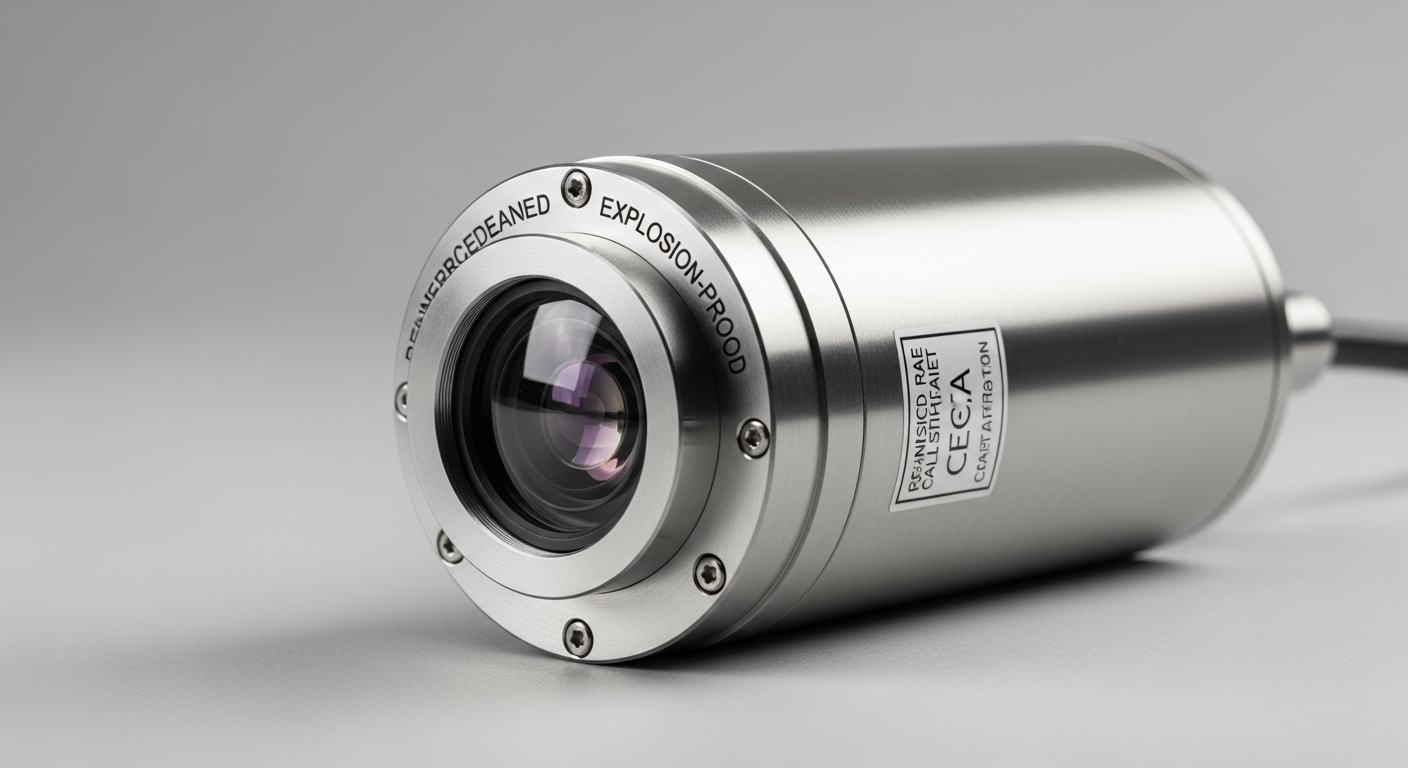
- Corrosion Resistance: The camera housing must be made from materials that resist saltwater corrosion. 316L stainless steel is the industry standard due to its superior resistance to chlorides, making it ideal for offshore and coastal installations.
- High Ingress Protection (IP) Rating: An IP rating indicates the level of protection against solids and liquids. For marine use, a rating of IP67 or, preferably, IP68 is essential. IP68 signifies the unit is completely dust-tight and can withstand continuous immersion in water.
- Advanced Pan-Tilt-Zoom (PTZ) Capabilities: The ability to remotely pan, tilt, and zoom is crucial for monitoring large areas like a vessel deck or a refinery perimeter. Look for smooth, precise controls, high optical zoom levels (e.g., 30x or more), and programmable presets for efficient surveillance.
- Low-Light and Thermal Performance: Marine operations run 24/7, often in poor visibility. Cameras equipped with powerful infrared (IR) illuminators for night vision or thermal imaging capabilities are necessary for detecting threats or monitoring processes in complete darkness or fog.
Installation and Maintenance Best Practices
Proper installation and regular maintenance are critical for the long-term reliability and safety of the surveillance system. To ensure compliance and performance in hazardous marine settings, it’s essential to follow all manufacturer guidelines and industry standards.
- Secure Mounting and Cabling: The camera must be securely mounted to withstand vibrations from machinery and heavy seas. Use appropriate explosion-proof cable glands and conduit to protect wiring from environmental damage and to maintain the integrity of the explosion-proof enclosure.
- Power and Network Connectivity: Power over Ethernet (PoE) can simplify installation by running power and data over a single cable. Ensure all network components, including switches and injectors located within the hazardous area, are also appropriately certified.
- Regular Inspection and Cleaning: Schedule routine inspections to check for signs of corrosion, damage to the enclosure, or loose fittings. The camera’s lens window should be cleaned regularly to remove salt residue and grime, which can obscure the view and reduce image quality.
- Firmware and Software Updates: Keep the camera’s firmware and the video management system (VMS) software updated. These updates often include critical security patches and performance improvements to protect your network and enhance camera functionality.
Recommended Products for Marine Environments
The following products from our catalog are certified for use in hazardous areas and directly relevant to this guide:
| Product Category | Rating / Certification | Link |
|---|---|---|
| Explosion Proof CCTV Cameras | ATEX Zone 1 / IECEx | Shop Now |
| Cameras for Class/Division & Zone Areas | Class/Division & ATEX/IECEx Zone | Shop Now |
Shop Certified Explosion Proof Cameras
Our extensive catalog features ATEX and IECEx certified cameras built to withstand the harshest industrial and marine conditions.
Frequently Asked Questions
What makes a PTZ camera ‘explosion proof’?
An explosion-proof camera is housed in an enclosure constructed to contain an explosion originating within the housing. This prevents sparks or flames from escaping and igniting flammable gases, dust, or fibers in the surrounding environment. The construction must meet strict standards like ATEX and IECEx.
Why is 316L stainless steel important for marine environment cameras?
316L stainless steel contains molybdenum, which significantly enhances its resistance to corrosion, particularly from chlorides found in saltwater and sea spray. This makes it the ideal material for equipment deployed in offshore, marine, and coastal locations, preventing rapid degradation and ensuring a long service life.
What is the difference between ATEX and IECEx certification for cameras?
ATEX is a mandatory legal requirement for equipment sold within the European Union, while IECEx is an international certification system accepted in many countries worldwide. While their technical standards are very similar, ATEX is law-based and IECEx is standards-based, often simplifying global compliance.
Can explosion proof cameras be used in non-hazardous areas?
Yes, they can be. While they are designed for hazardous locations, their durable construction also makes them suitable for any harsh industrial environment where a rugged camera is needed, even if there is no risk of explosion. However, they are typically more expensive than non-certified industrial cameras.
How do I choose the right optical zoom for a marine PTZ camera?
The required optical zoom depends on the distance you need to monitor. For large areas like a ship’s deck or a port facility, a higher optical zoom (e.g., 30x or 36x) is necessary to identify details and read text from a significant distance. Assess your site’s specific surveillance needs to determine the appropriate zoom level.
Chat for a Quote Call: 832-699-6726
Selecting the right surveillance equipment for marine and offshore applications comes down to three things: certification, materials, and capability. Prioritize cameras with internationally recognized certifications like ATEX and IECEx. Ensure the construction uses corrosion-resistant materials like 316L stainless steel and has a high IP rating. Finally, verify that the PTZ and imaging functions meet your site’s specific operational needs. Investing in a properly certified, purpose-built device is a critical step for achieving effective monitoring and protecting personnel and assets in hazardous environments.