Intrinsically Safe Knowledge Base
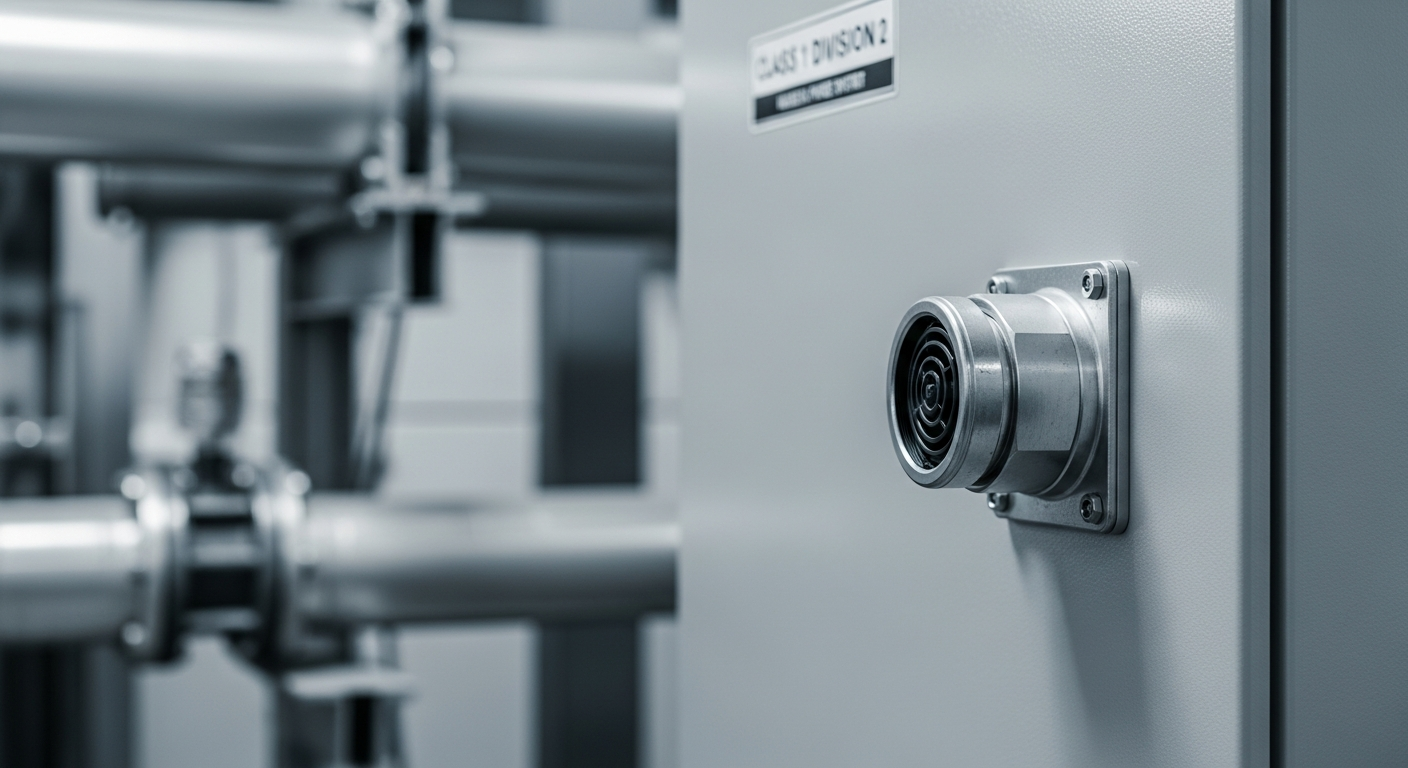
Ventilation Requirements for Class 1 Division 2 Enclosures
When it comes to hazardous environments, safety is paramount, and proper ventilation is crucial. This is where the Intrinsically Safe Store comes into play. As a leading provider of safety equipment and solutions, we understand the importance of adhering to safety standards, particularly when dealing with Class 1 Division 2 equipment. We invite you to explore our wide range of certified safety products and solutions.
Why Proper Ventilation is Non-Negotiable in Class 1 Division 2 Areas
Understanding the Risks: Heat Buildup and Flammable Atmospheres
In hazardous locations, the dual threat of heat buildup from operational equipment and the potential presence of flammable gases or vapors creates a high-risk scenario. Electrical components naturally generate heat, and without adequate dissipation, this heat can raise the internal temperature of an enclosure to dangerous levels. This not only degrades sensitive electronics, leading to premature failure, but also increases the risk of igniting a flammable atmosphere that could leak into the area.

Defining the Class 1 Division 2 (C1D2) Environment
A Class 1 Division 2 (C1D2) location is an area where flammable gases, vapors, or liquids are present but are normally confined within closed containers or systems. They may only escape and create a hazardous atmosphere under abnormal conditions, such as an accidental rupture or breakdown of a container. These environments are common in industries like oil and gas, chemical processing, and pharmaceuticals, where precise control and safety are essential.
The Dangers of Using Uncertified Cooling Equipment
Introducing standard, uncertified cooling equipment like a common fan or air conditioner into a C1D2 area is extremely dangerous. These devices contain components—such as motors, switches, and relays—that can create arcs or sparks during normal operation. In a C1D2 environment, even a small spark can be an ignition source for a flammable atmosphere, potentially causing a catastrophic explosion or fire. Therefore, only equipment specifically certified for Class 1 Division 2 use is permitted.
What Are the Ventilation Requirements for a Class 1 Div 2 Location?
Key Standards from the NEC and NFPA for Hazardous Locations
Compliance in hazardous locations is governed by strict standards. The National Electrical Code (NEC), particularly Articles 500-505, and the National Fire Protection Association (NFPA) provide the foundational requirements. NEC Articles 500-505 establish the framework for classifying hazardous locations into Classes, Divisions, and Groups based on the properties of the flammable substances present. Standards like NFPA 496 (Standard for Purged and Pressurized Enclosures for Electrical Equipment) and NFPA 497 (Recommended Practice for the Classification of Flammable Liquids, Gases, or Vapors) dictate the approved methods for ventilation, purging, and pressurization to prevent ignition of flammable substances.
Methods of Ventilation: Dilution, Pressurization, and Purging
Several approved methods can be used to maintain a safe atmosphere within a C1D2 enclosure. The selection depends on the specific application, the nature of the hazard, and the equipment being protected.
- Dilution Ventilation: This method involves introducing a continuous flow of fresh air to dilute the concentration of flammable gases to a level well below their Lower Flammable Limit (LFL), often specified as 25% of the LFL or less per industry standards (e.g., NFPA 69). It is a common strategy for large, open areas but requires careful calculation to ensure the dilution is effective under all operating conditions.
- Pressurization (Type Z): For enclosures, Type Z pressurization is a highly effective method. It involves maintaining a positive pressure of clean air or inert gas inside the enclosure relative to the surrounding hazardous atmosphere. This pressure differential physically prevents flammable gases from entering the enclosure and coming into contact with internal components that could be an ignition source.
- Purging: This is a preliminary step used with pressurization. Before energizing the equipment inside an enclosure, a specific volume of protective gas, as required by NFPA 496 (typically 4-10 times the enclosure volume depending on the internal components), is passed through it to flush out any flammable substances that may have accumulated while the equipment was powered down. Once the purge cycle is complete, the pressurization system maintains positive pressure during operation.
Calculating Required Air Changes Per Hour (ACH) for Compliance
A key compliance metric is the number of Air Changes Per Hour (ACH). This calculation determines how many times the volume of air within an enclosure or room must be replaced each hour to effectively dilute potential contaminants. The required ACH depends on factors like the enclosure size, the rate of potential gas release, and the type of flammable substance. Engineering calculations based on NFPA and IEC guidelines are necessary to determine the precise ACH to ensure safety and maintain a non-hazardous atmosphere within the space.
Components of a Compliant C1D2 Ventilation System
A compliant ventilation system is more than just a fan. It is an engineered solution comprising several critical components designed to work together to ensure safety and reliability in hazardous environments.
Certified Ventilation Fans and Blowers
The heart of any ventilation system is the fan or blower. For C1D2 areas, these must be specifically designed to be non-sparking. This involves using materials like aluminum or bronze for the blades and housing to prevent frictional sparks, and utilizing motors that are totally enclosed and rated for the hazardous location.
Airflow Monitoring and Alarms
Simply moving air is not enough; compliance requires verification. C1D2 ventilation systems must include sensors to monitor airflow or pressure. These sensors are tied to a control system that will trigger an alarm or automatically de-energize the equipment inside the enclosure if the ventilation fails, preventing the buildup of a hazardous atmosphere during an unprotected state.
Using Enclosure Air Conditioners for Targeted C1D2 Cooling
How a Class 1 Div 2 Enclosure Air Conditioner is Designed for Safety
A Class 1 Div 2 enclosure air conditioner is engineered from the ground up to operate safely in hazardous environments. Unlike standard AC units, every component that could potentially create a spark is sealed, contained, or designed to be non-arcing. The entire system is built to prevent the internal electronics from igniting any external flammable atmosphere, ensuring safe and reliable cooling for critical equipment.
Key Features: Explosion-Proof Components and Certified Construction
Key safety features of C1D2 air conditioners include hermetically sealed compressors, encapsulated relays, and brushless fan motors. The wiring is protected in rigid conduits, and all electronic controls are housed in explosion-proof enclosures. The unit’s construction is certified by recognized bodies like UL or CSA to meet the stringent requirements of the NEC for Class 1 Division 2 locations.
Benefits of Using a Certified AC Unit vs. General Ventilation
While general ventilation helps dilute hazardous gases in a room, a certified enclosure air conditioner provides a superior, targeted solution. It creates a closed-loop cooling system that protects sensitive electronics from both overheating and external contaminants like dust and moisture. This direct cooling is more efficient and reliable for maintaining optimal operating temperatures for control panels and equipment, ensuring longevity and preventing heat-related shutdowns, all while guaranteeing compliance.
Case Study: The Importance of Proper Ventilation
A case study highlighting the importance of proper airflow is the 2005 Texas City Refinery explosion. They attributed the incident, which resulted in 15 deaths and over 170 injuries, to a lack of adequate ventilation in a Class 1 Division 2 enclosure. This tragic event underscores the critical role of airflow in maintaining safety in hazardous environments.
How to Select the Right C1D2 Enclosure Air Conditioner
Calculating Your Enclosure’s BTU Cooling Requirements
Proper sizing is critical for effective cooling. To select the right AC unit, you must calculate the total heat load, measured in BTU/hr. This involves summing the heat generated by the equipment inside the enclosure and the heat gained from the external environment (solar load and ambient temperature). Online calculators and manufacturer guidelines can help you determine the precise BTU rating needed for your specific application.
Comparing NEC, ATEX, and IECEx Certification Standards
While NEC (Class/Division) is the primary standard in North America, projects elsewhere may require compliance with ATEX (Europe) or IECEx (International) standards. While their goals are similar, the classification systems and testing requirements differ. It is essential to choose an air conditioner certified for the specific jurisdiction where it will be installed to ensure full regulatory compliance.
Key Considerations: Mounting, Power Supply, and Maintenance
Beyond BTUs and certifications, consider practical factors. How will the unit be mounted—on the side, top, or door of the enclosure? Ensure you have the correct voltage and phase for your power supply. Finally, consider long-term maintenance. Look for units with easy-to-access filters and durable components to minimize downtime and ensure reliable operation for years to come.
Frequently Asked Questions about C1D2 Ventilation
What is the main difference between a Class 1 Div 1 and Div 2 air conditioner?
The primary difference lies in the expected operating conditions. A Class 1 Div 1 air conditioner is designed for areas where hazardous atmospheres are present continuously or for long periods under normal operating conditions. Therefore, its construction is fully explosion-proof. A Div 2 unit is for areas where hazardous atmospheres are present only under abnormal conditions (e.g., a leak), so its safety features focus on being non-sparking during normal operation.
Can I use a C1D2 certified fan instead of an air conditioner?
A C1D2 certified fan can help with general air circulation and dilution ventilation, but it cannot cool the air below the ambient temperature. If the heat generated inside your enclosure is significant, a fan alone will be insufficient to protect sensitive electronics from overheating. An air conditioner is necessary for active cooling and temperature control.
How often should hazardous area ventilation systems be inspected?
Inspection frequency depends on the specific equipment and facility protocols, but NFPA guidelines generally recommend a regular, documented maintenance schedule. This typically includes periodic checks of filters, fan operation, ductwork integrity, and control systems to ensure the ventilation system is functioning as designed and providing the required level of protection.
Importance of Proper Ventilation in Class 1 Division 2 Enclosures
Proper ventilation in Class 1 Division 2 enclosures is crucial to prevent the accumulation of flammable substances and ensure safety. It requires continuous operation, adequate airflow, and proper exhaust. The tragic Texas City Refinery explosion serves as a stark reminder of the importance of adhering to these requirements. When choosing an airflow system, consider the type of flammable substances, the size of the enclosure, and the environmental conditions. For more information and assistance in selecting the right C1D2 ventilation system for your facility, talk to a hazardous area ventilation specialist at the Intrinsically Safe Store.