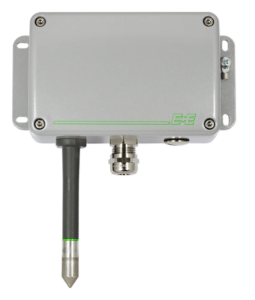
Intrinsically Safe Humidity and Temperature Transmitters
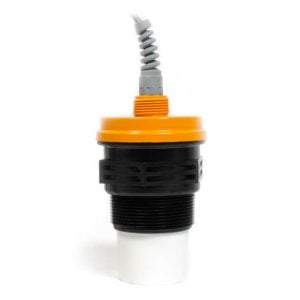
APG LPU-2428 Ultrasonic Level Transmitter
Zone 0
$1,216.94In Stock


Your Global Authority In Hazardous Areas
Accurate and reliable monitoring of relative humidity and temperature is essential for process safety, quality control, and operational efficiency in hazardous locations. Intrinsically safe humidity and temperature transmitters are specifically engineered to perform this critical function by limiting electrical and thermal energy to levels incapable of igniting flammable gases, vapors, or dusts. As an instrumentation and controls professional, selecting the correct transmitter is a crucial decision that requires a detailed analysis of your specific operational environment and safety requirements.
The environmental challenges in a chemical processing facility are vastly different from those in a grain storage silo, and your transmitter choice must reflect this. Each environment presents unique risks that demand specific design features and certifications.
Evaluating a transmitter’s technical specifications is paramount to ensuring it meets your process control and safety needs. Focus on these three critical parameters:
Our curated selection of intrinsically safe humidity and temperature transmitters provides solutions for a wide array of hazardous area applications. In this category, you will find robust devices featuring combined RH and temperature sensors in a single unit, minimizing installation complexity. We offer models with industry-standard 4-20mA loop-powered outputs for seamless integration with your existing PLC or DCS systems. Choose from various mounting configurations, including wall-mount, duct-mount, and remote sensor probes, to suit your specific installation point. Each product is built with durable housing materials and is fully certified for use in designated explosive atmospheres.
Navigating the complexities of hazardous area classifications and product specifications can be challenging. Our team of instrumentation specialists is here to help. We possess deep technical knowledge of intrinsic safety principles and can assist you in selecting the ideal transmitter that not only meets your performance criteria but also ensures full compliance with your site’s safety standards. Contact us today for a consultation to guarantee you find the right solution for your critical application.
Intrinsic Safety (IS) is a protection technique that limits the electrical and thermal energy in a circuit to a level below what can ignite a specific hazardous atmosphere. This means the equipment is safe even during fault conditions. Explosion Proof (XP) enclosures, conversely, are built to contain an internal explosion and cool escaping gases to prevent ignition of the external hazardous atmosphere. Intrinsically Safe systems are often preferred for instrumentation as they are typically lighter, less expensive to install (no heavy conduit required), and allow for live maintenance without a hot work permit.
The certification markings provide critical safety information. For example, a marking like ‘Ex ia IIC T4 Ga’ breaks down as follows: ‘Ex’ signifies it is certified for explosive atmospheres. ‘ia’ is the protection method, meaning Intrinsically Safe with tolerance for up to two faults. ‘IIC’ is the gas group, indicating it’s suitable for the most volatile gases like hydrogen and acetylene. ‘T4’ is the temperature class, meaning the maximum surface temperature will not exceed 135°C. ‘Ga’ is the Equipment Protection Level (EPL), signifying it is suitable for use in Zone 0, the most hazardous location.
Intrinsically safe transmitters typically use a standard 2-wire, 4-20mA loop-powered output. The transmitter is installed in the classified hazardous area (e.g., Zone 0, 1, or 2), and its wiring is routed to a safe area through an approved Intrinsically Safe barrier or isolator. This barrier is a critical component that limits the voltage and current sent into the hazardous area, ensuring the entire loop remains non-incendive. The safe-area side of the barrier then provides a standard 4-20mA signal that can be directly connected to the input card of your PLC, DCS, or other control system.
For applications in chemically aggressive environments, material selection is paramount. Look for transmitters with housings made from 316L stainless steel for broad chemical resistance. For the sensor element itself, options include specialized protective coatings that shield the sensor from corrosive vapors without impeding measurement accuracy. Additionally, sintered stainless steel or PEEK filters can be fitted to the probe to protect against dust, particulates, and high-velocity gas flows while still allowing ambient air to reach the sensing element.
Yes. Many modern intrinsically safe transmitters are combination units designed for efficiency. They integrate both a high-accuracy Relative Humidity (RH) sensor and a precision temperature sensor (like a Pt100 RTD) into a single probe and housing. These devices typically provide two independent 4-20mA output signals—one corresponding to the humidity reading and the other to the temperature reading. This dual-output design simplifies installation, reduces wiring complexity, and provides comprehensive data for precise environmental control and safety monitoring in hazardous locations.
Your cart is empty.