No Image
Explosion Proof Air Conditioners
ATEXXO Explosion Proof Air Conditioner – ATEX Zone 2 - Split Units - 24,000 BTU / Hr
$16,515.06In Stock


Your Global Authority In Hazardous Areas
Safety specifications not available for this product
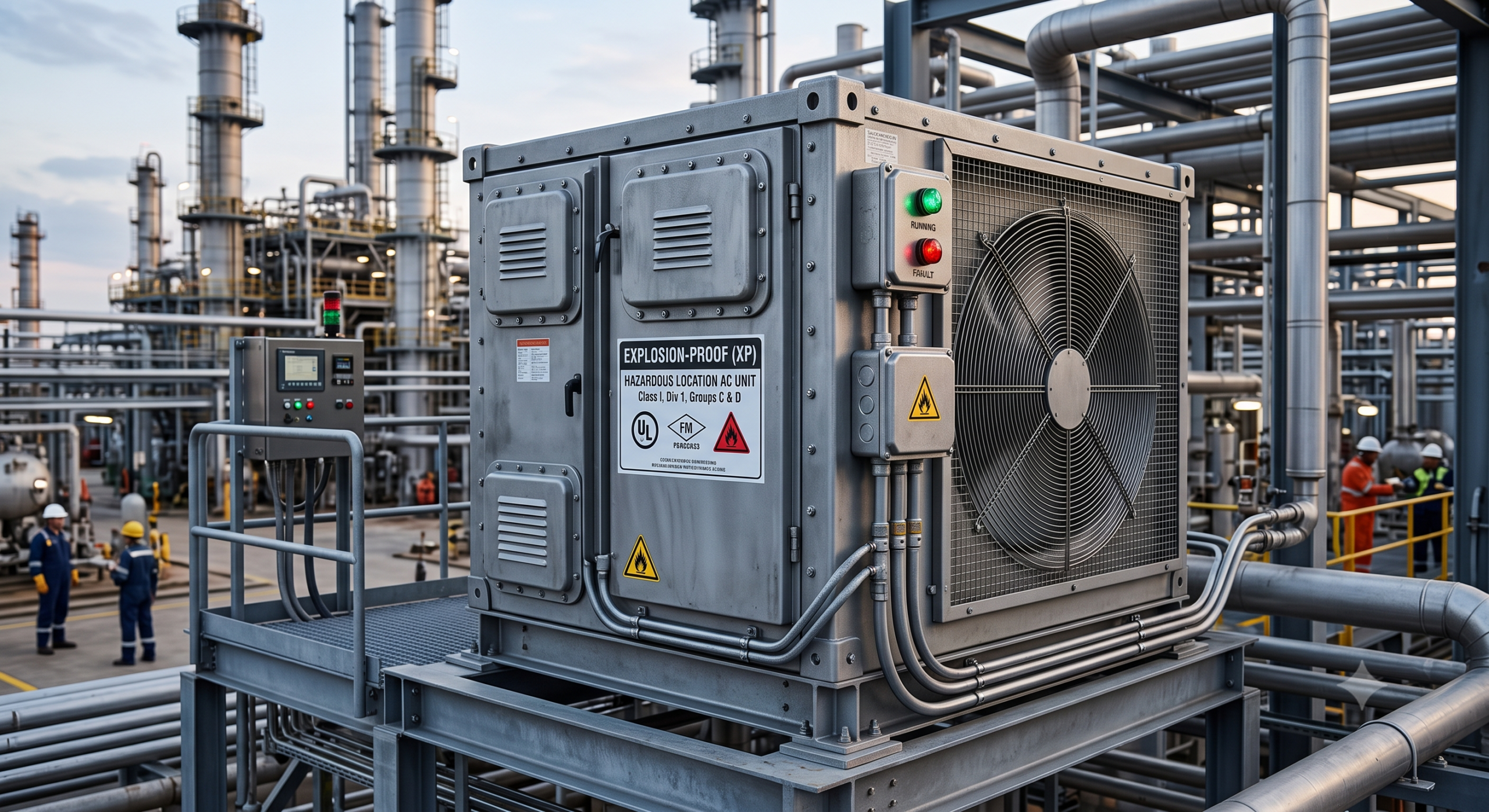
Engineered for harsh and hazardous environments like oil refineries and chemical plants, this heavy-duty explosion-proof air conditioner combines robust containment engineering with intrinsically safe control circuits to deliver reliable, high-capacity cooling. It is fully customizable to meet strict NEC, ATEX, and IECEx hazardous area classifications, protecting both your personnel and facility compliance.
Use the questionnaire below and provide as much information as possible to receive a quote.
| Country of Origin | United States (US) |
This Hazardous Area Air Conditioning system is engineered specifically for volatile environments—such as oil refineries, chemical plants, and grain silos. In these environments, flammable gases, vapors, or combustible dust pose a constant risk of ignition.
For those seeking guidance on making the right choice, this intrinsically-safe-air-conditioner-selection-guide will help you ensure safety and compliance in hazardous locations. If you are looking for specific advice, the Explosion-Proof -air-conditioner-selection-guide is here to assist. It helps with selecting the proper unit for your needs.
By combining a heavy-duty explosion-proof (XP) containment enclosure for high-power components with intrinsically safe (IS) control circuits, this system ensures safe, reliable climate control. Additionally, it does so without compromising on cooling performance.
Designed to deliver robust performance and technical reliability in the field, this climate control system handles severe thermal loads. Furthermore, it handles high ambient temperatures.
Hazardous Area AC_Questionnaire>
✅ Certification: Configurable for NEC 500 (Class I/II, Div 1/2) and NEC 505 / ATEX / IECEx (Zone 1, 2, 21, 22)
✅ Control System: Intrinsically safe low-voltage digital thermostat and remote control interface [cite: 5, 20]
✅ IP/NEMA Ratings: Available in NEMA 4X/IP66 (corrosion-proof/watertight), NEMA 4/IP65, or NEMA 3R/IP54
✅ Connectivity: Integrated wiring for remote control interface and localized digital sensors [cite: 7, 20]
✅ Component Engineering: Heavy-duty compressors and fan motors encased in robust aluminum or cast-iron housings
✅ Thermal Management: Supports high internal heat dissipation from electronics/VFDs up to over 3,000 Watts
✅ Power Levels: Built to handle high-voltage industrial power configurations (115V to 575V, Single or Three-Phase)
✅ Corrosion Protection: Optional Heresite, Blygold, or Epoxy E-Coat protective coil coatings
✅ Physical Configuration: Available in Wall Mount, Roof Mount, Split System, or Ductless Mini-Split
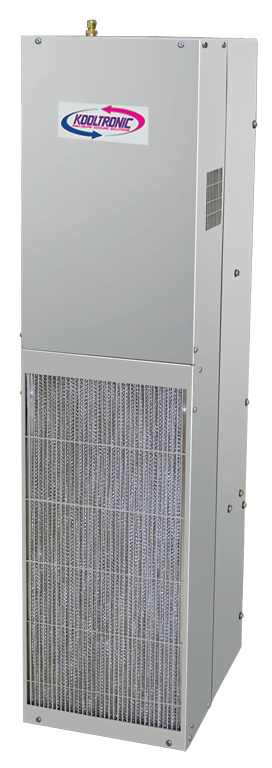
🔹 Wall Mount / Roof Mount Pack: Complete single-enclosure exterior side-mount or rooftop HVAC system
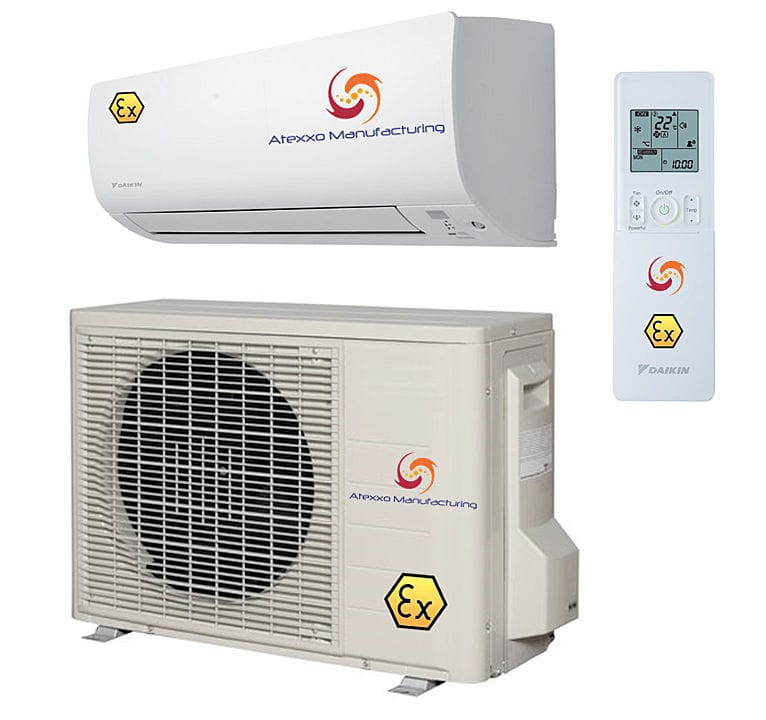
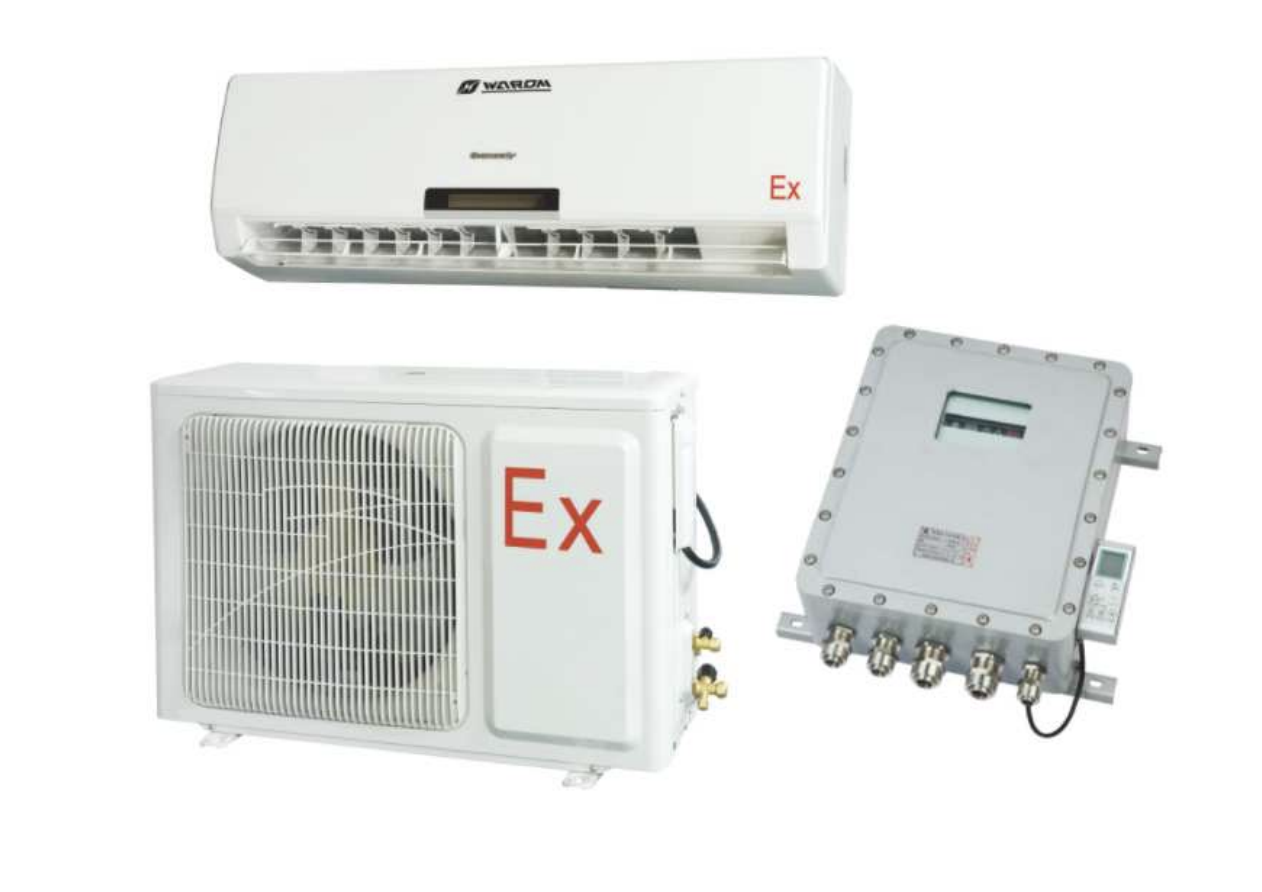
🔹 Split System Pack: Remote condenser unit paired with an indoor evaporator unit
🔹 Ductless Mini-Split Pack: Zone-specific indoor evaporator unit with an outdoor condenser
🔹 Custom Marine/Offshore Pack: Includes 316 Stainless Steel housing and specialized anti-salinity coil coatings
| Feature | Details |
|---|---|
| Safety Philosophy | Explosion-Proof (XP) containment for high-power elements; Intrinsically Safe (IS) for controls |
| Area Classification | NEC 500 (Class I/II, Div 1/2) & NEC 505 ATEX / IECEx (Zone 1, 2, 21, 22) |
| Gas & Dust Groups | Groups A, B, C, D / IIC, IIB, IIA Dust Groups E, F, G / IIIA, IIIB, IIIC |
| Temperature Class | T3 (≤200°C), T3A/B/C, T4 (≤135°C), or T5 (≤100°C) |
| Cooling Capacity | 6,000 to >60,000 BTU/hr (0.5 to 5.0+ Tons) |
| Mounting Configurations | Wall Mount, Roof Mount, Split System, or Ductless Mini-Split |
| Housing Materials | 316 Stainless Steel, 304 Stainless Steel, Powder-Coated Carbon Steel |
| Coil Protection Coatings | Factory Standard Copper/Aluminum, Heresite, Blygold, or Epoxy E-Coat |
| Ingress Protection Rating | NEMA 4X/IP66 (Corrosion-proof/Watertight), NEMA 4/IP65, or NEMA 3R/IP54 |
| Supply Voltage Options | 115V Single-Phase, 230V Single/Three-Phase, 460V/480V Three-Phase, 575V Three-Phase |
| Line Frequency | 60 Hz (North America) 50 Hz (Europe / Middle East / Asia) |
| System Options | Fresh Air Purge and Pressurization, Internal Heat Dissipation up to >3,000W |
🔗 NEC 500 Division System – Covers Class I (Groups A, B, C, D) and Class II (Groups E, F, G) Division 1 & 2 environments
🔗 ATEX / IECEx / NEC 505 Zone System – Certified for Zone 1, Zone 2, Zone 21, and Zone 22 gas and dust hazards
🔗 Surface Temperature T-Rating – Compliant with T3 (≤200°C), T4 (≤135°C), or T5 (≤100°C) standards
🔗 Ingress Protection – Certified ratings up to NEMA 4X / IP66 for extreme dust and water protection
🔹 Oil & Gas
🔹 Chemical Plants
🔹 Mining
🔹 Labs
🔹 Manufacturing
📦 1x Heavy-Duty Explosion-Proof Air Conditioner Enclosure (or Condenser/Evaporator for Split Systems)
📦 1x Intrinsically Safe Digital Thermostat / Control Interface
📦 1x Mounting Hardware Kit (Wall, Roof, or Split Bracket options)
📦 Lead Time: Built to order; typical engineering and assembly lead time is 4–6 weeks.
📍 Shipping Terms: Worldwide / Freight Forwarding & Expedited Options Available
💳 Payment Options: Credit Card, PayPal, Net 30 Terms
Can an entire industrial air conditioner be 100% Intrinsically Safe (IS)?
No. Because running heavy compressors and large fans requires high voltage and high power, a whole-room AC cannot be entirely intrinsically safe. Instead, the system utilizes an Explosion-Proof enclosure to safely contain high-power components. At the same time, it utilizes Intrinsically Safe technology for its control panels, thermostats, and sensors.
What is the difference between prevention and containment in these systems?
Intrinsically safe components rely on prevention by limiting electrical energy so sparks cannot form. Explosion-proof components rely on containment. They assume an internal spark will happen but safely contain the mini-explosion within a heavy-duty housing. Meanwhile, they cool escaping gases through specialized flame paths.
What kind of maintenance do explosion-proof air conditioners require?
They require strict maintenance. Because they rely on tight joints and heavy-duty casings to contain internal explosions, a single loose bolt or scratched joint can ruin the explosion-proof protection entirely.
Why does the Intrinsically Safe Store require site classification data before finalizing an order?
Safety is life-or-death in hazardous industrial environments. Verifying the exact area classification, gas/dust groups, and environmental conditions ensures the equipment matches your facility's precise regulatory compliance. In addition, it matches your protection needs.
No reviews yet — be the first to review this product.
Your cart is empty.