Intrinsically Safe Products
Class 1 Div 1 Junction Box Sizing Guide [2026]
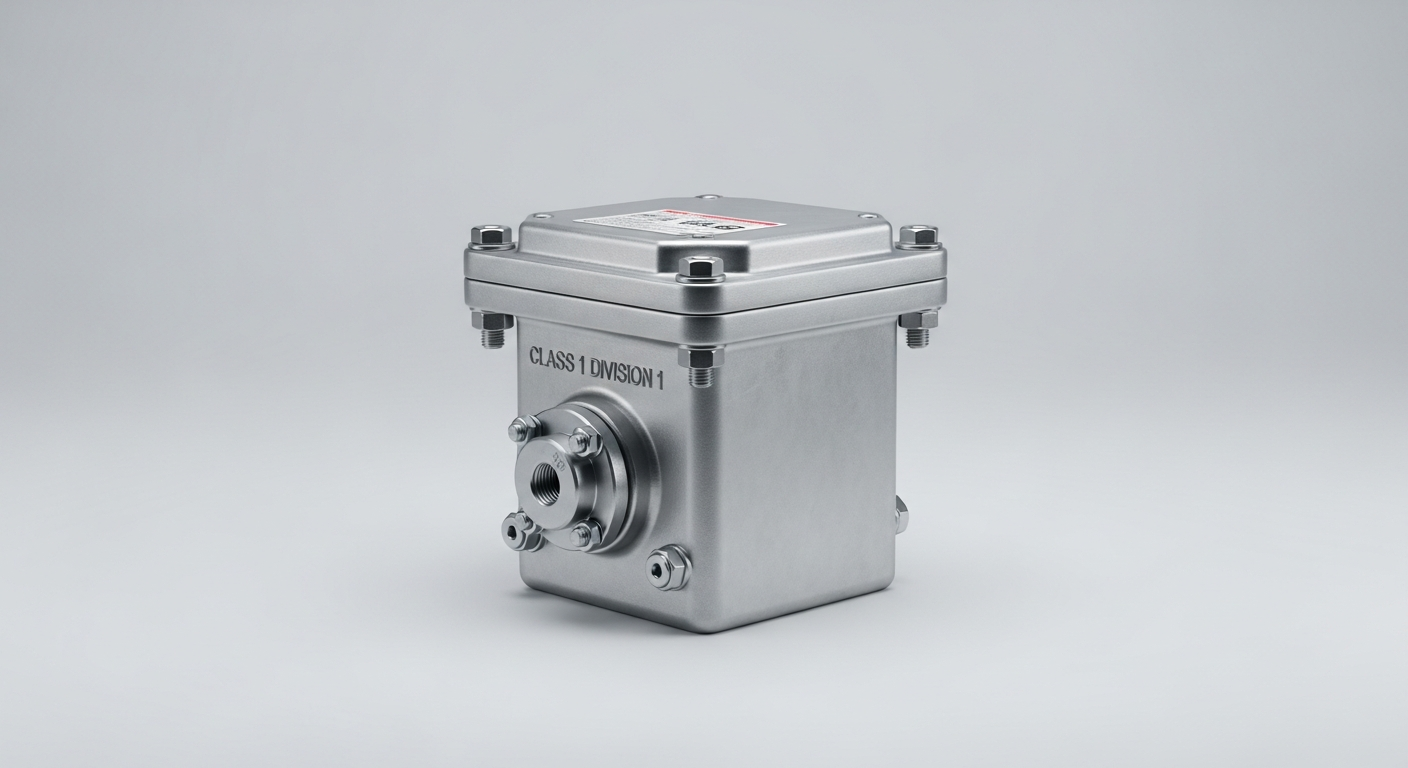
Properly sizing a junction box for a Class 1 Division 1 environment is not just a matter of fitting components; it’s a critical safety and compliance requirement mandated by national electrical codes. Selecting an enclosure that is too small can lead to overheating, difficult maintenance, and a catastrophic failure of the containment system designed to prevent explosions. This comprehensive class 1 div 1 junction box sizing guide provides engineers and technicians with the technical framework needed to accurately calculate enclosure volume, select appropriate components, and ensure full compliance with hazardous location standards. By following a systematic approach, you can guarantee the integrity of your electrical installations, protecting both personnel and valuable assets from the inherent risks of flammable gases, vapors, and liquids.

Managing All Equipment in Hazardous Locations
While correctly sized junction boxes are fundamental for electrical safety, other systems like ventilation are equally crucial for mitigating risks. Learn about certified solutions for air movement in hazardous areas.
Understanding the NEC Framework for Junction Box Sizing
The primary authority governing the installation of electrical equipment in hazardous locations within the United States is the National Electrical Code (NEC), specifically NFPA 70 Article 501 for Class I locations. This article provides detailed requirements for wiring methods and materials to ensure that electrical systems do not become an ignition source. When it comes to junction box sizing, the principles of NEC Article 314, which covers outlet, device, pull, and junction boxes, are applied with additional, more stringent requirements for explosion-proof enclosures. The core concept is volume calculation. The total internal volume of the junction box must be sufficient to accommodate all conductors, devices, and fittings without exceeding a specified percentage of fill. For an explosion-proof box, this isn’t just about preventing overheating; it’s about ensuring there is enough free volume for hot gases from an internal explosion to cool down as they escape through the flame paths, preventing the ignition of the surrounding hazardous atmosphere.
Key Factors Influencing Junction Box Size
Selecting the correct size for a Class 1 Div 1 junction box requires a detailed analysis of several factors beyond just the physical dimensions of the enclosure. Each element contributes to the total required volume and impacts the long-term safety and serviceability of the installation.
- Conductor Count and Size: The number and gauge (AWG) of the conductors passing through or terminating within the box are the most significant factors. Larger conductors occupy more volume, and the NEC provides specific volume allowances (in cubic inches or cm³) for each conductor size that must be summed up.
- Internal Devices and Components: Any device housed within the box, such as terminal blocks, switches, or small power supplies, must be accounted for. The physical dimensions of these components directly subtract from the available free space and must be included in the total volume calculation.
- Cable Entry and Gland Requirements: The type and number of conduit entries or cable glands affect both the internal space and the external mounting footprint. Each entry point requires adequate clearance for installation and maintenance, and the glands themselves may protrude into the usable internal volume.
- Future Expansion and Accessibility: Best practice dictates selecting a box that is at least 25% larger than the immediate calculated requirement. This foresight allows for future modifications or additions without needing to replace the entire enclosure, and provides technicians with adequate space to work safely and efficiently.
A Step-by-Step Sizing Calculation Guide
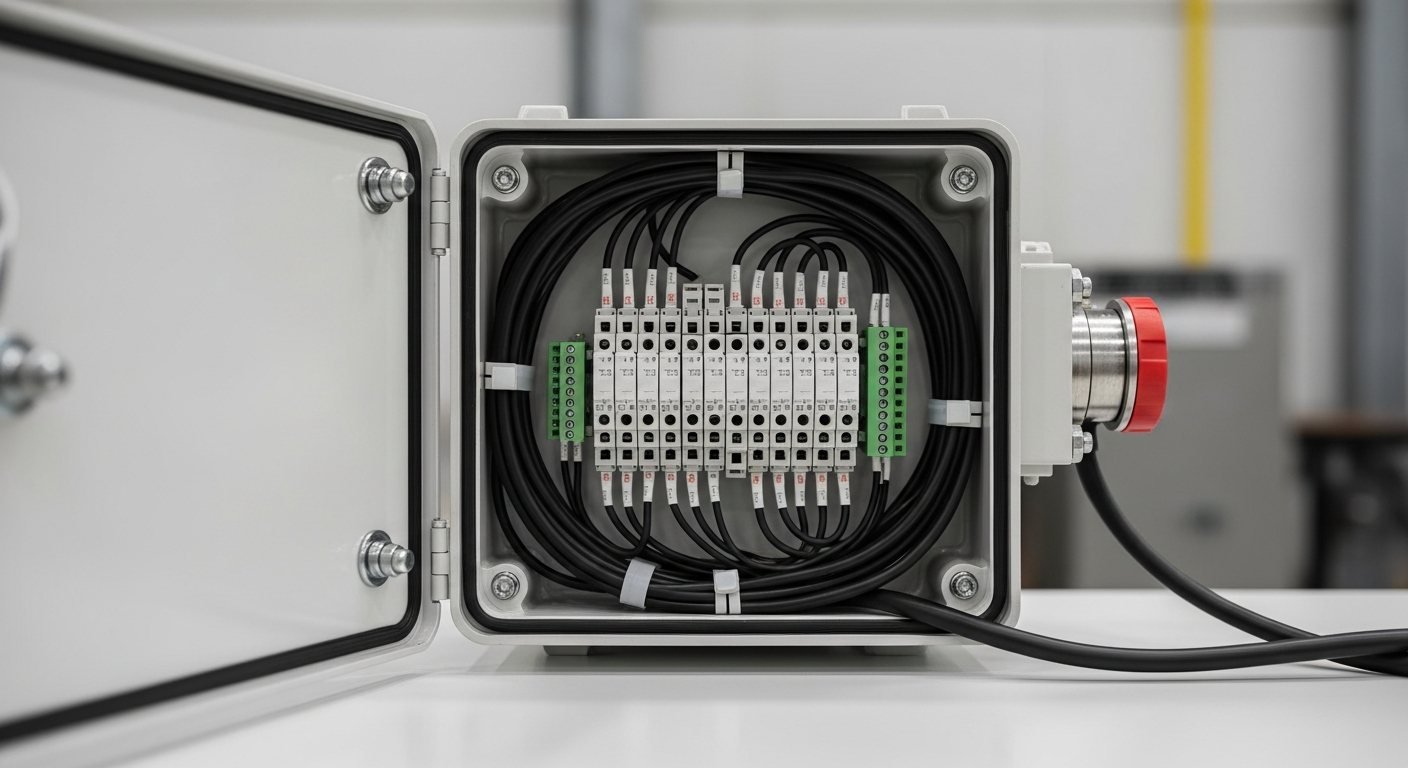
Following a structured process is the most effective way to ensure your junction box is sized correctly and meets all code requirements. This step-by-step method helps prevent miscalculations and ensures a safe, compliant installation.
- Identify All Conductors and Components: Create a comprehensive list of every item that will be inside the box. This includes all conductors (counting each one that passes through or terminates), internal cable clamps, support fittings, and any devices like switches or receptacles.
- Calculate Conductor Volume: Using NEC Table 314.16(B), find the volume requirement for each conductor based on its gauge. Multiply this value by the total number of conductors of that size. Sum the volumes for all different conductor sizes to get a total conductor volume.
- Account for Devices and Fittings: According to NEC rules, each yoke or strap containing a device (like a switch) counts as double the volume of the largest conductor connected to it. Internal clamps and support fittings also have volume allowances, typically equivalent to a single largest conductor. Sum these volumes.
- Determine Total Required Volume: Add the total conductor volume from Step 2 to the total device and fitting volume from Step 3. This sum represents the minimum required internal volume for your junction box in cubic inches or cubic centimeters.
- Select a Certified Enclosure: Review manufacturer datasheets for Class 1 Div 1 certified junction boxes. Choose a standard-sized box whose listed internal volume is greater than the total required volume calculated in Step 4. Always round up to the next available size and add a margin for future serviceability.
Recommended Products for Class 1 Div 1 Applications
The following products from our catalog are certified for use in hazardous areas and are directly relevant to this guide on junction box sizing:
| Product Category | Rating / Certification | Link |
|---|---|---|
| Class 1 Division 1 Junction Boxes | Class I Div 1, Groups B, C, D | Shop Now |
| Explosion Proof Junction Boxes | Varies (ATEX, IECEx, Class/Div) | Shop Now |
Shop Certified Class 1 Div 1 Junction Boxes
Our catalog features a wide range of certified junction boxes designed to meet stringent NEC standards and ensure the safety of your hazardous location.
Frequently Asked Questions
What is the primary purpose of a Class 1 Div 1 junction box?
A Class 1 Div 1 junction box is an explosion-proof enclosure designed to contain any sparks, arcs, or explosions originating from the electrical components inside. Its purpose is to prevent these internal events from igniting the flammable gases or vapors present in the surrounding hazardous atmosphere, thereby ensuring plant safety.
How do I calculate wire fill for a junction box?
You calculate wire fill by determining the volume of each conductor using NEC Table 314.16(B), then summing these volumes along with allowances for devices and fittings. This total calculated volume must be less than the rated internal volume of the junction box you select.
Can I drill my own conduit entries into an explosion-proof junction box?
No, you should never drill or modify a certified explosion-proof junction box. Field modifications void the certification and can compromise the enclosure’s ability to contain an explosion. All conduit entries must be factory-drilled and threaded to maintain the integrity of the flame path.
What is the difference between a NEMA 7 and a NEMA 9 enclosure?
A NEMA 7 enclosure is designed for indoor Class I (gases, vapors) hazardous locations and is explosion-proof. A NEMA 9 enclosure is designed for indoor Class II (combustible dusts) hazardous locations and is dust-ignition-proof. They are not interchangeable, as they are built to contain different types of explosive events.
Are all explosion-proof junction boxes suitable for Class 1 Div 1?
No, not all explosion-proof boxes are rated for Class 1 Div 1. The specific certification must be checked. An enclosure must be explicitly listed for Class I, Division 1, and also for the specific gas group (e.g., Group B for hydrogen, Group D for propane) present in the environment.
Chat for a Quote Call: 832-699-6726
Conclusion
Accurate junction box sizing is a foundational element of electrical safety in Class 1 Division 1 hazardous locations. It is a process governed by strict code requirements that leave no room for error. The three key takeaways for any engineer or installer are: always adhere to NEC calculations for volume, account for every single conductor and component, and select a certified enclosure that provides a margin of safety for future work. Rushing this process or using an undersized box can invalidate certifications and create a significant safety hazard. By following a methodical approach, you ensure your installations are not only compliant but also robust and maintainable for the long term, which is the ultimate goal of a proper class 1 div 1 junction box sizing guide.