Intrinsically Safe Knowledge Base
Hazardous Area Classification Chart (NEC & ATEX)
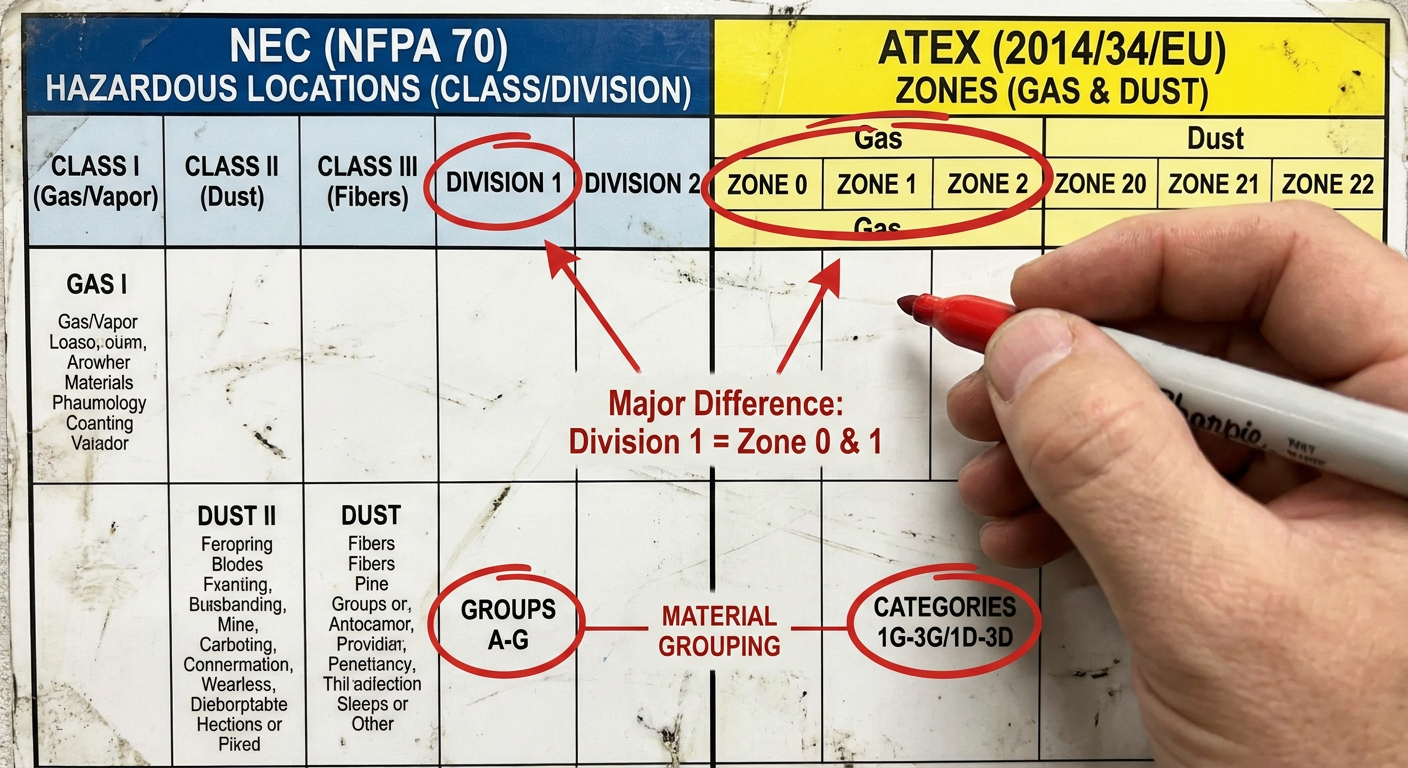
Understanding the nuances of hazardous area classifications is not just a matter of compliance, but of fundamental safety. A hazardous area classification chart provides a systematic way to identify and categorize environments where explosive or flammable materials are present. The primary goal is to prevent ignition by ensuring all equipment used in these zones is appropriately rated. For facilities in North America, this often means adhering to the National Electrical Code (NEC), while European and international standards typically follow ATEX and IECEx guidelines. This guide will help you interpret and apply these critical safety documents to ensure your facility meets all necessary requirements for operational safety and regulatory compliance.

Decoding the Hazardous Area Classification Chart
A hazardous area classification chart is a critical tool for ensuring safety in environments with flammable substances. These charts help in classifying hazardous locations into different categories based on the nature of the flammable material and the likelihood of its presence. As required by NFPA 70 Article 505, these classifications are essential for selecting the right electrical equipment that will not cause an explosion. The chart typically outlines the different classes, divisions, and groups for North American standards (NEC) and zones for international standards (ATEX/IECEx). Understanding this chart is the first step towards a robust safety strategy in any hazardous industrial setting.
Prepare for 2025: USA Intrinsically Safe Regulations
Ensure your facility stays ahead of the curve. Read our comprehensive breakdown of the upcoming 2025 USA regulatory changes for hazardous environments so you can maintain audit-ready compliance.
Key Elements of a Hazardous Area Classification Chart
To effectively use a hazardous area classification chart, it’s important to understand its key components:
- Classes: These define the type of hazardous material present. Class I is for flammable gases or vapors, Class II for combustible dust, and Class III for ignitable fibers or flyings.
- Divisions/Zones: These indicate the likelihood of the hazardous material being present. Division 1 (or Zone 0/1) means the hazard is present under normal operating conditions, while Division 2 (or Zone 2) means it’s only present in abnormal conditions.
- Groups: This is a further subdivision based on the specific properties of the hazardous material, such as its ignition temperature and explosion pressure. For example, Group A includes acetylene, which is highly explosive.
- Temperature Codes (T-Codes): These specify the maximum surface temperature a piece of equipment can reach, ensuring it remains below the auto-ignition temperature of the hazardous material.
NEC vs. ATEX/IECEx Classification Systems
While both NEC and ATEX/IECEx systems aim to prevent explosions, they have different approaches to classification:
- The NEC system uses Classes and Divisions, which is a more simplified approach.
- The ATEX/IECEx system uses Zones, which provides a more granular risk assessment.
- Equipment certified for one system is not automatically compliant with the other, so it’s crucial to know which standard applies to your facility.
Recommended Products for Hazardous Area Classification
The following products from our catalog are certified for use in hazardous areas and directly relevant to this guide:
| Product Category | Rating / Certification | Link |
|---|---|---|
| All Products | Class I Div 1 / ATEX Zone 1 / IECEx | Shop Now |
Chat for a Quote
Call: 832-699-6726
Frequently Asked Questions
What is a hazardous area classification chart?
A hazardous area classification chart is a document that categorizes areas with explosive or flammable materials based on the type and presence of the hazard. It’s a key tool for ensuring safety and compliance in industrial settings.
How do I read a hazardous area classification chart?
To read the chart, you need to understand the classes (type of material), divisions/zones (likelihood of presence), groups (specific properties of the material), and temperature codes (maximum equipment surface temperature).
What is the difference between NEC and ATEX?
The NEC (National Electrical Code) is the standard used in the United States, which uses a Class/Division system. ATEX is the European directive for equipment in hazardous areas, which uses a Zone system. They are not interchangeable.
Why is hazardous area classification important?
Proper classification is crucial for preventing explosions and fires in hazardous environments. It ensures that only appropriately certified equipment is used, minimizing the risk of ignition.
Where can I find the requirements for hazardous area classification?
The primary source for requirements in the U.S. is the NFPA 70 Article 505. For Europe and many other parts of the world, the ATEX directives and IEC 60079 series of standards are the main references.
Equip Your Zones with Certified Hardware
Sourcing the right tools for Class I, Division 1 or ATEX Zone 0 environments shouldn’t be a guessing game. Browse our complete inventory of rigorously tested, explosion-proof electronics engineered for highly volatile industrial conditions.
Conclusion
Navigating the complexities of hazardous area classifications is a critical responsibility for any facility manager or safety engineer. By understanding and correctly applying the hazardous area classification chart, you can significantly mitigate the risks of explosion and fire. The key takeaways are to identify the class, division/zone, and group of the hazardous materials in your facility, and to always select equipment that is certified for that specific environment. Ultimately, a thorough understanding of the hazardous area classification chart is fundamental to maintaining a safe and compliant operation.