Intrinsically Safe Knowledge Base
Explosion Proof vs Flameproof: The 2026 Expert Guide
Navigating the terminology for hazardous area equipment can be confusing, especially when encountering terms like explosion proof vs flameproof. While often used interchangeably in casual conversation, these terms define two distinct protection concepts rooted in different global regulatory systems. Understanding their precise meanings is not just an academic exercise; it is critical for ensuring site safety, maintaining regulatory compliance, and selecting the correct certified equipment for your specific hazardous environment. This guide will clarify the key distinctions, explain the underlying principles of each protection method, and help you identify the right solution based on the governing standards in your region, whether it’s the NEC in North America or ATEX/IECEx internationally.

Master Hazardous Area Classifications
Understanding explosion proof and flameproof concepts starts with knowing your environment. Our detailed guide breaks down NEC and ATEX/IECEx zones and divisions.
The Core Difference: Regional Standards and Terminology
The fundamental distinction between ‘explosion proof’ and ‘flameproof’ is geographical and regulatory. Both terms describe a method of protection known as ‘containment,’ but they originate from different standards bodies. ‘Explosion Proof’ is a term predominantly used in North America and is defined by the National Electrical Code (NEC) and standards from organizations like UL and CSA. In contrast, ‘Flameproof’ is the term used internationally, governed by the International Electrotechnical Commission (IEC) and adopted by regional standards like ATEX in Europe. The specific standard for flameproof enclosures is IEC 60079-1, which outlines the design, testing, and marking requirements for equipment with this type of protection, designated as ‘Ex d’. While the core principle is similar—containing an internal ignition—the specific constructional requirements, testing procedures, and certification markings differ significantly between the two systems. Choosing the wrong one can lead to non-compliance and compromise safety.
What Does Explosion Proof (XP) Mean?
Under the NEC (e.g., Articles 500-505), an explosion proof enclosure does not mean it is sealed to prevent flammable gases from entering. On the contrary, it assumes the hazardous atmosphere will penetrate the enclosure and that an internal ignition could occur. The design ensures that this event is safely contained. Key principles of explosion proof equipment include:
- Containment Strength: The enclosure must be robust enough to withstand the pressure of an internal explosion without rupturing or being permanently deformed. This involves thick walls and strong materials.
- No Flame Propagation: The joints, flanges, and threaded connections of the enclosure are engineered to act as ‘flamepaths’. These are carefully machined gaps that are long and narrow enough to cool any escaping hot gases from an internal explosion, preventing them from igniting the surrounding hazardous atmosphere.
- Safe External Surface Temperature: The equipment must operate at a surface temperature that is below the auto-ignition temperature of the specific gases or dusts present in the hazardous location.
- Rigorous Testing: To earn the ‘Explosion Proof’ certification, prototypes are subjected to destructive testing, including internal explosions with specific gas mixtures, to verify their containment capabilities according to standards like UL 1203.
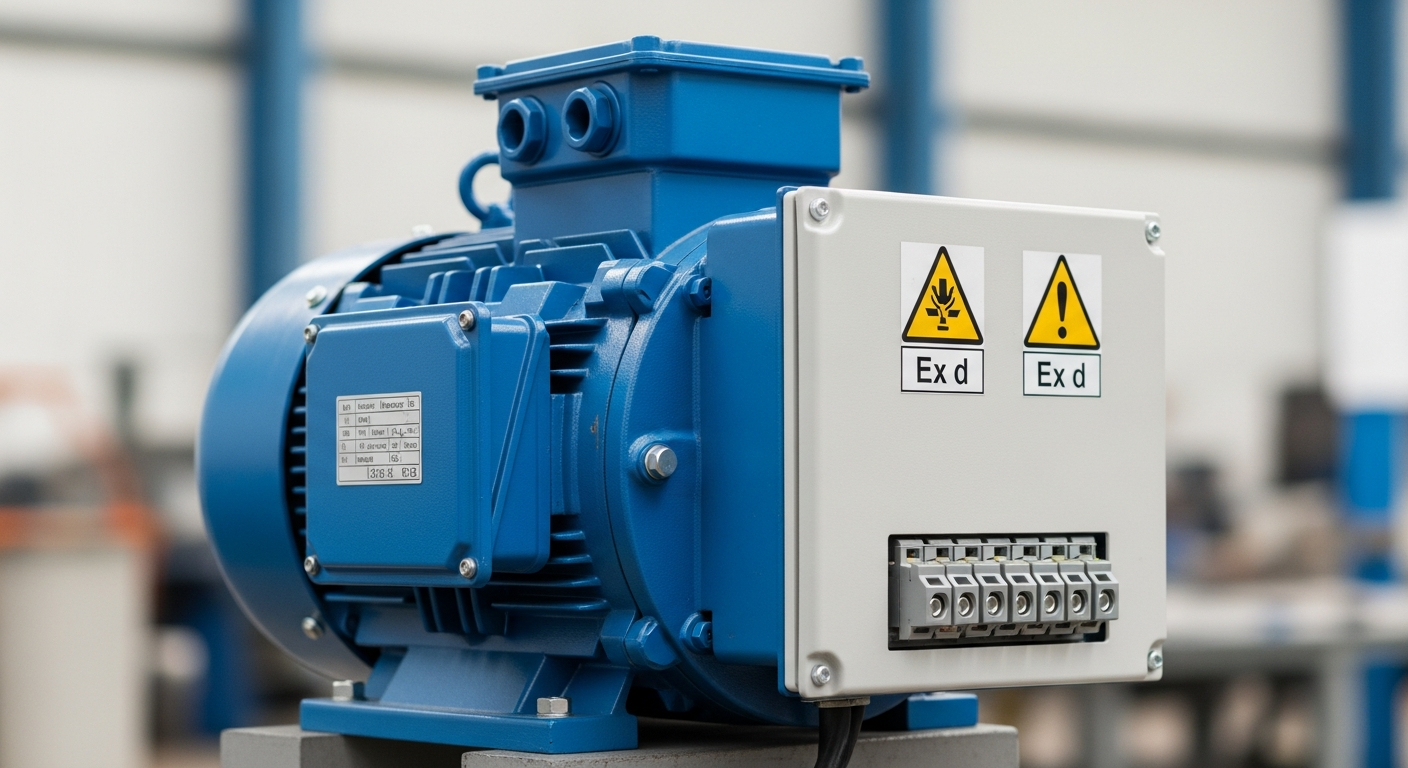
Understanding Flameproof (Ex d) Enclosures
A flameproof enclosure, designated ‘Ex d’ under ATEX and IECEx standards, operates on the same containment principle as its explosion proof counterpart. It allows flammable gases to enter, contains any potential internal explosion, and cools the escaping gases through flamepaths to prevent external ignition. However, the design specifics and certification process are defined by international standards. Key aspects of flameproof enclosures include:
- Defined Flamepaths: The standard IEC 60079-1 provides explicit requirements for the dimensions (length and gap) of flamepaths based on the gas group (e.g., IIA, IIB, IIC) and the enclosure’s volume. These are precisely engineered surfaces.
- Pressure Piling Consideration: The design must account for ‘pressure piling,’ a phenomenon where an ignition in one compartment of an enclosure can cause a pressure wave that compresses the unburnt gas in another compartment, leading to a much more powerful secondary explosion.
- Specific Certification Markings: Flameproof equipment carries specific markings that indicate its compliance, such as the ‘Ex d’ symbol, the applicable gas group, and the temperature class (T-rating).
- Material and Construction Requirements: Standards dictate acceptable materials and construction methods, including specifications for threaded entries, gaskets (which are generally not used for flame sealing), and fasteners.
Recommended Products for Containment Solutions
The following products from our catalog are certified for use in hazardous areas and directly relevant to this guide:
| Product Category | Rating / Certification | Link |
|---|---|---|
| Explosion Proof & Flameproof Equipment | NEC, ATEX & IECEx Certified | Shop Now |
Shop Certified Hazardous Area Equipment
Whether you need Explosion Proof enclosures for a Class I Division 1 area or Flameproof motors for a Zone 1 environment, our catalog has certified solutions to ensure safety and compliance.
Frequently Asked Questions
Can I use a flameproof enclosure in an explosion proof area?
Not without proper validation. A flameproof (Ex d) certified enclosure from an IECEx/ATEX region may not be automatically accepted in a North American NEC-governed area. It must also have the appropriate North American certifications (e.g., UL, CSA) for the specific Class/Division location.
What is a ‘flamepath’ in an Ex d enclosure?
A flamepath is the precisely machined gap between two surfaces of a flameproof enclosure, such as the lid and the body. When an internal explosion occurs, the hot gases are forced through this narrow path, cooling them down so they cannot ignite the external flammable atmosphere.
Are explosion proof and intrinsically safe the same thing?
No, they are fundamentally different. Explosion proof is a ‘containment’ method that allows an explosion to occur and contains it safely. Intrinsic Safety (IS) is an ‘energy limitation’ method that prevents an explosion by ensuring the electrical energy in a circuit is too low to create a spark or heat capable of causing ignition.
How are explosion proof enclosures tested?
They undergo rigorous testing, including hydrostatic pressure tests to check their strength and explosion tests where a flammable gas mixture is ignited inside the enclosure. The tests verify that the enclosure does not rupture and that the flame does not propagate to the outside.
What markings indicate a device is flameproof?
A flameproof device will be marked with ‘Ex d’ as part of its certification string. The full marking will also include the equipment protection level (e.g., Gb), gas group (e.g., IIB+H2), and temperature class (e.g., T4), indicating the specific environments where it is safe to use.
Chat for a Quote Call: 832-699-6726
Conclusion
While both explosion proof and flameproof protection methods are built on the principle of containment, they are not interchangeable. The primary difference lies in their origins: ‘explosion proof’ belongs to the North American NEC system, while ‘flameproof’ is part of the international IEC/ATEX system. Each has its own specific design standards, testing protocols, and marking requirements that must be respected for the jurisdiction in which the equipment is installed. Misunderstanding this can lead to costly compliance failures and, more importantly, a compromise in safety. Therefore, the key to proper equipment selection in the debate of explosion proof vs flameproof is to always verify the required certification for your specific location and hazardous area classification.