Intrinsically Safe Knowledge Base
Best Intrinsically Safe Smartwatch: 2026 Buyer’s Guide
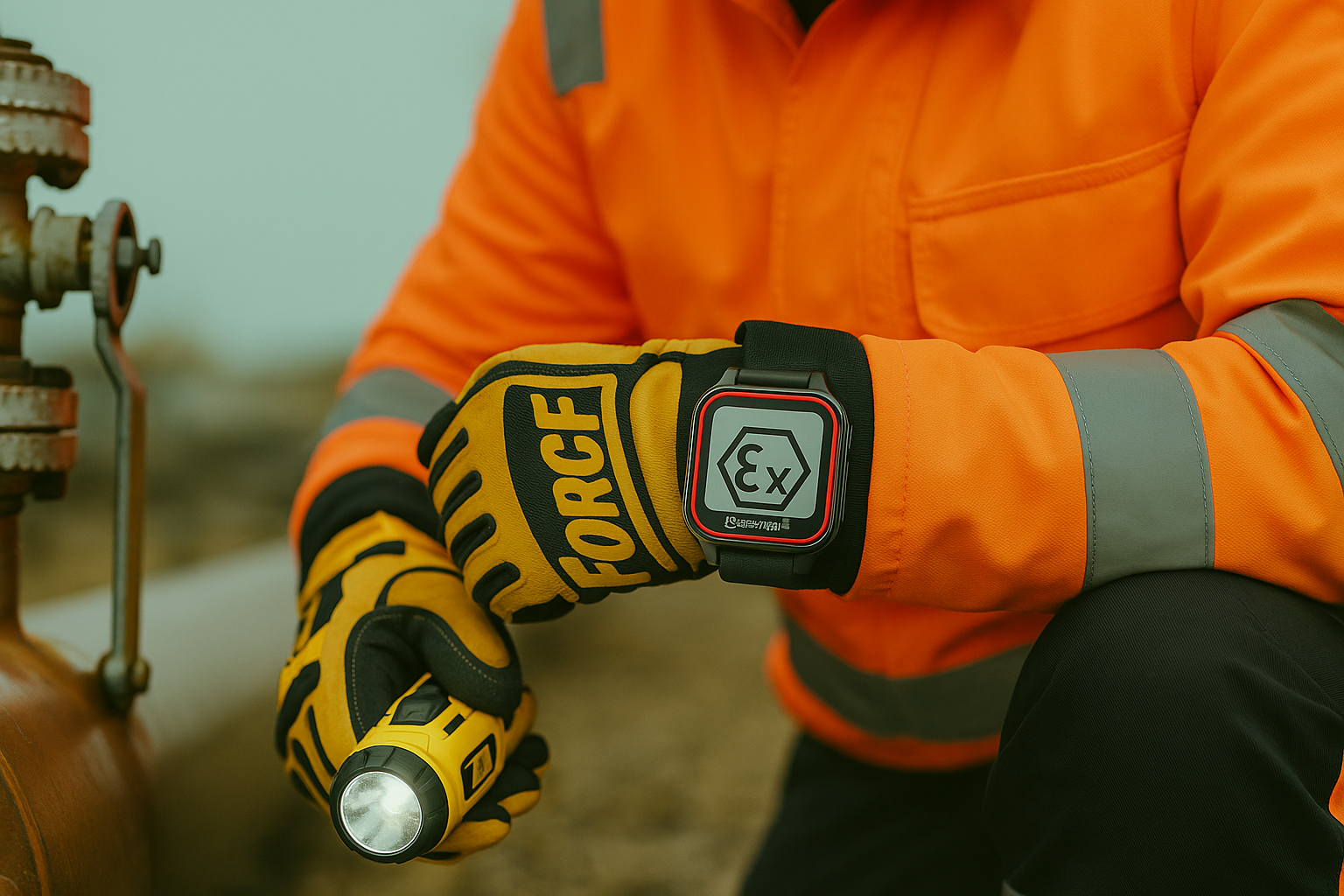
Intrinsically safe smartwatches are transforming communication in hazardous environments by offering hands-free safety monitoring and real-time data access directly on the worker’s wrist. Unlike traditional radios, they integrate critical functions like ‘man-down’ detection, SOS alerts, and digital workflows, drastically improving situational awareness, productivity, and emergency response in hazardous areas classified under ATEX (e.g., Zone 1/21) or North American (e.g., Class I, Division 1) standards.
Carrying specific certifications for use in areas such as ATEX Zone 1/21 or Zone 2/22, depending on the model, these wearables are not just for telling time—they are safety companions, emergency responders, and remote collaboration hubs all on your wrist. In this article, we’ll explore why these wearables are changing the game in hazardous locations, how they work, and which models are leading the industry.
Definition: What is an Intrinsically Safe Smartwatch?
An intrinsically safe smartwatch is a rugged wearable device certified to operate safely in atmospheres with flammable gases, vapors, or dust. It achieves this by limiting its own internal electrical and thermal energy to levels that cannot cause an ignition, even in the event of a fault. This core principle, known as intrinsic safety, is what distinguishes it from standard or even “rugged” consumer smartwatches and makes it certified for hazardous areas.
Key Certifications Explained
To be considered a true intrinsically safe smartwatch, a device must carry certifications from recognized bodies. These are not optional; they are a legal requirement for operating electronic equipment in classified hazardous locations.
Certifications You Should Expect:
-
ATEX (European Union): Certifies equipment for explosive atmospheres, typically marked for Zone 1, Zone 21, Zone 2, or Zone 22.
-
IECEx (International): Provides a globally recognized Certificate of Conformity, streamlining the certification process across countries.
-
Class I, Division 1 or 2 (North America): Governed by NEC/CEC standards, this is essential for compliance in the US and Canada.
These certifications make intrinsically safe smartwatches suitable for oil refineries, offshore rigs, chemical plants, and grain storage facilities.
How Do Intrinsically Safe Smartwatches Work?
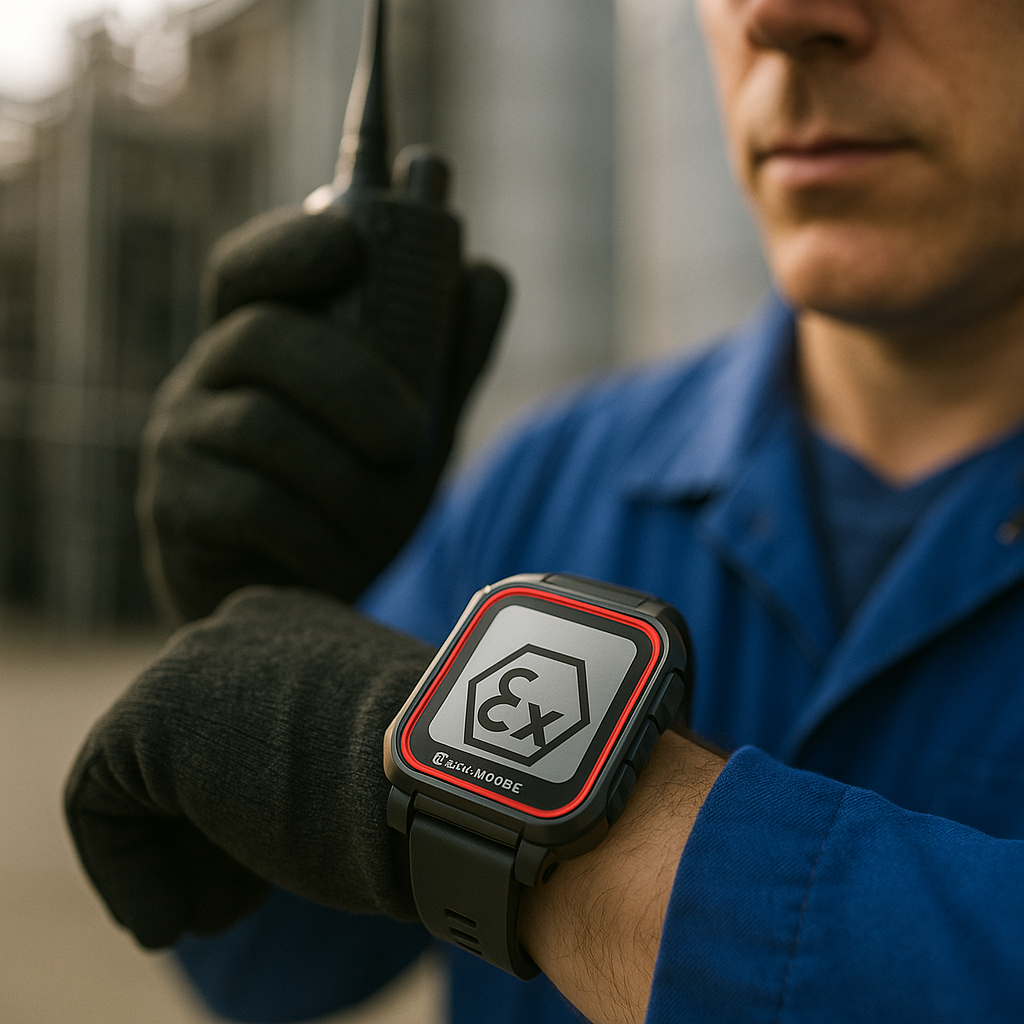
Unlike standard smartwatches, intrinsically safe models are built with specialized circuits, casings, and temperature regulation. They limit voltage and current to prevent sparks, and use non-sparking materials and encapsulation techniques. Most models include:
-
Real-time GPS location tracking
-
Man-down detection and SOS alerts
-
Integration with industrial safety apps
-
Ruggedized design with water and dust resistance
They enable hands-free, always-on communication that complies with safety standards—an essential feature in environments where seconds matter.
Why Are Intrinsically Safe Smartwatches Critical for Field Teams?
1. Hands-Free Safety Communication
Workers in high-risk areas can’t always handle radios or phones. With voice-activated PTT and wrist-mounted alerts, smartwatches allow seamless communication—even while climbing ladders or wearing PPE.
2. Emergency Alert Capabilities
Features like man-down detection, SOS buttons, and geofencing help locate workers and alert supervisors instantly when something goes wrong.
3. Improved Productivity Through Digital Workflows
From receiving maintenance orders to updating field reports, intrinsically safe smartwatches streamline field operations—minimizing time spent on paperwork and maximizing uptime.
4. Real-Time Monitoring & Location Tracking
Supervisors can monitor movement, confirm safe zones, and track worker health stats in real time—ensuring compliance and boosting situational awareness.
What’s New in Intrinsically Safe Wearable Technology?
The technology behind intrinsically safe smartwatches is constantly evolving. Recent advancements have moved these devices from simple notification tools to powerful hubs for industrial IoT (IIoT) ecosystems. Key changes include more powerful processors capable of running sophisticated enterprise applications directly on the wrist, eliminating the need for a paired smartphone in some cases.
Furthermore, sensor technology has improved dramatically. Modern devices feature more accurate accelerometers and gyroscopes for man-down detection, reducing false alarms. Some emerging models are even incorporating biometric sensors to monitor vital signs like heart rate, providing an extra layer of health and safety monitoring for workers in physically demanding roles. Enhanced battery chemistry also allows for longer shift coverage, a critical factor in remote operations.
Key Details & Specifications
When evaluating intrinsically safe smartwatches, several technical specifications are critical for ensuring safety and functionality:
- Hazardous Area Certifications: Look for ATEX (Zone 1/21, 2/22), IECEx, and North American (Class I, Division 1/2) ratings appropriate for your specific environment.
- Connectivity: Models offer 4G/LTE for wide-area communication, Wi-Fi for plant-wide networks, and Bluetooth for connecting peripherals like headsets or gas detectors.
- Lone Worker Protection: Features like Man-Down detection, an SOS button, and real-time GPS tracking are crucial for protecting lone workers.
- Durability and Ingress Protection: A high ingress protection rating, such as IP68, is a critical feature, ensuring the device is fully dust-tight and can withstand water immersion based on manufacturer-specified depth and duration. MIL-STD-810G/H certification guarantees resistance to shocks, drops, and vibrations.
- Battery Life: Look for devices that can last a full 12-hour shift or longer. Some models feature extended battery modes or field-swappable batteries for 24/7 operations.
- Operating System: Most professional models run on Android, allowing for integration with enterprise applications like Zello for PTT, Microsoft Teams, and custom workflow management software.
Updated Comparison of Current Options
Below are top intrinsically safe smartwatch models available at the Intrinsically Safe Store:
| Product | Certifications | Key Features | OS / Platform | Ideal Use Case |
|---|---|---|---|---|
| i.safe MOBILE IS-SW1.1 | ATEX Zone 1/21, IECEx, CSA: Class I, Div 1, Groups A,B,C,D, T4 | SOS Button, Push-to-Talk Ready, Lone Worker Protection, GPS, BLE 5.0 | Proprietary (Connects to Android/iOS) | Oil & Gas, Chemical Plants |
| Ecom Smart-Ex Watch 01 | ATEX Zone 2/22, IECEx, Class I Div 2 | Hands-free notifications, gesture control, integrates with Ecom phones | Android (via connected device) | Maintenance, Inspection, Logistics |
| Bartec PIXAVI Watch | ATEX Zone 1, IECEx | 4G LTE, Fall Detection, Advanced Remote Monitoring, Video Capable | Android-based | Emergency Services, Remote Experts |
| Airo A-Watch | ATEX Zone 1/21, IECEx | Standalone 4G/LTE, Integrated PTT, Biometric monitoring, Android OS | Android | High-risk lone worker roles, critical infrastructure |
Best for Each Industry:
-
Oil & Gas: IS-SW1.1 for full Zone 1/21 coverage and robust PTT capabilities.
-
Utilities & Inspections: Ecom Smart-Ex Watch for seamless integration and simple compliance in Zone 2 areas.
-
Emergency Response: PIXAVI Watch for its advanced LTE connectivity and remote monitoring features.
Integration with Field Management Platforms
Many intrinsically safe smartwatches now support integration with:
-
Zello (PTT)
-
Microsoft Teams
-
Procore, SAP, and other ERP systems
-
Work order and inspection apps
-
SCADA platforms
This means smarter, faster workflows and seamless communication between field workers and command centers.
Key Considerations Before You Buy
1. Certification
Ensure your work zone (Zone 1/2 or Class I Div 1/2) matches the certification level of the smartwatch.
2. Connectivity Needs
Determine whether you need Wi-Fi, LTE, or Bluetooth-only functionality.
3. Battery & Power Management
Look for devices with a battery life sufficient for a full shift (12+ hours). Some models feature power-saving modes or field-swappable batteries for continuous operation.
4. User Interface & App Support
Make sure the device supports relevant apps, can be updated easily, and is user-friendly under field conditions (gloves, dirty environments, etc.).
FAQs About Intrinsically Safe Smartwatches
What environments require an intrinsically safe smartwatch?
Any workplace with potential exposure to flammable gases, vapors, dust, or fibers—such as oil rigs, refineries, mines, and grain silos—should use smartwatches certified for their specific hazardous location (e.g., ATEX for the EU, IECEx for international sites, or Class/Division for North America) to comply with safety regulations and reduce explosion risks.
Are intrinsically safe smartwatches waterproof and rugged?
Yes. Most models are IP68-rated, ensuring they are dustproof and can withstand water immersion based on manufacturer-specified depth and duration. They are also designed to withstand extreme temperatures, vibration, and shock.
What’s the difference between a rugged and an intrinsically safe smartwatch?
A rugged smartwatch is built to resist physical damage like drops, water, and dust (e.g., MIL-STD-810G, IP68). An intrinsically safe smartwatch meets these rugged standards but also has specialized internal circuitry designed to prevent it from creating a spark that could ignite a flammable atmosphere. This requires specific certifications like ATEX or IECEx, which standard rugged devices do not have.
Can intrinsically safe smartwatches replace radios?
In many use cases, yes. With Push-to-Talk, LTE/Wi-Fi support, and long battery life, these devices are lighter and more versatile than traditional two-way radios.
How do they improve safety for lone workers?
Smartwatches with man-down alerts, GPS tracking, and SOS functions ensure quick response times in case of accidents—especially for workers operating in remote or isolated areas.
Are there recurring costs or subscriptions?
Some features like LTE or Zello-based PTT require data plans or app licenses. Others function entirely on internal Wi-Fi networks. Always confirm the tech spec with the supplier.
Can I make a regular smartwatch safe for hazardous areas with a special case?
No. A case cannot make a non-certified device intrinsically safe. Intrinsic safety is an engineering principle applied to the internal electronic circuits to limit energy. A standard device, even in a rugged case, can still generate a spark and cause an explosion. Only devices certified from the manufacturer as ATEX, IECEx, or Class/Div are compliant.
What is the typical battery life of these devices?
Most intrinsically safe smartwatches are designed to last a full 8 to 12-hour work shift under normal use. Battery life varies based on features like GPS tracking, LTE connectivity, and screen brightness. Some models offer extended battery modes or field-swappable batteries for 24/7 operations.
How does Push-to-Talk (PTT) work on a smartwatch?
PTT on a smartwatch works over cellular (PoC or PTT over Cellular) or Wi-Fi networks using dedicated apps like Zello or Microsoft Teams. Users can press a physical button on the watch or a virtual button on the screen to instantly communicate with individuals or groups, similar to a traditional two-way radio but with global range.
Conclusion: Are Intrinsically Safe Smartwatches Worth It?
If your team operates in a hazardous environment where safety and uptime are mission-critical, investing in an intrinsically safe smartwatch is not just smart—it’s essential.
These wearables bridge the gap between safety compliance and operational efficiency, enabling better communication, faster response times, and real-time awareness—all from the wrist of your frontline team.