Intrinsically Safe Knowledge Base
OSHA Gas Detector Calibration: 2026 Rules
What is the correct portable gas detector calibration frequency to maintain compliance and ensure worker safety? This question is critical for any team operating in hazardous environments where toxic or combustible gases pose a constant threat. While manufacturers provide baseline recommendations, regulatory bodies like OSHA set the legal standard for workplace safety. Failing to adhere to these requirements not only endangers lives but also exposes companies to significant legal and financial penalties. Establishing a consistent calibration schedule is not just a best practice; it is a non-negotiable component of a robust safety program, ensuring that these life-saving devices function accurately when they are needed most.

Enhance Your Safety Protocols
Proper gas detector calibration is a key part of a comprehensive safety plan. Learn more about another critical component: the hot work permit system for hazardous areas.
Understanding OSHA Requirements for Gas Detector Calibration
When determining the correct portable gas detector calibration frequency, OSHA provides crucial guidance, though it often defers to manufacturer specifications. The primary directive is found within the standard for permit-required confined spaces, OSHA 29 CFR 1910.146. This regulation mandates that atmospheric testing equipment must be calibrated according to the manufacturer’s instructions. This effectively makes the manufacturer’s recommended schedule the minimum legal requirement. Most manufacturers recommend calibrating a portable gas detector at least once every 180 days (6 months). However, this baseline can be insufficient depending on the specific application and environmental conditions. OSHA’s general duty clause also requires employers to provide a workplace free from recognized hazards, and an improperly calibrated gas detector is a significant hazard. Therefore, a more frequent calibration schedule is often necessary to ensure true safety and compliance, especially if the device has been dropped, exposed to high gas concentrations, or subjected to extreme temperatures.
Key Factors Influencing Calibration Frequency
While manufacturer guidelines provide a starting point, several operational factors demand a more dynamic approach to determining calibration frequency. A one-size-fits-all schedule can lead to dangerous inaccuracies. A robust safety protocol considers the specific context in which each device is used. Here are the critical factors that should influence your portable gas detector calibration frequency:
- Sensor Type and Age: Different sensors have varying levels of stability and drift. For example, electrochemical sensors for toxic gases may require more frequent calibration than infrared (IR) sensors for combustible gases, which are generally more stable. As sensors age, their performance degrades, often necessitating more frequent checks.
- Environmental Conditions: Exposure to extreme temperatures, high humidity, or airborne contaminants like silicone vapors can poison sensors or cause them to drift out of specification more quickly. Devices used in harsh industrial settings will require more frequent calibration than those used in cleaner, controlled environments.
- Usage Patterns and Exposure: A detector that is used daily and frequently alarms due to high gas concentrations will need calibration more often. Each exposure to the target gas can slightly diminish the sensor’s lifespan and accuracy. Conversely, a device used infrequently for spot checks might adhere to a longer interval.
- Handling and Physical Shock: Portable gas detectors are often subjected to bumps, drops, and vibrations. A significant physical impact can damage the sensor or internal components, immediately compromising its accuracy. Company policy should mandate recalibration after any known drop or severe shock event.
The Difference Between Calibration and Bump Testing
It is essential to distinguish between a full calibration and a daily bump test, as both are vital for ensuring a gas detector’s reliability. They serve different purposes and are performed on different schedules. Understanding this difference is key to a successful gas detection program.
- Bump Test (Functional Check): This is a qualitative check performed before each day’s use. The user briefly exposes the detector to a known concentration of the target gas that is higher than the alarm setpoints. The purpose is simply to verify that the sensors respond and that the audible and visual alarms function correctly. It is a quick pass/fail test to ensure the device is operational.
- Full Calibration: This is a quantitative procedure that adjusts the instrument’s readings to align with a known concentration of certified calibration gas. During calibration, the sensor’s response is compared to the value of the gas, and the device’s internal software makes adjustments to correct any inaccuracies. This ensures the detector provides precise, reliable measurements, not just a simple alarm function.
In summary, a bump test confirms functionality, while a full calibration ensures accuracy. A daily bump test is a non-negotiable safety check, while the calibration frequency is determined by the factors discussed previously, such as usage, environment, and manufacturer recommendations.
Recommended Products for Gas Detection and Calibration
The following products from our catalog are certified for use in hazardous areas and directly relevant to this guide:
| Product Category | Rating / Certification | Link |
|---|---|---|
| Measurement & Calibration | ATEX / IECEx / CSA | Shop Now |
| Intrinsically Safe Bond Meter | ATEX / IECEx | Shop Now |
Shop Certified Calibration & Measurement Tools
Ensure accuracy and compliance with our range of certified measurement and calibration equipment, designed for the most demanding hazardous environments.
Frequently Asked Questions
How often should you bump test a portable gas detector?
A bump test should be performed before each day’s use. This quick functional check ensures that the sensors are responding to the target gas and that all alarms are working correctly, providing a crucial layer of safety before a worker enters a potentially hazardous area.
What happens if you don’t calibrate a gas detector?
Failure to calibrate a gas detector leads to sensor drift and inaccurate readings. This can result in a catastrophic failure where the device does not alarm in the presence of dangerous gas levels, or it may cause false alarms, leading to unnecessary evacuations and operational downtime.
Can I calibrate a gas detector myself?
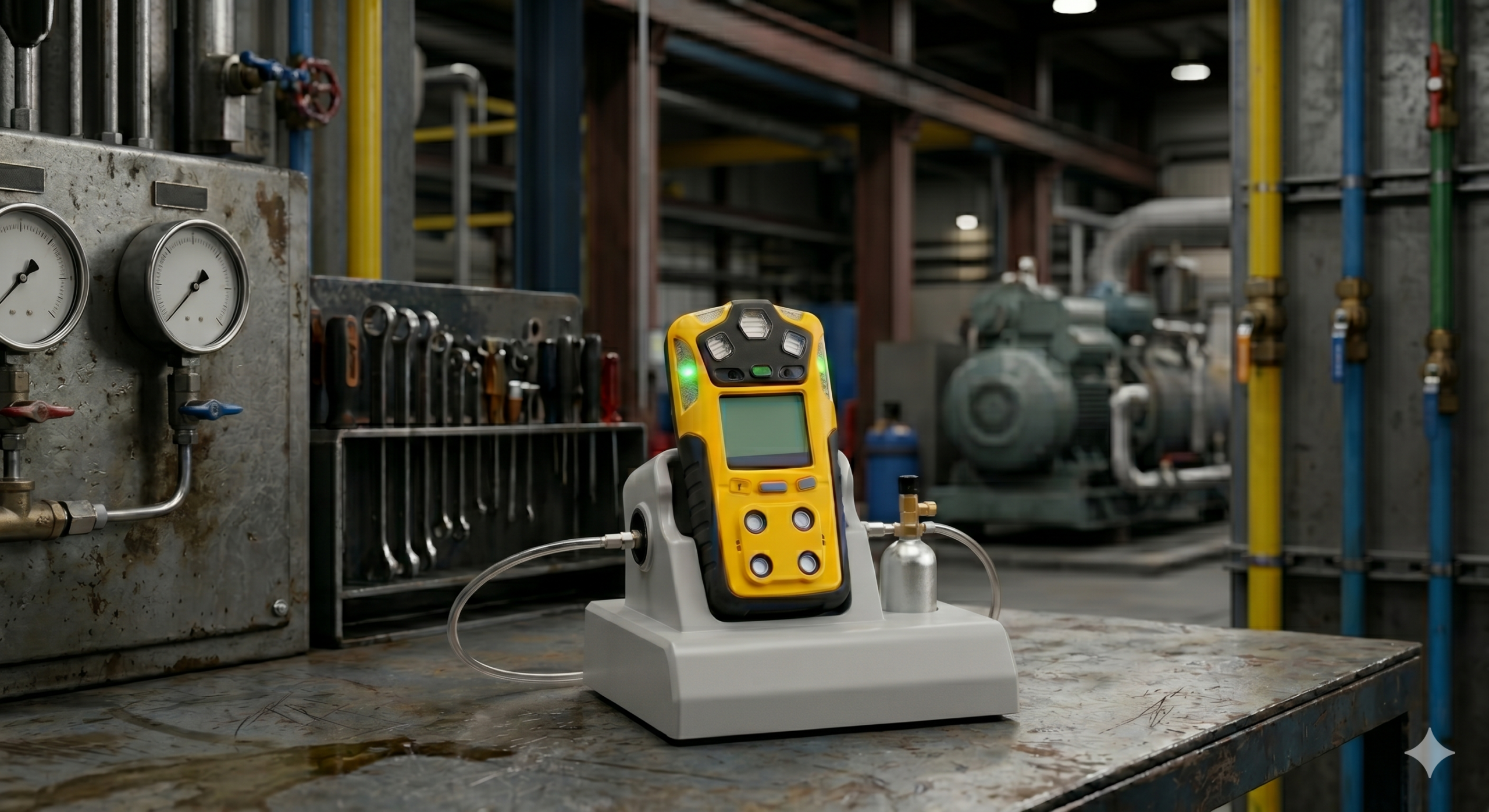
Yes, you can calibrate a gas detector yourself if you are properly trained and have the correct equipment, including certified calibration gas, a regulator, and tubing. Many companies use automated docking stations that perform bump tests and calibrations automatically, simplifying the process and logging the results.
What is the difference between sensor zeroing and calibration?
Zeroing a sensor involves exposing it to clean, uncontaminated air to set its baseline reading to zero. Calibration is a more complex process that involves exposing the sensor to a known concentration of a specific gas to adjust its measurement accuracy across its entire range.
Does temperature affect gas detector calibration?
Yes, temperature significantly affects sensor performance and accuracy. Most modern gas detectors have internal temperature compensation, but it is still best practice to calibrate the device at a temperature as close as possible to where it will be used. Extreme temperature shifts can cause temporary reading inaccuracies.
Chat for a Quote
Call: 832-699-6726
Conclusion
Establishing and adhering to a proper calibration schedule is fundamental to any effective gas detection program. While OSHA regulations point to manufacturer guidelines as the minimum standard, a truly safe operation must consider the specific environmental and usage factors at play. Key takeaways include the non-negotiable requirement for daily bump tests, the distinction between a functional check and a full accuracy calibration, and the impact of sensor type and workplace conditions on device stability. Ultimately, a proactive approach to maintenance ensures these critical safety devices perform accurately, protect personnel, and maintain regulatory compliance. An appropriate portable gas detector calibration frequency is not just a line item on a checklist; it’s a cornerstone of industrial safety.