Intrinsically Safe Knowledge Base
Rugged vs. Intrinsically Safe: Which Do You Really Need?
In a demanding industrial environment, selecting the right equipment goes beyond simple durability. A device may be able to withstand drops and water, but that doesn’t make it safe for use in areas with flammable gases, dust, or fibers. This is a critical distinction for safety managers and procurement teams evaluating rugged vs intrinsically safe equipment. The difference isn’t just about performance or budget; it’s fundamental to operational safety and regulatory compliance. Rugged equipment is built to survive harsh physical conditions. Intrinsically safe equipment is engineered to prevent explosions in hazardous locations. Confusing the two can lead to equipment failure, serious accidents, and non-compliance with safety standards.
Understand Hazardous Area Regulations
Before selecting equipment, you need to understand the regulations that define your workspace. Our guide explains the core principles of hazardous area classifications.
What Does ‘Rugged’ Equipment Really Mean?
‘Rugged’ equipment is designed to resist physical damage from external forces. This is about durability, not explosion protection. Certifications for rugged equipment often include Ingress Protection (IP) ratings and Military Standard (MIL-STD) testing. For example, MIL-STD-810G is a U.S. military standard that evaluates a device’s performance under various environmental stressors like shock, vibration, and extreme temperatures. An IP68 rating, for instance, indicates a device is completely dust-tight and can be submerged in water. However, these ratings offer no assurance of safety in an explosive atmosphere. A rugged device can still generate a spark or enough heat to ignite flammable substances, making it a significant hazard in classified locations. According to standards like NFPA 70 Article 500, electrical equipment in hazardous areas must be specifically approved for that location, a requirement that rugged ratings alone do not satisfy.
Key Characteristics of Rugged Devices
When you see a device marketed as ‘rugged,’ it typically means it has been tested and certified to withstand specific environmental challenges. These features are designed to extend the life of the device and ensure it functions reliably in physically demanding jobs, such as construction, logistics, or field service. The focus is purely on the physical integrity of the hardware.
- Shock and Drop Resistance: Devices are tested to survive falls from specific heights onto hard surfaces, a common requirement under MIL-STD-810G. This is achieved through reinforced frames, shock-absorbent materials, and protected internal components.
- Ingress Protection (IP Rating): This two-digit code defines the level of protection against solids (like dust) and liquids (like water). For example, IP67 means the device is fully protected from dust and can be immersed in water up to 1 meter for 30 minutes.
- Extreme Temperature Tolerance: Rugged equipment is designed to operate reliably in a wider range of temperatures, both hot and cold, than standard consumer electronics. This is critical for outdoor work in varying climates.
- Vibration Resistance: For use in vehicles or on heavy machinery, rugged devices are built to withstand constant vibrations without component failure, ensuring data integrity and operational continuity.
Defining ‘Intrinsically Safe’ Equipment
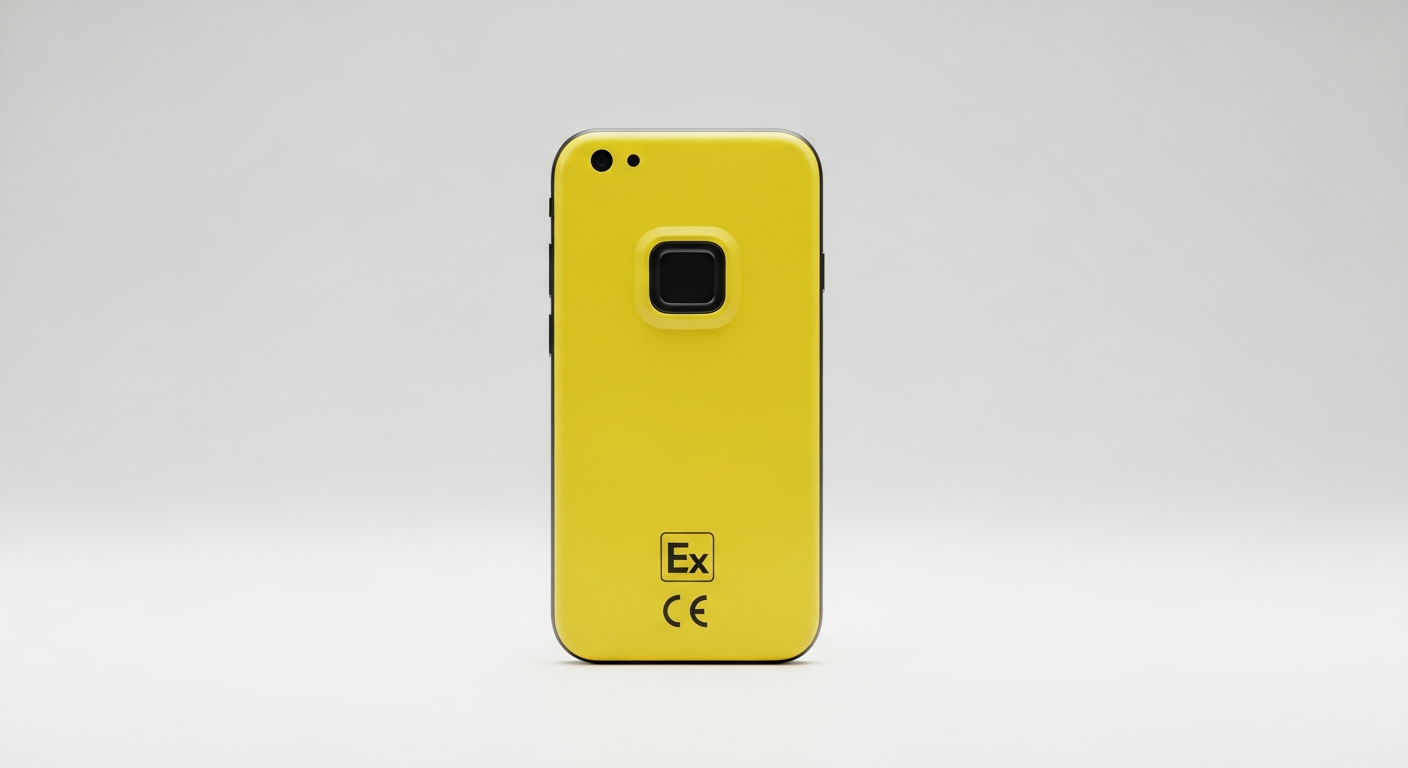
Intrinsic Safety (IS) is an explosion protection technique applied to electrical equipment and wiring for hazardous locations. Unlike ‘rugged,’ which is about physical toughness, ‘intrinsically safe’ is about electrical and thermal energy management. The core principle of intrinsic safety is to limit the available electrical and thermal energy within a device to a level below that which can ignite a specific hazardous atmospheric mixture. This is achieved through careful circuit design, using components like zener diodes to limit voltage and resistors to limit current. Equipment certified as intrinsically safe has been rigorously tested by third-party agencies like UL, CSA, ATEX, or IECEx to ensure it cannot produce a spark or hot surface capable of causing an explosion. This is a non-negotiable requirement for electronics used in oil refineries, chemical plants, grain elevators, and other environments where flammable materials are present.
- Low-Energy Circuitry: The primary design feature is circuitry that operates on very low voltage and current, far below the levels needed to create an incendiary spark.
- Fault Prevention: IS systems are designed to remain safe even if faults occur, such as a short circuit or component failure. Redundancy and safety components are built-in.
- System-Wide Approach: Intrinsic safety often involves a complete system, including an IS-certified device in the hazardous area, a safety barrier or isolator in the safe area, and specific wiring connecting them.
- Strict Certification: Devices must carry markings (e.g., ATEX, IECEx, or Class/Division ratings) that clearly state the hazardous environments for which they are approved. Using a device in a zone it is not certified for is a serious safety violation.
Recommended Products for Tough and Hazardous Environments
The following product categories from our catalog provide certified solutions for operations requiring either durability, intrinsic safety, or both.
| Product Category | Rating / Certification | Link |
|---|---|---|
| Intrinsically Safe Mobile Devices | Certifications typically include Class I Div 1, ATEX Zone 1, and more | Shop Now |
| General Safety & Industrial Equipment | Varies by Product | Shop Now |
Shop Certified Intrinsically Safe Mobile Devices
Ensure your team stays connected and safe with our full range of certified IS tablets, smartphones, and accessories for hazardous areas.
Frequently Asked Questions
Is all intrinsically safe equipment also rugged?
Not always. While many IS devices are built for industrial use and include rugged features, the primary certification is for explosion safety. An IS device may not have the same drop-test or water-ingress ratings as a device marketed specifically as ‘rugged’. Always check both the IS certification and the physical durability ratings (like IP or MIL-STD) to ensure a device meets all your environmental needs.
Can I use a rugged case to make my phone intrinsically safe?
Absolutely not. A rugged case provides only physical protection from drops and impacts. It does nothing to alter the internal circuitry of a standard phone, which can still generate sparks or heat capable of causing an explosion. Only devices designed and certified from the ground up as intrinsically safe are permitted in hazardous locations.
What’s the main cost difference between rugged and intrinsically safe devices?
Intrinsically safe equipment is generally more expensive than rugged-only equipment. This is due to the extensive research, specialized low-energy component design, rigorous third-party testing, and complex certification processes required to ensure it will not cause an explosion. The cost reflects the high level of engineering and safety assurance involved.
How do I know if my worksite requires intrinsically safe equipment?
Your facility must undergo a hazardous area classification assessment, conducted by a qualified engineer. This process identifies areas where flammable substances may be present and classifies them into Zones (ATEX/IECEx) or Classes/Divisions (NEC). The classification report will specify the required level of equipment protection for each area.
What does MIL-STD-810G certified mean?
MIL-STD-810G is a United States Military Standard that replicates the effects of various environmental conditions on equipment. It includes a series of tests for factors like low pressure, high/low temperatures, shock (drops), vibration, and humidity. It certifies physical durability but has no connection to explosion safety standards.
The distinction between rugged and intrinsically safe is not subtle. It’s a critical safety boundary. Rugged design protects the equipment from the environment, while intrinsically safe design protects the environment from the equipment. These terms are not interchangeable. A hazard assessment of your facility is the only reliable way to determine your specific needs. Choosing the wrong device based on a misunderstanding of these terms can void insurance, violate regulations, and, most importantly, put lives at risk. Always prioritize equipment certified for your specific hazardous area when deciding between rugged vs intrinsically safe equipment.