Intrinsically Safe Products
Intrinsically Safe Devices That Support Fast and Safe Evacuation

In hazardous industrial environments—like oil refineries, offshore rigs, chemical processing plants, and underground mines—evacuating quickly during an emergency is critical. Delays or equipment failure can be fatal. That’s why intrinsically safe evacuation devices are essential for operations in classified zones. These tools are designed to operate without igniting explosive gases, vapors, or dust, ensuring personnel safety even during high-risk events.
This article will explore the different categories of intrinsically safe evacuation tools, highlight certified products, explain safety standards, and provide product recommendations available at Intrinsically Safe Store. Whether you’re upgrading a refinery alert system or equipping frontline responders, this guide will help you stay compliant and ready.
What Makes a Device Intrinsically Safe for Evacuation?
An intrinsically safe device is engineered to prevent the release of sufficient energy to ignite flammable atmospheres. For evacuation, this means alarms, communication tools, and lighting systems are designed with restricted energy outputs, fail-safe features, and rugged casings.
They must also meet strict international standards:
-
ATEX Zones 1 and 2 (Europe)
-
IECEx (International)
-
Class I Division 1/2 (North America)
These certifications ensure that even if a device malfunctions, it won’t become an ignition source. This level of protection is vital in emergencies where sparks from faulty equipment can escalate a dangerous situation.
What Types of Intrinsically Safe Evacuation Devices Are Available?
A comprehensive evacuation strategy uses multiple intrinsically safe tools to enable alerts, coordination, and guidance. Let’s break down the essential device categories:
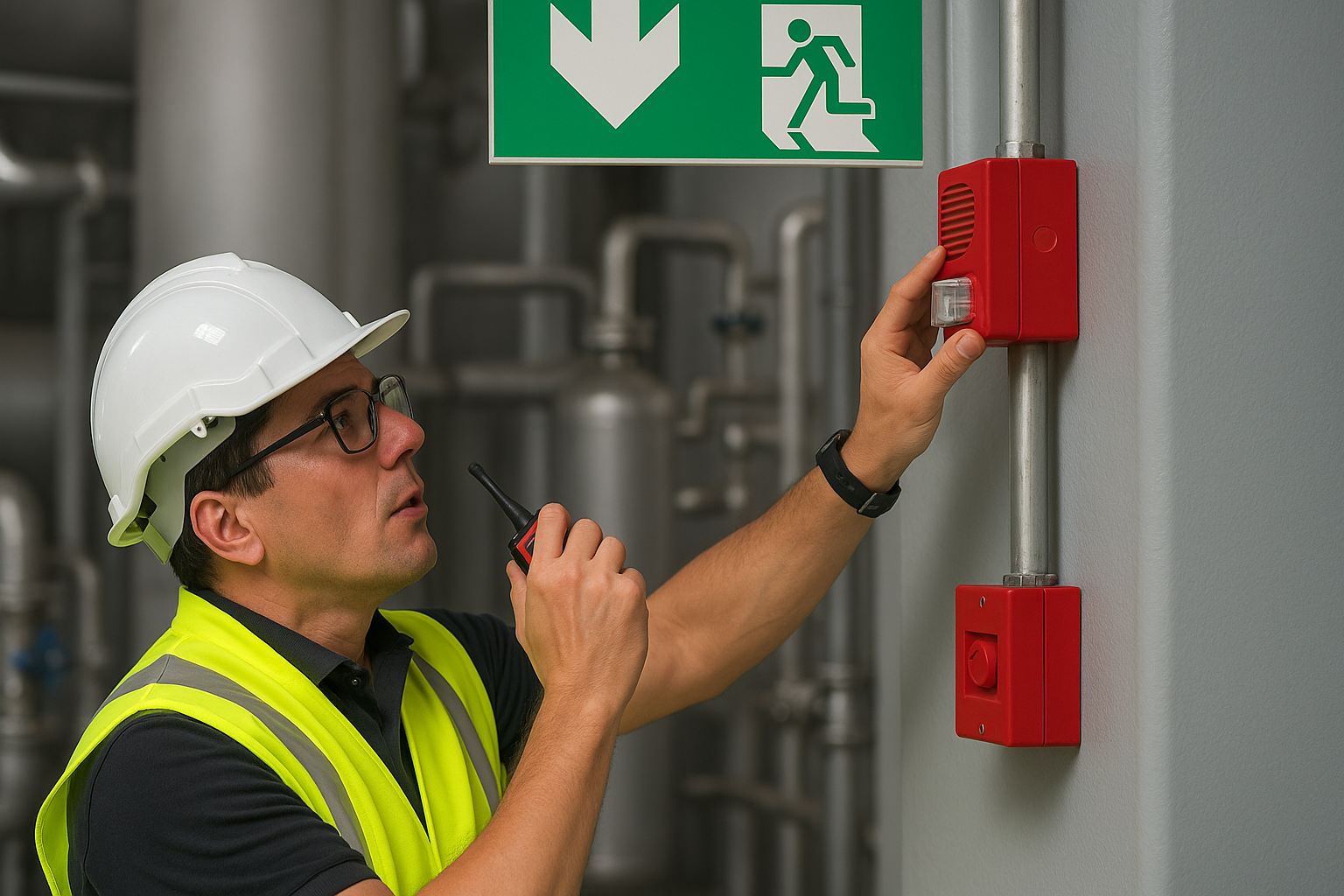
Alarm Sounders and Visual Beacons
Purpose: Alert everyone in the vicinity—visually and audibly—that an evacuation is in progress.
Recommended Products:
-
Tomar BExS110 Series Horn Sounder
110 dB output, IECEx and ATEX Zone 1/2 certified. Flameproof and ideal for large industrial areas. -
Tomar GNExB2X10 Xenon Strobe Beacon
Bright, visible strobe light for low-visibility zones. Certified for hazardous area signaling. -
Tomar BExCLI110-L2
Combines omnidirectional sound and LED beacons for all-around coverage.
These devices are mounted at key evacuation points and integrated with facility-wide alert systems.
Intrinsically Safe Two-Way Radios
Purpose: Enable real-time communication during evacuations between safety teams, coordinators, and responders.
Recommended Products:
-
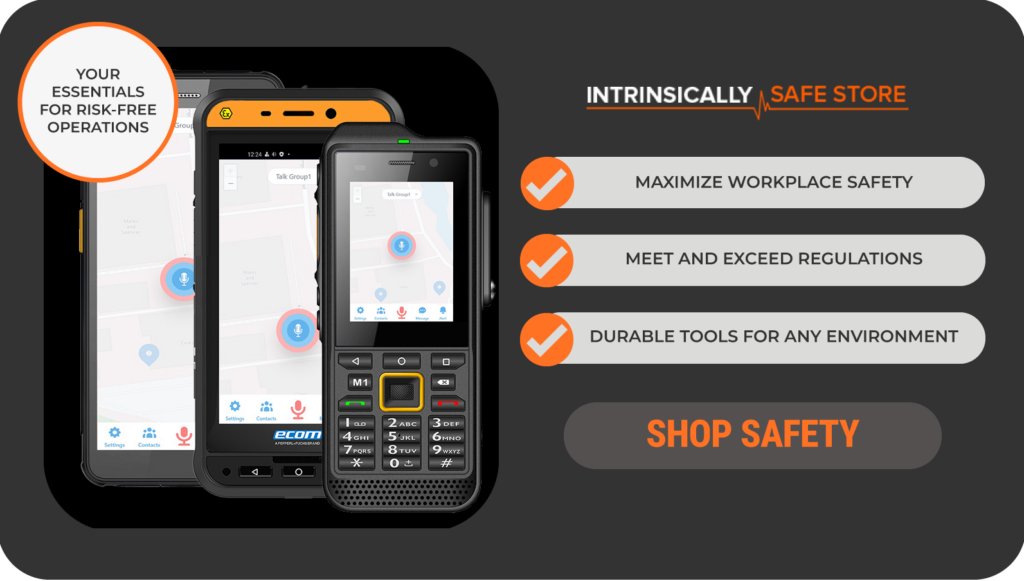
Ecom TETRA THR9 Ex Two-Way Radio
Rugged build, ATEX Zone 1 certified, and compatible with standard communication protocols. -
Sensear SM1P02 IS Headset
Ideal for loud environments. Protects hearing while maintaining full radio comms. -
Sensear SMPLUGR10001
Compact push-to-talk radio module, ideal for short-range hazardous area coordination.
Radios provide immediate, low-latency coordination—vital when guiding workers to exits or confirming clear zones.
Flashlights and Headlamps
Purpose: Illuminate escape routes when lighting fails or visibility is compromised.
Recommended Products:
-
NightStick XPP-5418RX Flashlight
Certified IS flashlight with high visibility and durable housing. -
NightStick XPP-5422G Dual-Light
Combines spotlight and floodlight in one, useful for group navigation. -
NightStick XPP-5452G Headlamp
Hands-free lighting mounted on helmets. Bright, reliable, and safe for Zone 0 use.
These tools are essential for evacuation during power outages, fires, or smoke-filled environments.
Intrinsically Safe Smartphones & Tablets
Purpose: Centralize communication, manage evacuation workflows, and provide access to digital evacuation maps or SCADA data.
Recommended Products:
-
Ecom Smart-Ex 02 DZ1 Smartphone
Full Android smartphone, intrinsically safe for Zone 1, with LTE, GPS, and push-to-talk. -
Bartec Pixavi Smartphone
High-performance mobile device with camera and screen-sharing for remote coordination. -
Ecom Tab-Ex 03 D2 Tablet
8″ Android tablet for control room evacuation management or mobile team leaders.
With these tools, teams can send real-time updates, access safety documents, or control systems remotely during emergencies.
How Do Intrinsically Safe Evacuation Systems Operate?
These systems are layered to provide redundancy and universal coverage:
-
Sounder-beacons are triggered manually or by automation (gas leak, fire, pressure drops).
-
Radios and IS smartphones keep personnel in communication, guiding them toward exits.
-
Headlamps and flashlights provide visibility where permanent lighting has failed.
-
Mobile control tablets can initiate shutdowns or trigger additional alarms remotely.
Built-in fail-safes, such as battery redundancy and emergency override, ensure these tools work even if infrastructure is damaged.
What Certifications Should You Look For?
When selecting devices for intrinsically safe evacuation, ensure they carry appropriate marks:
| Certification | Meaning | Use Region |
|---|---|---|
| ATEX (Zone 1/2) | European safety for explosive atmospheres | EU/UK |
| IECEx | International electrical safety for hazardous areas | Global |
| UL/CSA Class I Div 1 | U.S./Canada electrical area safety rating | North America |
| INMETRO, Ex EAC | Brazil, Russia, and others | Regional |
Look for labeling like: II 2G Ex d IIC T6 Gb, which indicates gas group, zone, and temperature class. Products on Intrinsically Safe Store include these ratings in their technical documentation.
Why is Fast Evacuation So Critical in Hazardous Zones?
-
Over 60% of fatalities in chemical plants occur within the first 3 minutes of an emergency.
-
NFPA recommends full site evacuations within 60 seconds of an alert for high-risk areas.
-
Flashpoint gas ignition can occur instantly after leaks or pressure drops, making every second count.
The faster your alerts and communications activate, the better your chances of minimizing injuries and equipment loss.
Product Comparison Table
| Product Name | Type | Certifications | Key Features | Best Use Case |
|---|---|---|---|---|
| Tomar BExS110 | Horn Sounder | ATEX Zone 1/2, Class I Div 1 | 110 dB, flameproof | General plant evacuation alert |
| Ecom THR9 Ex | Two-Way Radio | ATEX Zone 1 | Push-to-talk, rugged | Team comms in gas zones |
| Bartec Pixavi | Smartphone | IECEx, ATEX | High-def camera, LTE | Evacuation command center |
| Nightstick XPP-5422G | Flashlight | Zone 0 | Dual-light, hands-free | Evacuation in smoke or dark |
| Tab-Ex 03 Tablet | Tablet | Division 2 | 8” touchscreen, GPS | Emergency control panels |
Frequently Asked Questions
What’s the difference between intrinsically safe and explosion-proof devices?
Intrinsically safe (IS) devices are designed to prevent ignition by limiting electrical energy. Explosion-proof devices, on the other hand, contain any internal ignition within a strong enclosure. For evacuation, IS devices are lighter, safer to carry, and typically used for portable gear.
Can existing evacuation alarms be upgraded to intrinsically safe?
Only if retrofitting includes new circuits, barriers, and certified components. It’s often more cost-effective and compliant to replace older units with certified intrinsically safe models like the Tomar BExS110 or BExCLI110 series.
How do IS radios and mobile devices help during evacuation?
They provide real-time coordination between teams, allowing command centers to direct traffic, check personnel status, and manage critical systems—all without triggering a fire risk.
What is a PASS device and should I include it?
A PASS (Personal Alert Safety System) activates a loud alarm if a worker is motionless, typically worn by firefighters. While not listed in the products above, if you carry any IS-certified PASS devices, they should absolutely be included in your evacuation plans.
Protect your team with certified safety gear.
Ready to upgrade your evacuation system? Get personalized product advice.
Schedule a Free Safety Consultation
Conclusion
In high-risk environments, a standard evacuation system won’t cut it. Only intrinsically safe evacuation devices ensure alarms, lighting, and communications operate without becoming ignition hazards themselves. From strobe alarms and handheld radios to smartphones and headlamps, investing in certified equipment saves lives and reduces liability.
Upgrade your emergency response system today.
Visit the Intrinsically Safe Store to find certified evacuation devices tailored to your industry.