

Intrinsically Safe Knowledge Base
Understanding the Role of ISO Safety Standards in Intrinsically Safe iPhone Cases
Introduction
When it comes to safety in hazardous environments, every detail matters. This includes the devices we carry with us daily, such as our iPhones. At Intrinsically Safe Store, we understand the importance of adhering to safety standards, particularly those set by the International Organization for Standardization (ISO). In this article, we delve into the role of intrinsically safe iPhone cases in meeting ISO safety standards. We invite you to explore our website to learn more about our commitment to safety.
Understanding Intrinsically Safe iPhone Cases
Designers create intrinsically safe iPhone cases to limit the electrical and thermal energy available for ignition. This means that even in the presence of a flammable atmosphere, these cases prevent the ignition of a hazardous atmosphere. They are essential for professionals working in industries such as oil and gas, chemical manufacturing, and firefighting, where the risk of explosion is high.
ISO Safety Standards: An Overview
The ISO develops and publishes international standards to ensure safety, reliability, and quality across various industries. These standards provide guidelines for products, services, and systems to ensure they are safe and reliable. For instance, ISO 80079-36 and ISO 80079-37 are specific to the manufacturing of explosion-proof equipment, including intrinsically safe iPhone cases.
How Intrinsically Safe iPhone Cases Meet ISO Standards
Intrinsically safe iPhone cases are designed to meet or exceed International Organization for Standardization safety standards. Here’s how:
- Limiting Energy Output: As per ISO standards, these cases are designed to limit their electrical and thermal energy so that ignition cannot occur, ensuring the safety of the user and the environment.
- Quality Assurance: ISO standards require rigorous testing and quality assurance. Intrinsically safe iPhone cases undergo stringent testing to ensure they meet these standards.
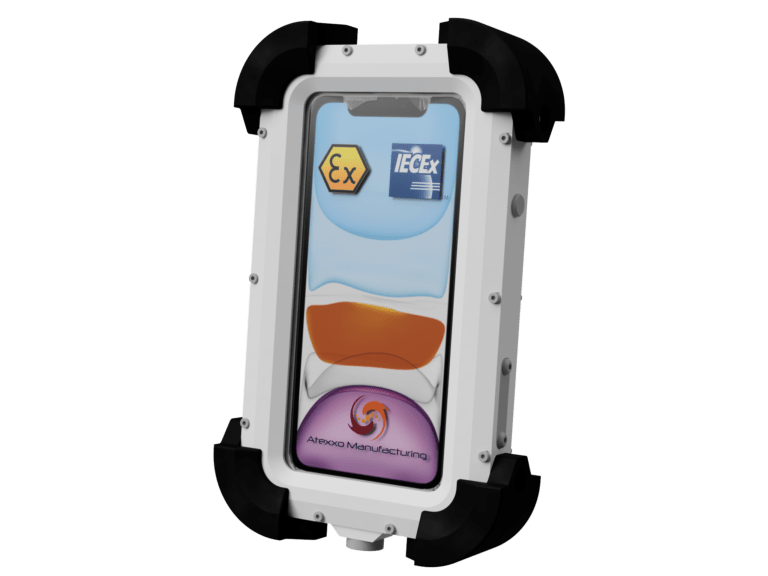
- Marking: ISO standards require clear marking of the safety level on the product. Intrinsically safe iPhone cases are clearly marked, providing assurance of their safety level.
Key Features & Benefits of Intrinsically Safe iPhone Cases
Beyond meeting specific ISO guidelines, certified intrinsically safe iPhone cases offer a range of benefits that enhance both safety and productivity in hazardous environments. These cases are engineered not just for compliance, but for real-world industrial use.
- Compliance Assurance: Using a certified case provides documented proof of compliance with safety regulations, which is crucial during safety audits and for maintaining operational permits. It guarantees the device meets strict international standards like ISO, ATEX, and IECEx.
- Enhanced Worker Safety: The primary benefit is preventing the ignition of flammable gases, vapors, or dust. This directly protects personnel from the risk of explosions, creating a safer work environment.
- Improved Operational Efficiency: These cases allow teams to use powerful smart devices for communication, data collection, and accessing digital work instructions directly within hazardous zones, eliminating the need to constantly exit and re-enter safe areas.
- Rugged Device Protection: In addition to their electrical safety features, these cases are built to be extremely durable. They protect the iPhone from drops, shocks, water, and dust, safeguarding the hardware investment in harsh conditions.
Case Study: Intrinsically Safe iPhone Cases in Action
A case study from the oil and gas industry illustrates the importance of intrinsically safe iPhone cases. A company operating in a high-risk environment equipped its field workers with iPhones housed in intrinsically safe cases. This not only ensured the safety of the workers but also improved communication and efficiency. The cases met ISO standards, providing the company with the assurance of safety and compliance.
Frequently Asked Questions (FAQs)
Are all ‘rugged’ or ‘heavy-duty’ iPhone cases intrinsically safe?
No. This is a critical distinction. A case must be specifically designed, tested, and certified to intrinsically safe standards (like ATEX, IECEx, or Class I Division 1) to be used in hazardous areas. Ruggedness refers to physical durability against drops and water, while intrinsic safety refers to electrical and thermal properties that prevent ignition. Standard rugged cases are not safe for explosive atmospheres.
What is the difference between ISO standards and ATEX/IECEx certifications?
ISO standards, such as ISO 80079, provide the international framework and technical guidelines for designing, manufacturing, and testing explosion-proof equipment. ATEX (for Europe) and IECEx (international) are certification systems that formally verify a product has been tested by an independent body and meets these specific safety standards for use in explosive atmospheres.
Can I use any iPhone model with an intrinsically safe case?
No, each intrinsically safe case is designed and certified for a specific iPhone model. The certification applies to the complete assembly of the case and the specific phone inside it. Using a case with an incompatible or different iPhone model is prohibited and voids the safety certification, as the internal dimensions and energy characteristics would no longer match the tested configuration.
Conclusion: The Importance of Intrinsically Safe iPhone Cases
In conclusion, intrinsically safe iPhone cases play a crucial role in meeting ISO safety standards. They limit energy output, undergo rigorous testing, and are clearly marked, providing assurance of their safety level. By choosing an intrinsically safe iPhone case from the Intrinsically Safe Store, you are choosing a product that meets the highest safety standards. We invite you to talk to a hazardous area specialist to learn more about our commitment to safety and quality.