Intrinsically Safe Knowledge Base
A Manufacturer’s Guide to the ATEX Certification Process
For any company manufacturing equipment for use in potentially explosive atmospheres within the European Union, understanding the ATEX certification process is a legal and commercial necessity. The process ensures that products like sensors, motors, and lighting fixtures are designed and tested to prevent ignition in hazardous environments, thereby protecting workers and facilities. The atex certification process for manufacturers is a structured series of steps, from initial design and risk assessment to rigorous testing and final declaration. This guide provides an overview of these stages, helping you bring a compliant and safe product to the EU market.
New to ATEX Compliance?
Start with the fundamentals. Our beginner’s guide breaks down the core concepts of ATEX certification for hazardous area equipment.
Understanding the ATEX Directive and Manufacturer Obligations
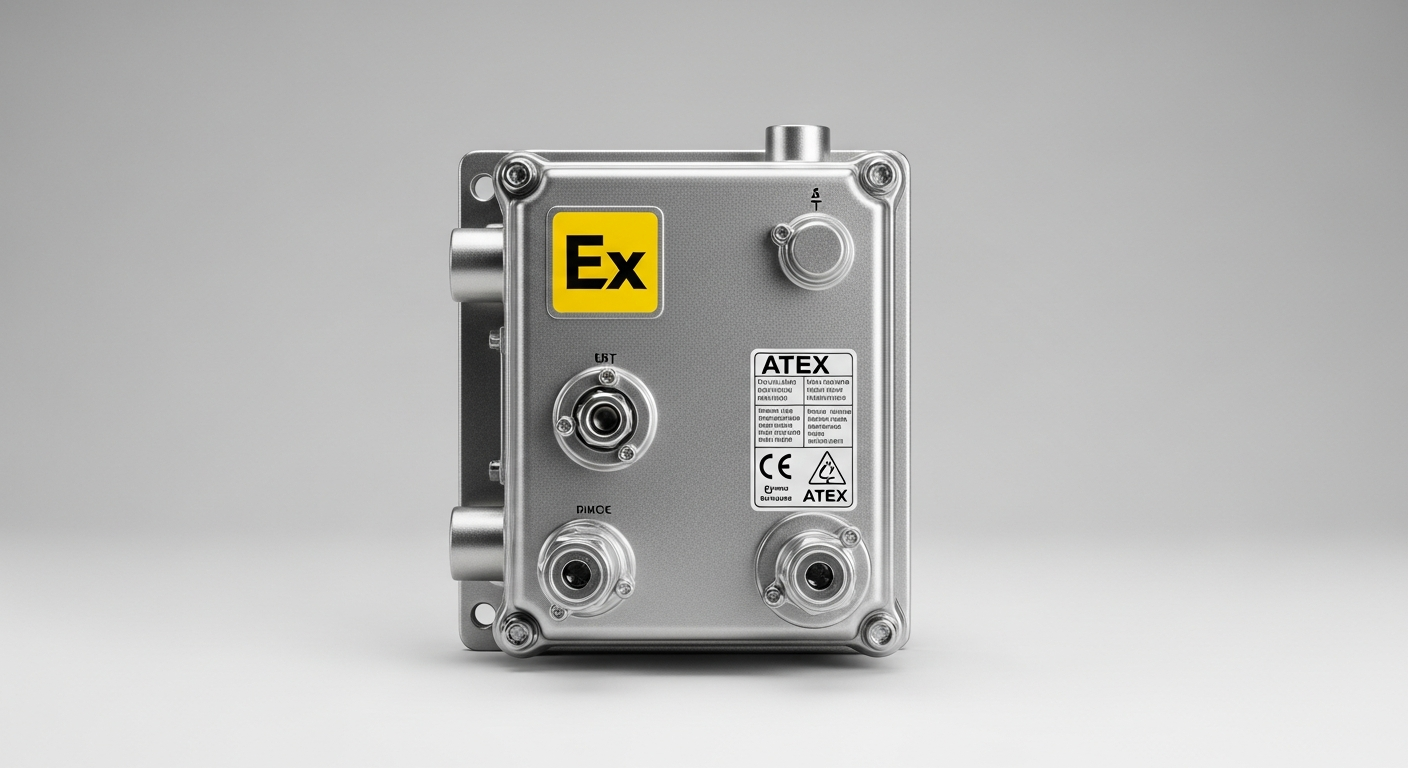
The foundation of this framework is the ATEX Directive 2014/34/EU, which outlines the essential health and safety requirements (EHSRs) that equipment and protective systems must meet. As a manufacturer, your primary obligation is to ensure your product complies with these EHSRs before affixing the CE and Ex markings and placing it on the market. This involves classifying your equipment into the correct category based on the level of protection it offers. Equipment is divided into two main groups: Group I for mining applications and Group II for all other surface industries. These are further subdivided into categories (1, 2, and 3) corresponding to the ATEX zone (0/20, 1/21, 2/22) where the equipment can be safely used. The higher the risk of an explosive atmosphere, the more stringent the requirements become, directly impacting the conformity assessment route you must follow in the atex certification process for manufacturers.
Key Stages in the ATEX Certification Process
ATEX certification is a multi-stage process that requires meticulous planning and documentation. While the specifics can vary based on equipment category and protection concept, the core process follows a consistent path. A successful outcome requires a good understanding of each phase, from initial concept to final market placement.
- Ignition Hazard Assessment: The first practical step is to conduct a thorough risk assessment of your product. You must identify all potential ignition sources it could create, whether from electrical sparks, hot surfaces, static electricity, or mechanical friction, and implement measures to mitigate them effectively.
- Technical Documentation File (TDF): You must compile a detailed TDF. This file serves as the evidence of your product’s compliance and includes design drawings, circuit diagrams, material specifications, risk assessment results, test reports, and user manuals.
- Conformity Assessment and Notified Body Involvement: Depending on the equipment category, you will follow a specific conformity assessment module. For Category 1 and 2 equipment, this almost always requires the involvement of an ATEX Notified Body, an independent organization designated by an EU member state to assess and certify your product’s compliance.
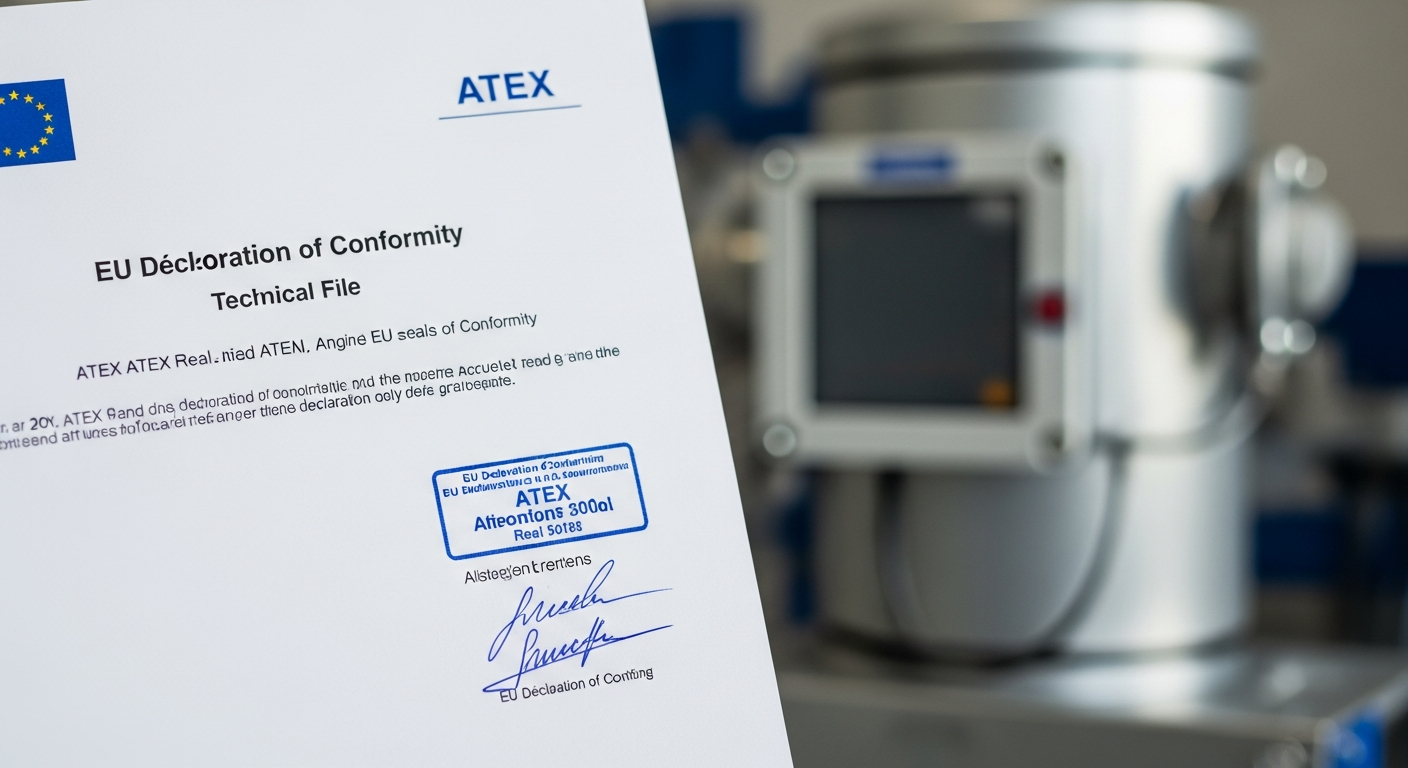
- EU Declaration of Conformity and CE/Ex Marking: Once compliance is verified (either through self-certification for Category 3 or via a Notified Body), you must draw up and sign an EU Declaration of Conformity. This legal document formally declares the product meets all requirements of the directive. Only then can you affix the CE mark, the specific Ex marking, and other required information to your product.
Choosing the Right Conformity Assessment Module
The ATEX Directive provides several conformity assessment procedures, or ‘modules,’ to demonstrate compliance. The correct module depends on your equipment’s category and whether you are producing a single unit or a series. Understanding these modules is critical for an efficient certification process.
- Module B (EU-Type Examination): This is a common starting point for Category 1 and 2 equipment. A Notified Body examines the technical design of a product and verifies that it meets the Directive’s requirements, issuing an EU-Type Examination Certificate upon successful review.
- Module D (Conformity to Type based on Quality Assurance of the Production Process): Following Module B, this module requires a Notified Body to audit and approve your manufacturing quality system to ensure it meets the requirements of standard ISO/IEC 80079-34. This ensures ongoing production consistently matches the certified type.
- Module F (Conformity to Type based on Product Verification): Also used after Module B, this module involves a Notified Body inspecting and testing every single product or a statistical sample to verify conformity with the certified type.
- Module A (Internal Production Control): This module is reserved for Category 3 equipment only. It allows for self-certification, where the manufacturer ensures and declares that the products satisfy the directive’s requirements without mandatory Notified Body involvement for the design or production phases.
Recommended Products for Hazardous Area Compliance
The following products from our catalog are certified for use in hazardous areas and directly relevant to this guide:
| Product Category | Rating / Certification | Link |
|---|---|---|
| IECEx Rated Equipment | IECEx | Shop Now |
Shop Certified Hazardous Area Equipment
Ensure your operations are fully compliant with equipment certified to the highest international standards for safety and reliability.
Frequently Asked Questions
What is the role of a Notified Body in the ATEX process?
A Notified Body is an independent, third-party organization designated by an EU country to assess the conformity of products before they are placed on the market. For higher-risk equipment (Category 1 and 2), they must review the design (EU-Type Examination) and often audit the production quality system to ensure ongoing compliance.
Can a manufacturer self-certify their equipment for ATEX?
Self-certification is only permitted for Category 3 equipment, which is intended for the lowest-risk hazardous areas (Zone 2 for gas/vapor, Zone 22 for dust). The manufacturer must still compile a Technical File and issue a Declaration of Conformity, but Notified Body involvement is not mandatory.
How long does the ATEX certification process typically take?
The timeline can vary significantly, from a few months to over a year. Factors include the complexity of the product, the availability of test labs and Notified Bodies, the completeness of your technical documentation, and whether the product passes testing on the first attempt.
Is ATEX certification valid outside of the European Union?
ATEX is a mandatory legal requirement specifically for the EU market. However, its technical principles are closely aligned with the international IECEx scheme, and an ATEX certification is often recognized and respected globally as a strong indicator of a product’s safety and quality for explosive atmospheres.
What is the difference between an EU-Type Examination Certificate and a Declaration of Conformity?
An EU-Type Examination Certificate is issued by a Notified Body and confirms that a product’s design (the ‘type’) meets ATEX requirements. The EU Declaration of Conformity is a legal document created and signed by the manufacturer, taking full responsibility that the product (and its ongoing production) complies with all applicable EU directives, including ATEX.
Completing the ATEX certification process is a key step for accessing the European market. It demonstrates a manufacturer’s commitment to safety and quality engineering. The critical steps are to understand your equipment’s classification, conduct a rigorous ignition hazard assessment, and prepare a thorough Technical Documentation File. For most manufacturers, working with a reputable Notified Body is essential for the conformity assessment. Following this structured approach helps ensure your products meet the safety standards required by the directive. A solid understanding of the atex certification process for manufacturers is the foundation for market access and operational safety.