Intrinsically Safe Knowledge Base
ATEX Directive 2014/34/EU: A Clear and Concise Summary
The ATEX Directive 2014/34/EU establishes the essential health and safety requirements for equipment and protective systems intended for use in potentially explosive atmospheres within the European Union. It creates a harmonized legal framework that ensures products meeting its standards can be sold and operated freely across the EU market, to ensure a high level of protection for workers and facilities. This guide summarizes the core components of the directive, the obligations for manufacturers, and the process for achieving compliance. Understanding these regulations is not just a matter of legal obligation; it is fundamental to preventing catastrophic accidents in industries such as oil and gas, chemical processing, mining, and manufacturing where flammable substances are present.
Decode ATEX Product Labels
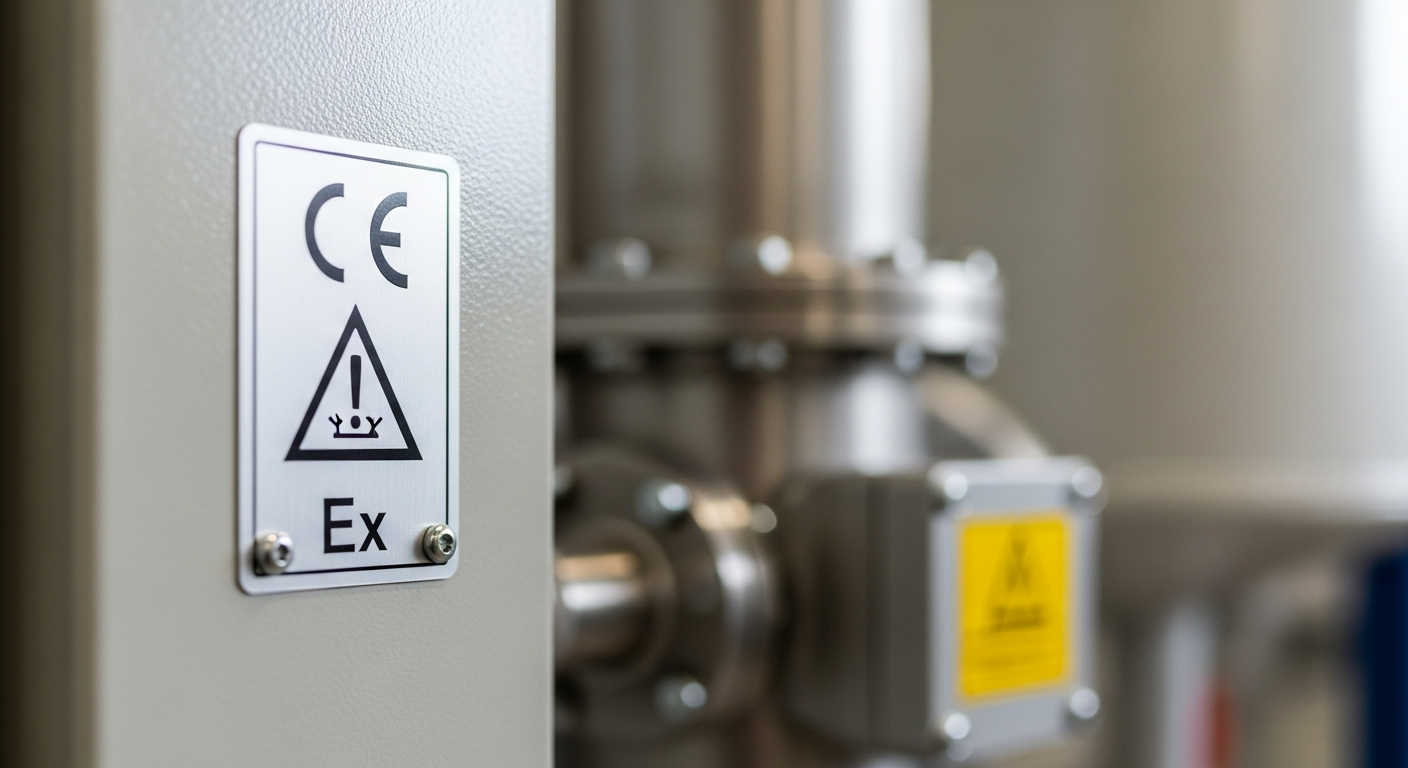
Once a product is certified, it carries a complex marking. Our detailed guide explains every code and symbol on an ATEX label.
Understanding the Scope and Core Objectives of the ATEX Directive
The primary goal of the ATEX Directive is to ensure the free movement of goods within the EU by harmonizing the technical and legal requirements for equipment used in hazardous locations. It applies to a broad range of products, including both electrical and non-electrical (mechanical) equipment, as well as protective systems. The directive classifies equipment into groups and categories based on the level of protection offered and the environment where it can be safely used. Specifically, per Directive 2014/34/EU, its scope covers any device intended to function in a potentially explosive atmosphere and capable of causing an explosion through its own potential sources of ignition. This includes everything from motors and switches to sensors and communication devices. The directive does not apply to medical devices, equipment for domestic use, or certain sea-going vessels and personal protective equipment (PPE), which are covered by separate regulations. By setting these clear, EU-wide standards, it eliminates the need for manufacturers to navigate different national regulations, simplifying market access.
Key Obligations for Manufacturers
Placing an ATEX-compliant product on the market requires the manufacturer to meet several mandatory obligations. These responsibilities ensure that every piece of equipment is designed, tested, and documented to be safe for its intended hazardous environment. Fulfilling these requirements is a prerequisite for affixing the CE and Ex markings.
- Technical Documentation: Manufacturers must create and maintain a detailed technical file. This file must contain all relevant information proving the product conforms to the directive’s requirements, including design specifications, risk assessment analysis, a list of standards applied, test reports, and operating instructions.
- Conformity Assessment Procedure: The product must undergo a conformity assessment. The specific procedure depends on the equipment category and the zone of use. For higher-risk equipment (Category 1 and 2), this typically involves a Notified Body, an independent organization designated by EU authorities to assess conformity.
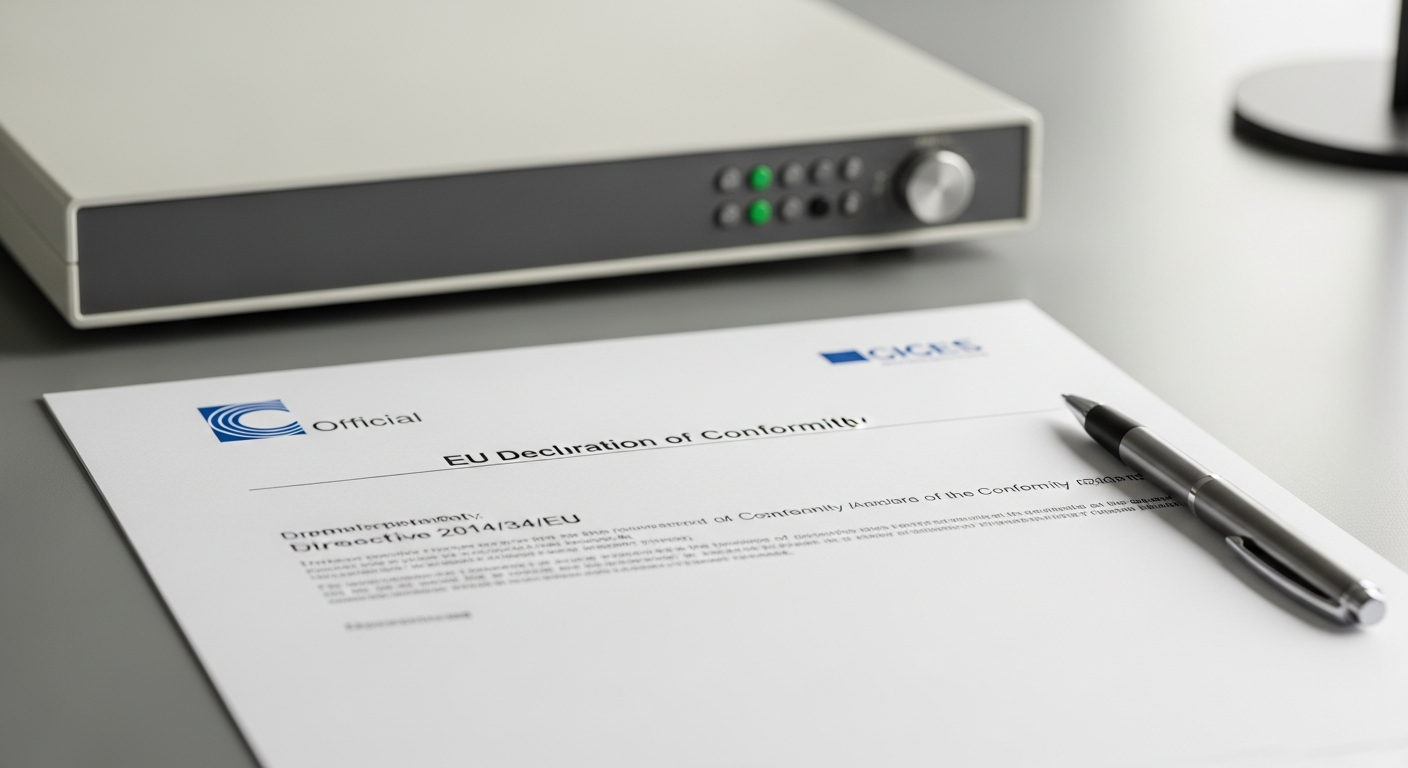
- EU Declaration of Conformity (DoC): The manufacturer must draw up and sign a legally binding DoC. This document formally declares that the specific product meets all relevant requirements of the ATEX Directive and any other applicable EU directives.
- CE and Specific Ex Marking: Once compliance is established, the manufacturer must affix the CE marking, the specific explosion protection symbol (the ‘Ex’ mark in a hexagon), and other required information detailing the equipment group, category, and protection methods used. This marking signals compliance and allows the product to be sold freely across the European market.
Navigating Conformity Assessment Modules
The ATEX Directive outlines several ‘modules’ for conformity assessment, detailed in Annexes III through IX, providing different routes to certification depending on the product’s risk level. The choice of module determines the extent of Notified Body involvement. For equipment intended for the most dangerous zones (e.g., Zone 0 or Zone 20), more stringent modules involving both design and production phase assessments are required.
- Module B (EU-Type Examination): This involves a Notified Body examining the technical design of a product and verifying that it meets the directive’s requirements. The Notified Body issues an EU-Type Examination Certificate if the design is compliant. This module covers the design phase only.
- Module D (Conformity to type based on quality assurance of the production process): This module follows Module B and requires the manufacturer to operate an approved quality system for production, final inspection, and testing, which is audited and monitored by a Notified Body.
- Module F (Conformity to type based on product verification): Also following Module B, this module involves a Notified Body examining and testing every single product to check its conformity with the approved type described in the EU-Type Examination Certificate.
- Module G (Conformity based on unit verification): A Notified Body examines an individual unit or a small batch of products and issues a certificate of conformity for that specific unit, providing a certification route for custom or non-series production.
Equipment Groups and Categories in Detail
The ATEX Directive categorizes equipment based on the environment where it will be used. This classification ensures that a device provides the appropriate level of protection for the associated risk.
- Equipment Group I: This group is for equipment intended for use in underground parts of mines, as well as those parts of surface installations of such mines, liable to be endangered by firedamp and/or combustible dust. It is subdivided into Categories M1 and M2.
- Equipment Group II: This group applies to equipment intended for use in all other places liable to be endangered by explosive atmospheres (i.e., surface industries). It is subdivided into three categories based on the persistence of the hazard.
For Equipment Group II, the categories are:
- Category 1: Equipment designed for areas where an explosive atmosphere is present continuously or for long periods (Zone 0 for gases/vapors, Zone 20 for dusts). This equipment must ensure a very high level of protection.
- Category 2: Equipment for areas where an explosive atmosphere is likely to occur in normal operation (Zone 1 for gases/vapors, Zone 21 for dusts). This category ensures a high level of protection.
- Category 3: Equipment for areas where an explosive atmosphere is unlikely to occur, and if it does, it will only be for a short period (Zone 2 for gases/vapors, Zone 22 for dusts). This requires a normal level of protection.
Roles and Responsibilities Beyond the Manufacturer
While the manufacturer has the primary responsibility for compliance, Directive 2014/34/EU also places clear obligations on other economic operators in the supply chain to ensure a consistent level of safety.
- Importers: Importers placing equipment from outside the EU on the market must verify that the manufacturer has carried out the correct conformity assessment procedure. They must ensure the technical documentation is available, the product bears the CE and Ex markings, and their own name and address are on the product. They are required to hold a copy of the EU Declaration of Conformity for 10 years.
- Distributors: Distributors must act with due care. Before making equipment available, they must verify that it bears the necessary markings, is accompanied by the required documents (including instructions in the appropriate language), and that the manufacturer and importer have complied with their respective requirements. If they believe a product is non-compliant, they must not place it on the market.
These shared responsibilities ensure that certified equipment maintains its compliance integrity from the factory to the final installation site.
Recommended Products for Hazardous Area Compliance
The following products from our catalog are certified for use in hazardous areas and directly relevant to this guide:
| Product Category | Rating / Certification | Link |
|---|---|---|
| IECEx Rated Equipment | IECEx Certified for Global Hazardous Areas | Shop Now |
Shop Certified Hazardous Area Equipment
Ensure compliance and safety with our extensive catalog of IECEx and ATEX certified products, ready for deployment in your facility.
Frequently Asked Questions
What is the main purpose of ATEX Directive 2014/34/EU?
Its main purpose is to ensure a high level of health and safety protection for people in potentially explosive atmospheres while guaranteeing the free movement of certified equipment and protective systems within the European Union market.
Does the ATEX Directive apply outside the EU?
Strictly, the ATEX Directive is a legal requirement only within the EU and the European Economic Area (EEA). However, its standards are globally recognized and often accepted as a benchmark for safety in hazardous areas worldwide, similar to the IECEx scheme.
What is the difference between ATEX 94/9/EC and 2014/34/EU?
ATEX 2014/34/EU replaced the older 94/9/EC directive. The change was primarily an alignment with the New Legislative Framework (NLF), clarifying the roles and responsibilities of manufacturers, importers, and distributors. The essential health and safety requirements remain largely the same.
Who is responsible for ensuring compliance with the ATEX Directive?
The manufacturer bears the ultimate responsibility for ensuring a product complies with the directive. This includes conducting the conformity assessment, creating the technical file, issuing the Declaration of Conformity, and correctly marking the product.
What does the ‘CE’ mark signify in the context of ATEX?
The CE mark indicates that the manufacturer declares the product’s conformity with all applicable EU directives, including ATEX 2014/34/EU. It is a mandatory marking that signifies the product can be legally placed on the market anywhere in the European Economic Area.
Talk to an ATEX Specialist Call: 832-699-6726
The ATEX Directive 2014/34/EU is a cornerstone of industrial safety in Europe. It provides a solid framework that balances safety with market accessibility, creating a single set of rules for all member states. For manufacturers, compliance is a multi-step process involving proper design, testing, quality control, and documentation. For end-users, the ATEX markings provide a clear assurance that the equipment is fit for purpose in hazardous environments. A solid understanding of the directive’s core principles is essential for any stakeholder involved with equipment for potentially explosive atmospheres to navigate its requirements effectively.