Intrinsically Safe Knowledge Base
Mastering Hazardous Zone Compliance: Your Essential Guide to ATEX, IECEx, and Industrial Safety
In the high-stakes world of industrial operations, the greatest dangers are often the ones you cannot see. Invisible clouds of flammable gas, microscopic particles of combustible dust, or volatile vapours can silently accumulate, turning a seemingly safe production floor into a ticking time bomb. The line between a normal operating day and a catastrophic event is often just a single, unintended spark. This is the stark reality that hazardous zone compliance exists to prevent. It is far more than a bureaucratic checklist or a set of arcane regulations; it is a comprehensive, life-saving discipline that provides the essential framework for managing the risk of fire and explosion in potentially hazardous atmospheres. This guide is designed to demystify this critical subject, transforming it from an intimidating challenge into a manageable and foundational pillar of your safety strategy. We will journey deep into the core principles of compliance, exploring everything from the fundamental science of area classification and the intricate language of global standards like ATEX and IECEx, to the practical realities of who holds responsibility and when these crucial steps must be integrated into your project’s lifecycle. Whether you are an engineer designing a new facility, a manager overseeing operations, or a technician on the front lines, mastering this knowledge is not just about following rules—it is about protecting lives, securing assets, and building a resilient culture of safety from the ground up.
Master Hazardous Area Classification
Ensure your engineering and safety teams understand the critical differences between Class/Division and Zone systems. Read our comprehensive breakdown to accurately map your facility and mitigate explosion risks.
Decoding the Essentials: What Exactly is Hazardous Zone Compliance?
Embarking on the journey of understanding hazardous zone compliance can often feel like learning a new language, one filled with cryptic codes, overlapping standards, and incredibly high stakes. At its core, however, the concept is rooted in a fundamental and universal priority: preventing catastrophic events. Hazardous zone compliance is not merely a bureaucratic hurdle or a box-ticking exercise; it is a comprehensive, systematic methodology designed to prevent the ignition of flammable or combustible substances in the atmosphere, thereby protecting human life, the environment, and significant capital assets. It is the practical application of science and engineering to manage the ever-present risk of fire and explosion in industrial environments. To truly grasp its meaning, one must first visualize the perfect storm it seeks to prevent—the convergence of fuel, oxygen, and an ignition source. This trio, often taught as the “fire triangle,” is the simple yet deadly recipe for disaster. In many industrial settings, such as oil refineries, chemical processing plants, grain mills, pharmaceutical manufacturing facilities, and even wastewater treatment centers, the first two elements—fuel (in the form of flammable gases, vapors, mists, or combustible dusts) and oxygen (from the air)—are often an unavoidable part of the operational process. Therefore, the entire discipline of hazardous zone compliance pivots on rigorously controlling the third element: the source of ignition.
Key Benefits of UL Certification
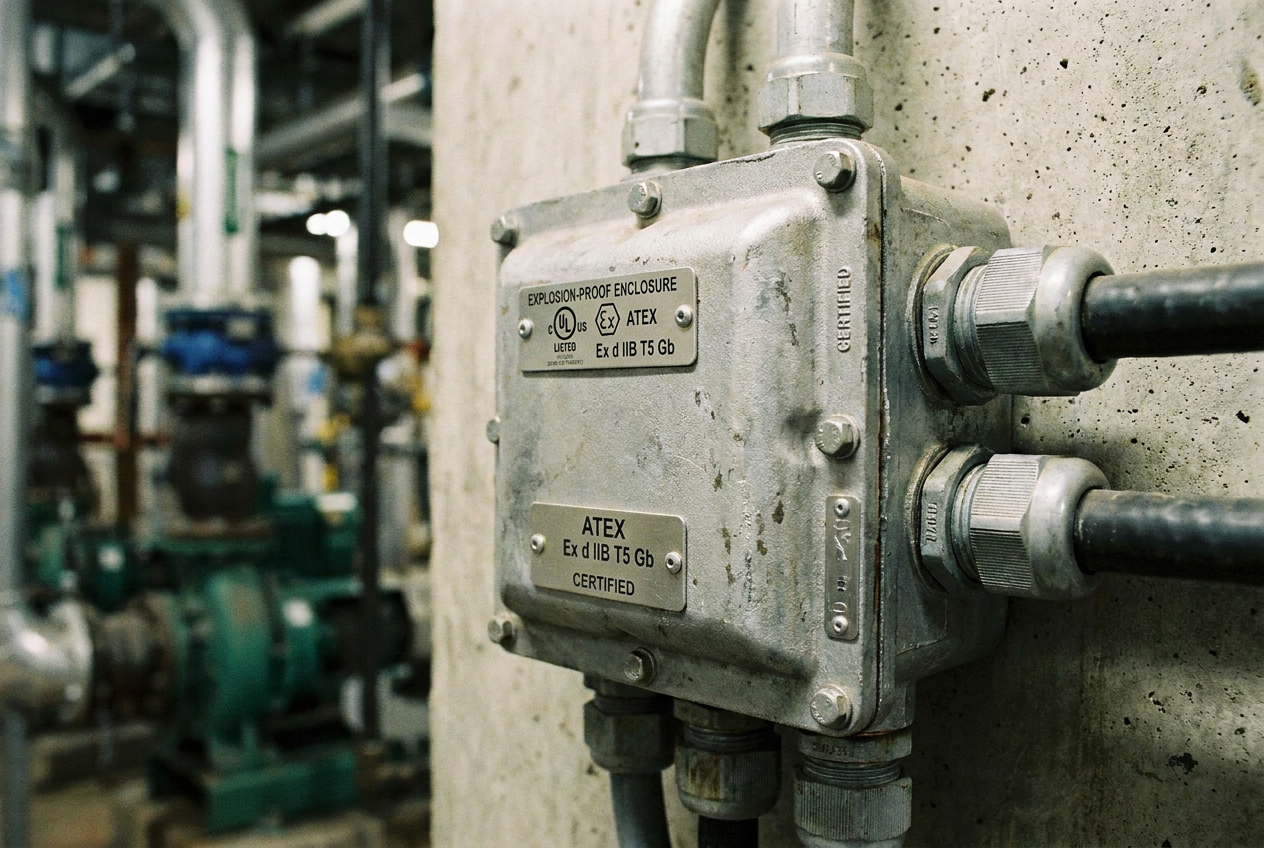
- Enhanced Safety: UL certification ensures that products have been rigorously tested to meet strict safety standards, minimizing the risk of fire, explosion, and electrical shock in hazardous environments.
- Regulatory Compliance: Using UL-certified equipment helps companies comply with national and international safety regulations, such as those from OSHA, ATEX, and IECEx, avoiding costly fines and legal issues.
- Insurance and Liability: Many insurance companies offer lower premiums for facilities that use UL-certified equipment, as it demonstrates a commitment to safety and risk reduction.
- Brand Reputation: A strong safety record, supported by the use of certified equipment, enhances a company’s reputation, making it a more attractive partner for customers and employees.
- Operational Reliability: Certified equipment is not only safer but also often more reliable, leading to less downtime and maintenance, which in turn improves productivity and profitability.
Mission-Critical Gear for Hazardous Environments
| Equipment Category | Available Equipment Types | Primary Safety Application |
|---|---|---|
|
Explosion Proof CCTV Cameras View Details |
Bullet Cameras, Dome Cameras, and Heavy-Duty Camera Enclosures | Continuous facility surveillance, remote area monitoring, and asset protection in hazardous zones. |
|
Explosion Proof LED Lighting View Details |
Linear Lights, High-Bay Area Lights, and Heavy-Duty Flood Lights | Safe, high-efficiency illumination for production floors and high-risk industrial facilities. |
|
Industrial Gas Detectors View Details |
Portable Monitors, Fixed Systems, Leak Detectors, and Calibration Equipment | Real-time atmospheric risk mitigation, combustible dust management, and toxic vapor detection. |
Equip Your Hazardous Zones with Certified Gear
Do not compromise on operational safety. Browse our extensive catalog of rugged, intrinsically safe cameras, lighting, and enclosures engineered to exceed ATEX, IECEx, and OSHA compliance standards.
FAQs
What is the difference between a Zone and a Division?
The Zone system (international standard) classifies hazardous areas based on the probability and duration of an explosive atmosphere’s presence (Zones 0, 1, 2). The Class/Division system (North American standard) categorizes areas by the type of hazardous substance (Class I, II, III) and whether the hazard exists under normal or abnormal conditions (Division 1, 2).
Who is responsible for hazardous area classification?
The facility owner or operator is ultimately responsible. However, the classification must be conducted by a competent team of qualified engineers and safety professionals with expertise in the relevant standards and material properties.
Can I use a Zone 1 rated device in a Zone 2 area?
Yes, you can use equipment rated for a higher-risk zone in a lower-risk zone. A Zone 1 device is built to more stringent standards than a Zone 2 device, so it is safe to use in a Zone 2 area. However, the reverse is strictly prohibited.
What are the consequences of non-compliance?
The consequences are severe and include the risk of catastrophic accidents, major legal and financial penalties, criminal prosecution for individuals, massive operational downtime, and irreparable damage to a company’s reputation.
What is the difference between ATEX and IECEx?
ATEX is a legal requirement for equipment used in hazardous areas within the European Union. IECEx is a voluntary international certification scheme that facilitates global trade by providing a single, internationally recognized certificate of conformity.
Chat for a Quote
Call: 832-699-6726
Conclusion
The journey through the intricate landscape of hazardous zone compliance reveals a profound truth: this discipline is not a destination to be reached, but a continuous path that must be walked with diligence and unwavering commitment. It is not a final exam to be passed before a facility opens, but a daily practice woven into the very DNA of an organization. Viewing compliance as a mere regulatory burden is to fundamentally misunderstand its purpose and to miss its greatest benefits. The true mastery of these principles—from understanding the nuanced differences between ATEX and IECEx, to meticulously applying the correct protection concepts, to embedding this knowledge across every role from the design engineer to the maintenance technician—is what separates a merely compliant facility from a genuinely safe one. It represents a paradigm shift from a reactive, rule-following posture to a proactive, risk-averse culture where safety is not just a department, but a shared value and a collective responsibility.