Intrinsically Safe Knowledge Base
ATEX Markings Guide | Zones 0, 1 & 2 Explained | ISS
Knowing how to read the string of letters and numbers on ATEX-certified equipment is a critical safety requirement for anyone working in hazardous areas. This code, the ATEX marking, is a shorthand summary of the equipment’s capabilities, limitations, and the specific environments where it can be safely used. The ability to interpret this information correctly is fundamental for engineers, technicians, and safety managers to prevent explosions and maintain compliance. This guide breaks down what each part of the ATEX marking means, so you can select and verify equipment correctly.
Go Deeper: Understand ATEX Zones
This marking tells you *what* the equipment is. To understand *where* it can be used, our guide to ATEX Zone 1 vs. Zone 2 is essential for proper application.
What is an ATEX Marking? The Core Components Explained
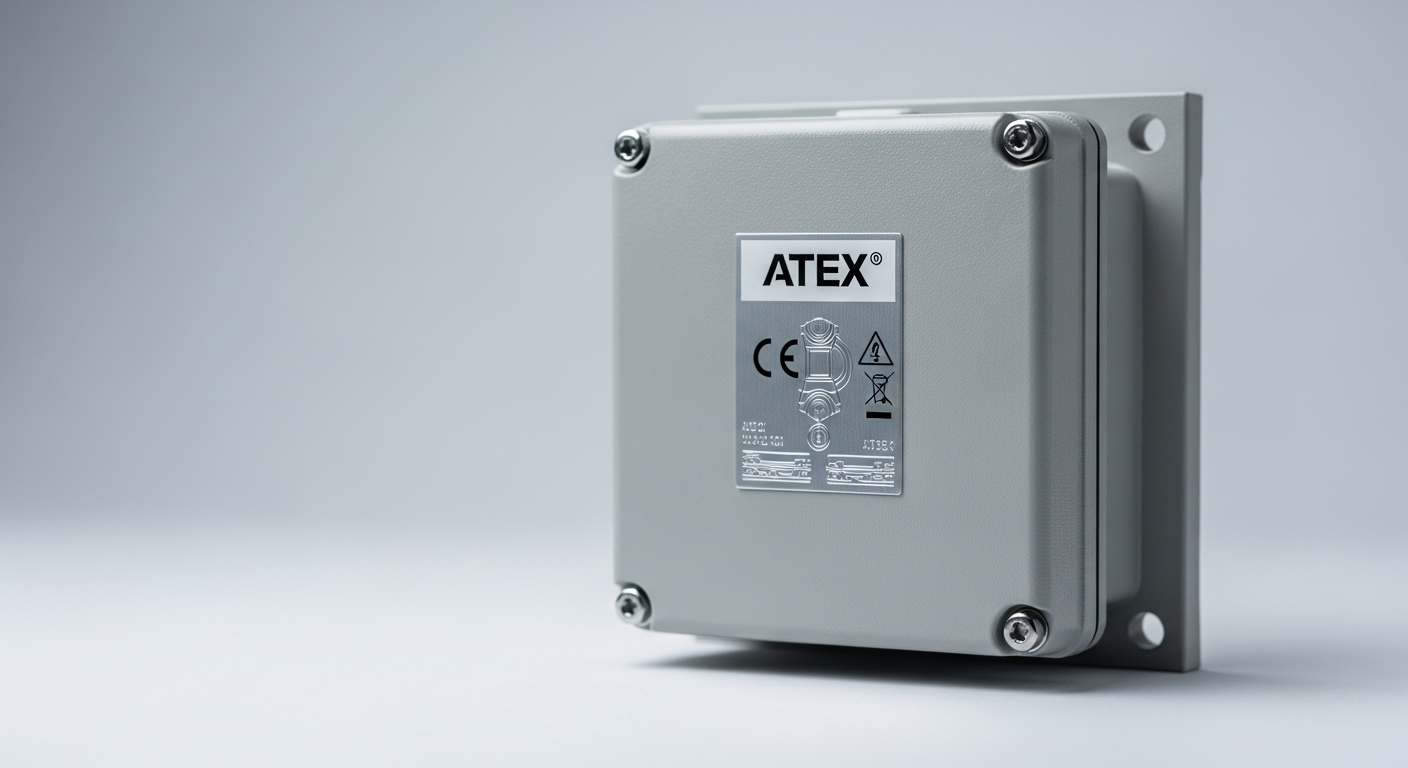
An ATEX marking is a mandatory label on all equipment certified for use in potentially explosive atmospheres within the European Union. It’s a standardized format that quickly communicates vital safety information. The structure is defined by harmonized standards, with EN 60079-0 setting the general requirements for the marking. Every character has a purpose, from identifying the type of hazardous environment to the maximum surface temperature the device can reach. Let’s break down the essential elements you will always find.
The sequence typically begins with the CE mark, indicating conformity with EU health, safety, and environmental protection standards. This is followed by a series of numbers identifying the Notified Body that certified the product. The most recognizable part comes next: the ‘Ex’ symbol inside a hexagon, which officially designates the equipment as explosion-protected. Following this, the marking string details the specific classifications, which we will explore in the next section. Misinterpreting any of these components can lead to installing a non-compliant device, creating a significant safety risk for the facility and its personnel.
Breaking Down a Typical ATEX Marking String
To explain the marking clearly, let’s look at a real-world example. Consider a marking like: II 2 G Ex db IIC T4 Gb. This might look complex, but it’s a logical sequence. Each part of the string provides a specific piece of information.
- Equipment Group & Category: The ‘II’ indicates Equipment Group II, for use in surface industries (not mining). The ‘2’ is the Equipment Category, meaning it’s suitable for Zone 1 (high-risk) areas. ‘G’ specifies it’s for gas atmospheres.
- Protection Method: ‘Ex db’ refers to the type of protection. ‘Ex’ is the prefix for all protection methods, while ‘db’ stands for ‘Flameproof Enclosure‘. This means the enclosure can contain an internal explosion and prevent it from igniting the surrounding atmosphere.
- Gas/Dust Group: ‘IIC’ is the gas group. This is a critical detail, as it specifies the type of gas the equipment is safe to be around. Group IIC is the most onerous, covering highly volatile substances like hydrogen and acetylene, and is also suitable for use in IIA and IIB environments.
- Temperature Class: ‘T4’ indicates the maximum surface temperature the equipment will reach, which in this case is 135°C. This must be lower than the auto-ignition temperature of the hazardous substances present.
- Equipment Protection Level (EPL): ‘Gb’ provides a simplified risk assessment. ‘G’ is for gas, and ‘b’ signifies a ‘high’ level of protection, suitable for Zone 1.
Common ATEX Protection Concepts
The ‘Ex’ portion of the marking is followed by letters indicating the specific protection method used in the equipment’s design. Understanding these is key to matching the right device to the right application and hazard level. Here are some of the most common concepts you’ll encounter:
- Ex d (Flameproof): As mentioned, this concept involves an enclosure strong enough to withstand an internal explosion and cool any escaping gases so they cannot ignite the external atmosphere. It is commonly used for motors, junction boxes, and lighting fixtures.
- Ex e (Increased Safety): This method applies additional safety measures to prevent sparks or high temperatures from occurring in normal operation. It’s often used for terminals and connection boxes where there are no sparking components inside.
- Ex i (Intrinsic Safety): This is one of the safest protection methods. It limits the electrical and thermal energy within the equipment to a level below what is required to ignite a specific hazardous atmosphere. This concept is divided into levels ‘ia’ (for Zone 0), ‘ib’ (for Zone 1), and ‘ic’ (for Zone 2).
- Ex p (Pressurized Enclosure): This technique involves maintaining a positive pressure inside the equipment enclosure with a protective gas (like clean air or nitrogen) to prevent the flammable atmosphere from entering.
- Ex m (Encapsulation): This method involves encasing potentially spark-producing components in a resin or compound to completely isolate them from the hazardous environment.
Recommended Products for ATEX Environments
The following products from our catalog are certified for use in hazardous areas and directly relevant to this guide:
| Product Category | Rating / Certification | Link |
|---|---|---|
| ATEX Zone 0 Equipment | ATEX Zone 0 | Shop Now |
Shop Certified ATEX Zone 0 Equipment
Ensure compliance and safety with equipment rated for the most hazardous environments. Browse our selection of certified Zone 0 products.
Frequently Asked Questions
What does the ‘Ex’ symbol in a hexagon mean?
The ‘Ex’ symbol enclosed in a hexagon is the official mark for explosion-proof equipment under the ATEX directive. It signifies that the product has been designed, tested, and certified to be safely operated in potentially explosive atmospheres.
How do I find the Temperature Class on an ATEX marking?
The Temperature Class is indicated by a ‘T’ code, from T1 to T6, near the end of the marking string. For example, ‘T4’ means the maximum surface temperature will not exceed 135°C. This is crucial for preventing ignition of the surrounding atmosphere.
What is the difference between ATEX Equipment Group I and Group II?
Equipment Group I (marked with ‘I’) is specifically for use in underground mining operations, which have hazards from methane and coal dust. Equipment Group II (marked with ‘II’) is for all other surface industries with potentially explosive gas, vapor, or dust atmospheres.
Can I use ATEX Zone 2 equipment in a Zone 1 area?
No, you cannot. Equipment must be rated for the zone it is used in or a more hazardous one. You can use Zone 1 equipment in a Zone 2 area, but not the other way around. Using Zone 2 equipment in a Zone 1 area presents a serious safety risk.
Does ATEX certification expire?
The certification of a product model itself does not expire, but it is tied to the standards it was certified against. If the standards (like EN 60079-0) are updated, new products must be certified to the latest version. The physical product must also be maintained to remain compliant.
The ATEX marking is a dense but effective code for hazardous area safety. By understanding its core components: the equipment group, category, protection method, gas group, and temperature class, you can make informed decisions that protect both people and assets. This knowledge isn’t optional; it is a fundamental part of a sound safety management system. Always take the time to verify the marking against your area classification documents and equipment datasheets. When understood, the ATEX marking changes from a confusing code into a practical tool for ensuring operational safety and compliance in challenging industrial environments.