

Intrinsically Safe Knowledge Base
Exploring Intrinsically Safe Fan Types
Introduction
Intrinsically safe fans are a critical component for safe ventilation in potentially explosive atmospheres. Designers make these specialized fans to operate safely in potentially explosive atmospheres, which makes them an essential tool in industries such as oil and gas, mining, and chemical processing. In this article, we will delve into the different types of intrinsically safe fans available on the market. Intrinsically Safe Store, is a leading provider of intrinsically safe products. So, let’s get started and explore the world of intrinsically safe fans.
What are Intrinsically Safe Fans?
Intrinsically safe fans are designed to prevent ignition of flammable gases, dust, or vapors in hazardous environments. They achieve this by limiting the energy, electrical and thermal, available for ignition. This makes them a crucial component in maintaining safety in industries where explosive atmospheres are common.
Key Features & Benefits of Intrinsically Safe Fans
Understanding the core features of intrinsically safe fans helps in appreciating their role in workplace safety. These are not standard fans; they are engineered with specific components and materials to mitigate ignition risks.
- Non-Sparking Materials: A certified fan assembly utilizes multiple protection concepts. While the motor may be intrinsically safe (an electrical protection), the fan’s mechanical components, like blades and housing, are also critical. These are often built from non-sparking materials and with precise clearances to prevent ignition from mechanical friction or impact, a concept known as Constructional Safety.
- Certified Motors: The electric motors in these fans are certified as intrinsically safe (Ex i). This means their electrical circuits operate with such low energy (voltage and current) that they are incapable of generating a spark or thermal effect that could ignite a hazardous atmosphere, even under fault conditions.
- Thermal Control: These fans operate within strict temperature limits to avoid becoming an ignition source themselves. The design ensures that surface temperatures never reach the auto-ignition point of the surrounding hazardous substances.
The benefits of deploying certified intrinsically safe ventilation are significant:
- Enhanced Safety and Risk Reduction: The primary benefit is the prevention of catastrophic explosions, protecting personnel, equipment, and the facility.
- Regulatory Compliance: Using certified fans ensures compliance with stringent safety standards such as ATEX in Europe and HazLoc classifications in North America, avoiding legal and financial penalties.
- Durability and Reliability: Built for harsh industrial settings, these fans are robust and designed for long-term, reliable operation with minimal maintenance.
Common Fan Designs for Hazardous Locations
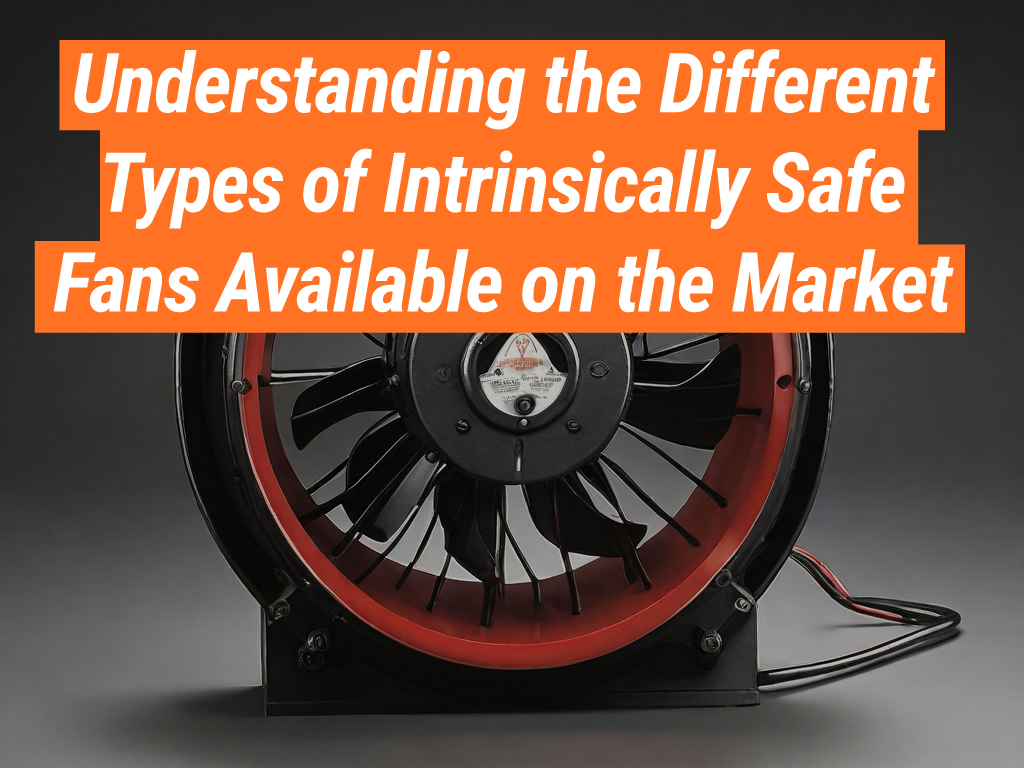
Fans intended for hazardous areas typically come in standard designs like axial or centrifugal, but they are specially engineered and certified with appropriate protection methods (like intrinsically safe motors or explosion-proof enclosures) to operate safely. There are several types of intrinsically safe fans available on the market, each designed to meet specific needs and applications. Here are some of the most common types:
- Axial Fans: These fans draw air into the fan and discharge it in the same axial direction using a propeller. Typically, people use them for general ventilation and cooling purposes.
- Centrifugal Fans: These fans, also known as blowers, move air radically, changing the direction of the airflow. People commonly use them for ventilation, heating, and cooling.
- Exhaust Fans: Designers create these fans to remove stale or contaminated air from a room and replace it with fresh air. People often use them in bathrooms, kitchens, and industrial settings.
Choosing the Right Intrinsically Safe Fan
When choosing an intrinsically safe fan, it’s important to consider several factors. These include the type of hazardous environment (e.g., specific gas groups or dust types), the required airflow to ensure proper ventilation, and the fan’s noise level. It’s also crucial to ensure that the fan meets the necessary safety standards and certifications for your region and application.
Why Choose Intrinsically Safe Store?
Intrinsically Safe Store is your one-stop-shop for all your intrinsically safe product needs. We offer a wide range of intrinsically safe fans from top manufacturers, ensuring you get the highest quality products. Our team of experts is always ready to help you choose the right fan for your specific needs and environment. Browse our certified selection to secure your operations today.
Frequently Asked Questions (FAQs)
What certifications should I look for in an intrinsically safe fan?
Look for certifications relevant to your region and industry. The most common are ATEX for Europe and IECEx for international standards. In North America, look for NEC/CEC ratings like Class I, Division 1. This classification is roughly equivalent to the IEC Zone 0 or Zone 1 classification, where flammable concentrations are present continuously or intermittently under normal operating conditions.
Can intrinsically safe fans be used in environments with combustible dust?
Yes, but you must select a fan specifically rated for combustible dust environments. These will have certifications indicating their suitability for specific dust groups (e.g., Class II for dusts in North America). The fan’s construction will prevent dust ingress and ensure surface temperatures remain below the dust’s ignition point.
What is the difference between an intrinsically safe fan and an explosion-proof fan?
Intrinsically safe equipment is designed to be incapable of producing enough electrical or thermal energy to cause an ignition. Explosion-proof equipment, on the other hand, is built to contain an internal explosion and prevent it from propagating into the surrounding hazardous atmosphere. Both are methods for safety in hazardous areas, but they achieve it through different principles.
Conclusion
Intrinsically safe fans are an essential tool in maintaining safety in hazardous environments. With several types available, it’s important to understand the differences and choose the right one for your specific needs. Intrinsically Safe Store is here to help, offering a wide range of high-quality intrinsically safe fans and expert advice. Talk to a hazardous-area specialist today to find the perfect certified fan for your needs.