

Intrinsically Safe Knowledge Base
Why Are Explosion Proof Fans and Exhaust Fans Necessary? -Why You Need Them!
Introduction to Explosion-Proof Ventilation
Exhaust fans and fans are essential in factories or industries that work with flammable materials. Keeping equipment cool and the atmosphere under control reduces the risk of fire accidents. But, operations with explosion-proof fans are necessary under what circumstances?
In a hazardous atmosphere, a standard fan poses a significant risk. Its electrical components, like the motor or switches, can generate sparks during normal operation. If flammable materials are present in the air, a single spark can be a sufficient trigger for a catastrophic ignition. So how can you prevent accidents like this? This article will help you understand your needs.
What do you need to know about Explosion-proof Equipment
In explosion risk areas, working with proof equipment is essential. Operating in locations where there is a risk of exposure to combustible materials requires twice as much safety. Explosion-proof equipment is specifically designed to contain an internal ignition, preventing it from propagating into the wider hazardous environment and causing a larger, more dangerous event. If your work presents this risk, you certainly want to make sure your equipment and staff are safe.
Ex-Proof has certifications and ratings that allow its use in hazardous locations. Let’s take a quick look at which certifications you should consider to ensure your equipment is safe. The international area classification standard helps identify the hazard present in the environment. Hazardous locations in North America are classified by the NEC/NFPA system according to Class, Division, and Group.
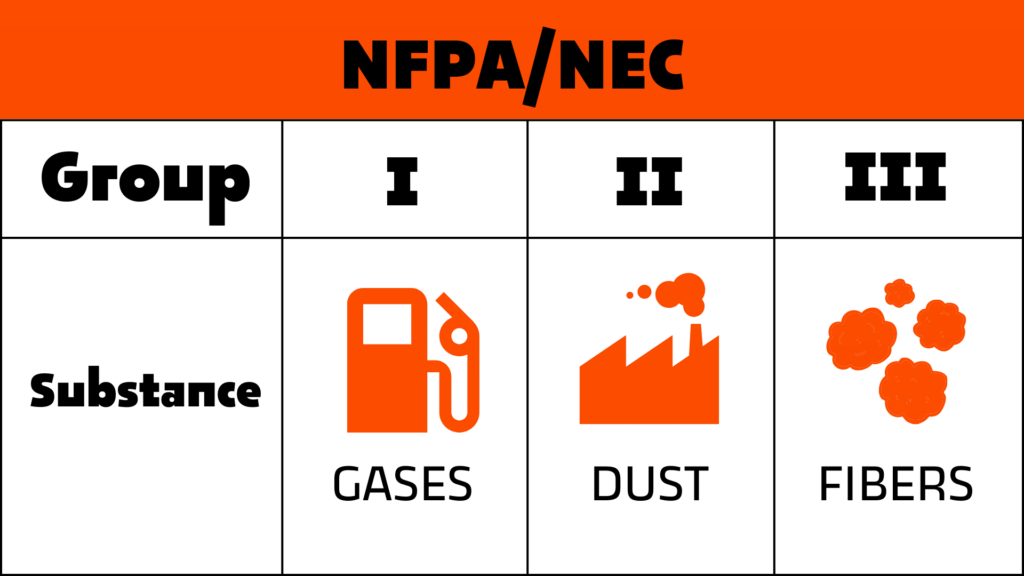
In addition to this brief exemplification, the groups are also classified according to the place’s substances. We’ve written in detail about this rating before you can check it out here. Having equipment certified to these regulations gives you confidence that your performance will be productive. An explosion-proof design assumes an ignition can occur inside the equipment. Its robust enclosure is engineered to contain that internal explosion and cool any escaping gases so they cannot ignite the external flammable atmosphere. Therefore, it is essential to consider all the manufacturer’s recommendations for use.
AMCA Designations
Now that you know what to expect from explosion-proof equipment let’s delve deeper into our conversation about Ex-proof Fans and Exhaust Fans. In addition to preventing explosions added to the environment, the fan classified as Ex-proof resists explosions even when it originates from itself.
To have this great function, the design of the fan follows AMCA (Air Movement and Control Association International) standards to minimize the risks of internal sparks. The AMCA standard works with three spark-resistant design designations: A, B, and C types.
Equipment that meets these standards is effective against explosion hazards. As mentioned before, NEC (National Electrical Code) and NFPA (National Fire Protection Association) classifications are also safety and quality references for explosion-proof equipment.
Key Features & Benefits of Explosion-Proof Fans
Beyond basic air circulation, explosion-proof fans are engineered with specific safety features that make them indispensable in hazardous locations. Understanding these benefits clarifies why they are a necessary investment for operational safety and compliance.
- Spark-Resistant Construction: To prevent mechanical sparks, these fans use materials like aluminum, bronze, or other non-ferrous alloys for blades and housings. This construction is critical in environments where a single spark could ignite flammable gases or dust.
- Contained and Sealed Components: The motors and all electrical wiring are housed in robust, sealed enclosures. This design ensures that any internal electrical arc or spark is contained and cannot escape to ignite the surrounding hazardous atmosphere.
- Durable for Harsh Environments: Built to withstand corrosive materials, extreme temperatures, and high-pressure washdowns, these fans offer reliability and a long service life in demanding industrial settings.
- Certified Safety and Compliance: Explosion-proof fans are rigorously tested and certified to meet strict standards from bodies like NFPA, NEC, ATEX, and IECEx. This certification verifies the equipment meets strict safety standards for use in specific hazardous area classifications, ensuring compliance and reducing ignition risk.
Designed for your Needs
Your primary need is to keep your equipment working safely. Ex-proof exhausts and fans are ideal for industrial areas that contain combustible materials in the air. Also, having the spark protection factor that the AMCA construction standard implements in fans guarantees productivity.
Frequently Asked Questions (FAQs)
What makes a fan “explosion-proof”?
A fan is considered explosion-proof due to its specialized construction. Key features include a motor and electrical components housed in a sealed enclosure that can contain an internal ignition event, preventing it from reaching the external hazardous atmosphere. They also use non-sparking materials for parts like blades and the casing to avoid friction sparks.
In which industrial environments are these fans mandatory?
Explosion-proof fans are required in any location classified as hazardous due to the presence of flammable gases, vapors, liquids, combustible dust, or fibers. This includes industries such as oil and gas refineries, chemical processing plants, paint booths, grain elevators, wastewater treatment facilities, and pharmaceutical manufacturing.
Are explosion-proof and intrinsically safe fans the same thing?
No, they are based on different safety principles. Explosion-proof equipment is designed to contain an internal explosion, while intrinsically safe equipment is designed to operate on such low electrical energy that it cannot generate a spark powerful enough to cause ignition in the first place.
How do AMCA standards relate to an explosion-proof rating?
AMCA provides classifications for spark resistance (Type A, B, C), which is a critical component of an explosion-proof fan’s safety. While an AMCA spark-resistant rating is essential, it must be combined with a certified explosion-proof motor and enclosure to create a fully compliant explosion-proof fan assembly for a hazardous location.
Find the Right Certified Fan for Your Hazardous Area
Ensuring safety and compliance starts with the right equipment. Our specialists can help you select the correct explosion-proof fan for your specific Class, Division, and Group requirements.
Keeping safety in your workplace is your priority. To ensure both safety and productivity, the best choice is Ex-proof exhausters and fans. Searching for the right equipment can be difficult, but we provide you with the best options in our Intrinsically Safe Store Catalogue. Talk to our hazardous-area specialists to get the information you need!
In addition to providing some information about explosion-proof equipment, we also recommend that you consult hazardous area engineers to provide you with the equipment that best fits your situation. This booklet can also have more details about hazard location classifications.