Intrinsically Safe Products
NEMA 7 vs NEMA 9: Class I & II Enclosure Guide | ISS
Selecting the correct junction box for a hazardous location is a critical decision for facility safety and regulatory compliance. The distinction between NEMA 7 and NEMA 9 enclosures is central to this choice, as each is engineered for a specific atmospheric hazard. Engineers, technicians, and safety managers must understand the core differences when evaluating nema 7 vs nema 9 enclosures. NEMA 7 enclosures are designed to contain internal explosions from flammable gases or vapors, preventing ignition of the surrounding atmosphere. NEMA 9 enclosures, on the other hand, are built to be dust-tight, keeping combustible dusts from entering and creating a hazard. Choosing the wrong type can lead to equipment failure, safety code violations, and serious risk to personnel. This guide breaks down the applications, design features, and standards for each to help you make the right choice.

Beyond the Box: Enclosure Safety Requirements
Your enclosure is only one part of the system. Ensure total compliance by understanding the critical ventilation requirements for Class 1 Division 2 environments.
NEMA Ratings for Hazardous Locations
The National Electrical Manufacturers Association (NEMA) provides a rating system for electrical enclosures based on their ability to protect against specific environmental conditions. For hazardous locations, the standards are particularly stringent. The primary document governing these designs is NEMA 250, which details the construction and testing requirements for enclosures. The key difference between NEMA 7 and NEMA 9 enclosures is the type of hazardous substance they are designed to handle. NEMA 7 is for Class I locations (flammable gases or vapors), while NEMA 9 is for Class II locations (combustible dusts). This distinction is critical because the protection methods are fundamentally different. A gas explosion requires containment, whereas a dust hazard requires exclusion. An enclosure rated for one hazard is not suitable for the other, which makes correct identification of the site hazard the most important first step in the selection process.
NEMA 7 vs. NEMA 9: Key Differences at a Glance
| Feature | NEMA 7 Enclosure | NEMA 9 Enclosure |
|---|---|---|
| Hazard Type | Class I: Flammable gases or vapors | Class II: Combustible dusts |
| Protection Method | Explosion containment (allows gases to enter but contains an internal explosion) | Dust exclusion (prevents dust from entering) |
| Primary Standard | Designed for Class I, Division 1 locations | Designed for Class II, Division 1 locations |
| Design Focus | Heavy-duty construction, thick walls, and long flame paths to cool escaping gases. | Precision-machined surfaces and high-quality gaskets to create a dust-tight seal. |
| Material | Typically cast aluminum or stainless steel | Cast aluminum, stainless steel, or sheet steel |
| Hazardous Groups | Groups A, B, C, D | Groups E, F, G |
NEMA 7 Enclosures for Gas Environments
NEMA 7 enclosures are engineered for indoor use in Class I, Division 1, Groups A, B, C, or D hazardous locations. These are areas where flammable gases or vapors can be present under normal operating conditions. The core design principle of a NEMA 7 enclosure is not to be gas-tight, but to contain an internal explosion and prevent it from propagating to the surrounding environment.
- Explosion Containment: The enclosure must be constructed to withstand the pressure from an internal explosion of a specified gas-air mixture without rupturing or suffering permanent deformation.
- Flame Path Design: Joints, gaskets, and shaft openings are designed to form long, tight flame paths. If an explosion occurs inside, the hot gases are forced through these paths and cooled enough that they cannot ignite the external hazardous atmosphere.
- Heavy-Duty Construction: These enclosures are typically made from materials like cast aluminum or stainless steel, with bolted covers and thick walls to handle the high pressures of an explosion.
- Specific Applications: NEMA 7 enclosures are used in oil refineries, petrochemical plants, paint finishing booths, and facilities where flammable gases or volatile liquids are processed or stored.
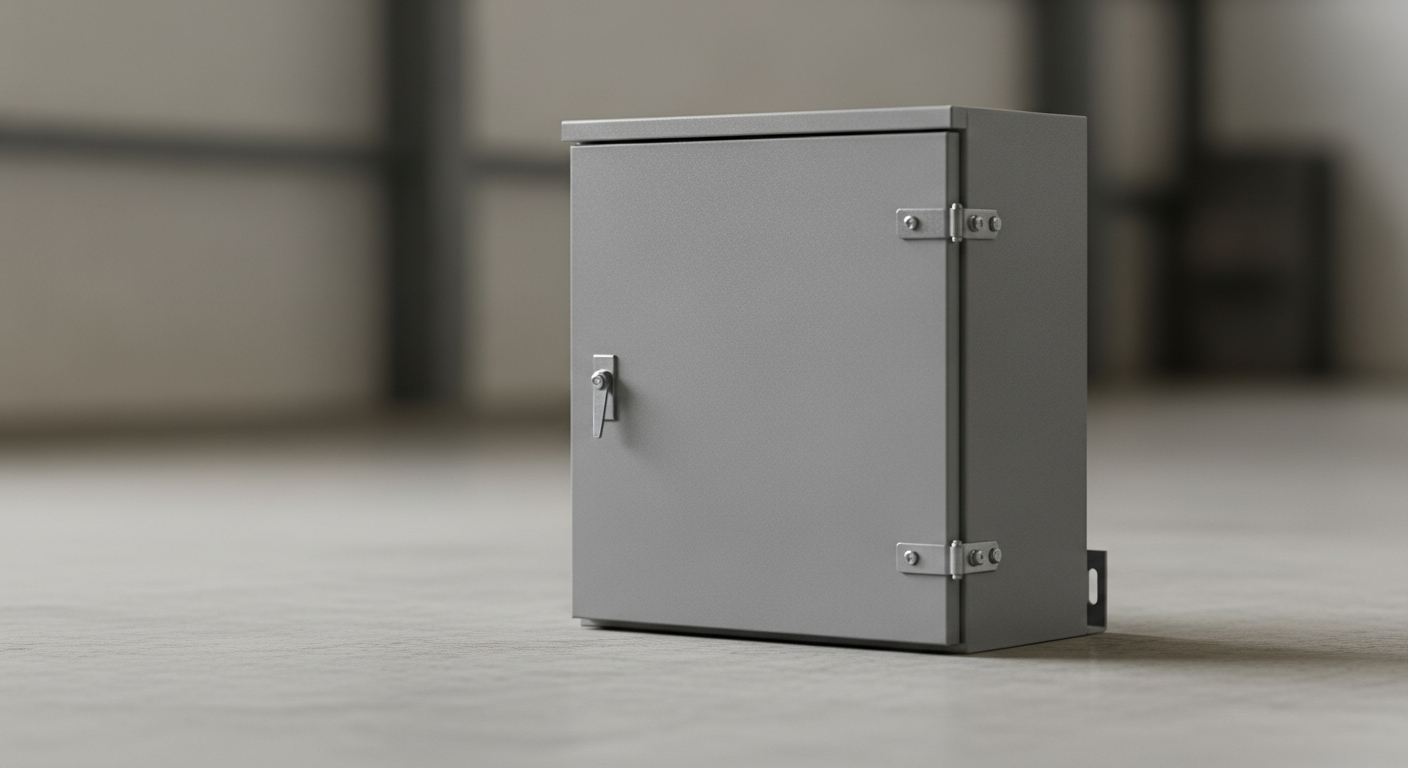
NEMA 9 Enclosures for Dust Environments
NEMA 9 enclosures are designed for indoor use in Class II, Division 1, Groups E, F, or G hazardous locations. These environments contain combustible dusts like metal dust, coal dust, grain dust, or flour. The primary function of a NEMA 9 enclosure is to be dust-tight, preventing these particles from entering and contacting internal electrical components.
- Dust-Tight Sealing: Gaskets and precision-machined surfaces create a seal that prevents fine combustible dust from entering, which could otherwise cause a short circuit or ignite.
- Surface Temperature Limitation: The design must keep the enclosure’s external surface temperature below the auto-ignition point of the specific dust present, even during internal fault conditions.
- Material and Construction: NEMA 9 enclosures focus on tight seals rather than explosive force containment. They typically use clamped or screwed covers with high-quality gaskets to ensure a reliable seal against dust ingress over time.
- Common Industries: NEMA 9 enclosures are necessary in grain elevators, food processing plants, coal facilities, and manufacturing plants where fine, combustible dusts are a byproduct of operations.
Understanding Hazardous Location Groups
The specific Group rating (A, B, C, D, E, F, or G) is as important as the NEMA type. It indicates the specific hazardous substance the enclosure is designed for.
Class I Groups (Gases/Vapors) for NEMA 7
- Group A: Acetylene
- Group B: Hydrogen, and other gases with similar characteristics.
- Group C: Ether, and other gases with similar characteristics.
- Group D: Propane, gasoline, natural gas, and other common flammable hydrocarbons.
Class II Groups (Dusts) for NEMA 9
- Group E: Combustible metal dusts, such as aluminum and magnesium.
- Group F: Combustible carbonaceous dusts, like coal or charcoal dust.
- Group G: Other combustible dusts not included in E or F, such as flour, grain, wood, or plastic dusts.
Certification and Installation Best Practices
While NEMA ratings are a North American standard, proper certification and installation are vital for ensuring safety. Always look for third-party certification marks from bodies like UL (Underwriters Laboratories) or CSA (Canadian Standards Association) on the enclosure. This mark verifies that the product has been tested and meets the stringent requirements for its designated hazardous location. To ensure safety and compliance, installation must adhere to the requirements of the National Electrical Code (NEC), specifically Articles 500-505, as well as the manufacturer’s specific installation instructions. These standards typically mandate practices such as using listed conduit seals to maintain the integrity of the system and torquing all bolts to specified values to ensure a proper seal.
Recommended Products for Hazardous Location Enclosures
The following products from our catalog are certified for use in hazardous areas and are relevant to this discussion:
| Product Category | Rating / Certification | Link |
|---|---|---|
| Class 1 Division 1 Junction Box | NEMA 7 (Class I, Div 1, Groups B, C, D) | Shop Now |
| Explosion-Proof Junction Box | NEMA 9 (Class II, Div 1, Groups E, F, G) | Shop Now |
Shop Certified NEMA-Rated Junction Boxes
Ensure compliance and protect your assets with our range of certified NEMA 7 and NEMA 9 junction boxes, built for the toughest hazardous locations.
Frequently Asked Questions
Can a NEMA 7 enclosure be used in a NEMA 9 location?
No, this is not compliant or recommended. A NEMA 7 enclosure is designed to contain a gas explosion, not to be dust-tight. Combustible dust can penetrate a NEMA 7 enclosure’s flame paths and ignite, making it unsafe for a Class II (NEMA 9) environment.
What is the main difference between NEMA 7 and NEMA 4X enclosures?
The primary difference is the type of protection. NEMA 7 is for explosion containment in hazardous gas locations. NEMA 4X is for non-hazardous locations, providing protection against corrosion, rain, and hose-directed water, but it offers no protection against explosions.
Are NEMA 7 enclosures also waterproof?
Not necessarily. The NEMA 7 rating only applies to explosion containment for indoor locations. If outdoor or water protection is also required, you would need a dual-rated enclosure, such as NEMA 4/7, which meets the requirements for both standards.
How do I know if I need a NEMA 7 or NEMA 9 enclosure?
You must perform a hazardous area classification for your facility. This assessment identifies the type of hazardous substance (gas/vapor or dust), its properties, and the likelihood of its presence to classify areas into a Class, Division, and Group, which then dictates the required NEMA rating.
What materials are typically used for NEMA 7 and NEMA 9 enclosures?
NEMA 7 enclosures are almost always made of heavy, thick-walled cast aluminum or stainless steel to withstand explosion pressure. NEMA 9 enclosures can be made from cast aluminum, stainless steel, or sheet steel, with a focus on precision-machined surfaces and high-quality gasketing for dust-tight sealing.
Choosing the Right NEMA Enclosure
The choice between NEMA 7 and NEMA 9 enclosures is not interchangeable; it is a critical safety specification dictated by the hazardous materials at your site. NEMA 7 enclosures are built to contain internal explosions from flammable gases (Class I), whereas NEMA 9 enclosures are designed to be dust-tight to prevent the entry of combustible dusts (Class II). The selection process must always start with a hazardous area classification. Adhering to standards like NEMA 250 ensures the enclosure provides the correct type of protection for both personnel and infrastructure. Making the correct choice between NEMA 7 and NEMA 9 enclosures is a fundamental part of any industrial safety program.
Get an Expert Recommendation Call a Specialist: 832-699-6726