

















Forklifts are the backbone of modern warehouse logistics—moving pallets, handling materials, and navigating tight storage aisles. But when a facility contains flammable gases, explosive vapors, aerosols, or combustible dust, even routine forklift operations become a potential ignition hazard. Standard forklift lighting can spark, overheat, or create arcs that could ignite an explosive atmosphere. This is why many industries rely on explosion proof forklift lighting, a specialized category of lighting designed to operate safely in hazardous locations without triggering ignition.
Explosion-proof forklift lighting isn’t simply a “recommended” upgrade—it is often a mandatory compliance requirement governed by OSHA, NFPA, ATEX, IECEx, and national electrical codes. These lighting systems improve visibility, protect workers, and ensure that forklifts can operate safely inside Class I, II, III and ATEX Zone 1/21 rated environments.
This expanded guide explores the safety standards, lighting types, certifications, visibility rules, and best certified forklift lighting options available at IntrinsicallySafeStore.com. You’ll also find detailed product comparisons and practical recommendations for compliance in explosive warehouse environments.
Need certified explosion-proof lighting for your forklifts?
Explore compliant lighting solutions designed for hazardous warehouse environments.
Browse Explosion-Proof LightingWhat Is Explosion-Proof Forklift Lighting?
Explosion-proof forklift lighting is designed to prevent ignition in areas where flammable gases, vapors, chemicals, or dusts are present. These lights are engineered so that:
Internal sparks or arcs cannot escape
External heat does not exceed ignition temps
Electrical components remain sealed under vibration
Housings withstand impact, pressure, and forklift shock
Lenses do not shatter under stress
Cabling meets hazardous-area electrical safety standards
In short, the light is designed so that even if an internal explosion occurs, it stays contained inside the fixture—preventing it from igniting the external atmosphere.

Why Forklifts in Hazardous Warehouses Need Certified Lighting
Forklifts are one of the most common sources of workplace ignition. Lighting systems, in particular, create risk because they involve wiring, glass, electrical components, and thermal output.
Explosion proof forklift lighting is essential for environments such as:
Chemical manufacturing warehouses
Petrochemical storage facilities
Paints, adhesives, resins, and solvent storage
Food and grain facilities (dust hazards)
Pharmaceutical plants
Battery storage
Mining warehouses
Metallurgical operations
Waste processing and recycling centers
Hazardous warehouse fires often start from sources like:
Overheated fixtures
Broken lighting enclosures
Damaged wiring from forklift vibration
Arcing from cracked connectors
Dust accumulation on hot surfaces
Using certified lighting eliminates these ignition risks.
Unsure which forklift lighting meets your compliance requirements?
Speak directly with our hazardous-area specialists for recommendations and quotes.
Chat with an Expert Call 832 699 6726What Safety Requirements Apply to Explosion-Proof Forklift Lighting?
Explosion-proof forklift lighting must meet strict hazardous-area requirements depending on the region.
ATEX Certification (EU)
ATEX certification applies to explosive atmospheres in Europe under directive 2014/34/EU. Forklift lighting may require:
Zone 1: Hazard present during normal operation
Zone 2: Hazard present only occasionally
Zone 21: Dust hazard during normal operation
Zone 22: Dust hazard only intermittently
Lighting must also meet equipment group and temperature class requirements.
IECEx Certification (International)
IECEx certification verifies that lighting systems meet stringent explosion-protection standards recognized worldwide. It evaluates:
Ignition risk
Surface temperature
Pressure resistance
Material compliance
Electrical safety under vibration and impact
IECEx certifications are especially important for international warehouse operations.
North American Class/Division Ratings
In the United States and Canada, hazardous-area lighting must comply with NEC, CEC, UL, FM, or CSA standards.
Class I: Flammable gases/vapors
Class II: Combustible dust
Class III: Fibers (textile, wood, etc.)
Division 1: Hazard exists under normal conditions
Division 2: Hazard exists only during abnormal conditions
Forklifts operating in these areas must have compliant lighting systems.
Learn more about hazardous area certifications before selecting your lighting
ATEX Certification Guide IECEx Standards Explained Class I Div 1 vs Div 2 Understanding Intrinsically Safe DevicesWhat Visibility Requirements Apply in Hazardous Warehouses?
Explosion-proof forklift lighting must do more than prevent ignition—it must enable safe navigation and load handling.
Minimum Visibility Distance
Operators must maintain:
4–6 meters of forward visibility
2–3 meters backward
Full visibility of forks, mast, and load
Reduced visibility accounts for a significant portion of forklift accidents.
Load Handling Visibility
Forklift lighting must illuminate:
Fork tips
Pallet edges
Racking shelves
Floor conditions
Aisle intersections
This is critical for safe and precise pallet placement.
Pedestrian Awareness
Explosion-proof safety lights—such as blue spot lights or red exclusion zones—help prevent:
Pedestrian collisions
Blind-corner accidents
Overhead load strikes
Lighting must be bright enough to cut through dust and chemical vapors without causing glare.
Types of Explosion-Proof Forklift Lighting
A fully compliant forklift lighting setup includes several types of certified lights.
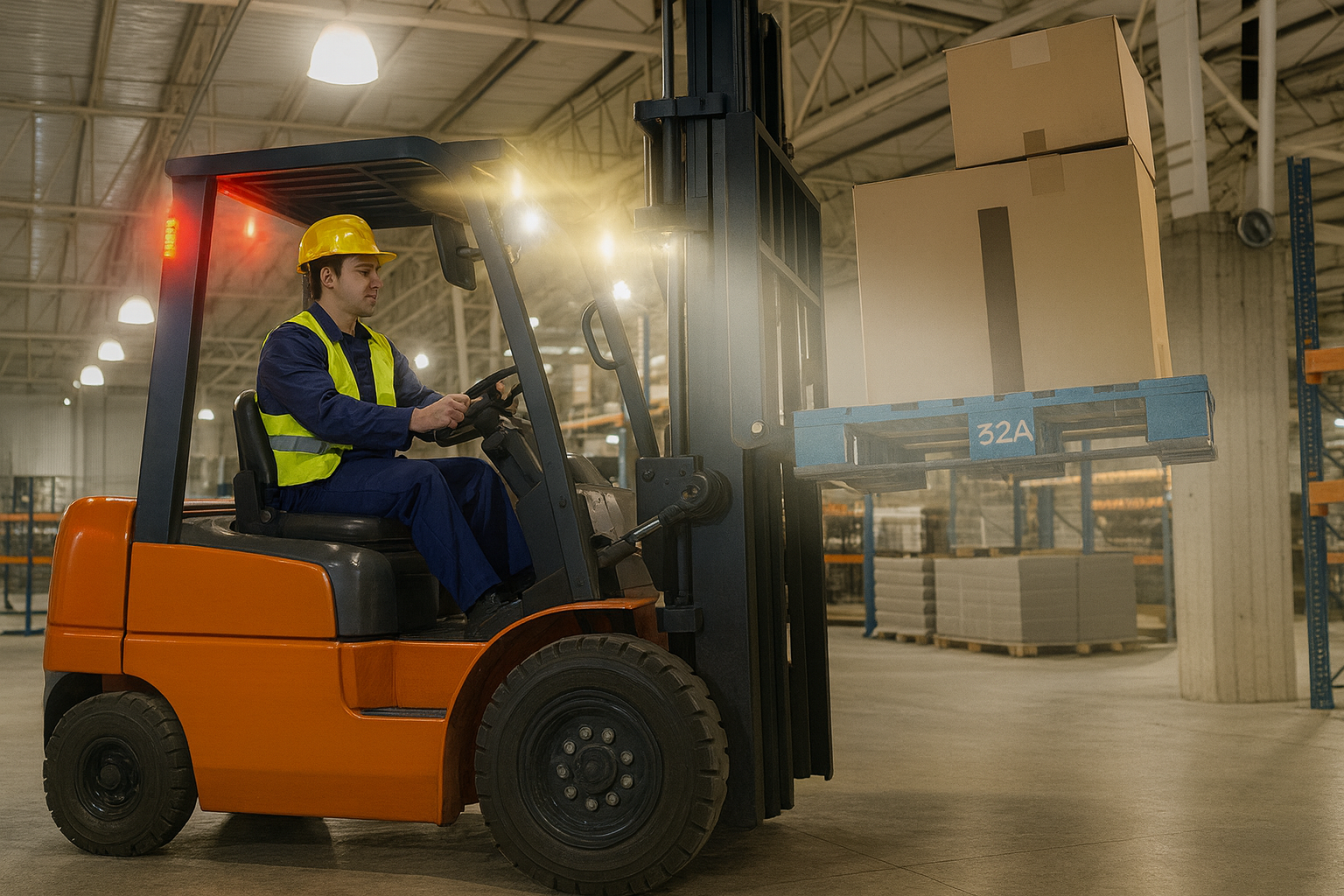
Explosion-Proof Headlights
Provide forward and reverse visibility for driving and navigating aisles.
Intrinsically Safe Work Lights
Mounted near the forklift mast to illuminate:
Fork tips
Pallet faces
Load heights
These lights reduce operator errors during lifting and placement.
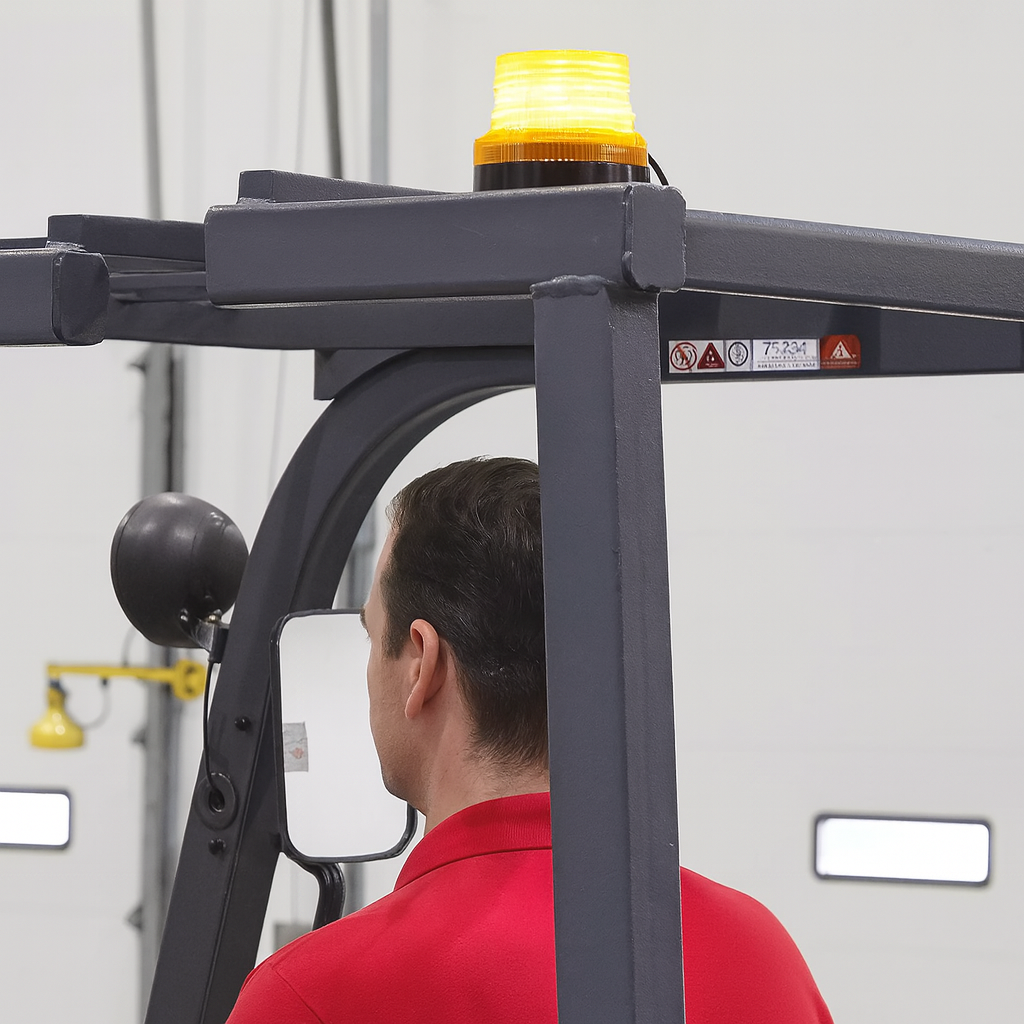
Hazardous-Area Warning Lights
Includes:
Blue arc lights
Red pedestrian exclusion lines
Halo projection lights
These enhance worker awareness in noisy or visually obstructed warehouses.
Explosion-Proof Floodlights
Used for wide-area illumination, especially:
Chemical blending rooms
Low-light cold storage
Dust-heavy facilities
These ensure safe operation even in dim or contaminated environments.
Explosion-Proof Forklift Lighting Options at Intrinsically Safe Store
While this category includes forklift accessories, mounting systems, certified lighting tools, and intrinsically safe equipment—not every product is a standalone forklift headlamp. Many explosion-proof forklift lighting solutions require certified mounting and accessory integration, which the Intrinsically Safe Store provides.
Top Certified Forklift Lighting & Mounting Solutions
| Product | Certifications | Ideal Use | Key Features |
|---|---|---|---|
| iSAFE MOBILE Intrinsically Safe Forklift Accessories | ATEX / IECEx | General hazardous-area forklift lighting | Heavy-duty, shock protected, versatile mounting |
| Ecom / Pepperl+Fuchs Forklift Mounting Systems | ATEX Zone 1, IECEx | Mounting certified lighting tools | Rugged construction, vibration-proof, flexible positioning |
| Bartec Safe Lighting Accessories | ATEX, IECEx | Control-area and pathway illumination | Robust housings, stable lighting output |
These products provide the required certified hardware needed for integrating safe, explosion-proof lighting systems on hazardous-area forklifts.
Comparison Table: Explosion-Proof Forklift Lighting Accessories
| Feature | iSAFE Mobile | Ecom/P+F | Bartec |
|---|---|---|---|
| Certification | ATEX / IECEx | ATEX Zone 1 | ATEX, IECEx |
| Ruggedness | High | Very high | High |
| Ideal Use | Hazardous forklift lighting | Lighting mounts & vibration-heavy tasks | Manufacturing & hazardous control areas |
| Lighting Integration | Yes | Yes | Yes |
| Durability Under Vibration | Excellent | Exceptional | Excellent |
Industries That Require Explosion-Proof Forklift Lighting
Chemical Warehouses
Vapors from solvents, acids, and adhesives pose constant hazards.
Oil & Gas Facilities
Offshore supply bases, fuel depots, and chemical blending rooms require certified lights.
Pharmaceutical Manufacturing
Solvent-based production demands explosion-proof equipment.
Grain & Food Processing
Combustible dust is a leading cause of industrial explosions.
Mining and Metallurgy
Dust, gases, and confined spaces require ATEX/IECEx-certified lights.
Paint, Resin & Coating Warehouses
Volatile organic compounds (VOCs) elevate ignition risks.
How to Choose the Right Explosion Proof Forklift Lighting
1. Determine Your Hazard Classification
Know whether your facility is:
Zone 1/2
Zone 21/22
Class I, II, or III
Division 1 or Division 2
Lighting must match the classification.
2. Check Certification Labels
Verify markings such as:
ATEX II 2G
IECEx Ex ib
Class I, Division 1
T4/T5/T6 temperature ratings
3. Evaluate Lighting Type
Does your forklift need:
Headlights
Mast work lights
Warning lights
Floodlights
Pedestrian safety beams
4. Durability & Vibration Resistance
Forklifts shake violently during operation; lights must survive continuous vibration.
5. Mounting Compatibility
Use certified mounts to maintain compliance.
6. Power Efficiency
LED explosion-proof lights reduce heat output and extend bulb life.
Explore certified lighting solutions for forklifts in hazardous zones
Explosion-Proof Floodlights Intrinsically Safe Work LightsMaintenance and Inspection Requirements
Explosion-proof forklift lighting must undergo routine evaluation.
Monthly Visual Inspection
Check for:
Corrosion
Loose wiring
Cracked or cloudy lenses
Broken seals
Annual Compliance Review
Inspect certification labels and temperature class markings.
Replacement with Certified Parts Only
Any non-certified replacement voids the entire explosion-proof rating—and violates safety codes.
Ready to upgrade your forklift lighting for hazardous environments?
Request a quote or speak with our team to ensure full safety compliance.
Get a Quote via Chat Call Our SpecialistsFAQs
Is explosion-proof forklift lighting mandatory?
Yes. In any hazardous location, only certified lighting is legally allowed.
Can I install regular LED lights on a forklift in an explosive atmosphere?
No. Standard LEDs can still spark or overheat.
What’s the difference between explosion-proof and intrinsically safe lighting?
Explosion-proof lighting contains internal ignition; intrinsically safe lighting restricts energy so ignition cannot occur.
Do forklift safety lights require certification too?
Yes—blue and red safety lights must also be hazardous-area approved.
How long does explosion-proof lighting last?
Most LED systems exceed 50,000 hours, even in high-vibration environments.
Conclusion
Explosion proof forklift lighting is essential for safe operation in any warehouse containing flammable gases, vapors, or combustible dusts. Certified lighting improves visibility, reduces pedestrian accidents, and ensures regulatory compliance. ATEX, IECEx, and Class/Division-certified solutions—such as those available from Intrinsically Safe Store—deliver unmatched reliability and safety in hazardous locations.
