
























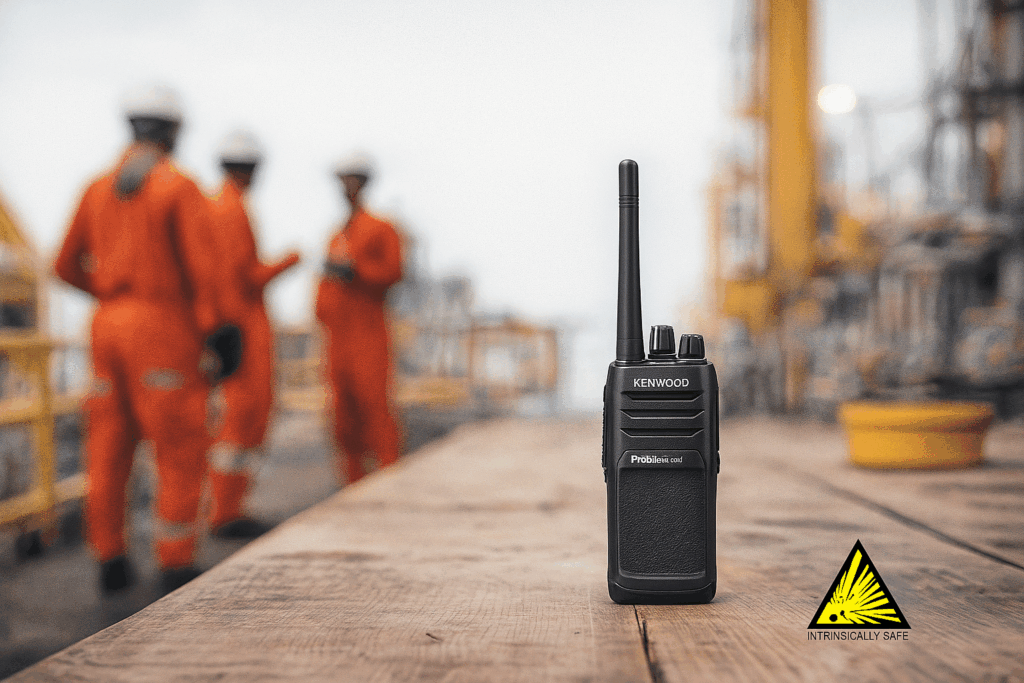
Effective communication in hazardous industrial environments is more than a convenience—it’s a critical safety requirement. Workers in oil & gas refineries, chemical plants, grain handling facilities, mining sites, and confined spaces rely heavily on portable radios to coordinate operations and respond to emergencies. However, not all radios are built for explosive atmospheres. Only an intrinsically safe portable radio can be safely used where flammable gases, vapors, dusts, or fibers may be present.
This comprehensive guide explains how intrinsically safe radios work, which certifications matter, how safe communication protocols operate, what real-world deployments look like, and which certified equipment you can source from Intrinsically Safe Store.
What Is an Intrinsically Safe Portable Radio?
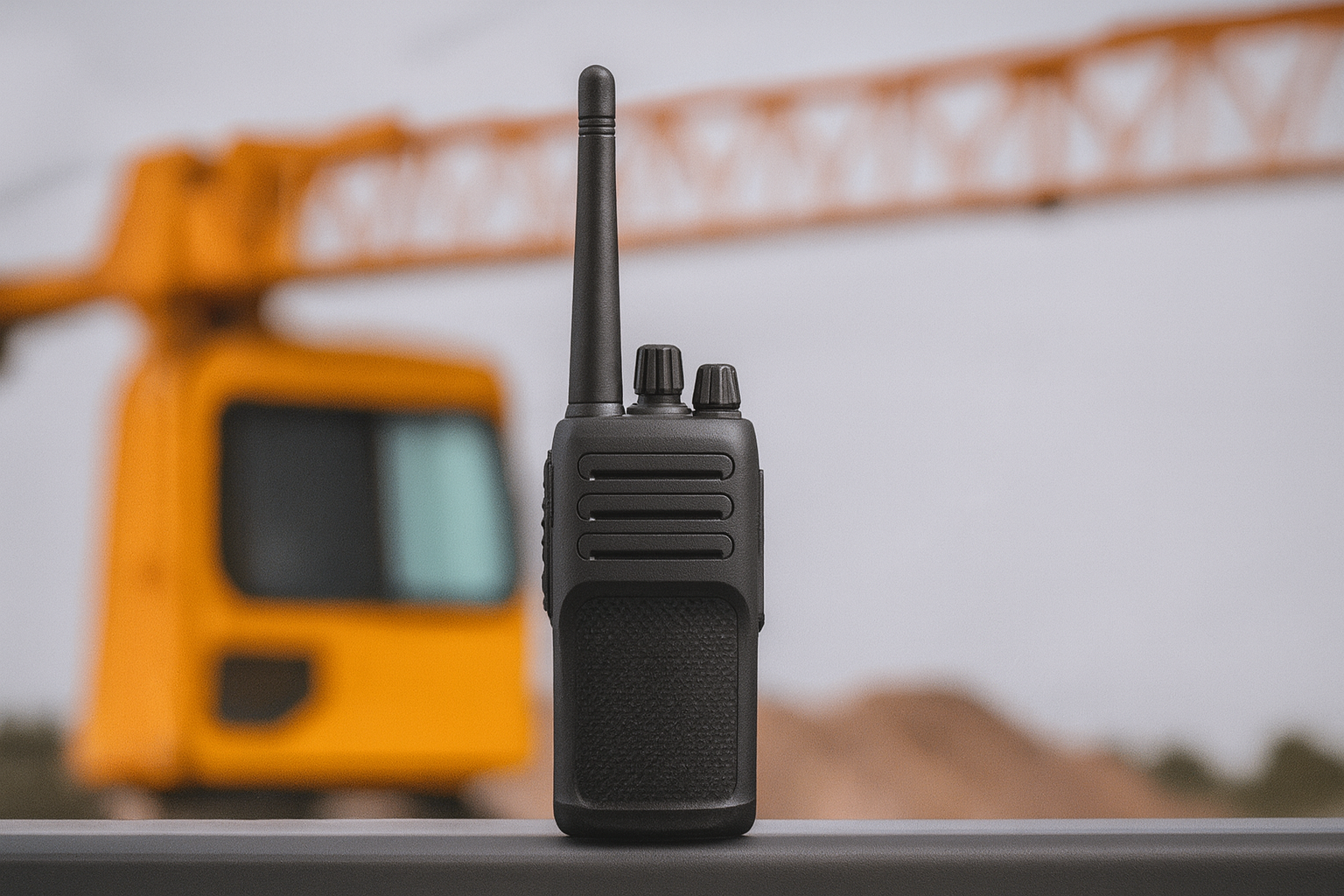
An intrinsically safe portable radio is a two-way communication device engineered to prevent ignition in explosive atmospheres. Unlike standard radios, intrinsically safe (IS) units limit electrical and thermal energy so they cannot ignite flammable materials present in Class I, II, or III hazardous locations or ATEX Zones 0, 1, or 2.
These radios are certified to meet strict guidelines ensuring:
No sparks
No hot surfaces
No arcs
No component failure capable of triggering ignition
This makes them essential tools for high-risk worksites where constant communication is mandatory.
Looking for certified intrinsically safe portable radios?
Explore radios engineered for hazardous environments with ATEX, IECEx and Class I Div certifications.
Browse Intrinsically Safe Radios
Why Are Intrinsically Safe Portable Radios Required in Hazardous Locations?
Standard communication devices contain circuits, batteries, and components that can arc or overheat. In explosive atmospheres, even a microscopic spark can trigger a catastrophic accident.
Industries such as oil & gas, petrochemical, manufacturing, food processing, wastewater treatment, and mining require IS radios to:
Maintain reliable communication during normal and emergency operations
Ensure compliance with OSHA, NEC, ATEX, IECEx, and NFPA regulations
Reduce risk of ignition from dropped equipment, battery failure, or electrical malfunction
Enable safe coordination between teams in different hazardous zones
Intrinsic safety is especially important in environments where communication interruptions could jeopardize worker safety or disrupt mission-critical operations.
What Certifications Do Intrinsically Safe Portable Radios Need?
Radio certification is one of the most important factors when selecting the right intrinsically safe portable radio. Compliance ensures the radio is safe for the specific hazardous environments where it will be used.
Below are the major certification systems.
North American Certifications (NEC/CEC)
In the U.S. and Canada, intrinsically safe portable radios must meet:
Class I – Flammable gases/vapors
Class II – Combustible dust
Class III – Ignitable fibers or flyings
Division 1 – Hazard normally present
Division 2 – Hazard present only under abnormal conditions
Examples: oil platforms, refineries, LNG terminals, paint booths, flour mills.
ATEX Certification (European Union)
ATEX certification applies to any equipment used in explosive atmospheres within the EU.
Key designations include:
Zone 0 – Continuous exposure to explosive gas
Zone 1 – Likely exposure
Zone 2 – Occasional exposure
Zone 21 / 22 – Combustible dust environments
IECEx Certification (Global Standard)
IECEx certification offers uniform global safety compliance.
It is widely adopted in:
Middle East
Australia
Southeast Asia
Africa
Multinational energy projects
IECEx-certified radios ensure international compatibility for companies operating in multiple countries.
Certification Comparison Table
| Certification | Region | Hazard Level | Common Use Cases |
|---|---|---|---|
| NEC/CEC Class I Div 1 | U.S./Canada | Highest gas hazard | Refineries, drilling rigs |
| NEC/CEC Class II Div 1 | U.S./Canada | Highest dust hazard | Grain handling, chemical powder facilities |
| ATEX Zone 0 | EU | Continuous hazard | Inside tanks, offshore platforms |
| ATEX Zone 1/2 | EU | Likely/occasional hazard | Petrochemical plants |
| IECEx | Global | Gas/dust | International operations |
Choosing a radio with the correct certification ensures compliance and legal safety.
Understand hazardous location standards before choosing your radio
Learn how certifications impact safety, compliance, and radio performance in explosive areas.
ATEX vs IECEx Class I Div 1 vs Div 2 IS vs Explosion-Proof EquipmentWhat Communication Protocols Do Intrinsically Safe Portable Radios Use?
Intrinsically safe portable radios support communication protocols designed for clarity, reliability, and emergency response in hazardous environments.
These include:
Analog FM Communications
Still widely used in traditional industrial sites because of:
Strong signal penetration
Lower complexity
Easy interoperability
However, analog lacks advanced data features.
Digital Mobile Radio (DMR)
DMR is the most common digital protocol for IS radios, offering:
Better voice clarity
Noise suppression
Text messaging
GPS location
Improved battery life
DMR Tier II and Tier III systems are common in modern refineries.
P25 (Project 25)
Primarily used by government, utilities, and emergency response teams.
Benefits include:
Secure encrypted communication
Interagency interoperability
Superior reliability in emergencies
TETRA (Terrestrial Trunked Radio)
Common in Europe, Middle East, and large-scale industrial complexes.
Known for:
High network capacity
Built-in encryption
Reliable coverage over large facilities
What Design Features Are Required for Intrinsically Safe Portable Radios?
To operate safely in hazardous environments, IS radios integrate multiple layers of protection.
Ruggedized Construction
IS radios typically include:
Reinforced housing
Drop resistance
Shock and vibration protection
Chemical and corrosion resistance
This ensures reliability in industrial field conditions.
Sealed Battery Compartments
Battery design is critical because most ignition risks originate from battery failure.
IS batteries include:
Short-circuit protection
Thermal protection
Reinforced casings
Sealed PTT (Push-To-Talk) Buttons
PTT switches must be designed to prevent sparking or electrostatic discharge.
Anti-static Housing Materials
These reduce static build-up that could ignite flammable gases or dusts.
Intrinsic Safe Circuits
Electronic components deliberately limit energy output to safe levels—below known ignition thresholds.
How Are Intrinsically Safe Portable Radios Used in Oil & Gas Operations?
Oil & gas operations rely heavily on continuous communication because workers are often surrounded by flammable hydrocarbons.
Common usage scenarios include:
Refinery Operations
Workers use IS radios to coordinate:
Unit startups and shutdowns
Maintenance activities
Turnarounds
Confined space entry
Leak detection and repair operations
IS radios ensure safe communication even near volatile processing units.
Drilling Rigs and Offshore Platforms
Communication challenges include:
High electromagnetic interference
High noise levels
Harsh weather
IS radios support:
Drill floor coordination
Crane operations
Marine safety operations
Emergency mustering
Pipeline and Storage Terminal Operations
Operators rely on IS radios for:
Pigging operations
Tank inspections
Fugitive emission inspections
Emergency response drills
Clear communication is vital when operators are dispersed across large areas.
How Are Intrinsically Safe Radios Used in Chemical Plants?
Chemical processing facilities often contain flammable solvents, powders, and gases. Safe communication is mandatory.
Common applications include:
Production Lines
Operators use IS radios to:
Monitor chemical reactions
Coordinate batch changes
Communicate with control rooms
Hazardous Material Transfer
Safe communication prevents ignition during:
Loading/unloading
Pumping
Drum filling
Bulk transfer
Maintenance and Shutdown Operations
During maintenance, IS radios allow:
Coordination between maintenance teams
Permit-to-work communication
Real-time safety updates
What Intrinsically Safe Portable Radios Are Available?
Intrinsically safe portable radios are available in a range of certifications, communication protocols, and durability levels to meet the demands of hazardous industrial environments. These radios are built to operate safely in the presence of flammable gases, vapors, and dusts, and are commonly used across oil & gas facilities, chemical plants, manufacturing sites, and confined spaces.
Available intrinsically safe radio options typically include:
Class I Division 1 and Division 2 radios designed for the most hazardous gas environments
ATEX Zone 0 and Zone 1 radios for facilities operating under European standards
IECEx-approved radios for global industrial operations
Digital models (DMR, TETRA, P25) offering enhanced clarity, noise suppression, and optional data features
Analog intrinsically safe radios suitable for legacy or mixed communication systems
Ruggedized radios built to withstand harsh temperatures, chemical exposure, and continuous field use
Models with advanced safety features such as GPS tracking, emergency alarms, lone-worker protection, and man-down sensors
While specific models vary by manufacturer, all intrinsically safe portable radios share a core focus on preventing ignition, ensuring reliable communication, and maintaining compliance in high-risk industrial zones.
Explore our full range of intrinsically safe batteries, protective radio cases and certified communication headsets designed for hazardous environments.Comparison Table: Intrinsically Safe Portable Radio Options
| Feature | Class I Div 1 Radios | ATEX Zone 0 Radios | DMR Radios | Analog Radios |
|---|---|---|---|---|
| Gas Safety | Highest | Highest | High | Moderate |
| Digital Features | Yes | Yes | Yes | No |
| Global Use | Limited | Global | Global | Universal |
| Voice Clarity | High | High | High | Medium |
| Best Use Case | Oil & gas | Chemical plants | Industrial facilities | Legacy systems |
Frequently Asked Questions (FAQs)
What is the difference between an intrinsically safe radio and an explosion-proof radio?
Intrinsically safe radios limit electrical energy to prevent ignition, while explosion-proof devices are built to contain an internal explosion. Radios used in hazardous areas are almost always intrinsically safe rather than explosion-proof.
Can I use a non-certified radio in a hazardous location?
No. Using a non-certified radio where flammable gases or dusts are present is a major safety violation and can violate OSHA and ATEX requirements.
Do intrinsically safe radios require special maintenance?
Yes. Only approved batteries, chargers, and accessories can be used. Any damage to the radio’s housing or battery must be addressed immediately.
Are digital radios safer than analog?
Safety depends on certification, not communication type—but digital radios (DMR/TETRA/P25) provide clearer audio, stronger encryption, and better noise suppression.
Do batteries for IS radios need separate certification?
Yes. Intrinsic safety applies to the entire system—radio + battery + accessories. Always verify battery certification before use.
Need help choosing the right intrinsically safe radio?
Our safety specialists can recommend certified radios, compatible batteries and accessories for your site.
Chat with a Safety Expert Call Us: +1 (832) 699-6726 Request a QuoteConclusion: Why Intrinsically Safe Portable Radios Are Essential for High-Risk Operations
Intrinsically safe portable radios are indispensable tools for hazardous industrial environments. By limiting energy output and preventing ignition, these radios ensure reliable communication in oil & gas refineries, chemical plants, grain facilities, and other explosive atmospheres. The right intrinsically safe portable radio enhances worker safety, supports compliance with global certification systems, and ensures uninterrupted communication during mission-critical operations.
If your facility needs certified radios, batteries, or accessories, explore Intrinsically Safe Store for fully compliant communication solutions.
