






















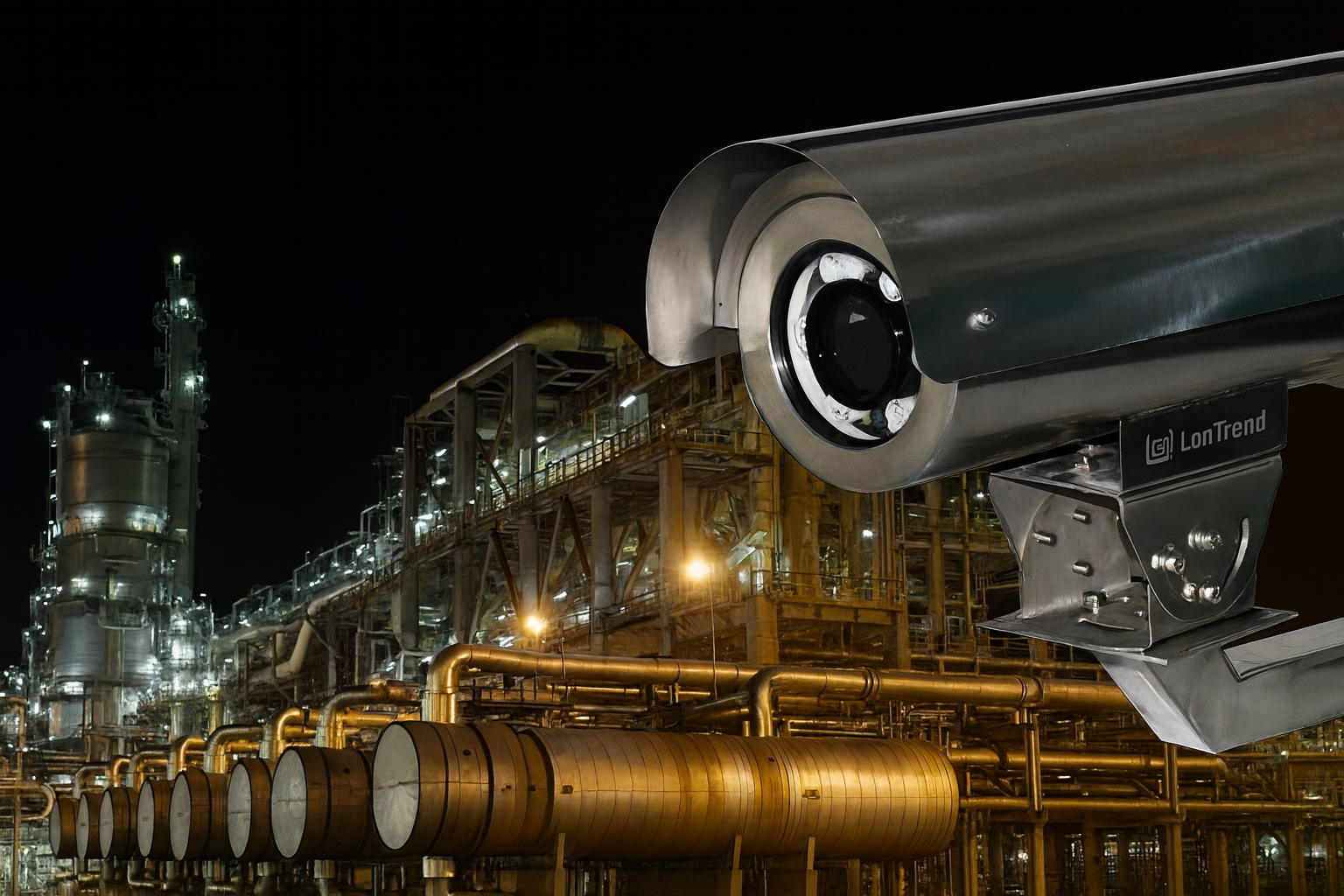
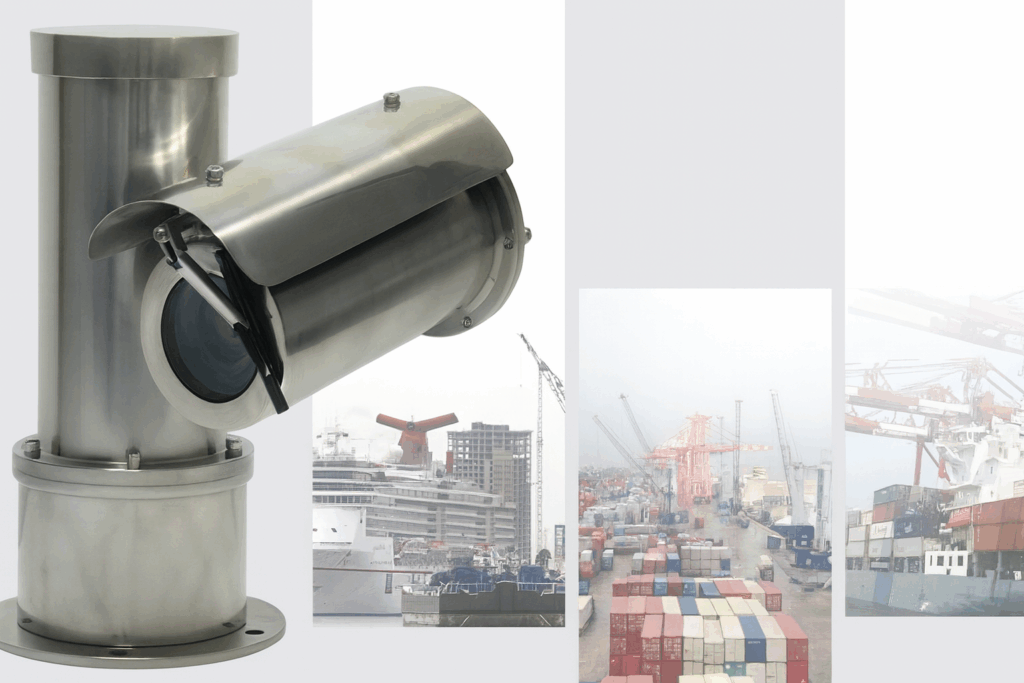
Explosion-proof camera enclosures are essential for keeping surveillance equipment safe and operational in hazardous industrial environments. From oil refineries to chemical plants and grain processing facilities, these environments often contain flammable gases, vapors, or airborne dust—any of which could ignite if exposed to heat or electrical sparks. An explosion proof camera enclosure ensures that cameras can operate without becoming an ignition source.
In this guide, you’ll learn how explosion-proof enclosures work, the materials used to build them, the certifications required for compliance, and how to choose the right housing for your application. We also compare leading explosion-proof enclosure solutions available at Intrinsically Safe Store to help you make an informed decision.
What Is an Explosion-Proof Camera Enclosure and How Does It Work?
An explosion-proof camera enclosure is a specially designed housing engineered to contain internal explosions and prevent them from igniting the surrounding environment. These enclosures do not prevent explosions inside the housing; rather, they contain them.
They achieve this through:
Thick, reinforced metal walls that withstand internal pressure.
Precision-machined flame paths that cool and disperse gases.
Temperature control to limit the external surface heat.
Sealed cable entries that prevent gas or dust ingress.
Even if a spark or short circuit occurs inside the camera, the housing prevents ignition from reaching the external atmosphere.

Why Are Explosion-Proof Enclosures Critical in Hazardous Industries?
According to aggregated industrial safety studies from OSHA, NFPA, and EU ATEX publications, over one-third of fires and explosions in industrial environments originate from electrical equipment. This makes proper surveillance housing not just a best practice—it’s a legal requirement.
Industries that Depend on Explosion-Proof Surveillance
Oil & Gas – constant risk of flammable vapors and gas leaks
Chemical Manufacturing – solvents and reactive vapors
Mining – methane and combustible dust
Food & Agriculture – flour, sugar, and grain dust
Pharmaceuticals – airborne powders and volatile compounds
Marine/Offshore – corrosive saltwater and hydrocarbon vapors
These environments require certified equipment that cannot trigger ignition—even during internal failure.
What Materials Are Used to Build Explosion-Proof Camera Enclosures?
Explosion-proof housings must withstand internal explosions, corrosive environments, extreme temperatures, and mechanical impact. The two most commonly used materials are stainless steel and aluminum.
Below is a comparison of the most common materials used:
Stainless Steel vs Aluminum: Which Is Better for Hazardous Locations?
Stainless Steel Enclosures
Stainless steel is the top choice for harsh or corrosive environments such as offshore platforms or chemical plants.
Advantages:
Exceptional corrosion resistance
Withstands extreme temperatures
Suitable for Class I Division 1 / Zone 1
Long operational lifespan
Limitations:
Heavier and more expensive
Requires reinforced mounting
Aluminum Enclosures
Aluminum enclosures are commonly used in less corrosive locations and indoor/outdoor industrial sites.
Advantages:
Lightweight
Easier to install
Cost-effective
Good heat dissipation
Limitations:
Less corrosion-resistant
Not ideal for marine or acidic environments
What Certifications Apply to Explosion-Proof Camera Enclosures?
Explosion-proof surveillance equipment must be certified under specific global standards depending on where they will be deployed.
Major Certification Systems
ATEX (EU Directive 2014/34/EU)
IECEx (International Certification Scheme)
UL/CSA (North American standards)
NEC Class/Division and Class/Zone Systems
IP Ratings (Ingress Protection: IP66, IP67, IP68)
Understanding these certifications is crucial for compliance, insurance, and legal installation in hazardous locations.
Need a refresher on hazardous area zones and certifications?
Review the essentials on ATEX, IECEx and Class I Division classifications so your camera enclosures match the right hazardous area requirements.
Key Differences Explained: ATEX vs IECEx
To provide a more complete perspective, here are the essential differences between ATEX and IECEx certification systems—including several important details commonly overlooked.
Summary: ATEX vs IECEx
ATEX is required by law in Europe and may allow manufacturer self-declaration in lower-risk applications.
IECEx offers harmonized testing recognized globally and preferred in multinational project deployments.
For most global operators, IECEx provides greater consistency and easier international approvals.
Explosion-Proof vs Intrinsically Safe: What’s the Difference?
Although both aim to prevent explosions, they work very differently.
Intrinsically Safe (IS)
Limits electrical energy so ignition is impossible
Used mainly for low-power devices (mobile equipment, sensors)
Not practical for high-power devices like CCTV cameras
Explosion-Proof (XP)
Contains internal explosions
Ideal for high-power, high-heat electronics
Designed for Class I Division 1 and Zone 1 applications
For surveillance systems, explosion-proof housings are the industry standard.
What Features Should You Look for in an Explosion-Proof Camera Enclosure?
When selecting a high-quality enclosure, look beyond basic certification.
Essential Features
Heavy-duty stainless steel or aluminum construction
Certified flame paths and pressure integrity
IP66 or IP68 weatherproof rating
Anti-fog heaters/blowers
Cable glands with matching certification
Vibration and shock resistance
Wide operating temperature tolerance
Sunshields or thermal control options for outdoor installations
How Do Temperature Classes Affect Enclosure Selection?
Temperature class determines the maximum external surface temperature of the equipment.
Temperature Class Overview
T6: ≤ 85°C (highest safety level)
T5: ≤ 100°C
T4: ≤ 135°C
T3: ≤ 200°C
T2: ≤ 300°C
If a hazardous substance auto-ignites at 135°C, for example, the camera enclosure must be T4 or better.
Selecting the wrong temperature class is one of the most common causes of failed inspections.
Comparison of Explosion-Proof Camera Enclosures Available at Intrinsically Safe Store
Below is a comparison of certified housings available through IntrinsicallySafeStore.com:
Best Choices by Industry
Offshore / Marine: C1D1 Explosion Proof CCTV Camera (maximum corrosion resistance)
General Industrial: Explosion Proof Camera Housing – Class I Division 1
Large Area Monitoring: Explosion Proof PTZ Camera – Class I Division 1
Ready to specify your explosion-proof camera system?
Browse certified housings and hazardous-area cameras trusted in refineries, chemical plants, offshore platforms and more.
FAQs About Explosion-Proof Camera Enclosures
Are explosion-proof enclosures the same as weatherproof housings?
No. Weatherproof housings protect against environmental factors, while explosion-proof housings prevent ignition in hazardous atmospheres. Many explosion-proof housings are also weatherproof, but not vice versa.
Can I use a standard camera inside an explosion-proof enclosure?
Yes—this is common practice. The enclosure, not the camera, carries the certification.
Do explosion-proof enclosures require routine maintenance?
Yes. Flame paths must remain clean and corrosion-free, and seals must remain intact. Annual inspections are recommended.
Are PTZ cameras available in explosion-proof form?
Absolutely. PTZ models are widely used in refineries and offshore environments and are available through Intrinsically Safe Store.
How long do explosion-proof enclosures last?
Stainless steel enclosures can last 10–20+ years. Aluminum enclosures may have a shorter lifespan depending on the corrosion level.
Not sure which explosion-proof enclosure setup you need?
Our hazardous-area surveillance team can help you specify the right camera enclosure, temperature class, and certified accessories for your Ex zones.
Conclusion: Choosing the Right Explosion-Proof Camera Enclosure
Choosing the right explosion proof camera enclosure ensures compliance, safety, and uninterrupted surveillance in hazardous locations. Materials like stainless steel offer superior durability, while certifications such as ATEX, IECEx, and UL/CSA ensure the enclosure can legally operate in explosive atmospheres.
Whether your environment demands corrosion-proof protection, lightweight housings, or high-performance PTZ capability, certified explosion-proof enclosures from Intrinsically Safe Store provide reliable, industry-grade solutions.
