Intrinsically Safe Products
ATEX Certified Inspection Drones: Industrial Use Cases & Safety Standards
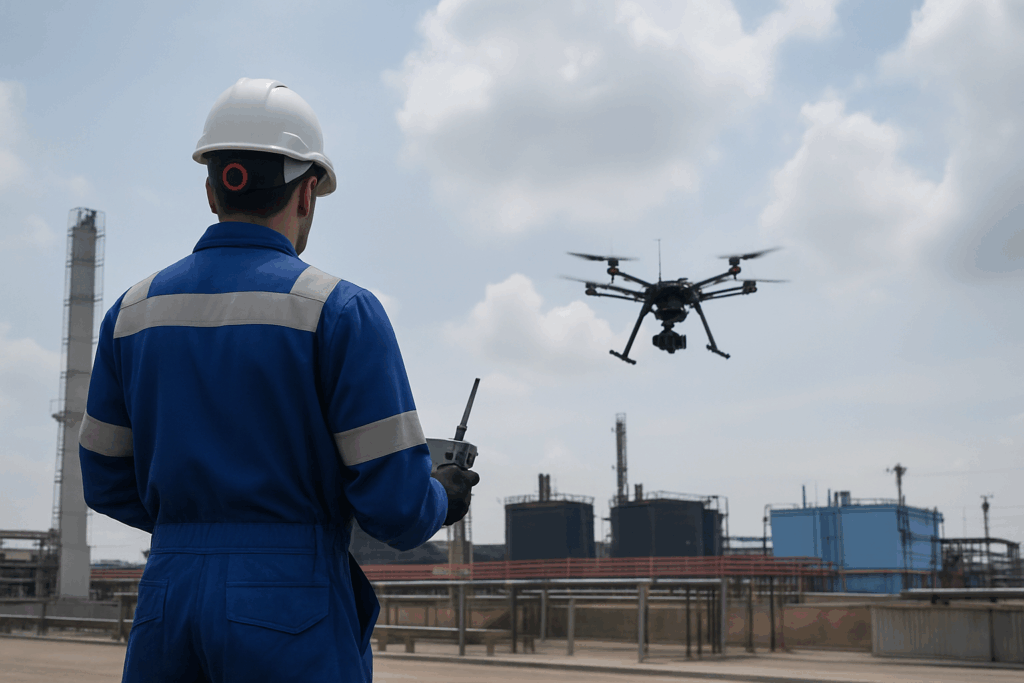
An ATEX certified inspection drone is an unmanned aerial vehicle (UAV) specifically engineered and approved to operate safely in explosive atmospheres, such as those in oil & gas, chemical, and mining facilities. These drones replace dangerous human entry into hazardous areas, dramatically reducing risk, downtime, and operational costs by providing remote visual data while meeting strict European ATEX directives for ignition prevention. An ATEX drone is designed with ignition-prevention features like intrinsically safe circuits and anti-static materials, allowing it to perform inspections in environments where flammable gases, vapors, or combustible dusts are present.
Industrial inspections in hazardous environments have traditionally required human entry into confined spaces, elevated structures, or areas containing explosive gases or dusts. This approach carries significant risks and often demands costly shutdowns. The emergence of the ATEX certified inspection drone has transformed inspection workflows across oil & gas, petrochemical, energy, pharmaceuticals, mining, wastewater, and manufacturing sectors.
ATEX-certified drones enable safe, remote visual inspection inside explosive atmospheres, dramatically reducing risk, downtime, and operational costs. This in-depth article explores how ATEX drone technology works, which certifications apply, the safety standards involved, and the expanding use cases across critical industries.
What is an ATEX Drone and Why is it Essential for Safety?
An ATEX certified inspection drone is an unmanned aerial vehicle designed and approved for operation in explosive atmospheres. These drones comply with European ATEX directives, meaning they are engineered to prevent ignition from electrical components, heat, static discharge, or mechanical failure.
ATEX drones are used to inspect hazardous areas where:
-
Flammable gases or vapors are present
-
Combustible dusts create explosive risk
-
Human entry would be unsafe
-
Continuous monitoring is required
This makes them essential tools for industries that rely on regular maintenance inspections but must avoid ignition risks. By deploying a certified drone, companies can gather critical data without introducing an ignition source, ensuring compliance with strict safety regulations and protecting both personnel and assets.
Need certified devices to support your ATEX drone inspections?
Pair your ATEX inspection drone with intrinsically safe cameras, tablets, and phones for data capture, reporting, and remote collaboration in hazardous areas.
Get Certified Cameras for Drone DataView Tablets for On-site Drone ControlExplore Phones for Remote Collaboration

Why Are Drones Used in Hazardous Industrial Environments?
Traditional inspection practices often require workers to enter dangerous spaces, erect scaffolding, use rope access systems, or shut down equipment. These activities introduce safety hazards and slow productivity.
Drones eliminate many of these challenges by delivering:
-
Remote inspection capability without human exposure
-
High-resolution imaging, thermal mapping, and 3D modeling
-
No need for shutdowns in many cases
-
Faster inspection times
-
Lower operational costs
-
Reduced confined-space entry requirements
When a drone is ATEX certified, it can operate in explosive areas where unapproved devices would be prohibited.
What ATEX Certifications Apply to Inspection Drones?
ATEX certification is required for any electronic device used in explosive atmospheres in Europe. Drones must comply with ATEX Directive 2014/34/EU and meet specific equipment group and category designations.
Below are the relevant ATEX classifications.
ATEX Equipment Groups
-
Group I – Mining environments
-
Group II – Above-ground industrial environments
ATEX certified inspection drones are typically Group II devices.
ATEX Hazard Zones
For gas (G) and dust (D) environments:
-
Zone 0 – Continuous or long-term exposure
-
Zone 1 – Likely exposure during normal operation
-
Zone 2 – Hazard present only occasionally
-
Zone 21/22 – Combustible dust environments
Most inspection drones are certified for Zone 1 or Zone 2, as these zones cover the vast majority of industrial inspection scenarios.
ATEX Protection Concepts for Drones
Drones must incorporate multiple ignition-prevention controls, including:
-
Limited surface temperature
-
Anti-static materials
-
Sealed propulsion systems
-
Protected batteries with thermal and electrical safety systems
Certification ensures the drone cannot ignite any surrounding hazardous atmosphere.
Understanding Drone Certifications: ATEX Zone vs. NEC Class/Division
While ATEX is the standard in Europe, facilities in North America follow the National Electrical Code (NEC), which uses a Class/Division/Group system. Understanding both is crucial for global operations or when sourcing equipment. An ATEX Zone 1 certification is often considered broadly equivalent to a Class I, Division 1 rating, but they are not directly interchangeable.
- ATEX/IECEx (Zones): Used globally, this system classifies hazardous areas based on the *frequency and duration* of the presence of an explosive atmosphere (e.g., Zone 0/20, Zone 1/21, Zone 2/22).
- NEC (Class/Division): Primarily used in the U.S. and Canada, this system classifies areas based on the *type* of hazardous material (Class I for gases, Class II for dusts) and whether the hazard is present *normally* (Division 1) or *abnormally* (Division 2).
When selecting a drone, you must ensure its certification matches the specific requirements of your facility’s jurisdiction. Some drones carry dual certifications (e.g., ATEX and IECEx) for wider applicability.
Want to go deeper into ATEX, IECEx and Class/Division standards?
These guides explain how global hazardous-area certifications work so you can select the right ATEX drone and supporting equipment with confidence.
ATEX vs IECExWhat Is ATEX Certification?IECEx Intrinsically Safe DevicesClass I Div 1 vs Div 2Intrinsically Safe vs Explosion-Proof
How Do ATEX Certified Inspection Drones Enhance Safety?
Safety is the core reason ATEX drones exist. Operating a traditional drone in an explosive atmosphere poses multiple ignition risks such as motor sparks, battery thermal runaway, or static electricity discharge. ATEX certification ensures these risks are eliminated or controlled.
Key safety advantages include:
Mitigates Ignition Risk
ATEX-certified drones are engineered to control potential ignition sources, ensuring electrical or mechanical components are incapable of igniting a flammable atmosphere under specified conditions.
Reduced Human Entry
Inspections that once required people to enter tanks, vessels, flare stacks, chimneys, or confined spaces can now be performed remotely.
Real-Time Monitoring
Drones offer continuous visual and sensor-based feedback, allowing early detection of structural issues, leaks, corrosion, or thermal anomalies.
Emergency Response Readiness
ATEX drones are frequently deployed after safety incidents to evaluate conditions before sending personnel into hazardous zones.
What Technology Do ATEX Certified Inspection Drones Use?
ATEX drones integrate advanced imaging and sensing tools to provide full inspection capability without human intervention.
Common technologies include:
High-Resolution Visual Cameras
Used for corrosion detection, weld inspection, structural integrity assessment, and measurement of surface degradation.
Thermal Imaging Sensors
Infrared cameras help detect:
-
Hotspots
-
Electrical anomalies
-
Process irregularities
-
Leaks in thermal systems
LiDAR Mapping
Three-dimensional mapping supports:
-
Structural modeling
-
Digital twin creation
-
Precision measurements
-
Tunnel and confined-space inspections
Collision-Avoidance Systems
Hazardous environments often involve tight spaces. ATEX drones use:
-
Multi-directional sensors
-
SLAM navigation
-
Obstacle avoidance algorithms
Enclosed Rotor and Propulsion Systems
Unlike conventional drones, ATEX units often use shielded or enclosed rotors to prevent mechanical sparks or object impact.
For ground-based inspection and support, you can also use explosion proof and ATEX cameras, intrinsically safe device cases, and intrinsically safe tablets to review footage, capture data and document findings directly in hazardous areas.
Key Features to Look for in a Hazardous Area Inspection Drone
When selecting a drone, move beyond basic specifications and focus on features critical for hazardous environments:
- Certification Level: Does it match your Zone or Class/Division requirements? Verify the official certification documents, not just marketing claims.
- Flight Time and Battery System: Look for sufficient flight time to complete inspections without frequent, risky battery swaps inside the hazardous area. The battery system itself must be certified.
- Payload Capacity and Options: Can the drone carry the sensors you need? This includes high-resolution optical cameras, thermal imagers, LiDAR scanners, or gas detectors.
- Durability and Ingress Protection (IP) Rating: The drone should be built to withstand industrial conditions, including dust, moisture, and potential impacts. An IP rating (e.g., IP54) indicates its resistance to environmental factors.
- Obstacle Avoidance: Advanced collision avoidance is non-negotiable for navigating complex, confined spaces like tanks, pipes, and structural steel.
- Data Security: Ensure the drone’s data link is encrypted to protect sensitive inspection data from interception.
Top Industries and Applications for Intrinsically Safe Drones
The use cases for ATEX drones have expanded significantly as technology improves. Below are the most common applications across high-risk industries.
Use Cases in Oil & Gas Facilities
Oil & gas operations include some of the most hazardous environments on the planet, making ATEX drones ideal for safe inspections.
Tank and Vessel Inspections
Drones inspect:
-
Floating roofs
-
Internal tank walls
-
Residue buildup
-
Corrosion
-
Internal framing structures
This reduces the need for scaffolding or shutdowns.
Flare Stack and Chimney Inspection
ATEX drones capture real-time images of:
-
Burners
-
Pipes
-
Guy wires
-
Refractory lining
Inspections can occur while equipment remains in operation.
Pipeline Monitoring
Drones detect:
-
Coating damage
-
Corrosion
-
Vegetation encroachment
-
Heat signatures indicating leaks
Offshore Platforms
On offshore rigs, ATEX drones reduce exposure to:
-
High-pressure systems
-
Explosive gases
-
Hard-to-access structures
Use Cases in Chemical and Petrochemical Plants
Chemical plants involve complex processes with flammable solvents, powders, and gases. ATEX drones enhance operational safety by enabling inspections without exposure.
Reactor and Column Inspections
Drones can enter confined processing equipment to assess conditions internally.
Dust Hazard Monitoring
For facilities handling powders or granules, ATEX drones identify:
-
Dust accumulation
-
Static charge risk
-
Filtration-system damage
Building and Structural Integrity Checks
Drones evaluate roofs, walls, piping racks, platforms, and structural steel for early signs of degradation.
Use Cases in Other High-Risk Industrial Sectors
ATEX certified inspection drones are also widely used in:
Mining
Monitoring conveyor tunnels, ventilation shafts, and explosive dust-prone zones.
Pharmaceuticals
Inspecting rooms with fine powders prone to combustible dust formations.
Wastewater Treatment
Evaluating gas-rich digesters and confined areas with methane exposure.
Food Processing
Monitoring sugar, flour, and grain dust facilities, which can present explosive dust hazards.
How to Choose the Right Certified Drone for Your Operation
Selecting the correct drone involves a systematic approach to ensure safety, compliance, and operational effectiveness. Follow these steps:
- Assess Your Environment: Identify the specific ATEX Zone or NEC Class/Division for all areas where the drone will operate. This is the most critical first step and determines the minimum required certification.
- Define Inspection Objectives: What data do you need to collect? This could be high-resolution visual data for crack detection, thermal imaging for leak identification, or 3D models for structural analysis.
- Match Payload to Objectives: Choose a drone that can carry the necessary sensors and cameras to meet your inspection goals. Ensure the payload components are also certified for the environment if required.
- Evaluate Flight Performance in Context: Consider the physical constraints of your inspection sites. Will the drone need to navigate tight, GPS-denied spaces? Assess its maneuverability, stability, and collision avoidance capabilities.
- Verify All Documentation: Request and review the ATEX or other hazardous location certificates for the drone, its battery, and any payloads. Confirm the markings on the equipment match the documentation.
- Plan for a Complete Workflow: Think beyond the drone itself. How will you manage data? What intrinsically safe tablets or communication devices are needed for the ground crew? Ensure you have a complete, compliant ecosystem.
What Are the Advantages of Using ATEX Certified Inspection Drones?
ATEX drones are becoming a standard tool across industries because of measurable operational advantages.
Reduced Downtime
Inspections can often occur while systems remain active.
Lower Cost
Eliminates scaffold erection, rope access, confined-space entry teams, and system shutdowns.
Enhanced Worker Safety
Removes personnel from hazardous, toxic, or explosive environments.
Better Data Quality
High-resolution imaging and continuous monitoring provide more accurate and complete data than manual methods.
Repeatability
Automated flight paths support routine, standardized inspections.
Comparison Table: ATEX Certified vs. Non-ATEX Drones
| Feature | ATEX Certified Drone | Non-ATEX Drone |
|---|---|---|
| Ignition Prevention | Yes | No |
| Hazardous Area Use | Zone 0, 1, 2, 21, 22 | Not permitted |
| Enclosed Components | Yes | No |
| Intrinsic Safety | Yes | No |
| Suitable for Oil & Gas | Yes | Limited |
| Confined-Space Use | Safe | Unsafe |
| Certification Documentation | Required | Not provided |
Frequently Asked Questions (FAQs)
Can a standard drone be used in a hazardous environment?
No. Standard drones pose ignition risks due to electrical sparks, static discharge, and battery heating. Only ATEX certified inspection drones are approved for explosive atmospheres.
Are ATEX drones intrinsically safe?
Many ATEX drones incorporate intrinsically safe design principles, but true intrinsic safety certification depends on the specific model. They must meet ATEX requirements for ignition prevention.
Can ATEX drones operate in confined spaces?
Yes. Many ATEX drones are designed for tight, enclosed, and GPS-denied environments using SLAM technology and collision-avoidance sensors.
What industries use ATEX inspection drones the most?
Common industries include oil & gas, petrochemical, mining, wastewater treatment, pharmaceutical manufacturing, and food processing.
Do ATEX drones require special training?
Operators typically require drone pilot certification, as well as hazard-awareness training for explosive atmospheres. Some organizations also require confined-space or process-safety training.
Planning to deploy ATEX inspection drones at your facility?
Our hazardous-area specialists can help you choose compatible cameras, control devices, lighting and gas detectors for a fully compliant inspection workflow.
Talk to a Drone Integration SpecialistCall Us: +1 (832) 699-6726Browse Certified Portable LightingShop Intrinsically Safe Gas Detectors
Conclusion: Why ATEX Certified Inspection Drones Are Essential for Hazardous Industrial Facilities
ATEX certified inspection drones have become vital tools for safe, efficient, and cost-effective inspection in explosive industrial environments. By eliminating ignition risks, reducing human exposure, and delivering high-quality data, the atex certified inspection drone is transforming operational safety across multiple sectors. From oil & gas refineries to chemical plants and dust-hazard facilities, these drones offer unmatched advantages in reliability, safety compliance, and inspection performance.
As industries continue prioritizing worker safety and operational efficiency, ATEX-certified drones will remain an essential component of modern industrial inspection strategies.