Intrinsically Safe Products
Explosion-Proof Centrifugal Blowers: Pricing, CFM/Static Pressure & RFQ
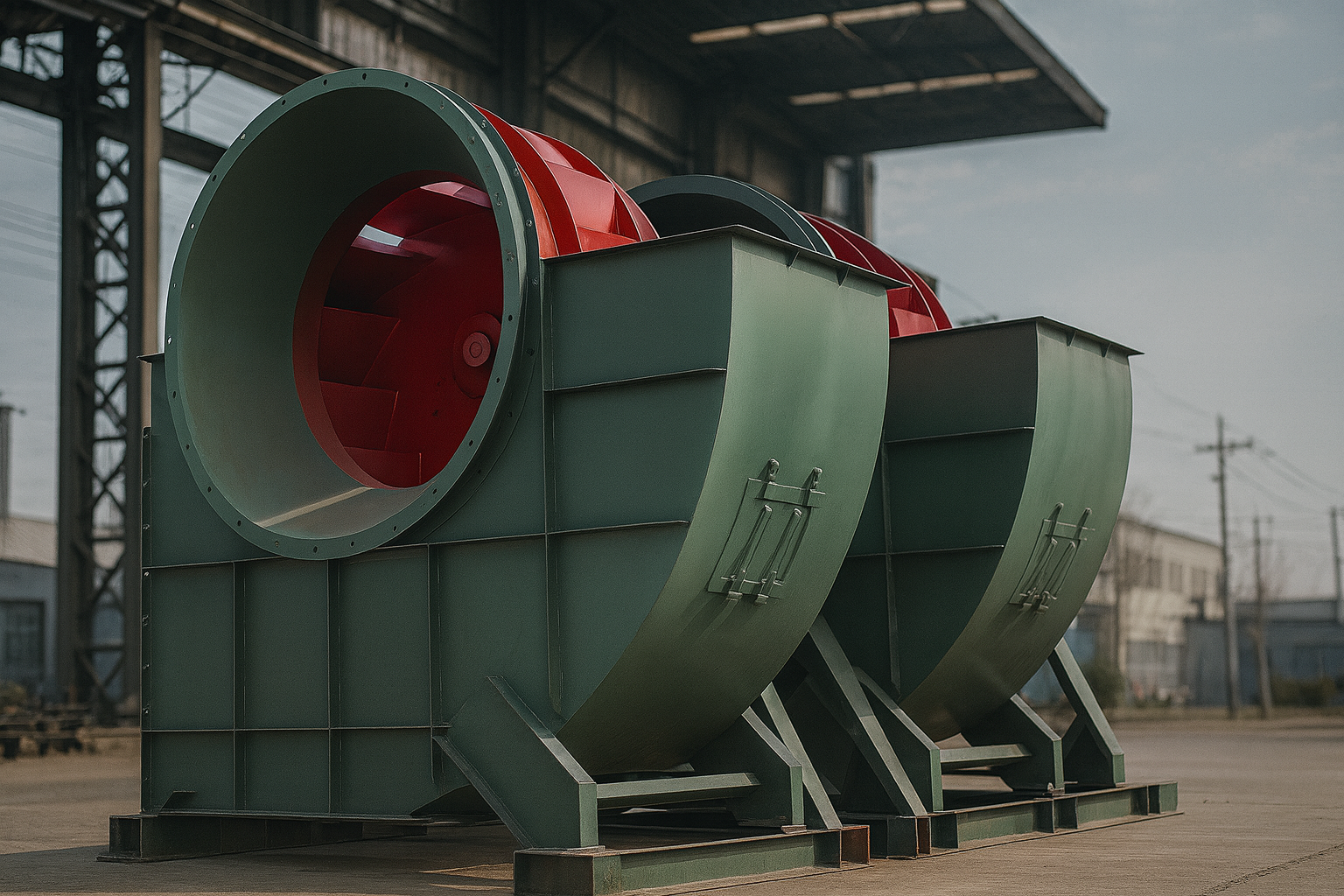
When it comes to hazardous area ventilation, explosion-proof centrifugal blowers are indispensable for keeping operations safe and compliant. In environments where flammable gases, vapors, or dust are present, using standard fans can trigger catastrophic ignition events. That’s why ATEX and explosion-proof rated blowers are required across industries like oil and gas, refineries, grain processing, and chemical manufacturing.
In this article, we’ll explore explosion-proof centrifugal blower prices, CFM and static pressure performance, and how to choose the right voltage and accessories for your application. You’ll also find a detailed comparison of top models from Atlantic Blowers, all available at Intrinsically Safe Store.
Need an Explosion-Proof Blower or Fan?
Find ATEX/IECEx centrifugal and axial models for hazardous ventilation.
What Is an Explosion-Proof Centrifugal Blower?
An explosion-proof centrifugal blower is an industrial-grade ventilation unit designed to move air or fumes safely in explosive atmospheres. Its components — including the motor, housing, and fan blades — are engineered to prevent ignition even if internal sparks or heat occur.
Key characteristics include:
-
Explosion-proof motor housing rated for hazardous gases and dust
-
Non-sparking aluminum or composite impellers
-
Heavy-duty steel frames and grounded wiring
-
High CFM (airflow) output with precise static pressure control
These blowers are often paired with ducting kits or air movers for confined space ventilation and hazardous vapor extraction.

How Much Does an Explosion-Proof Centrifugal Blower Cost?
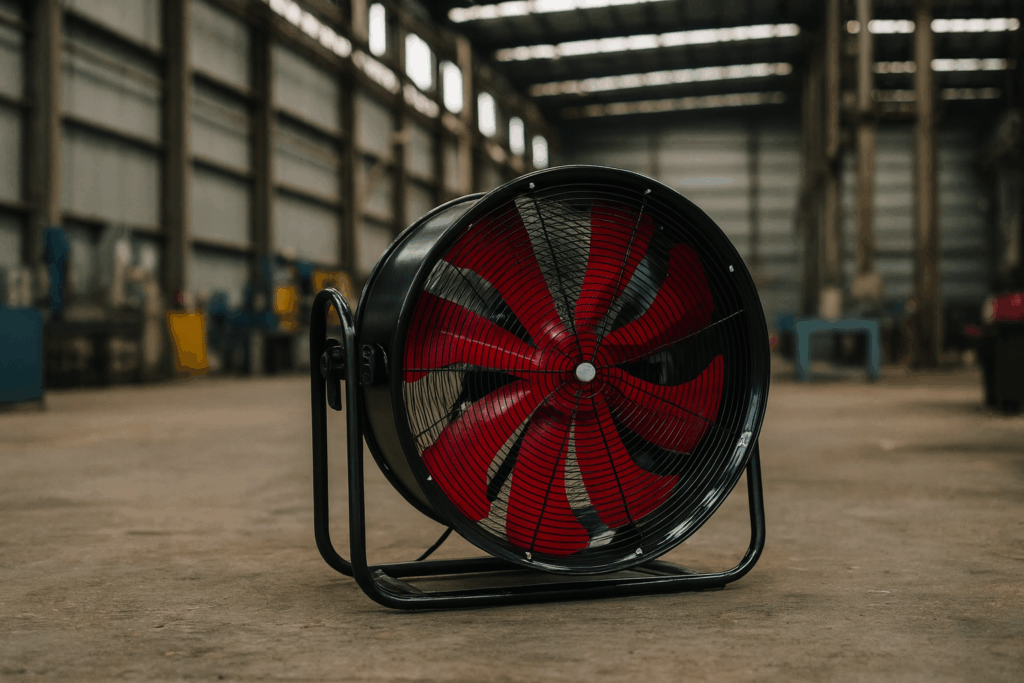
The price of an explosion-proof centrifugal blower depends on size, motor rating, airflow (CFM), and static pressure capacity. Typical pricing ranges from $475 to over $3,800, based on diameter and electrical configuration.
Below are current pricing examples from Atlantic Blowers:
| Model | Description | Airflow (CFM) | Static Pressure (in H₂O) | Voltage | Approx. Price (USD) |
|---|---|---|---|---|---|
| Atlantic Blowers ABAF-8-110E | Explosion Proof Fan 8-inch | 600 | 2.1 | 110V | $475.08 |
| Atlantic Blowers ABAF-12-110E | Explosion Proof Fan 12-inch | 1,200 | 2.4 | 110V | $995.63 |
| Atlantic Blowers ABAF-20-110E | Explosion Proof Fan 20-inch | 2,400 | 3.1 | 110V | $1,755.99 |
| Atlantic Blowers ABAF-24-110E | Explosion Proof Fan 24-inch | 3,200 | 3.6 | 110V | $2,735.71 |
| Atlantic Blowers ABAF-32-110E | Explosion Proof Fan 32-inch | 5,000 | 4.5 | 110V | $3,800.00 |
Note: Prices fluctuate based on voltage (110V or 230V), phase, and ducting kit inclusion.
To get the most accurate pricing, request an Instant Quote from Intrinsically Safe Store.
Not sure which size, voltage, or CFM?
Get fast sizing & pricing assistance for your ATEX/IECEx blower.
How Do You Choose the Right Explosion-Proof Centrifugal Blower?
Choosing the right blower involves evaluating your airflow needs, static pressure requirements, and environmental conditions. Let’s break this down:
1. Determine Airflow (CFM) Needs
CFM, or Cubic Feet per Minute, measures how much air the blower can move.
-
Confined spaces (small tanks or vaults): 600–1,000 CFM
-
Workshops or warehouses: 2,000–3,000 CFM
-
Large industrial rooms: 4,000–5,000+ CFM
2. Evaluate Static Pressure (in H₂O)
Static pressure represents resistance to airflow.
If your ducting is long or restrictive, you’ll need a blower with higher static pressure capability — typically above 3.0 in H₂O.
3. Check Voltage and Phase
Explosion-proof centrifugal blowers are often offered in:
-
110V single-phase (standard)
-
230V or 460V three-phase (heavy-duty setups)
Ensure voltage compatibility with your site’s electrical system to prevent downtime.
4. Certification and Compliance
Look for Class I, Division 1 or 2 explosion-proof motor ratings, or ATEX Zone 1/2 equivalents for international operations.
Related Certified Ventilation & Environment Control
How Do Explosion-Proof Blowers Compare by Size and Airflow?
Here’s how the Atlantic Blowers ABAF Series models stack up in terms of performance and ideal use cases:
| Model | Diameter (inches) | CFM Range | Best Use Case |
|---|---|---|---|
| ABAF-8-110E | 8 | 600 | Small enclosures, confined spaces |
| ABAF-12-110E | 12 | 1,200 | Light industrial ventilation |
| ABAF-20-110E | 20 | 2,400 | General hazardous room ventilation |
| ABAF-24-110E | 24 | 3,200 | Refinery or plant-level air movement |
| ABAF-32-110E | 32 | 5,000 | Large area or tunnel ventilation |
Best Choice by Application:
-
Confined Space Work: ABAF-8-110E
-
General Factory Use: ABAF-12-110E or ABAF-20-110E
-
Heavy Industrial Plants: ABAF-24-110E or ABAF-32-110E
What’s the Difference Between Axial and Centrifugal Explosion-Proof Blowers?
Both types are explosion-proof, but they differ in airflow characteristics and design.
| Type | Airflow Pattern | Static Pressure | Best For |
|---|---|---|---|
| Axial Blower | Straight-line flow | Low (1–2 in H₂O) | Cooling, general ventilation |
| Centrifugal Blower | Radial flow (90°) | High (3–6 in H₂O) | Ducted systems, long-distance air movement |
If your application involves ducting or air filtration systems, a centrifugal model is preferred due to its superior static pressure performance.
Why Are Explosion-Proof Motors Important?
The motor is the most critical component in an explosion-proof blower. Explosion-proof motors are built with:
-
Sealed housings to contain internal ignition
-
Thermal overload protection
-
Specialized wiring and conduit entries
These designs prevent sparks or flames from escaping the motor housing, maintaining compliance with NEC and IECEx standards.
Understand Hazardous Area Ratings
Learn how certifications and classes impact your blower selection.
Performance Curves: How CFM and Static Pressure Interact
Performance curves show the relationship between airflow (CFM) and static pressure — as resistance increases, airflow decreases.
-
A blower like the ABAF-8-110E maintains 600 CFM at 2.1 in H₂O.
-
Larger units like the ABAF-32-110E sustain 5,000 CFM even at 4.5 in H₂O, making them ideal for long duct runs.
When designing your ventilation setup, always consult the performance curve to ensure sufficient airflow under load conditions.
Do Explosion-Proof Blowers Come with Duct Kits?
Yes. Many Atlantic Blowers models can be paired with optional duct kits to extend functionality.
Duct Kit Components:
-
10–25 ft flexible anti-static ducting
-
Quick-connect clamps
-
Storage bag
-
Optional reducers or diffusers
Duct kits enable efficient air delivery into confined spaces, manholes, or tank interiors — ensuring safe air circulation during maintenance or inspection tasks.
FAQs About Explosion Proof Centrifugal Blower Price
1. What factors affect explosion-proof centrifugal blower price?
Prices vary by motor rating, diameter, voltage, airflow capacity (CFM), and certification. Models with higher static pressure and ATEX/IECEx ratings are generally more expensive.
2. Are all explosion-proof blowers ATEX certified?
Not always. Many models comply with UL or CSA explosion-proof standards, while ATEX certification applies primarily to European installations.
3. Can I use these blowers for dust or gas hazards?
Yes, most Atlantic Blowers models are rated for Class I (gases) and Class II (dust) hazardous locations.
4. How do I size a centrifugal blower for my application?
Determine your required CFM and static pressure. Then match these values with the blower’s performance curve for optimal efficiency.
5. What voltage should I choose?
Most industrial environments use 110V or 230V single-phase. For higher loads or continuous duty, 460V three-phase is preferred.
6. Do these blowers require special maintenance?
Explosion-proof blowers need regular inspection of seals, grounding, and motor housing. Always follow manufacturer maintenance schedules to preserve certification.
Maintenance & Safety Tips
To ensure reliability and compliance, always:
-
Ground the blower and ducting to prevent static discharge.
-
Inspect fan blades monthly for buildup or corrosion.
-
Replace worn gaskets or seals with OEM-rated parts.
-
Store the blower in a clean, dry area when not in use.
Preventive maintenance not only extends blower life but also maintains the integrity of explosion-proof certification.
Talk to a Safety Expert
Get model selection, CFM/pressure sizing, and a fast quote.
Conclusion
When working in volatile or explosive atmospheres, selecting the right explosion-proof centrifugal blower is crucial for both safety and efficiency. Whether you need a compact 8-inch model for confined space ventilation or a high-power 32-inch blower for large industrial operations, Atlantic Blowers’ ABAF Series offers certified, reliable solutions.