Intrinsically Safe Products
Explosion-Proof Enclosure Price Guide: Sizes, Materials & Lead Times
Introduction to Explosion-Proof Enclosures
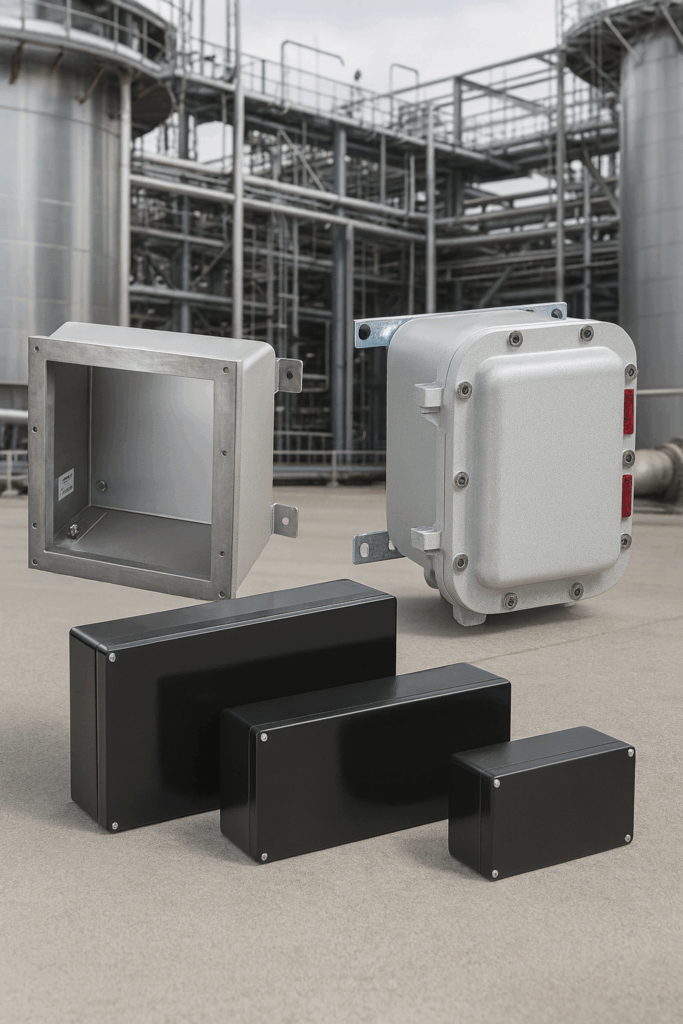
Explosion-proof enclosures are critical for protecting electrical components, instrumentation, communication equipment, and power systems in hazardous locations. These housings are engineered to contain internal explosions and prevent flame propagation into the surrounding atmosphere, making them indispensable in oil & gas, petrochemical, wastewater treatment, mining, grain handling, and any location classified as Class I Division 1, Class I Division 2, or ATEX/IECEx Zone 1 and Zone 2.
Looking to buy now instead of comparing specs? Browse our full catalog of certified, in-stock explosion-proof enclosures — sizes, materials, and pricing ready to ship.
Understanding the explosion proof enclosure price, material options, certifications, sizing, and lead times is essential for choosing the correct solution for your installation. This guide covers all pricing categories, compares steel, aluminum, and polycarbonate enclosures, and includes a reference table of in-stock models available at Intrinsically Safe Store.
Browse certified enclosures designed for C1D1 and ATEX Zone 1 locations.
What Is an Explosion-Proof Enclosure?
An explosion-proof enclosure is a certified housing designed to withstand an internal ignition of flammable gases or vapors and prevent it from escaping to the external hazardous atmosphere. These enclosures are constructed with flame paths, reinforced walls, threaded joints, certified cable entries, and materials capable of resisting high temperatures and mechanical stress.
Explosion-proof enclosures are used for:
-
I/O and automation systems
They must comply with standards such as UL 1203, NEC 500, ATEX, and IECEx depending on the region.
Explosion-Proof vs. Blast-Resistant Enclosures
While often used interchangeably with “explosion-proof,” a “blast rated enclosure” serves a distinct and critical purpose. A standard explosion-proof enclosure is designed to contain an internal explosion. In contrast, a blast-rated enclosure is engineered to withstand the force of an external blast wave, protecting the personnel and equipment inside from external threats.
These enclosures are essential in high-risk environments such as chemical processing plants, refineries, and military installations where external explosions are a possibility. Key characteristics include:
- Heavy-Duty Construction: Typically fabricated from thick-gauge steel or reinforced concrete to absorb and deflect blast overpressure.
- Structural Integrity: Designed to maintain their shape and prevent collapse under extreme pressure, ensuring the safety of internal systems and occupants.
- Specialized Certifications: Often rated according to specific blast resistance standards, which quantify the pressure (in psi) and duration they can withstand.
Choosing between an explosion-proof and a blast-rated enclosure depends on the primary risk assessment. If the danger comes from equipment inside the enclosure igniting a hazardous atmosphere, an explosion-proof model is required. If the danger is an external blast, a blast-rated design is necessary for true protection.
Key Features & Benefits
Explosion-proof enclosures provide more than just a housing; they deliver critical safety functions and operational reliability in high-risk environments. Understanding their core features is key to selecting the right product.
Containment of Internal Explosions
The primary function is to contain any explosion originating inside the enclosure from equipment malfunction. The robust construction ensures that sparks or flames do not escape and ignite the surrounding hazardous atmosphere, preventing a catastrophic event.
Rugged Durability and Material Strength
Constructed from materials like cast aluminum, stainless steel, or heavy-duty steel, these enclosures are built to withstand harsh industrial conditions. They offer high resistance to mechanical impact, corrosion, and extreme temperatures, ensuring long-term protection for the sensitive components inside.
Compliance with Global Safety Standards
Certified enclosures meet stringent safety standards such as ATEX, IECEx, and UL. This certification verifies that the product has been rigorously tested to perform safely in specified hazardous locations, ensuring compliance with local and international regulations.
Versatility for Various Applications
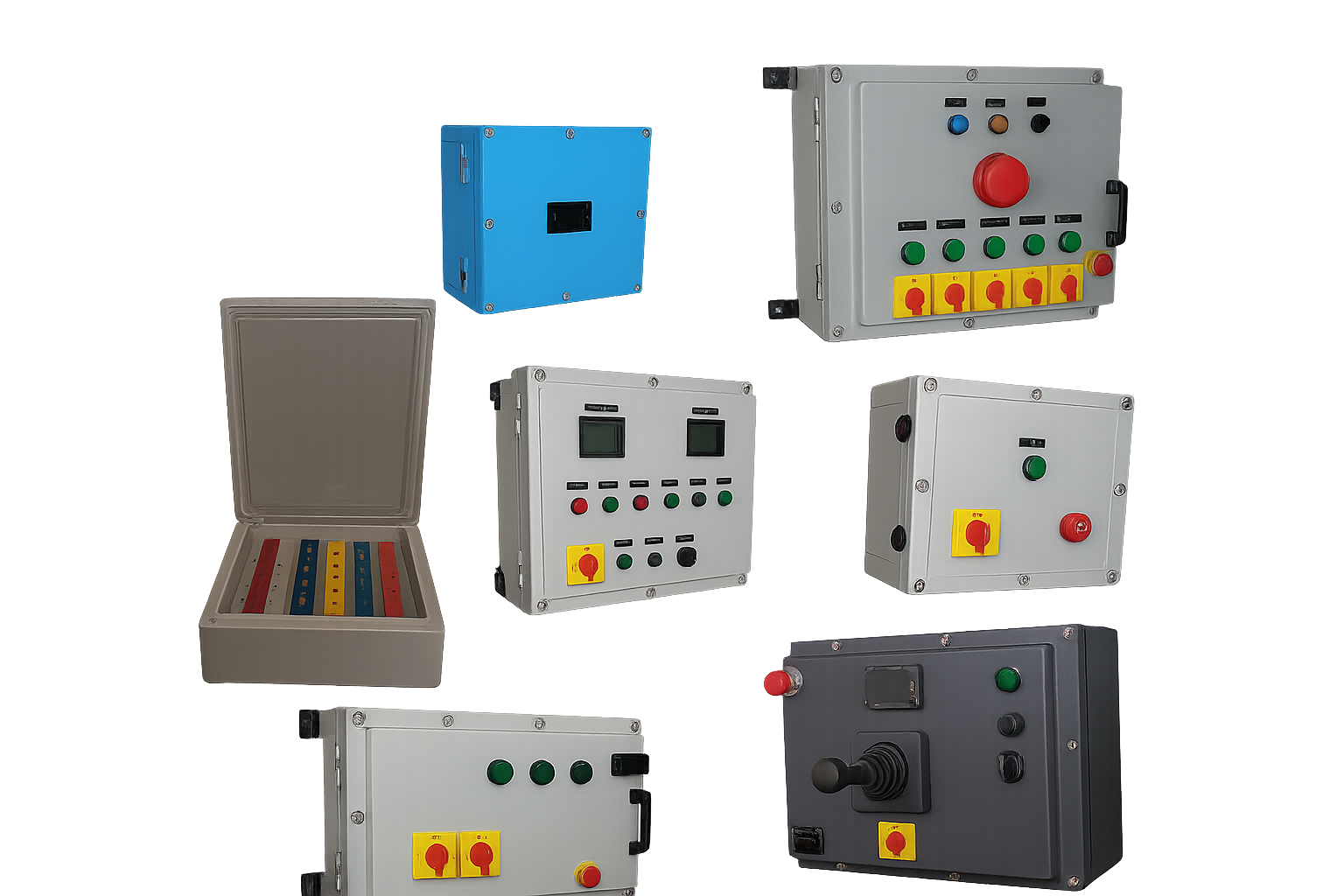
From small junction boxes for terminating wires to large, complex control panels, explosion-proof enclosures come in a wide range of sizes and configurations. They can be customized with windows, disconnect switches, and multiple conduit entries to fit specific application needs, providing a flexible solution for any hazardous area installation.
Explosion Proof Enclosure Price Breakdown
The explosion proof enclosure price varies widely depending on the enclosure size, certification, material, and features. Across current available models, prices typically fall into the following ranges:
Small Aluminum or Polycarbonate Enclosures
Compact housings used for junction boxes, small instruments, or low-voltage terminations. These models sit at the bottom of the price range and are ideal for confined-space installations or small I/O connections.
Medium Aluminum Explosion-Proof Enclosures
Common in industrial applications, these housings offer an excellent balance between cost, strength, and corrosion resistance. They are widely used for terminal boxes, automation systems, and general-purpose wiring interfaces.
Large Stainless Steel or Heavy-Duty Enclosures
These are significantly more expensive due to their reinforced construction and superior corrosion resistance. They are used in marine, chemical, offshore, and high-risk environments requiring maximum mechanical strength.
Flameproof Disconnect Enclosures
The most expensive category, used for isolating motors, pumps, and circuits in hazardous areas. Prices increase with amperage and physical size.
Factors That Influence Explosion-Proof Enclosure Price
Material Type
The enclosure material is one of the strongest cost drivers.
Steel
-
Maximum durability
-
Heaviest and most expensive material
Aluminum
-
Lightweight and corrosion resistant
-
More affordable than steel
-
Excellent heat dissipation
Polycarbonate / Composite
-
Lightweight
-
Resistant to corrosion and UV
-
Suitable for low-risk or control interfaces
-
Typically used for increased safety (Ex e) or terminal box applications; less common for flameproof (Ex d) designs which usually require metallic construction.
Size and Internal Volume
Larger enclosures require more raw material and more machining time, increasing total cost. The number of cover fasteners, hinge systems, and gasket requirements also scale with enclosure size.
Hazardous-Area Certification
C1D1 and ATEX Zone 1 applications often require flameproof (Ex d) enclosures, designed to contain an internal explosion, while C1D2 / Zone 2 locations may use increased safety (Ex e) enclosures, which are designed to prevent sparks or hot surfaces from occurring.
Need a deeper understanding of ATEX requirements for your enclosure?
Additional Features
-
Hinged lids
-
Multi-compartment layouts
-
Factory-installed terminals
These features significantly increase cost and lead time.
Explosion-Proof Enclosures (Overview Table)
Below is a reference table of explosion-proof and intrinsically safe enclosures currently available and in stock.
| Product | Material | Notes | Type |
|---|---|---|---|
| Kaixuan KX-EX09CBJ41-A Explosion Proof Enclosure | Aluminum | Compact enclosure for small devices | Explosion-proof (Ex d) |
| Warom Increased Safety Enclosures BXT-e | Aluminum | Certified Ex e enclosure suitable for housing terminals for Intrinsically Safe circuits | Increased Safety (Ex e) |
| Warom Explosion-Proof Enclosures BXT | Aluminum | Versatile hazardous-area enclosure | Explosion-proof |
| Explosion-proof Enclosures Warom BXT-□-W Series | Aluminum | Rugged build for harsh environments | Explosion-proof |
| Condor EX700 Explosion-Proof Enclosure | Aluminum | Cylindrical heavy-duty housing | Explosion-proof |
| Stainless Steel Explosion Proof Enclosure | Stainless Steel | Corrosion-resistant, robust design | Explosion-proof |
| Bartec ComEx 3-Gang Control Station | Composite | Multi-function control buttons | Flameproof (Ex d) |
| Explosion Proof EXEP0804 Switch Disconnector | Steel | High-duty disconnect enclosure | Flameproof |
| Explosion Proof EXEP0404 Switch Disconnector | Steel | Compact disconnect | Flameproof |
| Explosion Proof EXEP0254 Switch Disconnector | Steel | Smallest disconnect model | Flameproof |
| Explosion Proof EXEP1804 Switch Disconnector | Steel | Large capacity disconnector | Flameproof |
| Warom Explosion-Proof Terminal Box | Aluminum | Junction/terminal housing | Explosion-proof |
| Stainless Steel Enclosure Mounting Kit | Stainless Steel | Wall and pole mounting | Accessory |
| Pepperl+Fuchs FB9221 Remote I/O Field Unit | Metal | ATEX/IECEx certified I/O system | Remote I/O |
Find the exact enclosure size and material you need for your project.
Steel vs. Aluminum vs. Polycarbonate Enclosures
Explosion-proof enclosures are built in different materials depending on the application.
Steel
Steel offers the highest strength and flameproof capability. It’s ideal for disconnect switches, control stations, and heavy-duty installations. Steel enclosures are heavier but unmatched in durability.
Aluminum
Aluminum is the most common material in explosion-proof enclosures. It’s lightweight, corrosion resistant, easy to machine, and significantly more affordable than steel. Aluminum enclosures strike a perfect balance for most applications.
Polycarbonate / Composite
These enclosures are lightweight and corrosion-resistant, typically used for increased safety (Ex e) or terminal box applications; they are less common for flameproof (Ex d) designs which usually require metallic construction. They are ideal for intrinsically safe circuits, control interfaces, and low-voltage components.
Applications of Explosion-Proof Enclosures
Explosion-proof enclosures protect the following equipment types in hazardous zones:
Terminal and Junction Boxes
Used for cable splicing and termination in C1D1, C1D2, and Zone 1.
Disconnect Switch Enclosures
Provide motor or pump isolation in hazardous areas.
Control Stations
Allow safe user interface for start/stop functions, alarms, and emergency stops.
Instrumentation Housings
Used for transmitters, sensors, and control equipment in process industries.
Remote I/O Systems
House fieldbus and PLC interfaces in hazardous environments.
How to Choose the Right Explosion-Proof Enclosure
Selecting the correct enclosure involves balancing safety, budget, and installation requirements. Key considerations include:
-
Hazardous-area classification (C1D1, C1D2, Zone 1, Zone 2)
-
Material suitability for local environment
-
Required physical dimensions and internal volume
-
Cable entry requirements
-
Mounting method (wall, pole, pipe)
-
Thermal considerations
-
Required certifications (UL, ATEX, IECEx)
-
Lead time and stock availability
Lead Times for Explosion-Proof Enclosures
Lead times depend heavily on whether the enclosure is pre-manufactured or requires customization.
Fast-Ship, In-Stock Models
Standard aluminum and polycarbonate enclosures generally ship the fastest. Models such as Warom BXT, BXT-e, and compact aluminum enclosures typically have quick turnaround due to their modular designs.
Custom and Heavy-Duty Steel Enclosures
Steel disconnect enclosures, stainless steel housings, and enclosures requiring factory machining have longer lead times. Depending on configuration, these can range from several weeks to a few months, especially when cutouts, terminals, or disconnect switches must be installed at the factory.
FAQs
What is the typical explosion proof enclosure price?
Most enclosures range from low-cost compact housings to premium large flameproof enclosures. Prices vary according to size, certification, and material.
What material is best for hazardous areas?
Steel for maximum flameproof protection, aluminum for general use, and polycarbonate for low-risk control enclosures.
What is the difference between an explosion-proof and a blast-rated enclosure?
An explosion-proof enclosure is designed to contain an internal explosion and prevent it from igniting the surrounding atmosphere. A blast-rated enclosure is designed to withstand an external blast wave to protect the equipment inside. The choice depends on whether the primary threat is internal ignition or an external event.
Can I modify an explosion-proof enclosure on site?
Modifications must be approved by the manufacturer; drilling or machining can void certification.
Do I need special cable glands?
Yes. Cable glands must match the enclosure’s certification level and hazardous-area rating.
Are all explosion-proof enclosures flameproof?
Explosion-proof typically refers to flameproof Ex d enclosures, but some models meet increased safety Ex e requirements. Verify the protection type before purchase.
Not sure which enclosure fits your hazardous-area requirements?
Conclusion
Understanding the explosion proof enclosure price, materials, features, and lead times ensures that your installation meets hazardous-area safety requirements while staying within budget. Aluminum enclosures provide excellent all-around performance, steel offers maximum strength for the harshest environments, and polycarbonate gives a cost-effective option for lower-risk applications.
With a wide selection of in-stock models—including disconnect switch enclosures, terminal boxes, and stainless steel housings—Intrinsically Safe Store provides solutions for every hazardous-area requirement.