Intrinsically Safe Products
ATEX & IECEx Cable Glands | Class I Div 1/2 Rated | ISS
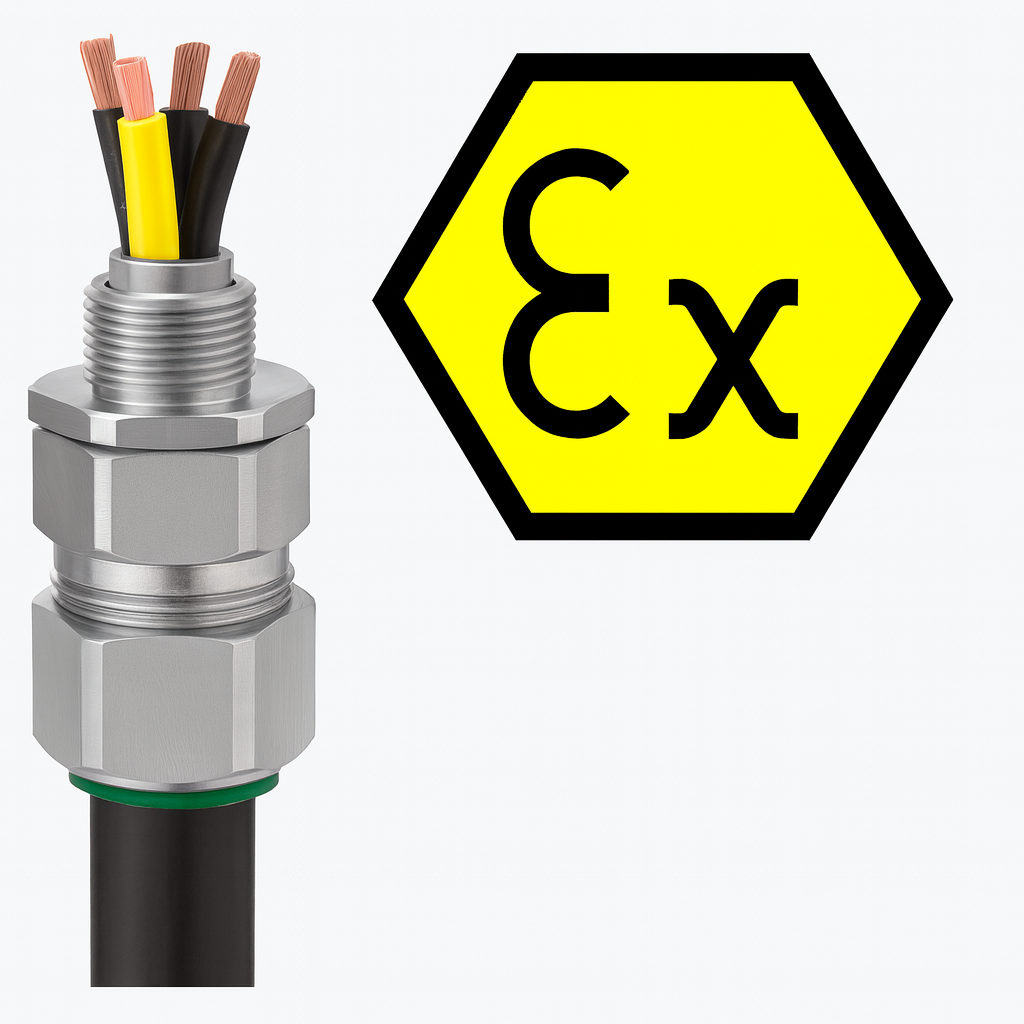
Cable glands may be small components, but in hazardous industrial environments, they play a critical safety role. A hazardous area cable gland ensures that cables entering electrical equipment do not become ignition sources. They maintain enclosure integrity, prevent gas or dust ingress, secure mechanical strain, and ensure continued compliance with hazardous location standards. Without the correct gland, even certified equipment can fail to meet ATEX, IECEx, or NEC safety requirements.
This comprehensive guide explains cable gland types, materials, sealing performance, Ex markings, and how to correctly match glands to your zone, class, or division. Whether you’re an engineer, installer, or safety manager, this article gives you the tools to choose the right gland for your application.
Build a Reliable Hazardous Area Cable Entry
Start with certified cables and compatible accessories to protect your Ex system from the first connection.
What Is a Hazardous Area Cable Gland?
A hazardous area cable gland is a mechanical entry device designed to secure the end of a cable and maintain the explosion protection rating of electrical equipment installed in flammable or combustible environments. These glands prevent gases, vapors, and dusts from entering enclosures while providing strain relief, earth continuity, and fire protection.
Hazardous area glands are used in:
-
Oil and gas production
-
Chemical processing
-
Pharmaceutical manufacturing
-
Grain handling
-
Marine and offshore
-
Battery energy storage systems
-
Paint and coatings facilities
These industries rely on glands to protect junction boxes, motors, instrumentation, and control panels in high-risk zones.
Why Cable Glands Matter in Explosion-Proof Installations
How Do Hazardous Area Cable Glands Prevent Ignition?
Hazardous area cable glands protect against ignition by maintaining the flameproof or increased safety design required for explosive atmospheres. They limit the passage of gases through the cable armor, sheath, or cores by using internal seals, barriers, and compression mechanisms.
A properly selected gland prevents:
-
Gas migration into equipment housings
-
Dust accumulation inside enclosures
-
Hot gases escaping during an internal explosion
-
Cable pullout or loosening under mechanical strain
Even a small failure in sealing can compromise a full Ex system.
Complete Your Explosion-Proof Cable Protection
Cable glands perform best when paired with certified enclosures and junction boxes designed for your exact hazardous rating.
Best for motors, control panels, and field terminations in Zone/Class-rated areas.
Understanding Hazardous Location Certifications
What Certifications Apply to Hazardous Area Cable Glands?
Cable glands installed in explosive atmospheres must match the equipment’s hazardous area certification. The three major systems are ATEX, IECEx, and NEC/CEC.
ATEX Certification (European Union)
ATEX certification under Directive 2014/34/EU applies to equipment intended for explosive atmospheres.
Markings include:
-
Group II – Surface industries
-
Category 1, 2, or 3 – Zones 0/1/2 or 20/21/22
-
G or D – Gas or dust
Example: II 2G Ex d IIC Gb
A hazardous area cable gland must match the equipment category and protection type.
IECEx Certification (International)
IECEx is widely accepted in global industries such as LNG, petrochemical, marine, and mining.
IECEx glands include:
-
Protection technique
-
Gas/dust group
-
Temperature class
-
Equipment protection level (EPL)
IECEx ensures consistent testing and simplifies international procurement.
NEC/CEC Hazardous Location Ratings (North America)
The U.S. and Canada classify hazardous locations by:
-
Class I, II, III (gases, dusts, fibers)
-
Division 1 or 2
-
Groups A–G
Cable glands must carry a Class/Division rating or a Class/Zone marking to match installation requirements.
Types of Hazardous Area Cable Glands
What Types of Hazardous Area Cable Glands Are Available?
Hazardous area cable glands vary based on sealing technology, cable type, and protection concept.
The primary types include:
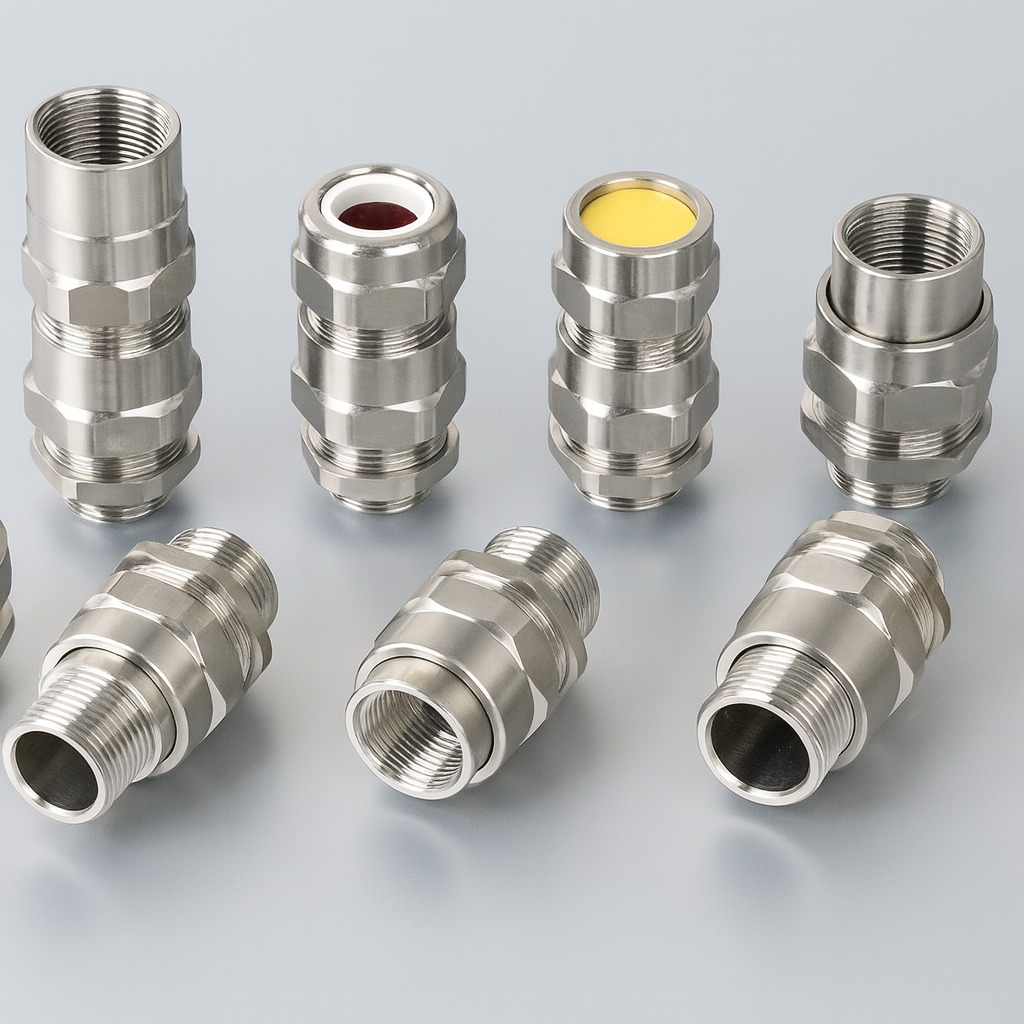
Barrier-Type Cable Glands
These glands use a compound or barrier resin to prevent gas migration along cable cores.
Often specified for: Applications where gas migration through the cable is a risk, as defined by installation standards like IEC 60079-14. Commonly used to meet the requirements of Zone 1 / Class I, Division 1 installations.
-
Cables with stranded conductors or flexible sheaths
Barrier glands provide the highest sealing integrity.
Compression-Type Glands
These glands compress a seal around the cable sheath, blocking dusts and moisture.
Commonly used in: Zone 2 or Division 2 applications where a barrier seal against gas migration through the cable is not required by the relevant installation code.
-
Armored and unarmored cables
They are easier to install than barrier glands but not as gas-tight.
Armored Cable Glands
Designed for steel wire armor (SWA), braided cable, or corrugated aluminum armor.
Features include:
-
Earth continuity
-
Mechanical retention
-
Explosion-proof sealing options
Armored glands come in barrier, compression, and combination models.
Unarmored Cable Glands
Used for industrial cables without armor, typically offering:
-
Simple compression sealing
-
Increased safety protection
-
Low installation complexity
Common in instrumentation and control applications.
Ex d vs. Ex e Cable Glands
-
Ex d (Flameproof): Designed to contain an internal explosion and prevent it from propagating. Sealing methods are certified to maintain the flameproof integrity of the enclosure, which may include barrier compounds or specific compression seal designs.
-
Ex e (Increased Safety): Prevent arcs or high temperatures; typically compression-seal glands.
The gland must match the equipment’s protection concept exactly.
Sealing Performance: How to Choose the Right Seal
How Do Cable Glands Provide Sealing Protection?
Hazardous area glands can seal:
-
The outer sheath
-
The inner bedding
-
The individual cable cores
-
The armor layer
Sealing methods include elastomer seals, compression rings, and epoxy barrier compounds.
What Affects Sealing Integrity?
Sealing performance depends on:
-
Cable construction (armored vs. unarmored)
-
Number of conductors
-
Sheath material
-
Chemical exposure
-
Hydrocarbon or dust concentrations
-
Temperature range
Installation standards, such as IEC 60079-14, specify that barrier glands must be used in certain conditions to prevent flammable gas from migrating along the cable cores.
Material Choices for Hazardous Area Cable Glands
What Materials Are Used in Hazardous Area Cable Glands?
Choosing the correct material ensures corrosion resistance, mechanical durability, and long service life.
Brass Cable Glands
Most common material for Ex glands.
Advantages:
-
Strong mechanical grip
-
Good corrosion resistance
-
Effective flameproof sealing
Often nickel-plated to prevent oxidation.
Stainless Steel Cable Glands
Used in harsh or corrosive environments.
Advantages:
-
High resistance to chemicals
-
Withstands saltwater, acids, solvents
-
Long lifespan in offshore or marine zones
Aluminum Cable Glands
Lightweight and cost-effective but less corrosion-resistant.
Commonly used in: General industrial applications within non-corrosive atmospheres where lightweight components are beneficial.
Polyamide (Plastic) Cable Glands
Used in some non-sparking applications, mostly increased-safety areas.
Limitations:
-
Not suitable for flameproof applications (Ex d)
-
Limited temperature resistance
Matching Cable Glands to ATEX/IECEx Zone Requirements
How Do You Select the Right Gland for Each Zone?
Each hazardous location rating requires a matching gland type.
Zone 0 and Zone 1 (Gas)
-
Zone 1 requires equipment with a high level of protection, such as Ex d, Ex ib, or Ex e. Zone 0, the most hazardous classification, generally requires equipment with a 'very high' level of protection, most commonly Ex ia (intrinsically safe).
-
Where gas migration through the cable is a risk, installation codes require a sealing method, such as a barrier gland, to prevent it.
-
Due to its high corrosion resistance, stainless steel is frequently specified for installations in harsh chemical environments.
Zone 2 (Gas)
-
Compression glands often acceptable
-
Material selection based on environment
Zone 20/21 (Dust)
-
Ex tb glands with dust-tight seals
-
Higher IP ratings required (IP66/IP68)
Zone 22 (Dust)
-
Compression types acceptable if enclosure is rated
Matching the gland to both zone and equipment protection method is mandatory for compliance.
Comparison Table: Hazardous Area Cable Gland Types
| Gland Type | Suitable Zones | Sealing Method | Best For | Material Options |
|---|---|---|---|---|
| Barrier Gland | Zone 0, 1; Div 1 | Epoxy compound | Gas migration prevention | Brass, Stainless Steel |
| Compression Gland | Zone 2; Div 2 | Elastomer seal | General industrial | Brass, Stainless, Aluminum |
| Armored Gland | Zone 1, 2 | Armor clamp + seal | SWA/AWA cables | Brass, Stainless |
| Unarmored Gland | Zone 1, 2 | Sheath compression | Instrument & control | Brass, Plastic |
| Ex d Gland | Flameproof zones | Barrier or flameproof seal | Motors, junction boxes | Brass, Stainless |
| Ex e Gland | Increased safety zones | Compression | Panels, terminals | Brass, Stainless, Polyamide |
Key Steps for Correct Cable Gland Installation
Proper installation is as crucial as selecting the right gland. An incorrectly fitted gland can nullify the safety features of the entire system. Following a meticulous process ensures compliance and operational safety.
1. Preparation and Cable Stripping
Before starting, verify that the gland's certification matches the hazardous area requirements. Carefully prepare the cable by stripping the outer sheath and any armor to the precise dimensions specified by the gland manufacturer. Using the wrong stripping length can compromise the seal or the armor clamp's effectiveness. Ensure all cable ends are clean and free from grease or debris.
2. Gland Assembly and Tightening
Disassemble the gland and slide the components onto the cable in the correct order. For armored glands, ensure the armor is evenly spread over the clamping cone to establish proper earth continuity. Tighten the components sequentially using the correct tools, such as calibrated spanners, to avoid over-tightening. The manufacturer's instructions will specify torque values; exceeding them can damage the seals or the cable itself.
3. Sealing and Final Inspection
For barrier glands, mix the epoxy compound according to the instructions and apply it carefully to fill the space around the conductors, ensuring there are no voids. Once assembled and tightened, perform a final inspection. Check that the seals are properly compressed, the armor is securely clamped, and there is no visible damage to the cable or gland. A pull test can confirm the mechanical retention of the gland.
Common Installation Mistakes and How to Avoid Them
Even experienced technicians can make mistakes that compromise safety. Being aware of these common pitfalls is essential for a secure and compliant installation.
- Incorrect Sizing: Using a gland that is too large or too small for the cable diameter is a frequent error. This leads to ineffective sealing and poor strain relief. Always measure the cable's actual diameter and consult the gland's specification sheet.
- Over-Tightening: Applying excessive torque can damage the gland's threads, crush the cable's inner bedding, and deform the elastomer seals, creating potential leak paths. Always use a torque wrench set to the manufacturer's recommended values.
- Forgetting Sealing Washers: A sealing washer (often red fiber or nylon) is typically required between the gland and the enclosure to maintain the IP rating. Omitting this component can allow dust and moisture ingress.
- Improper Armor Clamping: In SWA or braided cables, failing to properly terminate the armor in the gland's clamping mechanism results in poor earth continuity, which is a critical safety failure in the event of a fault.
Avoiding these errors is fundamental to achieving a safe installation as outlined in standards like IEC 60079-14.
Confirm Your Rating Before You Buy
Share your cable type, armor, and Zone/Class—our experts will help you match the right gland, enclosure, and sealing approach.
Frequently Asked Questions (FAQs)
What is the main purpose of a hazardous area cable gland?
It provides mechanical retention and prevents the passage of gases or dusts into electrical enclosures, maintaining ATEX/IECEx/NEC compliance and preventing ignition risks.
Do I need a barrier gland or compression gland?
Choose a barrier gland for Zone 0/1 or Class I Div 1 gas environments. Compression glands may be used in Zone 2 applications or dust zones where gas migration is not a risk.
Can stainless steel and brass be used interchangeably?
Both are acceptable, but stainless steel offers better corrosion resistance. Brass is more economical and ideal for most ATEX applications.
Are polyamide glands explosion-proof?
No — they are not suitable for Ex d flameproof applications but can be used in Ex e increased safety zones.
Do hazardous area glands need IP ratings?
Yes. For dust zones, look for IP66 or IP68 to ensure complete sealing against particulate ingress.
Conclusion: Choosing the Right Hazardous Area Cable Gland
Selecting the correct hazardous area cable gland requires understanding cable type, installation environment, zone classification, and sealing performance. Barrier glands protect against gas migration, compression glands offer fast installation, and material choices like stainless steel ensure long-term corrosion resistance. By matching the gland to ATEX, IECEx, or NEC requirements, facilities maintain safety compliance and ensure reliable electrical performance.
For certified hazardous-area equipment—including cameras, radios, lights, testing tools, and accessories—visit the Intrinsically Safe Store.