Intrinsically Safe Knowledge Base
Hazardous Area Certifications: ATEX, IECEx & Class Div | ISS
Electrical equipment used in hazardous environments must meet strict safety standards to prevent catastrophic explosions or fires. Whether you’re operating in oil refineries, chemical plants, or grain processing facilities, understanding hazardous area electrical certification is essential for safety and compliance. This article demystifies the certification process, compares key global standards, and shows you how to select the right certified equipment.
What Is Hazardous Area Electrical Certification?
Hazardous area electrical certification refers to the regulatory process that ensures electrical equipment is safe to use in environments with flammable gases, vapors, dust, or fibers. These certifications validate that equipment is engineered to avoid ignition in classified areas, commonly referred to as “hazardous locations.”
Why Is Certification Necessary?
In environments where explosive atmospheres are present, unprotected equipment can serve as an ignition source. Electrical sparks, high surface temperatures, or static electricity can lead to explosions, endangering lives and infrastructure. Certifications reduce this risk by confirming compliance with specific construction and performance standards.
Want to ensure compliance with certified equipment? Explore our ATEX & IECEx certified devices
How Are Hazardous Areas Classified?
Hazardous areas are divided into zones or divisions based on the frequency and duration of the presence of explosive atmospheres.
| Classification System | Region Used | Categories | Description |
|---|---|---|---|
| IEC/ATEX Zones | Europe, global | Zone 0, 1, 2; Zone 20, 21, 22 | Frequency of hazardous material presence (continuous, intermittent, rare) |
| NEC/CEC Divisions | North America | Division 1, Division 2 | Whether hazardous materials are present under normal (Div 1) or abnormal (Div 2) conditions |
Zone System (IEC/ATEX)
-
Zone 0/20: Continuous presence of explosive atmosphere.
-
Zone 1/21: Likely presence under normal operation.
-
Zone 2/22: Presence only under abnormal conditions.
Division System (NEC/CEC)
-
Division 1: Flammable gases or dusts are present during normal operation.
-
Division 2: Flammable materials are present only under fault conditions.
What Are the Main Certification Bodies?
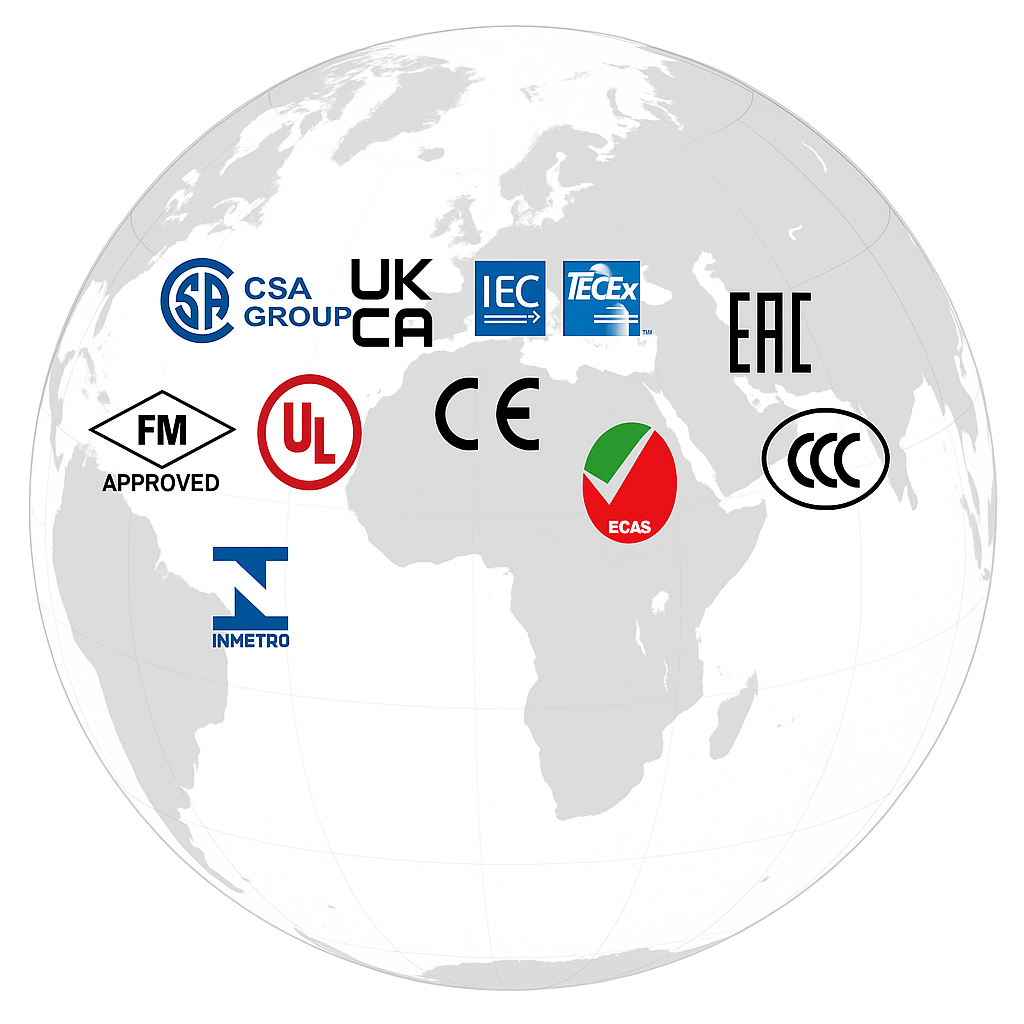
Different regions follow distinct standards and testing procedures for certifying electrical equipment for hazardous areas.
| Certification | Region | Standard Used | Marking Example | Key Authority |
|---|---|---|---|---|
| ATEX | Europe | EN 60079 series | Ex II 2G Ex d IIC T4 | EU Notified Bodies |
| IECEx | Global | IEC 60079 series | Ex d IIC T4 Gb | IECEx System |
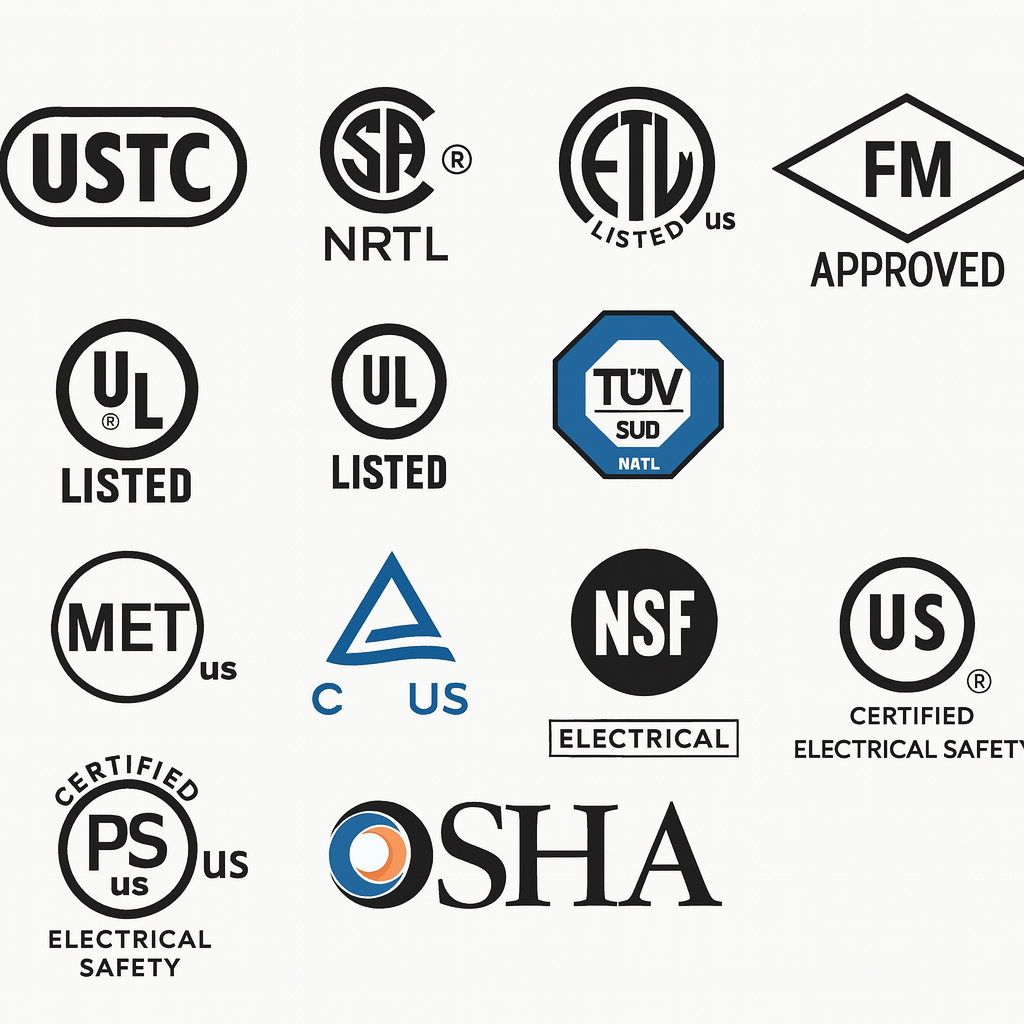
| UL / FM | USA | NEC 500/505 | Class I Div 1 Groups A-D | Underwriters Laboratories (UL), FM Global |
| CSA | Canada | CEC | Class I Div 2 | Canadian Standards Association |
| INMETRO | Brazil | IEC/ABNT | Ex d IIC T5 Gb | National Institute of Metrology |
For an in-depth guide, check our blog on Differences Between ATEX, IECEx, and UL
What Are the Key Differences Between ATEX and IECEx?
While both ATEX and IECEx ensure equipment safety in explosive atmospheres, there are some distinctions:
| Feature | ATEX | IECEx |
|---|---|---|
| Region | European Union | International (incl. Australia, Asia, Middle East) |
| Legal Requirement | Mandatory in EU | Optional but highly recognized globally |
| Certification Format | EU Declaration of Conformity | Certificate of Conformity (CoC) |
| Notified Bodies | Required | Used but system-wide certification is harmonized |
Best Choice:
-
For EU-based operations: Use ATEX-certified equipment.
-
For multinational compliance: Choose IECEx-certified products.
How Can You Tell If Equipment Is Certified?
Certified equipment features a label or nameplate indicating its approval. Here’s how to decode it:
Example:Ex II 2G Ex d IIC T4 Gb
-
Ex: Explosion protection
-
II: Non-mining application
-
2G: Equipment group and category
-
Ex d: Type of protection (flameproof)
-
IIC: Gas group (hydrogen, acetylene)
-
T4: Temperature class (max 135°C)
-
Gb: Equipment protection level (Gas, high protection)
Tip: Always cross-check product documentation and certification numbers with issuing body databases (e.g., UL, IECEx online certificates).
What Are Common Protection Methods?
Hazardous area equipment may use various protection techniques depending on the type of hazard.
| Method | Abbreviation | Description |
|---|---|---|
| Flameproof | Ex d | Contains explosion within enclosure |
| Intrinsic Safety | Ex i | Limits energy to prevent ignition |
| Pressurization | Ex p | Keeps flammable gas out of enclosure |
| Increased Safety | Ex e | Adds safety features to prevent arcs/sparks |
| Encapsulation | Ex m | Seals components in resin to isolate ignition source |
Which Certifications Apply to Intrinsically Safe Equipment?
Intrinsically safe equipment is designed to operate with very low energy levels that are incapable of causing ignition.
-
Typically marked as Ex i.
-
Certified under ATEX, IECEx, and UL/CSA standards.
-
Common in Zone 0 or Division 1 areas.
Browse certified intrinsically safe devices like:
What Happens If You Use Non-Certified Equipment?
Using uncertified electrical devices in hazardous locations is a serious regulatory and safety violation. Consequences may include:
-
Fines and legal action from OSHA or international regulators
-
Equipment seizure or shutdowns
-
Increased risk of ignition and explosion
-
Insurance denial in case of incident
What Industries Require Hazardous Area Electrical Certification?
The following industries commonly operate in classified zones and rely on certified equipment:
-
Oil & Gas
-
Petrochemicals
-
Mining
-
Pharmaceuticals
-
Food & Beverage (dust hazards)
-
Utilities and Power Generation
-
Aerospace and Defense
Industry Metrics:
-
Over 3 million workers globally operate in hazardous environments (ILO).
-
Electrical faults account for 22% of industrial fires (NFPA).
-
IECEx-certified equipment adoption has grown by 15% year-over-year since 2020 (IECEx Annual Report).
Comparison Table: Certification Standards by Region
| Certification | Electrical Standard | Use Case | Equipment Types | Regulatory Body |
|---|---|---|---|---|
| ATEX | EN 60079 | EU Explosive Zones | Phones, radios, lights | European Commission |
| IECEx | IEC 60079 | Global | All electrical categories | IECEx Management Committee |
| UL / FM | NEC 500/505 | North American Divisions | Motors, enclosures, panels | OSHA/NRTL |
| CSA | CEC | Canadian installations | Sensors, transmitters | CSA Group |
Best Choice for Certified Electrical Equipment
| Use Case | Recommended Certification | Product Example |
|---|---|---|
| European refinery | ATEX | i.safe IS530.1 Smartphone |
| Multinational compliance | IECEx | Ecom Smart-Ex 02 DZ1 |
| North American plant | UL/CSA | Sonim XP10 IS Phone |
| Dust-prone facility | ATEX Zone 22 | Aegex 10 Intrinsically Safe Tablet |
Have more questions? Book a free consultation with our hazardous location compliance specialists.
Frequently Asked Questions
What is the difference between Class, Division, and Zone?
“Class” defines the type of hazard (gas, dust), “Division” specifies likelihood in North America, and “Zone” is the international equivalent describing frequency of hazard presence.
Is ATEX certification valid worldwide?
No. ATEX is legally valid only in the EU. For global recognition, IECEx is preferred. Some countries may accept ATEX but require local approvals too.
Can ATEX and IECEx equipment be used interchangeably?
It depends on the jurisdiction. While technically similar, legal and insurance requirements may restrict interchangeability unless dual certification is present.
Do batteries in hazardous areas need to be certified?
Yes. Any component that stores or transfers energy—batteries, chargers, power banks—must be certified if used within a hazardous zone.
How do I verify if a product is certified?
Check for certification marks, documentation, and the registration of the product’s serial number or certificate ID on the respective certifying body’s online portal.
Conclusion: Why Hazardous Area Electrical Certification Matters
Ensuring your equipment carries valid hazardous area electrical certification isn’t just about compliance—it’s about protecting people, infrastructure, and business continuity. Whether you’re managing a refinery, utility plant, or mining operation, the right certifications save lives and money. Always look for products tested to ATEX, IECEx, UL, or CSA standards and consult experts before deploying devices in explosive atmospheres.