Intrinsically Safe Products
Hazardous Area LED Strip Lights: Ratings Explained
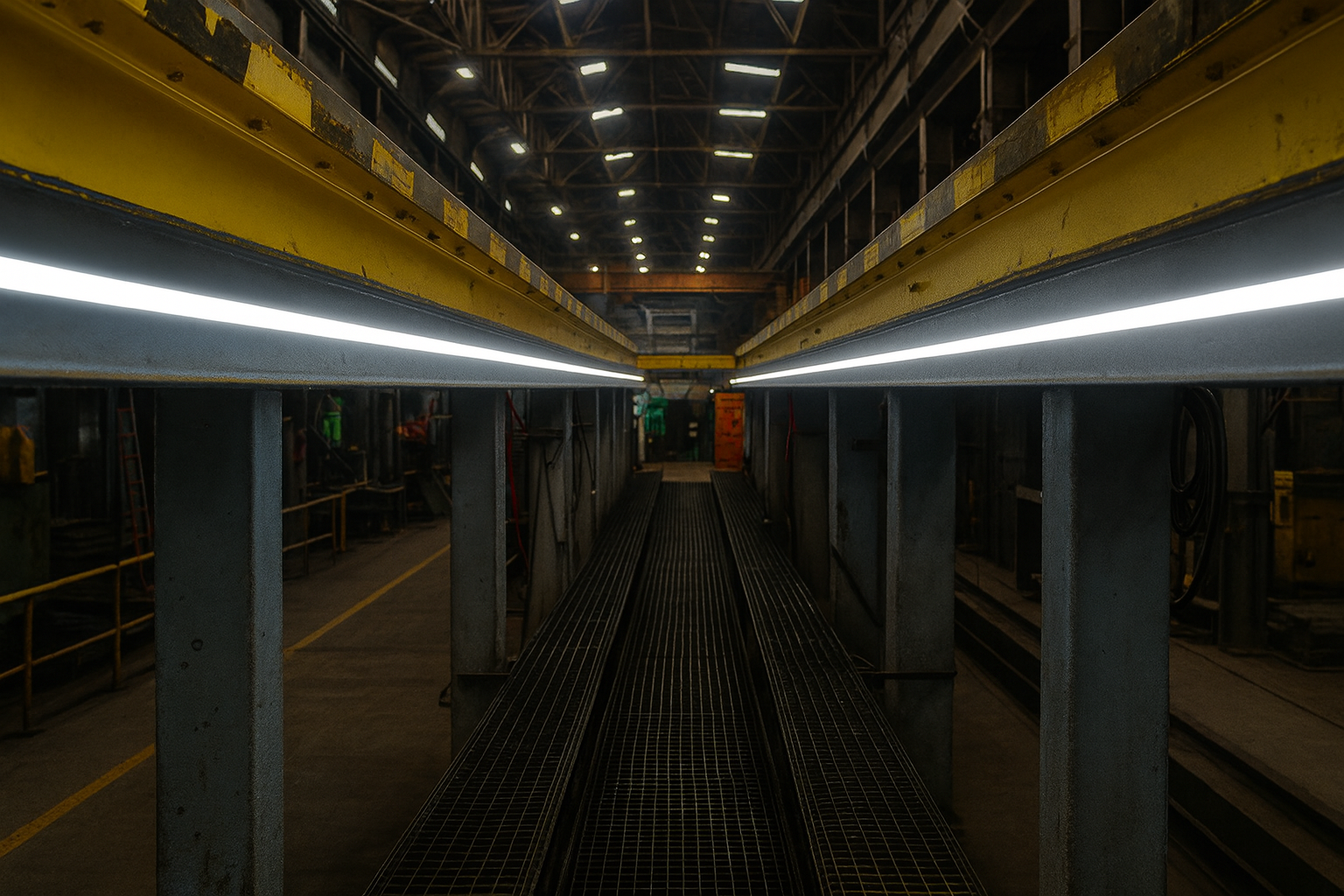
Hazardous area LED strip lights are becoming one of the most versatile and reliable illumination solutions for industrial environments with explosion risks. Facilities in oil and gas, wastewater treatment, chemical processing, and manufacturing increasingly rely on flexible lighting options that can be installed in tight spaces, curved surfaces, narrow walkways, and tank interiors—areas where traditional fixtures cannot function effectively.
Because explosive gases, vapors, and combustible dusts pose ignition hazards, industrial lighting must meet strict safety certifications such as ATEX, IECEx, and Class/Division ratings. LED strip lights designed for hazardous locations offer a low-profile, low-heat, continuous illumination option that improves worker safety, enhances visibility, and reduces maintenance costs.
This comprehensive guide explains applications, ratings, mounting methods, and compliance requirements for hazardous area LED strip lights, helping safety managers and engineers choose the right lighting for high-risk environments.
What Are Hazardous Area LED Strip Lights?
Hazardous area LED strip lights are flexible or semi-rigid linear lighting systems engineered to operate safely in explosive atmospheres. Unlike general-purpose strip lighting, hazardous-rated models incorporate:
-
Reinforced sealing and encapsulation
-
Impact-resistant materials
-
Controlled surface temperatures
-
Intrinsically safe or explosion-proof designs
-
High IP ratings for dust and moisture protection
These lights are engineered to prevent ignition under normal operation and fault conditions. They are commonly certified for Zones 1 and 2 or Class I, Division 1 and 2 depending on regional standards.
Their slim, bendable profile makes them ideal for locations where bulky fixtures cannot be mounted, providing continuous and uniform illumination along edges, paths, equipment, or inside confined structures.
Why Are LED Strip Lights Ideal for Walkways, Tanks & Emergency Areas?
LED strip lights are uniquely suited for hazardous environments because they are low-heat, compact, and flexible, while providing superior visibility along long lengths.
Walkways
Walkways in industrial plants require consistent lighting that withstands vibration, weather exposure, and hazardous atmospheres. LED strip lights excel because:
-
They produce continuous light with no dark gaps
-
Mount easily under railings, along curbs, or on structural beams
-
Improve worker visibility during night shifts or low-light operations
-
Have minimal risk of breakage due to their low profile
Tanks & Confined Spaces
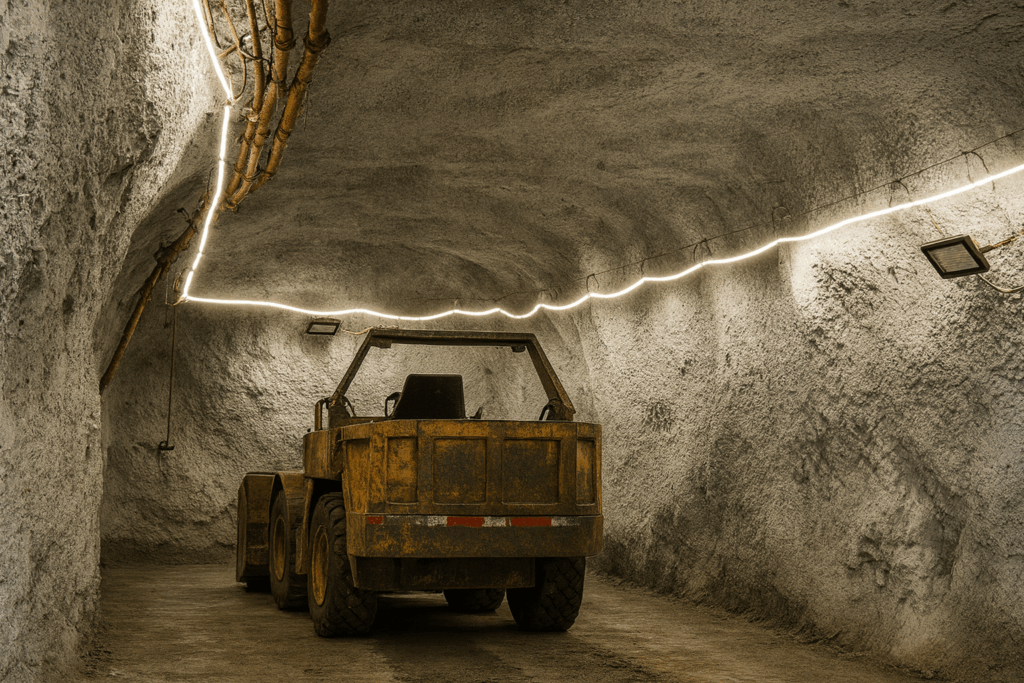
Tank interiors and confined spaces are some of the hardest areas to illuminate safely. Hazardous area LED strip lights are advantageous because they:
-
Conform to curved and tight surfaces
-
Reduce shadows and glare
-
Operate with controlled surface temperatures, which are classified by T-ratings (e.g., T4, T5, T6) to ensure they do not become an ignition source.
-
Offer safer alternatives to portable floodlights
-
Enhance inspection workflows
Their ability to wrap around surfaces or line access points provides more even lighting than point-source fixtures.
Emergency Areas & Egress Routes
Emergency lighting must maintain visibility even in sudden outages or during evacuations. Hazardous-rated strip lighting is often used to:
-
Illuminate exit paths
-
Mark directional routes
-
Provide low-level lighting in smoke-filled or dark conditions
-
Integrate with emergency battery systems
Their continuous light output improves orientation and reduces evacuation time.
What Certifications Apply to Hazardous Area LED Strip Lights?
Hazardous-area lighting must comply with rigorous global standards. The primary certification systems include:
ATEX
Required in Europe for equipment used in explosive atmospheres. ATEX identifies:
-
Zone 0 / 20: Continuous hazard
-
Zone 1 / 21: Likely during normal operation
-
Zone 2 / 22: Unlikely but possible
IECEx
A global standard recognized in many regions outside the EU. Provides a consistent certification path for hazardous electrical equipment.
UL/CSA Class & Division
Used in the United States and Canada:
-
Class I: Gases and vapors
-
Class II: Combustible dust
-
Class III: Fibers and flyings
-
Division 1: Hazard is likely to exist under normal operating conditions.
-
Division 2: Hazard is present only during abnormal operating conditions (e.g., due to equipment failure or rupture).
Ingress Protection (IP Ratings)
Hazardous area LED strip lights often feature high IP ratings to protect against environmental factors. Common ratings found on these products include IP66/IP67 for protection against powerful water jets, and IP68 for continuous immersion under specified conditions.
Temperature Codes (T-Ratings)
Show the maximum surface temperature of the lighting. Common T-codes include:
-
T6: ≤ 85°C
-
T5: ≤ 100°C
-
T4: ≤ 135°C
The T-code must be selected so the equipment’s maximum surface temperature remains safely below the auto-ignition temperature of the hazardous substances present. For example, a T6 rating (≤ 85°C) is specified for atmospheres where the substance’s auto-ignition temperature is above 85°C.
How Do You Identify a Certified Hazardous Area LED Strip Light?
To verify compliance, check for:
-
Certification logos (ATEX, IECEx, UL/CSA)
-
IP rating
-
Temperature class
-
Gas or dust group
-
Manufacturer’s test documentation
-
Model and serial number
Always verify equipment has a third-party certification mark (e.g., ATEX, IECEx, UL). Do not rely on generic marketing terms like ‘explosion-proof design’ if they are not supported by a formal certification label and documentation.
Where Can Hazardous Area LED Strip Lights Be Installed?
Hazardous area LED strip lights are used across multiple industries due to their flexibility, durability, and low power consumption.
Oil & Gas
-
Platform walkways
-
Pump skid illumination
-
Equipment perimeters
-
Compressor stations
These environments benefit from continuous lighting that endures heavy vibration and extreme temperatures.
Chemical Processing Plants
-
Mixers and blending areas
-
Tank inspection ports
-
Stairways and catwalks
Strip lighting is beneficial for outlining hazardous edges and improving process visibility.
Water & Wastewater Treatment
-
Digesters
-
Lift stations
-
Tunnels and service corridors
Moisture-resistant strip lights with IP68 ratings thrive in corrosive, damp environments.
Manufacturing, Food & Grain Processing
-
Areas with combustible dust
-
Conveyor belts
-
Inspection zones
Low-profile lighting reduces interference with operations while enhancing safety and quality control.
What Mounting Options Are Available for Hazardous Area LED Strip Lights?
Mounting flexibility is one of the biggest advantages of LED strip lighting.
Adhesive Backing
-
Best for smooth metal surfaces
-
Conforms to curved tanks or pipes
-
Quick installation for temporary or semi-permanent lighting
Mounting Clips & Brackets
-
Provide secure mounting on walkways and structures
-
Designed to withstand vibration
-
Suitable for permanent installations
Magnetic Mounts
-
Ideal for temporary tasks or inspection work
-
Easy relocation
-
Useful in tanks or scaffolding
Encased Strip Channels
-
Provide mechanical protection
-
Improve light directionality
-
Often made from aluminum or stainless steel
Choosing the right method depends on ambient conditions, exposure to chemicals, mechanical stress, and access needs.
What Are the Electrical Requirements for Safe Installation?
Hazardous area LED strip lights typically operate on:
-
12V, 24V, or 48V low-voltage systems
-
Intrinsically safe power supplies
-
Sealed or explosion-proof junction boxes
-
Protected conduit or cable systems
Improper power sources can void the certification—even if the LED strip itself is certified.
All installation must be performed by technicians trained in hazardous-area electrical requirements.
Key Protection Methods in Certified LED Strips
The safety of hazardous area LED strip lights comes from specific protection methods built into their design. The most common methods include:
- Encapsulation (Ex mb): This method involves completely sealing the LED components in a resin compound. The encapsulation prevents explosive atmospheres from reaching any potential ignition sources and also provides excellent protection against moisture, dust, and mechanical impact.
- Increased Safety (Ex eb): While less common for flexible strips, this method is used in rigid fixtures and connection boxes. It ensures that no arcs, sparks, or excessive temperatures can occur during normal operation by using high-quality terminals and robust construction.
- Intrinsic Safety (Ex ia/ib): This protection level limits the electrical energy in the circuit to a level below what is needed to ignite a specific hazardous atmosphere, even under fault conditions. This is often achieved through a certified intrinsically safe power supply located outside the hazardous area.
A single LED strip light often combines multiple protection methods, such as encapsulation (mb) for the light itself and increased safety (eb) for its terminal connections, to achieve a high level of safety for Zone 1 or Class I, Division 1 environments.
Comparison: Hazardous Area LED Strip Lights vs. Conventional Hazardous Lighting
Best Use Recommendations
-
Walkways: LED strip lights
-
Tank interiors: LED strip lights
-
Outdoor high-intensity lighting: Floodlights
-
Portable confined space use: Intrinsically safe handheld or headlamps
Recommended Hazardous Lighting Categories
Although this article does not include URLs, relevant product categories typically include:
-
Explosion-proof lighting
-
Hazardous area headlamps
-
Portable intrinsically safe work lights
These categories support similar use cases when hazardous-rated LED strip lighting is supplemented or unavailable.
Industry Metrics: Safety & Efficiency Benefits
Data from industrial lighting studies shows:
-
40–60% energy reduction when switching from fluorescent to LED
-
Up to 80,000 operating hours, reducing maintenance cycles
-
Improved walkway visibility reduces accidents by 20–25%
-
Continuous strip lighting reduces shadowing by up to 50%
-
LED systems maintain >90% lumen output after the first 10,000 hours, ensuring long-term performance
These metrics make hazardous-rated LED strip lighting a strong investment for operational efficiency and safety.
FAQs About Hazardous Area LED Strip Lights
Are hazardous area LED strip lights safe for tank interiors?
Yes. When certified to ATEX/IECEx or Class/Division standards and rated IP68, they provide low-heat, fully sealed illumination ideal for confined spaces.
Do LED strip lights replace explosion-proof fixtures?
Not fully. Strip lights are excellent for task, walkway, and contour lighting but do not replace high-output floodlighting.
How long do hazardous LED strip lights last?
Many models exceed 50,000–80,000 hours, minimizing maintenance needs.
Are they easy to install?
Yes—mounting clips, adhesives, and channels make installation straightforward, though wiring must meet hazardous-area electrical rules.
Can hazardous LED strip lighting be used for emergency illumination?
Absolutely. Their low power draw is compatible with UPS systems and emergency battery packs.
Need a Quote for Zone 1 LED Strip Lights?
Talk to a hazardous area specialist for a tailored recommendation. Start a live chat or call us at +1 (832) 699-6726 for immediate assistance.
Conclusion
Hazardous area LED strip lights offer a powerful combination of flexibility, durability, and safety for high-risk industrial environments. Their ability to illuminate walkways, tanks, equipment, and emergency routes makes them invaluable for facilities operating under ATEX, IECEx, or Class/Division regulations. By understanding certifications, mounting options, and electrical requirements, organizations can select lighting that enhances worker safety, reduces downtime, and supports compliance.