Intrinsically Safe Products
Intrinsically Safe Gas Detectors | ATEX & Class I Div 1
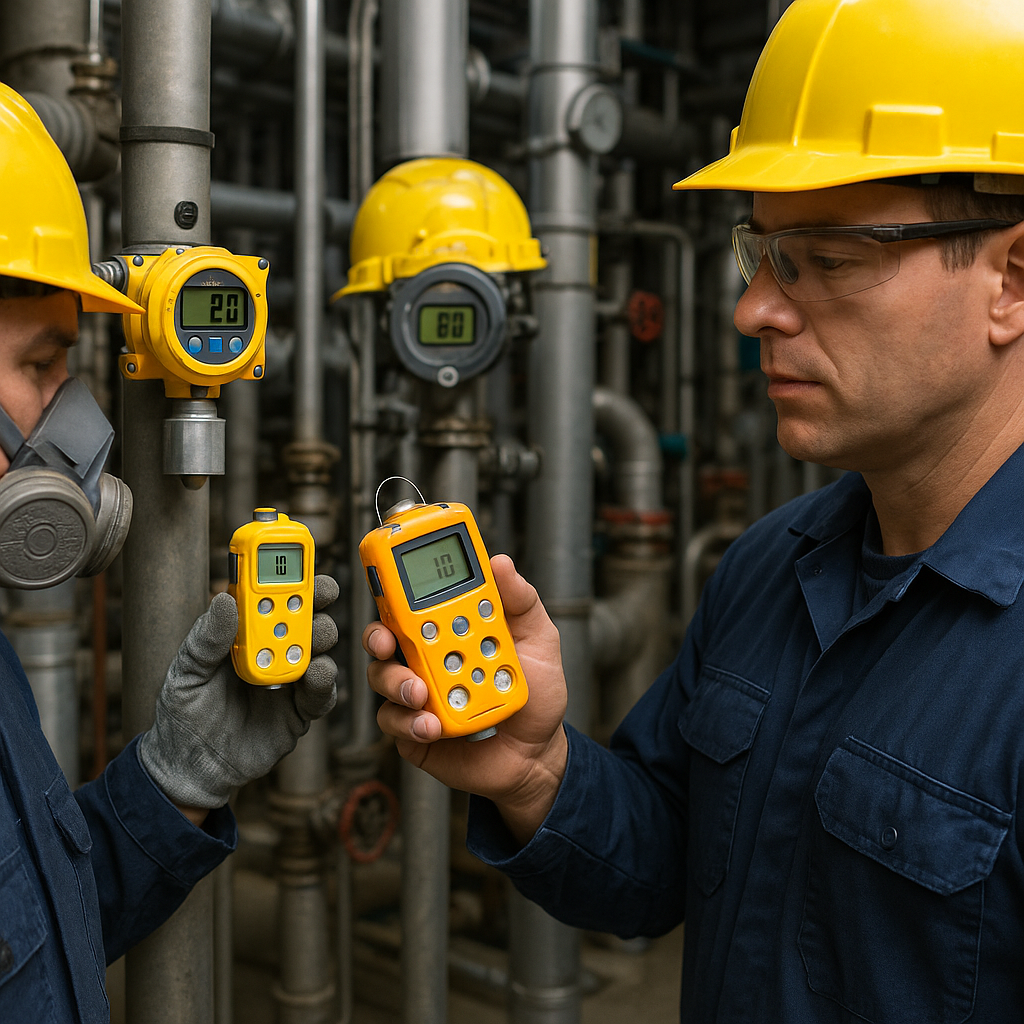
In industries where safety is non-negotiable, intrinsically safe gas detectors are indispensable. These devices are engineered to function safely in environments laden with explosive gases and vapors, ensuring that any electrical energy emitted is insufficient to ignite a hazardous atmosphere. Understanding the nuances of these detectors is vital for making informed purchasing decisions, particularly in high-risk sectors like oil and gas, chemical manufacturing, wastewater, and mining. This guide expands on the critical aspects of intrinsically safe gas detectors—what they are, who needs them, key benefits, what to look for when buying, and a more robust FAQ to help you choose confidently.
Need an Intrinsically Safe Gas Detector for your site?
Shop certified portable gas detectors, or get a fast, no-obligation quote for your specific hazardous area classification.
Understanding Intrinsically Safe Gas Detectors: A Comprehensive Buying Guide
Intrinsically safe (IS) gas detectors are essential tools in workplaces where flammable gases, vapors, or combustible dust may be present. “Intrinsically safe” refers to a protection technique that limits electrical and thermal energy to a level below what could ignite a specific hazardous atmosphere—even if a fault occurs. In practical terms, an intrinsically safe detector is designed so that it cannot create a spark or surface temperature capable of triggering an explosion in the zone it’s approved for.
It’s important to distinguish intrinsic safety from other explosion-protection methods. Some equipment is explosion-proof (built to contain an internal explosion) or flameproof (designed so ignition can’t propagate outward). Intrinsic safety takes a different approach: it prevents ignition from happening in the first place by controlling energy at the circuit level. That’s why IS devices are especially common for handheld and portable instruments that workers carry into classified areas.

How intrinsically safe gas detectors work (in real-world terms)
Most gas detectors rely on sensors that generate an electrical signal when exposed to a target gas. In an IS device, the electronics are designed and certified so the detector’s energy output remains below ignition thresholds. This is usually achieved through a combination of:
- Energy-limiting circuitry (resistors, fuses, barriers, current limiting)
- Temperature control (so surfaces don’t exceed safe limits)
- Fault tolerance (safe behavior even if a component fails)
- Certified batteries and enclosures that won’t compromise the safety concept
The result: a device that can be used in classified hazardous locations without becoming an ignition source.
Who Should Consider Intrinsically Safe Gas Detectors?
If your facility includes areas where flammable atmospheres can occur—even occasionally—an intrinsically safe gas detector is not a “nice to have.” It’s a frontline control.
Industries that commonly require IS gas detection
- Oil & Gas (upstream, midstream, downstream): drilling rigs, refineries, tank farms, loading areas, confined spaces
- Chemical and petrochemical plants: mixing areas, solvent storage, process units
- Mining: methane and other combustible gases, low oxygen risks, confined entries
- Wastewater and utilities: hydrogen sulfide (H₂S), methane, oxygen displacement in confined spaces
- Pharmaceuticals and solvents: volatile vapors in production and storage
- Food and beverage processing: CO₂ in breweries, nitrogen purging, refrigeration gases in some systems
- Fire and emergency response teams: unknown atmospheres and rapid screening
Roles that benefit most
- Safety managers and EHS professionals building compliance programs
- Maintenance technicians performing hot work permits, line breaks, and shutdowns
- Confined space entry teams needing continuous monitoring
- Operations personnel working near process equipment, storage tanks, or transfer points
- Contractors who move from site to site and need certified portable detection
If your workforce must enter hazardous zones, choosing the right intrinsically safe detector is a direct investment in injury prevention, uptime, and regulatory compliance.
The Main Benefits of Intrinsically Safe Gas Detectors
Intrinsically safe gas detectors do more than “detect gas.” They reduce risk and help teams make faster, safer decisions.
1) Reduced ignition risk in hazardous areas
The central advantage is built-in prevention: the detector itself is designed not to ignite an atmosphere. That’s critical in areas where a simple spark could escalate into an incident.
2) Early warning that prevents exposure and escalation
Many dangerous gas events begin as small leaks. Early detection can prevent:
- Worker exposure (acute and chronic)
- Fires and explosions
- Product loss and environmental releases
- Unplanned shutdowns
3) Improved compliance and audit readiness
In many regulated industries, gas detection is part of required risk controls. Certified equipment, calibration records, bump tests, and documented maintenance help you demonstrate due diligence.
4) Better operational decision-making
Good detectors provide actionable information: real-time concentration levels, alarm trends, peak readings, STEL/TWA exposure tracking, and event logs. This supports safer work permits, better ventilation decisions, and faster response.
5) Long-term cost control
A cheaper detector that fails calibration, has limited sensor life, or requires constant downtime can cost more in the long run. Reliable IS detectors reduce incident risk and minimize false alarms and stoppages.
Getting Started: How to Choose the Right Intrinsically Safe Gas Detector
Selecting the right detector starts with your hazards, then narrows into sensors, certifications, and usability. Here’s a practical buying framework.
1) Identify the gases you must detect
Common targets include:
- Combustible gases (LEL): methane, propane, solvents
- Toxic gases: H₂S, CO, SO₂, NH₃, Cl₂ (depends on process)
- Oxygen (O₂): deficiency/enrichment risk in confined spaces, inerting, purging
- Specialty gases: refrigerants, VOCs, PID-detectable compounds (where applicable)
Tip: Don’t guess. Use process safety documentation, SDS sheets, and incident history to confirm which gases are credible.
2) Decide: single-gas vs multi-gas
- Single-gas detectors are often used for ongoing personal monitoring (e.g., H₂S only).
- Multi-gas detectors (typically 4-gas) are the standard for confined space entry and unknown atmospheres (often LEL, O₂, CO, H₂S).
3) Verify certifications for your hazardous location
Hazardous area standards (such as IEC 60079-14 for IECEx/ATEX or the NEC for North America) require that equipment certification matches the location’s classification, including its Zone or Division, gas group, and temperature class. The “intrinsically safe” label alone isn’t enough—make sure the approval matches your site classification and region.
4) Evaluate sensor technology and performance needs
Different sensors suit different hazards:
- Catalytic bead (pellistor) for LEL: proven, but may be affected by poisons; requires oxygen to function
- Infrared (IR) for LEL: good for hydrocarbons, less affected by poisons; often higher upfront cost
- Electrochemical for toxics and O₂: common, but sensor life varies and cross-sensitivities matter
- PID (photoionization) for VOCs: useful when VOC exposure is the concern, requires lamp maintenance and correct interpretation
Your environment (humidity, temperature swings, pressure, exposure to silicone/poisons) can influence which sensor type is best. Here is a quick comparison for combustible gas sensors:
| Feature | Catalytic Bead (Pellistor) Sensor | Infrared (IR) Sensor |
|---|---|---|
| Principle | Detects gas through oxidation, which changes the resistance of a heated wire coil. | Detects gas by measuring the absorption of infrared light at specific wavelengths. |
| Pros | Lower upfront cost. Can detect a broad range of combustibles, including hydrogen. | Immune to sensor poisons (e.g., silicones). Does not require oxygen to operate. Longer lifespan. |
| Cons | Requires oxygen to function. Susceptible to poisoning. Can be damaged by high gas concentrations. | Higher upfront cost. Cannot detect hydrogen. Each sensor is calibrated for a specific hydrocarbon. |
| Best For | General-purpose LEL detection in normal oxygen environments where hydrogen may be present. | Inert environments (low O₂), areas with known sensor poisons, and hydrocarbon-specific applications. |
5) Assess Data Logging and Connectivity Needs
Modern gas detectors are more than just alarm devices; they are data collection tools. Look for models with robust data logging capabilities to record gas concentrations, alarm events, and calibration data. This information is invaluable for incident investigations, compliance reporting, and identifying exposure trends. Some detectors also offer wireless connectivity, allowing for real-time monitoring and instant notifications, which enhances situational awareness for supervisors and safety teams.
Match the detector to your hazard class, gases, and workflow
If you’re deciding between single-gas vs multi-gas, or need help selecting sensors and certifications, we can recommend the right configuration and provide a quote.
6) Consider alarm behavior and usability
Features that matter on real job sites:
- Loud, clear alarms + strong vibration (PPE-friendly)
- Screen readability in sunlight and low light
- One-hand operation (gloves, ladders, confined spaces)
- Simple bump test and calibration workflows
- Data logging and download capabilities (for compliance and investigations)
7) Plan calibration, bump testing, and maintenance
Gas detectors are not “set and forget.” Build a support plan:
- Bump test (functional check) frequency appropriate for your policy and risk
- Calibration schedule per manufacturer guidance and site requirements
- Replacement parts availability: filters, sensors, batteries, charging cradles
- Docking stations if you manage large fleets and want automated records
8) Look at total cost of ownership (not just purchase price)
Compare:
- Sensor replacement cost and lifespan
- Calibration gas consumption and accessories
- Downtime and repair turnaround
- Warranty coverage
- Training requirements
Often, the best value is the detector that stays reliable, easy to maintain, and fully supported.
Talk to a hazardous-area specialist
Tell us your site classification and target gases. We’ll help you choose a compliant detector setup and send a quote quickly.
Frequently Asked Questions About Intrinsically Safe Gas Detectors
What does “intrinsically safe” mean for a gas detector?
It means the detector is designed so it cannot release enough electrical or thermal energy to ignite a flammable atmosphere under normal operation or defined fault conditions. This makes it suitable for certified hazardous areas when used according to its approval rating.
Are intrinsically safe gas detectors the same as explosion-proof detectors?
No. Intrinsically safe devices prevent ignition by limiting energy. Explosion-proof (or flameproof) equipment is built to contain an internal explosion and prevent flame propagation. Both can be used in hazardous areas, but they rely on different protection principles.
Do I need an intrinsically safe detector if I only enter hazardous areas occasionally?
Often, yes. Even occasional entry can expose workers to ignition and exposure hazards. If your work permits, classification drawings, or site rules define certain spaces as hazardous, an appropriately certified detector is typically required whenever you enter.
What is the difference between a bump test and calibration?
A bump test verifies the detector responds to gas and alarms correctly (a pass/fail functional check). Calibration adjusts the detector’s sensor response so the readings match known gas concentrations. Bump tests are typically more frequent; calibration is done on a schedule and after certain events (e.g., sensor replacement or a failed bump test).
How often should I bump test and calibrate?
This depends on your policy, manufacturer recommendations, and risk profile. Many programs bump test before each day’s use (or before each entry) and calibrate on a routine interval (often monthly/quarterly), but your environment, usage frequency, and compliance requirements can change that. Follow manufacturer guidance and your site’s safety procedures.
What gases does a standard 4-gas detector usually measure?
Most 4-gas configurations monitor:
- LEL (combustibles)
- Oxygen (O₂)
- Carbon monoxide (CO)
- Hydrogen sulfide (H₂S)
This covers many confined space scenarios, but not every site hazard (e.g., chlorine or ammonia).
Can one detector measure every gas on my site?
Not realistically. Detectors are sensor-based, and each sensor targets certain gases with specific limitations. You may need different detectors or sensor configurations depending on your process hazards (e.g., adding SO₂, NH₃, Cl₂, or PID for VOCs).
What are cross-sensitivities, and why do they matter?
Cross-sensitivity occurs when a sensor responds to gases other than the target gas. This can cause false alarms or inaccurate readings. It matters because it can lead to wrong decisions—either unnecessary shutdowns or, worse, missed hazards. Review sensor cross-sensitivity charts when selecting devices for complex environments.
Do combustible (LEL) sensors work in low-oxygen environments?
Catalytic bead LEL sensors generally require oxygen to measure combustibles accurately, which can be a limitation in inerted or oxygen-deficient spaces. IR LEL sensors can be more suitable for some low-oxygen or poison-prone environments, depending on the gases involved.
What does “LEL” mean, and how should I interpret it?
LEL stands for Lower Explosive Limit—the minimum concentration of a gas/vapor in air that can ignite. Detectors often show %LEL; for example, 10% LEL indicates the atmosphere is approaching a dangerous range and requires immediate action according to your procedures.
How do I know if a detector is compliant for my work area?
Check the device labeling and documentation for its specific hazardous area approval (including zone/class, gas group, and temperature class). Confirm it matches your site classification and the substances present. If in doubt, align with your safety team and procurement standards before purchase.
What should I do if my detector alarms?
Follow your site’s emergency response procedure. Generally, this means stopping work, alerting nearby personnel, evacuating or ventilating as required, and not re-entering until conditions are verified safe. Never ignore an alarm or silence it without addressing the cause.
How long do sensors and batteries last?
Battery runtime varies by model and alarm activity. Sensor lifespan depends on sensor type, exposure conditions, humidity/temperature extremes, and exposure to poisons or high concentrations. Plan for routine replacement as part of total cost of ownership.
What are common mistakes when buying intrinsically safe gas detectors?
- Choosing sensors without confirming site-specific gases
- Assuming “intrinsically safe” automatically matches your zone/class
- Ignoring maintenance workflow (calibration gas, docking, recordkeeping)
- Underestimating training needs for proper use and interpretation
- Buying for lowest price rather than reliability and support
Conclusion
Investing in intrinsically safe gas detectors is a strategic decision that prioritizes safety, compliance, and operational continuity. The right device can prevent catastrophic incidents, protect workers from toxic exposure, and support safe work permits in hazardous atmospheres. By carefully evaluating your target gases, required certifications, sensor technology, usability, and maintenance program, you can choose a detector that performs reliably when it matters most—and build a safer, more resilient operation.