Intrinsically Safe Knowledge Base
Who Certifies Intrinsically Safe Devices in the U.S.?
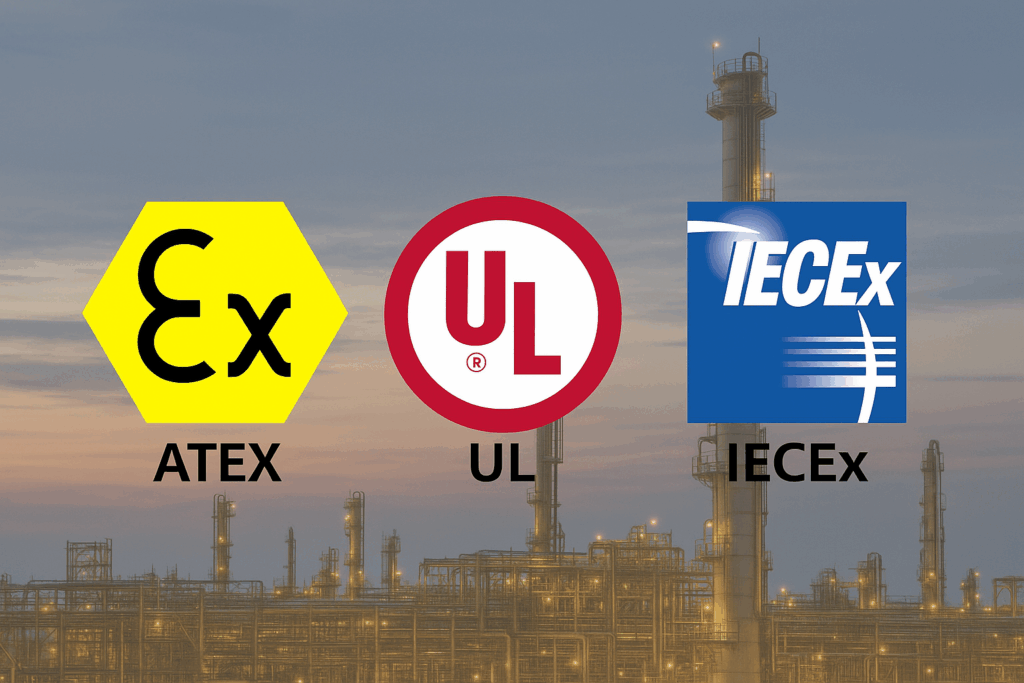
In hazardous industries like oil and gas, mining, chemical processing, and industrial manufacturing, safety isn’t just a priority—it’s a regulatory requirement. Electronic devices used in potentially explosive atmospheres must meet stringent safety standards to prevent ignition sources. But who certifies intrinsically safe devices in the U.S., and how do you know if your equipment is compliant?
This guide explains which certifying bodies are recognized in the U.S., what the intrinsically safe (IS) certification process involves, and showcases top-rated certified products available today.
What Does “Intrinsically Safe” Mean?
An intrinsically safe device is designed to operate safely in explosive environments by limiting the energy available for ignition. It prevents sparks and hot surfaces from forming in areas where flammable gases, vapors, or dust may be present.
These devices are built with reinforced insulation, sealed enclosures, and fail-safe engineering to meet strict safety standards. They’re essential in Classified Hazardous Locations, such as:
-
Class I: Flammable gases or vapors
-
Class II: Combustible dust
-
Class III: Ignitable fibers or flyings
Who Certifies Intrinsically Safe Devices in the U.S.?
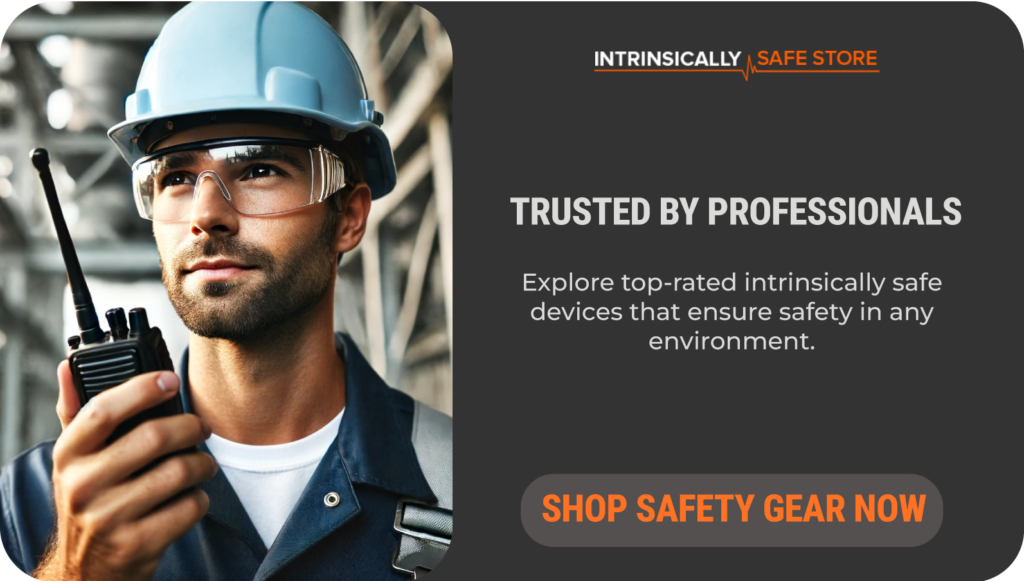
Certification in the U.S. is handled by Nationally Recognized Testing Laboratories (NRTLs) accredited by OSHA. These labs test and certify that products meet U.S. and international intrinsically safe standards.
| Certifying Body | Type | Region | Standards Used | Common Applications |
|---|---|---|---|---|
| UL (Underwriters Laboratories) | NRTL | U.S. | UL 913, ANSI/ISA, IECEx | Smartphones, cameras, sensors |
| FM Approvals | NRTL | U.S. | FM 3600, FM 3610 | Industrial phones, radios |
| CSA Group | NRTL | Canada/U.S. | CSA C22.2, UL harmonized | Tools, detectors, tablets |
| Intertek (ETL) | NRTL | Global | UL, CSA, IECEx | Multi-regional products |
| MSHA | Government Agency | U.S. | 30 CFR standards | Mining equipment |
Best Choice by Industry:
-
Oil & Gas: UL, FM, or dual ATEX/IECEx certified devices
-
Mining: MSHA certified only
-
Multinational: Dual-certified (ATEX + IECEx + UL)
What Standards Apply to Intrinsically Safe Certification?
U.S. certifiers test devices to conform with both local and international standards:
-
UL 913 – Intrinsically Safe Apparatus for Use in Class I, II, III, Division 1 and 2
-
FM 3610 – Intrinsically Safe Apparatus and Associated Apparatus for Use in Class I, II, and III, Division 1
-
ANSI/ISA 60079 Series – U.S. adoption of IEC standards
-
CSA C22.2 No. 157 – Canadian equivalent of UL 913
Hazardous areas are classified by Class (type of hazard), Division (likelihood), or Zone (IEC/ATEX-based).
Explore equipment by certification type and industry: Browse Certified Products.
How Does the Certification Process Work?
The intrinsically safe certification process involves multiple steps:
-
Design Submission: Engineers provide schematics and component analysis.
-
Prototype Testing: Simulated hazardous environments are used to evaluate device safety.
-
Compliance Verification: Certifier ensures compliance with applicable standards.
-
Factory Audit: Certifier may inspect manufacturing processes.
-
Certification Mark: Product is labeled (e.g., “Class I Div 1 UL Listed”).
Each product must pass rigorous electrical, thermal, and environmental stress tests before certification.
Why Is Certification Required?
-
OSHA Compliance: Certified devices meet the National Electric Code (NEC)
-
Reduced Liability: Legal protection against workplace hazards
-
Operational Safety: Prevents explosions and equipment failures
-
Insurance Requirements: Insurers demand certified equipment for risk mitigation
How to Identify a Certified Intrinsically Safe Device
Look for the following on the product or packaging:
-
Certifier mark: UL, FM, CSA, or ETL
-
Hazardous location rating: e.g., “Class I Div 1” or “Zone 1”
-
Certification documentation: Provided in the user manual or spec sheet
-
Listing on certifier’s database
Always verify authenticity via the certifier’s website or contact the manufacturer.
Which Intrinsically Safe Devices Are Certified and Available?
Here are intrinsically safe devices currently available at Intrinsically Safe Store with proper certifications for use in hazardous environments:
| Product Name | Certification | Hazard Class / Division | Use Case | Product Type |
|---|---|---|---|---|
| Ecom Smart-Ex 02 DZ1 Smartphone | ATEX Zone 1, IECEx, UL | Class I Division 1 | Field communication in explosive areas | Rugged Smartphone |
| Bartec Pixavi Smartphone | ATEX Zone 1, IECEx | Class I Division 1 (Groups A-D) | Hazardous inspections & communications | Industrial Smartphone |
| Rugged Edge – EdgeOne IoT Hub | ATEX Zone 1, UL | Class I Division 1 | Data acquisition, IoT connectivity | IoT Hub Device |
| Bartec Pixavi Cam | ATEX Zone 1, IECEx | Class I Division 1 (Groups A-D) | Hazardous area photography & live video | Explosion-Proof Camera |
| Atexxo iPad Pro 11 (Zone 2) | ATEX Zone 2 | Class I Division 2 | Industrial mobile computing & visualization | Intrinsically Safe Tablet |
Best Choice by Use Case
-
Mobile Communication → Ecom Smart-Ex 02 DZ1
Dual SIM, Android 9, IP68 certified — a top choice for safety and field communication. -
Video and Image Capture → Bartec Pixavi Cam
Shoot 4K video or livestream in Class I Div 1 zones without risk. -
Tablet Functionality → Atexxo iPad Pro 11
Zone 2 certified industrial iPad Pro for user-friendly productivity in less explosive areas. -
IoT and Smart Integration → Rugged Edge EdgeOne
Excellent for industrial automation and hazardous data collection. -
General Rugged Communication → Bartec Pixavi Smartphone
Android 11, military tested, compact design for harsh environments.
Not sure which certification your equipment needs? Contact our safety experts for personalized guidance and recommendations.
FAQs – Intrinsically Safe Certification
Who is authorized to certify intrinsically safe devices in the U.S.?
Only OSHA-recognized NRTLs such as UL, FM Approvals, CSA, and Intertek (ETL) are authorized to certify intrinsically safe equipment in the United States.
Is ATEX certification valid in the United States?
No. ATEX is a European Union directive. While many products are dual-certified for ATEX and IECEx, U.S. operations require UL, FM, or CSA certification following NEC guidelines.
Can I use uncertified devices if they appear to be intrinsically safe?
No. Even if a device follows IS design principles, it must carry third-party certification to be legally deployed in hazardous U.S. environments.
What does “Class I Division 1” mean?
This is a U.S. classification indicating areas where flammable gases or vapors are present under normal operating conditions. Devices used here must be tested and certified for continuous exposure risks.
Do intrinsically safe certifications expire?
No, certifications do not expire, but if a product is modified or upgraded, it may require retesting. Annual factory audits may be required to maintain certification status.
Conclusion: Who Certifies Intrinsically Safe Devices in the U.S.?
Understanding who certifies intrinsically safe devices is critical for ensuring compliance, safety, and performance in hazardous work zones. Trusted U.S. certifiers—UL, FM Approvals, CSA, and Intertek—evaluate and certify devices using internationally recognized standards.
When choosing intrinsically safe products, always verify the certification, hazardous class/division, and compatibility with your industry requirements. Devices like the Ecom Smart-Ex 02, Bartec Pixavi Cam, and Rugged Edge IoT Hub provide top-tier safety, usability, and compliance.