

























Explosion-proof switches and actuators are essential safety components in hazardous industrial environments. From chemical plants to refineries, these rugged devices are designed to control motors, pumps, fans, and equipment without becoming an ignition source. If you’re evaluating an explosion proof switch price, understanding how cost relates to features, certification, and installation requirements is critical.
This guide breaks down everything you need to know—pricing tiers, specification details, wiring requirements, and certified options for Class I, Division 1 (C1D1) and Class I, Division 2 (C1D2) hazardous areas.
Looking for certified explosion-proof control switches for your facility?
Explore heavy-duty C1D1 & C1D2 control switches designed for motors, pumps, and compressors in hazardous areas.
Browse Explosion-Proof Control Switches Request Expert AssistanceOr call our hazardous-area specialists at 832 699 6726
What Is an Explosion-Proof Switch?
An explosion-proof switch is a control device designed to contain an internal arc, spark, or electrical fault so it cannot ignite the surrounding hazardous atmosphere. They are built inside heavy-duty enclosures that withstand pressures produced by an internal explosion, cooling the gases so they cannot escape and cause ignition.
Explosion-proof switches are used in:
Petrochemical facilities
Oil & gas operations
Grain, food, and dust processing plants
Marine fuel environments
Pharmaceutical manufacturing
Paint booths and spray areas
Hazardous pump and compressor stations
These devices are typically mounted on machinery, on motor starters, or at ground level where operators require a safe shutoff or isolation point.

Explosion-Proof Switch Price: What Affects Cost?
Explosion-proof switches vary significantly in cost based on certification, enclosure material, amperage ratings, and whether they are single-gang or double-gang configurations.
Here is a breakdown of pricing factors:
1. Certification Level (C1D1 vs C1D2)
C1D1 certification is the most expensive because the enclosure must withstand and contain an internal explosion under the highest-risk conditions.
C1D2 switches: Lower cost
C1D1 switches: Highest cost due to more robust enclosure construction
2. Enclosure Material
Aluminum alloy: Standard, affordable, durable
Stainless steel: More expensive, ideal for corrosive environments
Cast iron: Extremely rugged but heavier
3. Amperage and Voltage Ratings
Higher load switches (20A, 30A, 60A) cost more than low-amperage control switches.
4. Gang Configuration & Actuator Type
Single-gang: Lower price
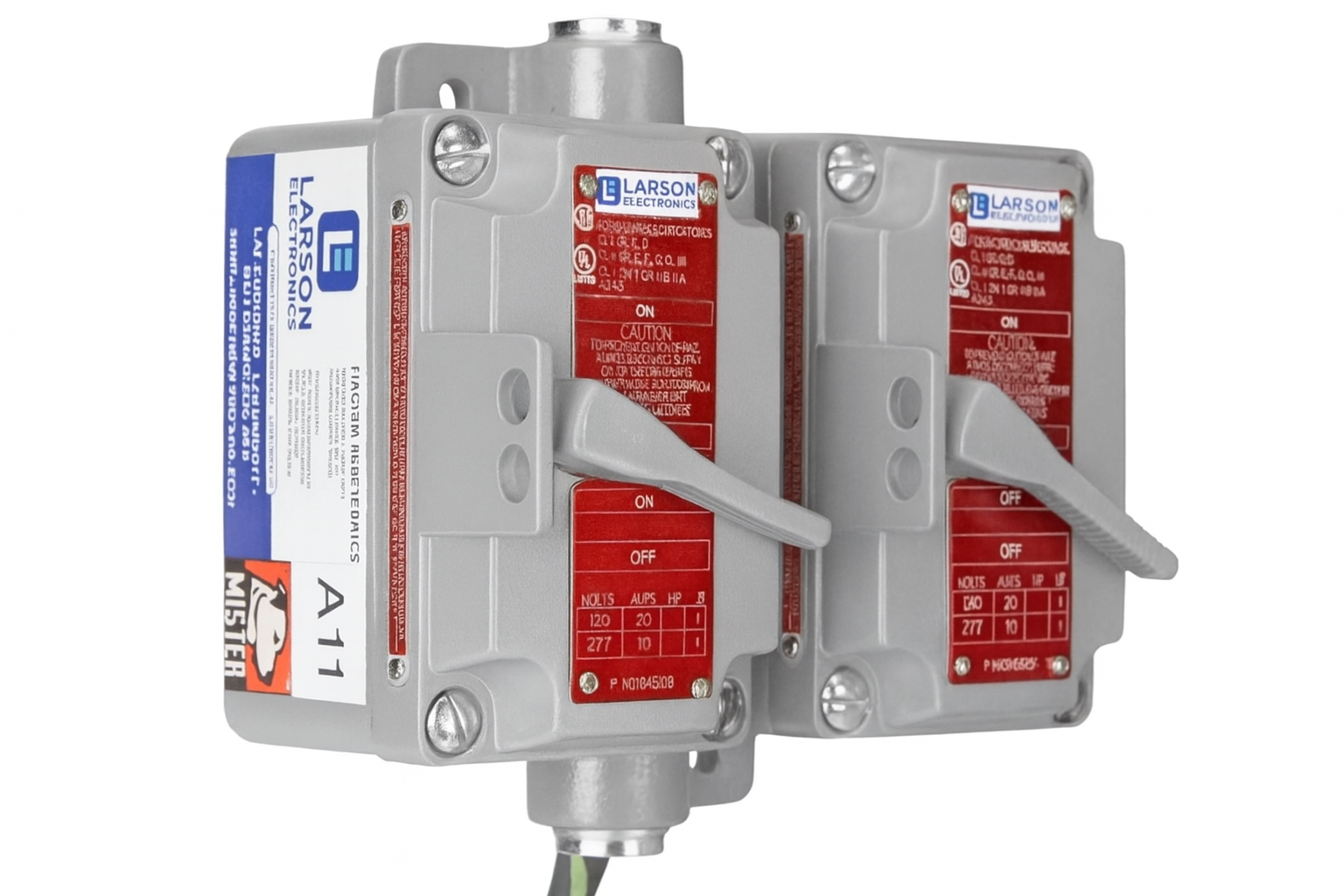
Double-gang: Higher price (as shown in the product image the user uploaded)
Lever, toggle, rotary, push-button, maintained/ momentary options all affect cost.
5. Installation Accessories
Conduit seals, unions, breather drains, and cable terminations also impact the final installed cost.
Below is a general pricing range:
| Explosion-Proof Switch Type | Typical Price Range |
|---|---|
| C1D2 Toggle / Rotary Switch | $350 – $750 |
| C1D1 Rated Single-Gang Switch | $700 – $1,200 |
| C1D1 Double-Gang Lever Switch (20A, 120–277V AC) | $1,200 – $1,600 |
| Stainless Steel Explosion-Proof Switch | $1,600 – $2,500+ |
| High-Load Motor Disconnect Switch | $2,500 – $5,000+ |
The pricing aligns with the Intrinsically Safe Store’s selection, where heavy-duty double-gang units fall near the $1,400–$1,600 range.
Need accurate pricing for your explosion-proof switch configuration?
Get a tailored quote based on amperage, enclosure type, and hazardous area rating.
View Explosion-Proof Enclosures & Housings Get a Quote via Live ChatExplosion-Proof Switch Specifications You Should Evaluate
Choosing the right switch requires understanding several technical parameters.
1. Hazardous Area Rating
Verify the enclosure markings for:
Class I (gas)
Class II (dust)
Division 1 or 2
Group classifications (A, B, C, D for gases; E, F, G for dusts)
Temperature code (T-rating)
2. Voltage and Amperage
Common ratings include:
120–277V AC
20A, 30A, and 60A models
Some rotary disconnect types may go up to 100A or higher
3. Enclosure Type
Explosion-proof switches typically use:
NEMA 9 (Class II)
Combined NEMA 7/9 enclosures cover both gas and dust hazards.
4. Switching Action
| Type | Description | Applications |
|---|---|---|
| Lever Switch | Heavy-duty, easy grip | Pumps, motors, compressors |
| Rotary Switch | Twist-to-operate | Motor disconnects |
| Toggle Switch | Fast operation | Local control stations |
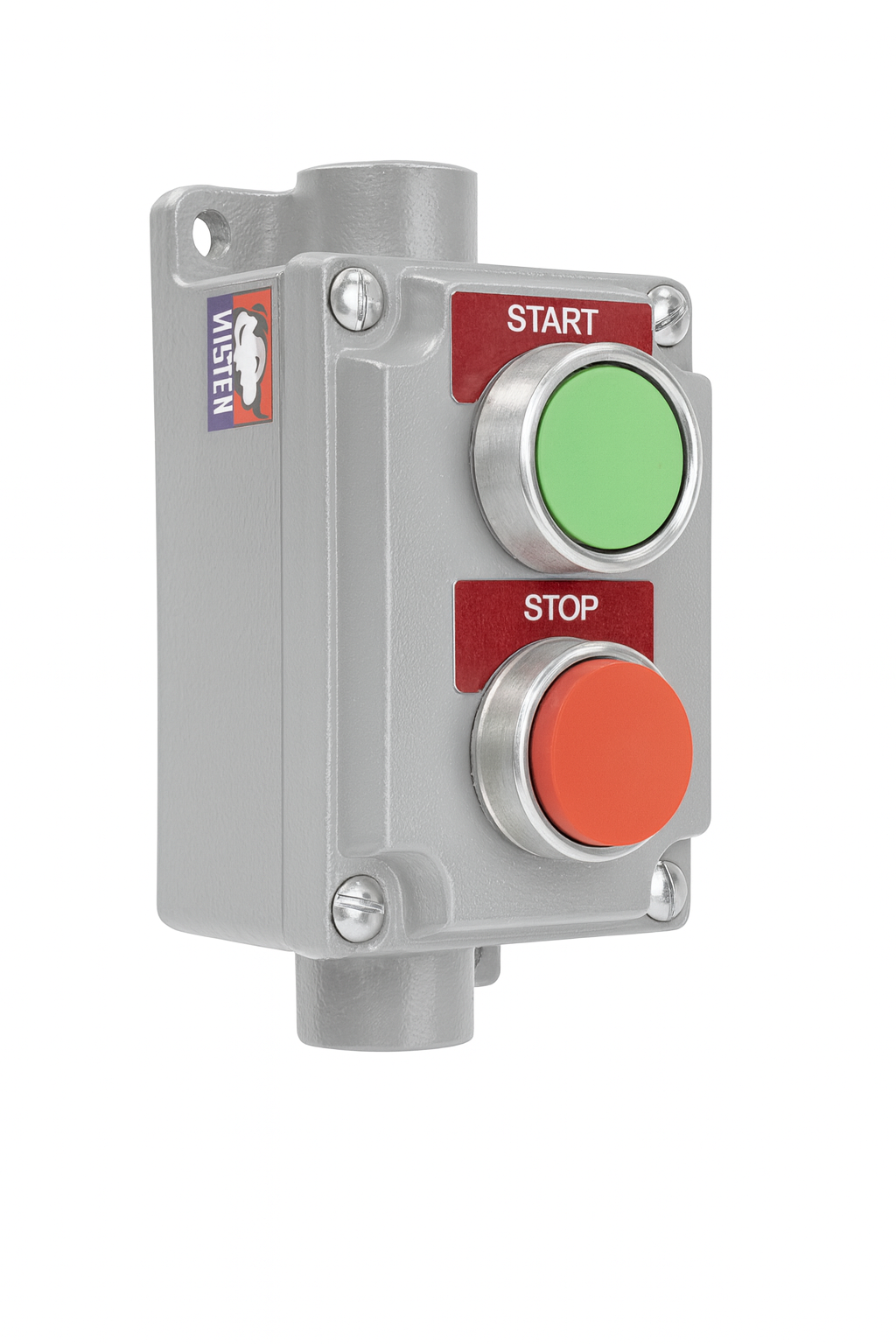
| Push-Button | Start/stop control | Automation, conveyors |
5. Environmental Protection
Many explosion-proof switches also include:
IP66 or IP67 dust/water ingress protection
Powder-coated corrosion-resistant finishes
Stainless steel hardware for marine environments
What Industries Depend on Explosion-Proof Switches?
Explosion-proof controls are found in any industry where flammable gases or dusts can be present.
Major use cases include:
Oil & Gas
Separators, PRVs, compressors, pumps
Well pads and upstream production systems
Chemical Processing
Reactor controls
Solvent-handling areas
Manufacturing & Industrial
Paint booths
Finishing lines
Powder processing
Food & Grain Handling
Dust explosion mitigation
Control switches near silos and conveyors
Water & Wastewater
Methane-prone pump stations
Explosion-proof switches are mission-critical in these industries because a typical electrical arc can cause catastrophic ignition.
Comparison Table: Explosion-Proof Switch Types
| Feature | C1D1 Lever Switch | C1D2 Toggle Switch | Rotary Disconnect | Push-Button Control Station |
|---|---|---|---|---|
| Hazard Rating | Highest (Div 1) | Moderate (Div 2) | Div 1 or Div 2 | Div 1 or Div 2 |
| Enclosure Strength | Excellent | Good | Excellent | Very Good |
| Typical Amp Rating | 20A – 60A | 10A – 30A | 30A – 100A+ | 5A – 20A |
| Price Range | High | Low–Medium | Medium–High | Medium |
| Best For | Motors, pumps, isolation | General controls | Disconnects | Start/stop stations |
How to Install Explosion-Proof Switches Correctly (C1D1)
Correct installation is essential—improper wiring, conduit sealing, or enclosure mounting can void certification.
1. Use Approved Conduit & Seals
In C1D1, all wiring leaving the switch enclosure must pass through a seal fitting within 18 inches of the housing.
This prevents flame propagation through conduit runs.
2. Maintain Thread Engagement
For explosion-proof housings:
Minimum five full threads must be engaged
Use only factory-machined threads (no adapters unless certified)
3. Use Proper Gaskets
If the enclosure requires a gasket:
It must be OEM-approved
Never use a substitute, even if dimensions match
4. Follow the Temperature Code
Ensure the switch’s T-rating is lower than the auto-ignition temperature of the gases present.
5. Do Not Modify the Enclosure
This includes:
Drilling holes
Enlarging conduit openings
Removing internal components
Any modification voids the explosion-proof integrity.
6. Bond & Ground Correctly
Explosion-proof switches must be grounded to prevent ignition from electrical faults.
Ready to upgrade your explosion-proof control system?
Access certified switches, enclosures, and safety devices engineered for Class I hazardous environments.
Learn more about hazardous area certifications:
Class I Div 1 vs Div 2 · What is Class 1 Div 1? · Understanding Intrinsically Safe Devices
For technical guidance or immediate quotes, chat with us or call 832 699 6726.
FAQs About Explosion-Proof Switches
What is the average explosion proof switch price?
Most high-quality explosion-proof switches cost $700–$1,600, depending on certification level and amperage. Heavy-duty C1D1 switches typically fall around $1,400–$1,600.
Do I need C1D1 or C1D2?
C1D1: Use where explosive gases may be present under normal operating conditions.
C1D2: Use where explosive gases are unlikely except in abnormal conditions.
When in doubt, choose C1D1—it is safer and universally acceptable.
What is the difference between explosion-proof and intrinsically safe switches?
Explosion-proof: Contains any internal explosion.
Intrinsically safe: Limits energy so ignition cannot occur.
Mechanical switches that physically break a circuit are almost always explosion-proof, not intrinsically safe.
Can I install a standard switch inside an explosion-proof enclosure?
Not unless the entire assembly is UL/CSA/ATEX certified as a complete unit. Modifying an enclosure voids certification.
Do explosion-proof switches require maintenance?
Minimal maintenance is required, but annual inspection should include:
Thread integrity
Corrosion checks
Seal fitting verification
Smooth actuator movement
Conclusion
Understanding explosion proof switch price ranges, certification requirements, and installation rules ensures safe operation inside hazardous gas and dust areas. Whether you’re selecting a C1D1 lever switch for a pump station or a C1D2 toggle for general controls, choosing the right device eliminates ignition risks and ensures compliance with electrical codes.
With this guide—and with access to certified, industrial-grade switches—you’re prepared to choose the safest, most reliable solution for your hazardous-area operation.
