Intrinsically Safe Products
Intrinsically Safe Vibration Sensors | ATEX & Class I Div 1
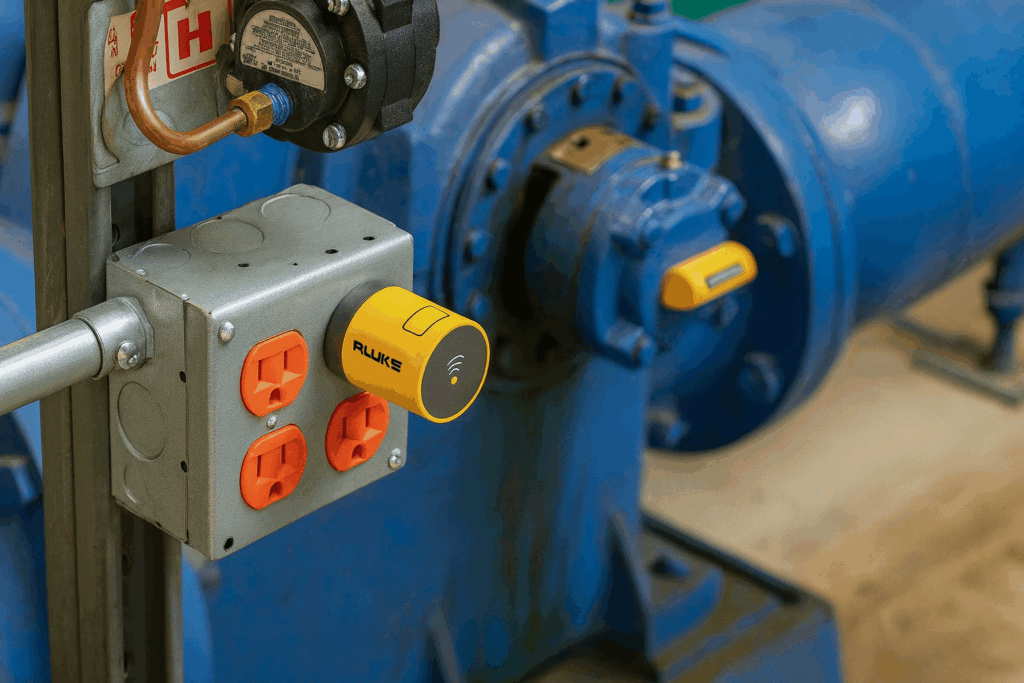
Vibration monitoring has become one of the most powerful tools in predictive maintenance—especially in industries where rotating machinery operates in hazardous areas. An intrinsically safe vibration sensor enables maintenance teams to capture accurate, real-time condition data without risking ignition in explosive atmospheres. When used correctly, these sensors reduce unplanned downtime, extend equipment life, and improve worker safety.
This comprehensive guide explains how intrinsically safe vibration sensors work, why they’re essential in hazardous locations, the different sensor types, selection criteria, certifications, and industry applications. You’ll also find product comparisons and recommendations from IntrinsicallySafeStore.com to help you choose the right device for your operation.
What Is an Intrinsically Safe Vibration Sensor?
An intrinsically safe vibration sensor is a vibration-measuring device engineered to operate safely in explosive atmospheres by limiting electrical and thermal energy to non-ignition levels. These sensors are essential for monitoring rotating equipment such as motors, pumps, compressors, and turbines located in hazardous zones.
By providing continuous or periodic vibration data, they help detect early signs of mechanical failure before breakdowns occur.
Ready to deploy intrinsically safe vibration monitoring in your plant?
Explore certified vibration sensors and measurement solutions designed for hazardous areas.
Why Vibration Monitoring Matters
Industry data shows that over 50% of rotating equipment failures originate from mechanical faults, many of which exhibit warning signs through changes in vibration levels. Predictive maintenance supported by vibration sensing is widely recognized in reliability engineering for its potential to significantly reduce unplanned downtime and extend equipment life.

How Does an Intrinsically Safe Vibration Sensor Work?
An intrinsically safe vibration sensor measures acceleration, velocity, or displacement caused by machine movement. It translates mechanical vibration into an electrical signal that can be analyzed manually or through condition monitoring software.
The key difference is the internal design: intrinsically safe sensors use protected circuitry, energy-limiting components, and certified barriers to prevent sparking, heat buildup, or ignition in hazardous spaces.
Main Functional Components
-
Sensing element: typically piezoelectric, MEMS, or electrodynamic
-
Signal conditioning electronics: convert raw motion into usable data
-
Intrinsically safe circuitry: limits voltage, current, and stored energy
Why Do Hazardous Areas Require Intrinsically Safe Vibration Sensors?
Hazardous locations typically contain flammable gases, vapors, mists, dusts, or fibers that can ignite from sparks or hot surfaces. Because traditional vibration sensors use electrical components, they require engineering controls to prevent ignition.
An intrinsically safe vibration sensor is designed to prevent ignition by ensuring the sensor cannot release enough electrical or thermal energy to ignite an explosive mixture under both normal and specified fault conditions.
Industries Requiring Intrinsic Safety
-
Oil & gas
-
Chemical processing
-
Pharmaceuticals
-
Mining
-
Food & beverage (dust hazards)
-
Water treatment
-
Power generation
-
Marine and offshore
These environments typically fall under ATEX, IECEx, CSA, or UL hazardous location classifications.
What Certifications Apply to Intrinsically Safe Vibration Sensors?
Certifications confirm that a vibration sensor is safe for operation in explosive atmospheres. Requirements vary by region, but most sensors must meet at least one of the following:
Major Certifications
-
ATEX (EU): Explosive Atmosphere Equipment Certification
-
IECEx (International): Harmonized global safety standard
-
UL/CSA (North America): Class I, II, III Divisions
-
UKCA Ex (UK): Post-Brexit hazardous location standard
Need clarity on hazardous area certifications?
Deepen your understanding of ATEX, IECEx and Class I Division 1/2 requirements before you choose your sensors.
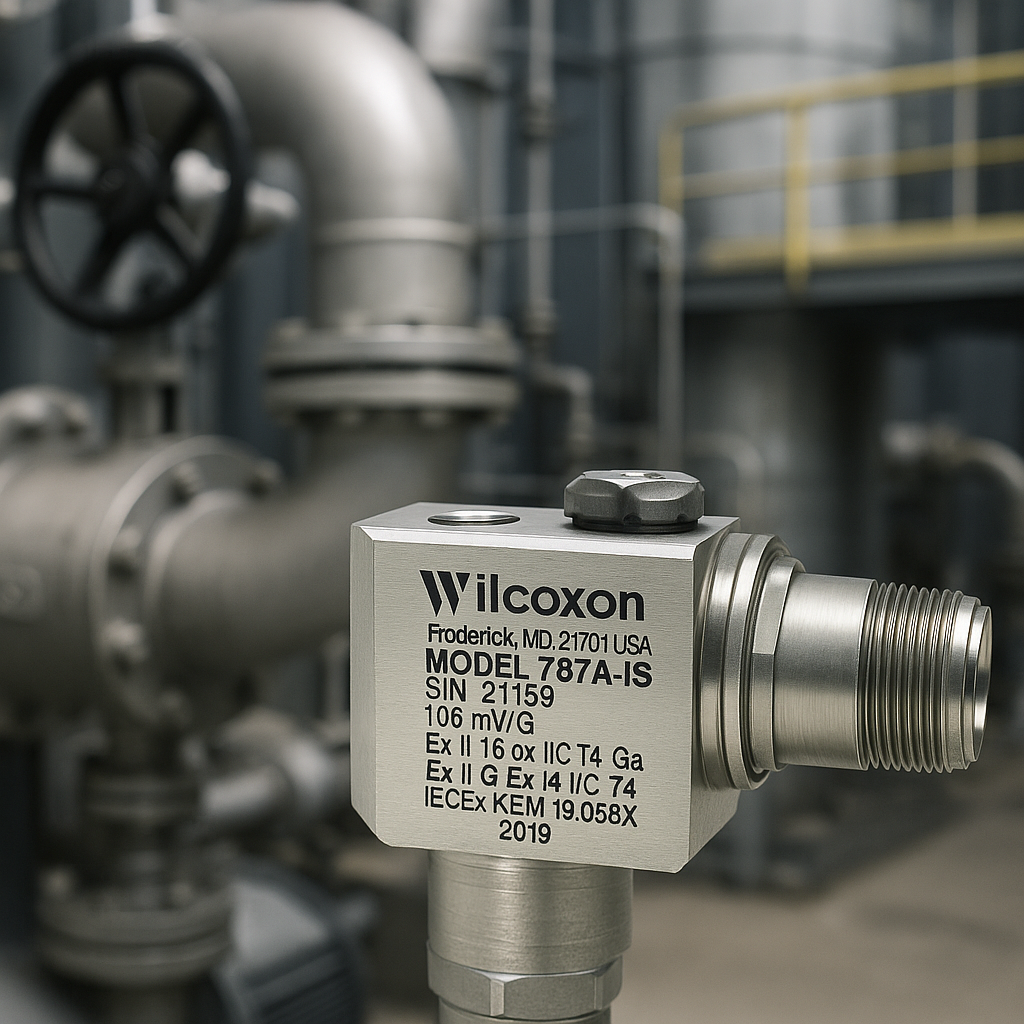
How to Read Certification Labels
For example:
ATEX II 1G Ex ia IIC T4 Ga
Each part explains category, protection concept, gas group, and temperature class.
Intrinsically Safe vs. Explosion-Proof
-
Intrinsically Safe (IS): Limits energy to a level insufficient to cause ignition. This method is commonly applied to portable or low-power sensors.
-
Explosion-Proof (XP): Contains an internal explosion, typically for fixed installations
What Types of Intrinsically Safe Vibration Sensors Are Available?
Different applications require different sensor technologies. Below are the most common types used in hazardous environments.
1. Piezoelectric Accelerometers (Most Common)
These sensors detect acceleration forces and are highly accurate for high-frequency vibration.
Typical Applications: rotating machinery, pumps, fans, compressors.
2. MEMS Vibration Sensors
Micro-electromechanical systems with digital output options.
Typical Applications: battery-powered wireless sensors, IoT systems, low-frequency detection.
3. Velocity Sensors
Measure vibration velocity rather than acceleration—useful for medium-frequency machinery.
Typical Applications: general-purpose condition monitoring.
4. Displacement Sensors
Capture shaft vibration or position changes.
Typical Applications: turbines, high-speed motors.
How Do You Choose the Right Intrinsically Safe Vibration Sensor?
Selecting the right sensor depends on machine type, measurement range, environmental hazards, and collection method.
Here are the main factors to consider:
Measurement Factors
-
Frequency range (e.g., 2 Hz–10 kHz)
-
Sensitivity (mV/g or digital resolution)
-
Measurement type (acceleration, velocity, displacement)
-
Dynamic range
Environmental Requirements
-
ATEX/IECEx/UL certifications
-
Ingress protection (IP67–IP69)
-
Chemical resistance
-
Operating temperature
Data Collection Method
-
Permanent (wired) installation
-
Portable, handheld data collection
-
Wireless IoT systems
Turn vibration data into real maintenance decisions.
Pair your intrinsically safe sensors with certified tablets, phones and cameras for field inspections and data collection.
What Are the Advantages of Using Intrinsically Safe Vibration Sensors?
Intrinsically safe vibration sensors deliver essential benefits for hazardous industries:
Key Advantages
-
Improved safety with energy-limiting circuitry
-
High-quality vibration data for better predictive maintenance
-
Reduced maintenance costs via early failure detection
-
Greater uptime & reliability for mission-critical assets
-
Regulatory compliance for ATEX, IECEx, UL/CSA environments
-
Flexible installation for permanent or portable monitoring
Which Intrinsically Safe Vibration Sensors Are Recommended?
Below are popular intrinsically safe vibration monitoring solutions available at IntrinsicallySafeStore.com.
Comparison Table: Intrinsically Safe Vibration Sensors
| Product | Certs | Features | Use Cases | Type |
|---|---|---|---|---|
| RAW Intrinsically Safe Vibration Sensor | ATEX, IECEx | Wireless, long battery life, hazardous location certified | Pumps, motors, compressors | Wireless accel. |
| Hansford Sensors ATEX Accelerometers (HS-150 Series) | ATEX, IECEx | High-frequency piezo accelerometer, rugged stainless steel housing | Fans, blowers, rotating equipment | Wired accel. |
| CTC Hazardous Area Accelerometers | ATEX, UL | Industrial-grade velocity and acceleration sensing | Petrochemical, drilling, refining | Wired accel. |
| MMX Wireless Vibration Sensor (IS Version) | ATEX | Wireless IoT vibration + temperature | Remote monitoring, predictive maintenance | Wireless MEMS |
Best Choice by Use Case
-
General rotating equipment: Hansford Sensors HS-150
-
Wireless predictive maintenance: RAW IS Vibration Sensor
-
High-frequency applications: CTC Hazardous Area Accelerometers
-
IoT cloud systems: MMX Wireless IS Sensor
Wired vs. Wireless Intrinsically Safe Vibration Sensors
A key decision in designing a vibration monitoring program is choosing between wired and wireless sensors. Both have distinct advantages and are suited for different operational contexts within hazardous areas.
Wired Sensors: Pros and Cons
Wired sensors are the traditional choice for permanent monitoring of critical assets. They are hardwired to a data acquisition system located in a safe area, often requiring intrinsically safe barriers or isolators.
- Pros: Highly reliable data transmission, no battery life concerns, capable of very high-frequency data capture, and often preferred for machinery protection systems.
- Cons: High installation costs due to cabling and conduit, limited flexibility once installed, and potential for cable damage in harsh industrial environments.
Wireless Sensors: Pros and Cons
Wireless sensors have grown in popularity due to their flexibility and lower installation costs. They transmit data wirelessly to a gateway, which then relays the information to a central server or cloud platform.
- Pros: Rapid deployment, significantly lower installation costs (no cabling), ideal for remote or hard-to-reach assets, and easily scalable.
- Cons: Dependent on battery life (though many modern sensors last 3-5 years), potential for signal interference, and may have lower data transmission rates compared to wired systems.
Integrating Vibration Data into Your Maintenance Workflow
Collecting data is only the first step. To achieve the full benefits of predictive maintenance, the information from your intrinsically safe vibration sensors must be integrated into your facility’s maintenance ecosystem. This typically involves several layers of technology and process.
First, the raw vibration signal is processed and analyzed. This can be done through dedicated condition monitoring software that uses algorithms to detect specific fault patterns like imbalance or bearing wear. The software can automatically generate alerts and alarms when vibration levels exceed predefined thresholds, notifying maintenance personnel of a potential issue.
For a more strategic approach, this data should be fed into a Computerized Maintenance Management System (CMMS). Integrating vibration alerts with your CMMS allows you to automatically generate work orders, track asset health over time, and build a comprehensive maintenance history for each piece of equipment. This connection turns raw data into actionable maintenance tasks, ensuring that potential failures are addressed proactively rather than reactively.
How Do Intrinsically Safe Vibration Sensors Support Predictive Maintenance?
These sensors detect early-stage mechanical problems that would otherwise go unnoticed. They provide actionable data that engineers can analyze to identify failure modes such as:
Common Faults Detectable by Vibration
-
Imbalance
-
Misalignment
-
Bearing wear
-
Gear mesh problems
-
Cavitation
-
Resonance
-
Structural looseness
By collecting real-time vibration data, maintenance teams can schedule repairs before failures occur, reducing downtime and extending asset life.
Want to build a full predictive maintenance strategy?
Learn how intrinsically safe and explosion-proof equipment fit into a long-term reliability program in hazardous areas.
How Is Data Collected Safely in Hazardous Areas?
Data collection in hazardous zones must follow strict safety protocols. An intrinsically safe vibration sensor ensures that the measurement point itself poses no ignition risk.
Safe Collection Methods
-
Portable intrinsically safe analyzers
-
Hardwired IS sensors connected to safe-area instrumentation
-
Wireless vibration nodes transmitting to a gateway outside the hazardous zone
Barriers or isolators are often required when connecting IS sensors to external equipment.
What Installation Considerations Apply to IS Vibration Sensors?
Several factors influence installation effectiveness and safety:
Key Considerations
-
Mount sensors using studs rather than adhesive whenever possible
-
Ensure grounding and shielding to minimize noise
-
Use approved cable glands and connectors
-
Follow zone classification rules for ATEX/IECEx/UL
-
Verify maximum cable lengths for intrinsic safety compliance
What Industries Benefit Most from Intrinsically Safe Vibration Sensors?
Any industry with hazardous areas and rotating machinery can benefit from predictive vibration monitoring. Below are the most common.
Oil & Gas
Covers upstream drilling, midstream pipelines, and downstream refining. Equipment such as pumps and compressors must be monitored continuously.
Chemical & Petrochemical
High-risk atmospheres make intrinsic safety mandatory for nearly all instrumentation.
Food & Beverage
Dust hazards in milling, sugar processing, and grain handling require non-sparking equipment.
Pharmaceuticals
Solvents used in manufacturing create potentially explosive environments.
Mining
Methane pockets and coal dust elevate explosion risks, requiring IS sensors for fans, conveyors, and crushers.
Need help selecting intrinsically safe vibration sensors for your facility?
Talk to our hazardous-area experts to specify the right sensors, enclosures and field devices for your predictive maintenance program.
Prefer to equip your team on site? Don’t forget intrinsically safe flashlights for inspections in dark or confined spaces:
view intrinsically safe flashlights
.
FAQs About Intrinsically Safe Vibration Sensors
What does “intrinsically safe” mean for a vibration sensor?
It means the sensor is designed to prevent ignition by limiting electrical and thermal energy. These devices are engineered for use in hazardous areas with flammable gases or dusts.
Can a standard vibration sensor be used in a hazardous environment?
No. Standard sensors pose ignition risks and are not certified for explosive environments. Only intrinsically safe or explosion-proof sensors are permitted.
Do intrinsically safe sensors require special wiring?
Yes. Most installations require approved IS wiring, glands, and barriers to ensure the entire measurement loop meets intrinsic safety standards.
What types of machinery need intrinsically safe vibration monitoring?
Common examples include pumps, fans, motors, compressors, blowers, and turbines operating in hazardous zones.
Are wireless intrinsically safe vibration sensors reliable?
Yes. Modern IS wireless sensors provide high-quality vibration and temperature data, long battery life, and robust connectivity suitable for predictive maintenance.
Conclusion: Why an Intrinsically Safe Vibration Sensor Is Essential
An intrinsically safe vibration sensor is a critical tool for predictive maintenance in hazardous environments. By delivering safe, accurate, and continuous vibration data, these sensors help organizations reduce downtime, extend asset life, and enhance worker safety. Whether your operation uses pumps, compressors, conveyors, or turbines, IS sensors ensure compliance and reliability while preventing ignition in explosive atmospheres.