

Intrinsically Safe News
What is an Explosion Proof Fan
Various types of the Explosion-Proof Fan are available at the Intrinsically Safe Store, depending on your needs.
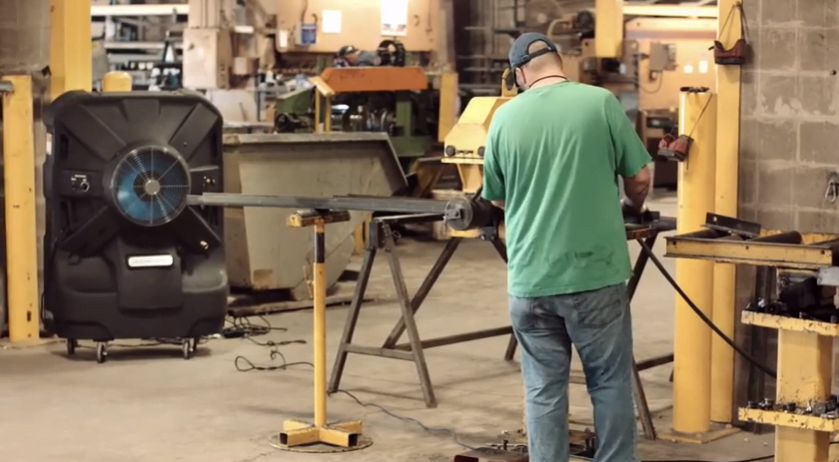
Explosion-Proof fans or hazardous location fans and blowers are an essential part of a warehouse, plant, mill, spray booth, tank, confined space. Additionally, fans are crucial in any other area where ignitable fumes, gases, or dust may be present.
Fine powder such as flour or coal is combustible because many highly volatile gaseous compounds such as methane, ethylene oxide, coal gas, and many other transported materials. Should combustion occur within the fan, it will withstand the explosion without rupture or transmitting ignition to the atmosphere.
But first, let’s answer the most important question:
What does Explosion-Proof mean?
The term Explosion-Proof refers to products designed and certified to contain an internal explosion — if ignition occurs inside the enclosure, the design prevents flames or hot gases from escaping and igniting the surrounding atmosphere. Achieving this rating requires certification by a recognized testing authority after the product passes prescribed testing.
An electrical product that is marked Explosion-Proof signifies that the product has an apparatus enclosed in a case. Additionally, the protective case is resistant to the explosion of a specific gas or vapor potentially circulating within it. The equipment prevents the ignition of the surrounding atmosphere by sparks, flashes, or explosions occurring within. And, it operates at a low external temperature, preventing the surrounding atmosphere from igniting. Explosion-Proof fans abide by the National Fire Protection Association (NFPA) the USA, under Standard No. 70, Article 100, of the National Electric Code.
For enclosures to obtain an Explosion-Proof rating, the equipment should contain any explosion originating within its housing. As well as prevent sparks within its housing from igniting vapors, gases, dust, or fibers in the air surrounding it.
Our Ex-Proof Fan Partners
Our list of available fans come from the most notable manufacturers including: Atlantic Blowers, Canarm, Portacool, and Ramfan.
Ventilation Design: Axial vs. Centrifugal
Explosion-proof fans are typically built in one of two configurations. Axial fans move air directly along the axis of rotation using a propeller-style blade, and are common for general-purpose ventilation and cooling where moderate airflow at low pressure is needed. Centrifugal fans (blowers) accelerate air outward using a rotating impeller, producing higher static pressure — better suited to ducted systems or applications that need to move air through resistance, such as long duct runs or filtration.
Gas Group and Temperature Class
Like other explosion-proof equipment, a certified fan carries a gas group rating (Class I, Groups C and D are common for general industrial atmospheres) and a temperature class (T-rating) stating its maximum surface temperature. Both must be matched to the specific flammable materials present at the installation site — a fan rated for Group D (e.g., gasoline, propane, common solvents) is not automatically rated for the more easily ignited Group C atmospheres (e.g., ethylene, cyclopropane).
FAQs About Explosion Proof Fans
Can an explosion-proof fan be used outdoors?
Many models are rated for outdoor use, but this is a separate consideration (typically an IP or NEMA enclosure rating) from the hazardous-location certification. Both ratings should be confirmed for the specific installation environment.
Do explosion-proof fans need special electrical wiring?
Yes. Per NEC Article 501, wiring methods for Class I hazardous locations typically require sealed conduit fittings at specific points to prevent gases from migrating along the conduit into non-classified areas — this is independent of the fan itself being certified.
How often should an explosion-proof fan be inspected?
There is no single universal interval; inspection frequency should follow the manufacturer’s documentation and the facility’s hazardous area equipment maintenance program, which may reference guidance such as IEC 60079-17 for electrical equipment inspection in hazardous locations.