
Explosion Proof Cables
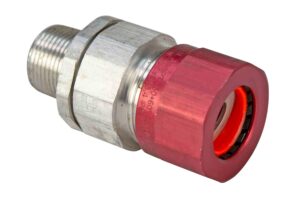
Explosion Proof Cable Connector – C1D1, C2D1 – 3/4″ MC-HL Cable Gland
$219.28Available

Your Global Authority In Hazardous Areas
Your cart is empty.
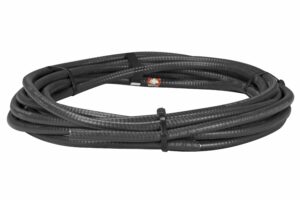
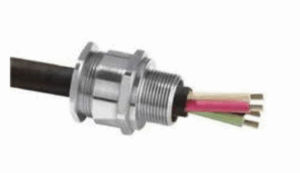
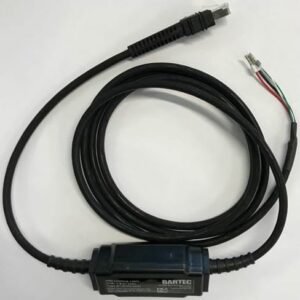
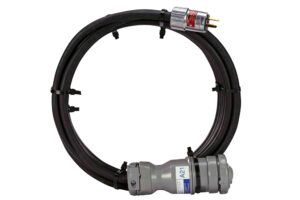
In industrial environments where flammable gases, vapors, liquids, or combustible dusts are present, electrical equipment—including wiring and cables—poses a significant ignition risk. The primary goal of hazardous area wiring is to eliminate this risk by preventing electrical energy from creating a spark or thermal effect sufficient to ignite the surrounding atmosphere. Certified hazardous area cables are not just wires; they are a critical component of a comprehensive safety system designed to protect personnel, assets, and the environment. Choosing the correct cable, certified for your specific location, is a non-negotiable aspect of operational safety and regulatory compliance.
Intrinsic Safety (IS) is a protection technique based on the principle of energy limitation. An intrinsically safe system, which includes the power source (via an IS barrier), the cabling, and the end device, is designed to operate with such low electrical and thermal energy that it is incapable of causing ignition, even in a fault condition. The cables themselves are designed to have specific capacitance and inductance characteristics to prevent energy storage that could lead to an incendiary spark. They are often color-coded (typically light blue) for easy identification, signifying that they are part of a low-energy, protected circuit that cannot be intermingled with standard, higher-energy wiring.
The term “explosion proof cable” is often used to describe the cables used within an explosion proof or flameproof wiring system. This protection method is based on containment, not prevention. The system allows an explosion to occur within a robust enclosure but is designed to contain that explosion and cool any escaping hot gases to a temperature that will not ignite the surrounding hazardous atmosphere. The integrity of this system relies heavily on the proper use of thick-walled metal conduits, certified explosion proof connectors and glands, and durable, insulated cables that can withstand the harsh installation environment and maintain electrical integrity. The cable itself must be rated for the application, but the primary protection comes from the complete, sealed conduit and enclosure system.
Selecting between an intrinsically safe and an explosion proof system determines the type of cable and installation method required. Understanding their core differences is essential for designing a safe, compliant, and cost-effective solution.
The cable you choose must carry the correct certification for your jurisdiction and hazardous location classification. In North America, the NEC (National Electrical Code) uses a Class/Division/Group system. For example, a “Class 1 Div 1 cable” would be suitable for an area where flammable gases or vapors are continuously present under normal operating conditions. Internationally and in Europe, the ATEX and IECEx standards use a Zone system (e.g., Zone 0, 1, 2 for gases/vapors). It is critical to match the cable’s certification—whether ATEX, IECEx, or UL Listed for a specific Class/Division—to the requirements documented in your facility’s area classification drawings.
At Intrinsically Safe Store, we understand the critical importance of reliable, correctly certified components for hazardous area operations. We are more than just a supplier; we are your partner in safety. Our extensive inventory of intrinsically safe and explosion proof cables, connectors, and glands is sourced from leading manufacturers and backed by the necessary certifications (ATEX, IECEx, UL) to ensure compliance and peace of mind. Our expert team is available to help you navigate the complexities of hazardous area classifications and select the precise components your application demands, ensuring your systems are built for maximum safety and reliability.
Explosion proof wiring systems typically use industrial-grade, durable cables installed within rigid metal conduits. While the cable itself isn’t “explosion proof,” it must be rated for the voltage, temperature, and environmental conditions. The primary protection comes from the complete system of conduits, certified explosion proof glands, and enclosures that contain any potential internal ignition.
An intrinsically safe cable is part of a low-energy system designed to prevent an explosion by limiting electrical energy to a level below what can cause ignition. An explosion proof cable is used in a high-energy system that contains a potential explosion within a robust enclosure and conduit system. The former prevents the spark; the latter contains the bang.
Yes, when using an explosion proof/flameproof protection method, certified explosion proof connectors and cable glands are mandatory. These components are essential for maintaining the integrity of the containment system, ensuring that any internal explosion cannot propagate to the external hazardous atmosphere.
For a Class 1, Division 1 area, you must use a wiring method approved by the NEC for that classification. This typically involves installing appropriately rated conductors inside threaded rigid metal conduit or other approved methods. If using an intrinsically safe approach in a Class 1 Div 1 area, you must use certified intrinsically safe cables as part of a complete, properly designed IS system.
Yes, we offer a wide range of ATEX certified cables suitable for use in hazardous locations across Europe and other regions that adhere to ATEX directives. Each product listing clearly specifies its certifications, including ATEX, IECEx, and UL, allowing you to select the correctly certified cable for your specific compliance requirements.