
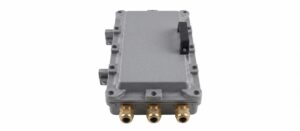
Explosion Proof Enclosures
Zone 1/21 MAMX-02-B3-D explosion-proof enclosure
II 2G Ex db IIB T6...T4 Gb | II 2G Ex db IIB+H2 T6...T4 Gb | II 2G Ex db IIC T6...T4 Gb |II 2D Ex tb IIIC T80°C, T95°C, T135°C Db IP66
$412.00Available

Your Global Authority In Hazardous Areas
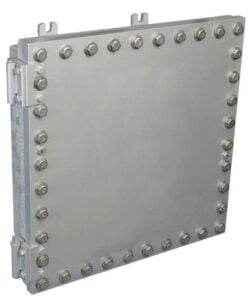
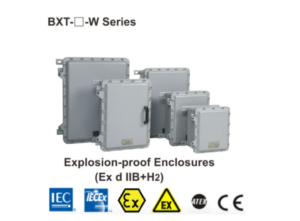
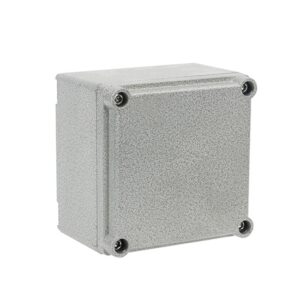
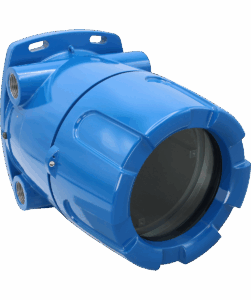
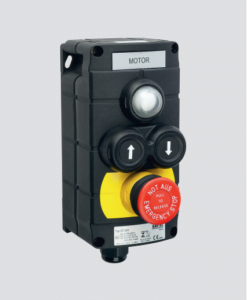
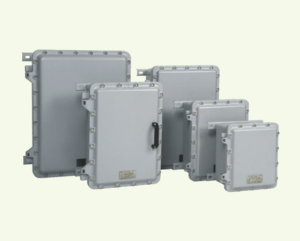
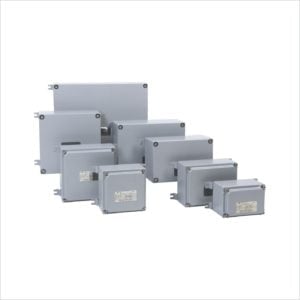
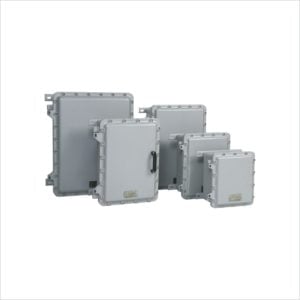
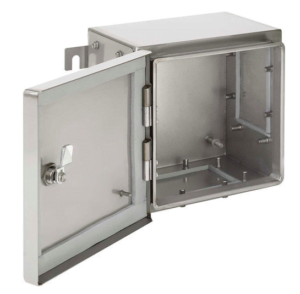
Explosion proof enclosures are specialized housings designed to protect electrical equipment in hazardous locations where flammable gases, vapors, liquids, or combustible dusts are present. Their primary function is not to prevent an internal explosion but to contain one. Should an arc or spark from the internal components ignite the hazardous atmosphere that has seeped into the enclosure, the robust construction is engineered to withstand the force of the blast. More importantly, its design, featuring carefully machined flame paths, cools and vents the expanding hot gases, preventing them from igniting the surrounding explosive atmosphere. This containment method is a critical safety measure in industries like oil and gas, chemical processing, and manufacturing.
These units, often referred to as explosion proof boxes, junction boxes, or housings, are a fundamental component of the “explosion proof” protection method. It’s crucial to distinguish this from the “intrinsically safe” method. While explosion proof enclosures contain an explosion, intrinsically safe systems are designed to operate at such low energy levels that they cannot produce a spark or thermal effect capable of causing ignition in the first place. The choice between these methods depends on the specific application, power requirements, and the nature of the hazardous environment.
Our selection of explosion proof enclosures is designed to meet the rigorous demands of hazardous area operations. Understanding their key features is essential for selecting the correct solution for your facility.
Built from high-strength materials like cast aluminum or stainless steel, these enclosures feature thick walls and reinforced bodies. This construction ensures they can withstand the extreme pressure generated by an internal explosion without rupturing, maintaining the integrity of the hazardous location.
A critical design feature is the flame path, which consists of the precisely machined gaps at joints, covers, and shaft openings. These paths allow the hot gases from an internal explosion to escape, but they cool the gases to a temperature below the ignition point of the surrounding hazardous atmosphere before they exit the enclosure.
Proper selection requires understanding hazardous area ratings. Our enclosures are certified for specific environments, defined by standards like the NEC:
We offer a wide range of products, including Class 1 Division 1 enclosures and C1D2 enclosures, to match your specific operational risks. Many are also rated according to NEMA standards (e.g., NEMA 7 for indoor Class I locations) for protection against environmental factors.
Applications often require specific configurations. Our enclosures can be customized with features such as viewing windows, which allow for monitoring of internal components without compromising safety, as well as custom-drilled conduit entries for fittings and connections.
An explosion proof enclosure is a specially designed housing for electrical equipment intended for use in hazardous areas. Its purpose is to contain an internal explosion and cool the escaping hot gases through precision-engineered flame paths to prevent the ignition of the flammable gases or dusts in the surrounding environment.
The core difference lies in their protection philosophy. An explosion proof enclosure is designed to contain an explosion, making it a robust, passive containment solution. In contrast, an intrinsically safe system is an active solution that limits electrical and thermal energy to a level below what is required to ignite a specific hazardous atmosphere, thus preventing the explosion from ever occurring.
These are hazardous location classifications defined by the National Electrical Code (NEC). A Class 1 Division 1 (C1D1) rating means the enclosure is suitable for areas where flammable gases or vapors are present continuously or intermittently under normal operating conditions. A C1D2 rating is for areas where these hazards are present only under abnormal conditions, such as an accidental leak or equipment failure.
They are used to safely house electrical components in hazardous locations. Common applications include protecting circuit breakers, terminals, motor starters, and control equipment in industries like oil refineries, chemical plants, wastewater treatment facilities, and grain processing facilities where flammable materials create a risk of explosion.
Yes, many explosion proof enclosures can be fitted with certified viewing windows. These windows are made from specially hardened glass or polycarbonate and are installed in a way that maintains the enclosure’s pressure-containing and flame-arresting properties, allowing for safe visual inspection of internal gauges, meters, and indicators.
Your cart is empty.