


























Industrial sites with explosive atmospheres live and die by documentation quality and speed. In this case study, a Gulf Coast petrochemical facility standardized on a new intrinsically safe camera stack to improve inspection first-pass yield, reduce re-entries into hazardous areas, and accelerate remote troubleshooting. Below you’ll find the rollout plan, ROI math, plain-text comparison tables, and the exact models selected for portable, wearable, and fixed monitoring.
Who is this case study for?
HSE managers responsible for hazardous-area compliance
Maintenance and reliability leads who need defensible photo/video evidence
Operations leaders balancing uptime, cost, and worker safety

What is an intrinsically safe camera—and why does it matter?
An intrinsically safe camera is engineered so it cannot release enough electrical or thermal energy to ignite a flammable atmosphere—even under fault conditions. In practice, that means circuitry, power limits, and surface temperatures are controlled by design and verified by third-party certification.
Choosing intrinsically safe cameras protects people and assets, but it also protects your compliance posture. When your equipment markings match the classification of the area you’re entering, your photo/video evidence is defensible during audits and incident investigations.
How do you choose the right certification for each area?
Start with your area classification drawings, then match the protection technique and approvals to those spaces.
ATEX Zone 0: explosive gas atmosphere present continuously or for long periods. Intrinsic safety (Ex ia/ib) is the typical requirement.
ATEX Zone 1: likely during normal operation. Intrinsic safety or other permitted techniques (e.g., flameproof “d”) may apply.
ATEX Zone 2: unlikely in normal operation; if it occurs, short duration. Type “n,” pressurization, and other methods may be allowed.
North America (Class/Division/Zone): verify Class I for gases/vapors, the Division or Zone, gas group, and temperature class on the label.
Rule of thumb: Select the camera for the highest zone it will ever enter; Zone 0 approvals cover Zone 1/2 of the same gas group, and Zone 1 often covers Zone 2.
Which intrinsically safe camera models did we deploy—and why?
Portable (handheld) documentation
Extronics iCAM502 — ATEX Zone 0 / IECEx / Class I, Division 1. Purpose-built for close-up evidence where risk is highest. Macro autofocus to approximately 5 cm and a strong LED make serial plates and terminations legible on the first pass.
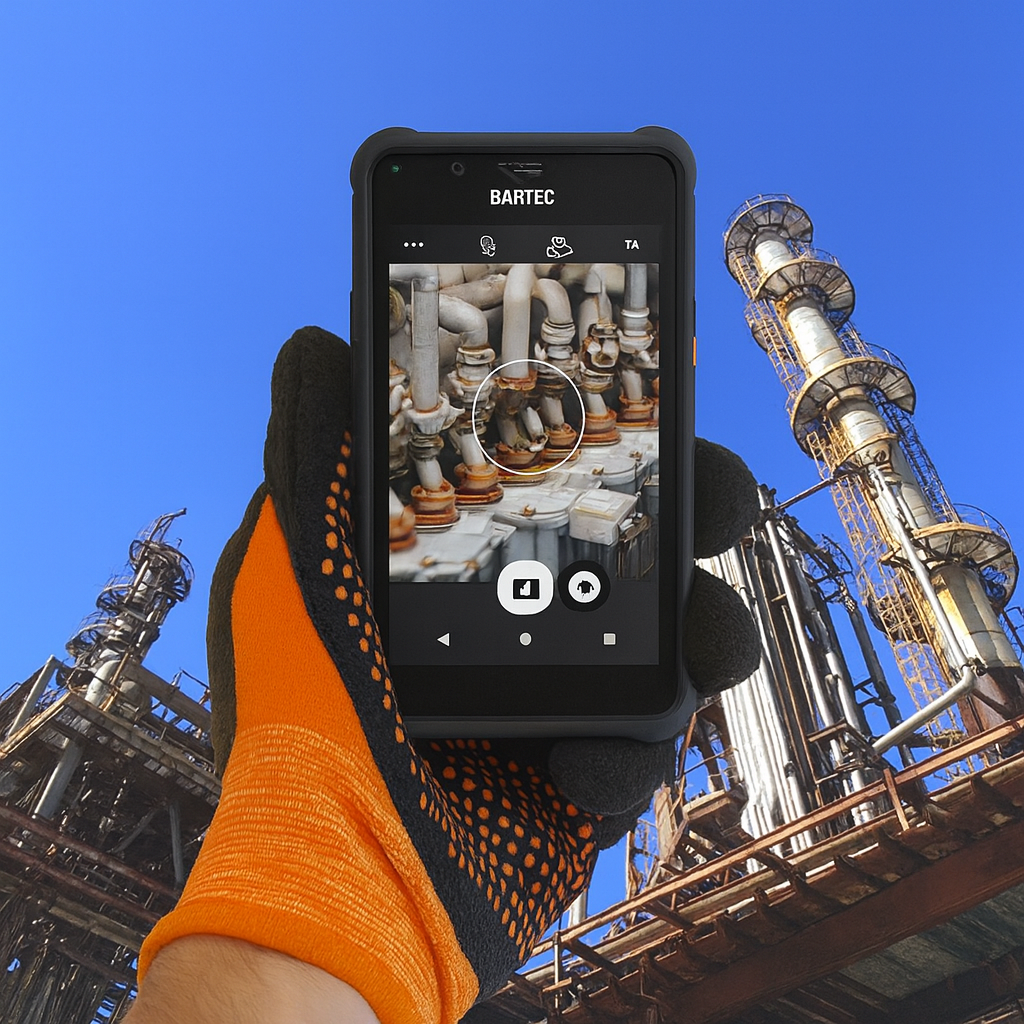
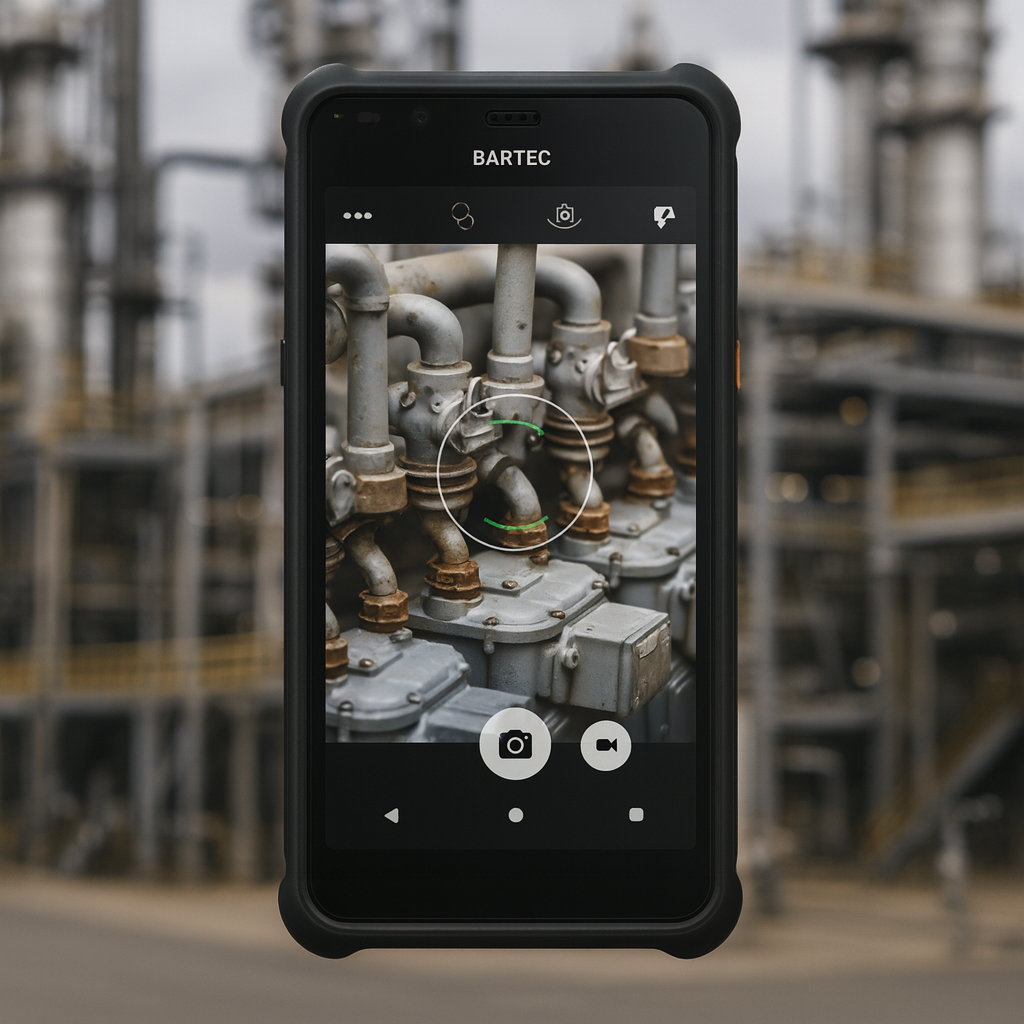
Bartec Pixavi Cam — ATEX/IECEx Zone 1, Class I, Division 1. A high-fidelity handheld that captures 12 MP stills and 4K video. Android-based workflow is ideal for incident documentation and maintenance reports.
Wearable, hands-free collaboration
Bartec Pixavi Orbit X — ATEX/IECEx Zone 1 wearable with HD video, dual LEDs, and a laser pointer. Designed for live remote mentoring and hands-free inspections. Mount to a helmet, chest harness, or telescopic pole to reach tight spaces.
Fixed CCTV coverage
IVC AMZ-3041-2 — Explosion-proof fixed camera for high-risk modules. Rugged cast-aluminum enclosure, NEMA 7/4X, and temperature tolerance for harsh environments.
Kaixuan KX-EX707PWV2 — ATEX Zone 2 stainless unit with IR illumination and ONVIF support for VMS integration. A cost-effective choice for perimeters and lower-risk process areas.
What results did the team see in the first 90 days?
Fewer hazardous re-entries. Macro-friendly stills from the iCAM502 and high-fidelity video from the Pixavi Cam meant technicians captured usable evidence on the first pass, avoiding repeat entries into skids and enclosed modules.
Faster troubleshooting. With the Orbit X, field techs streamed HD video hands-free to remote subject-matter experts. Decisions moved into the moment of work instead of after a call-back, cutting time-to-repair.
24/7 visibility on critical assets. Class I, Division 1-ready fixed cameras provided continuous coverage on critical skids and corridors. Operations gained early warning on process upsets without sending personnel into the area.
Audit-ready media. Consistent, time-stamped photos and videos improved documentation quality, reducing back-and-forth during audits and incident reviews.
Which intrinsically safe camera is best for your job?
Short answer: match by zone and task.
Zone 0 interiors (highest risk): Extronics iCAM502 — true Zone 0 approvals, glove-friendly controls, bright LED, and close-focus optics for plates and terminations.
Zone 1 high-fidelity documentation: Bartec Pixavi Cam — 12 MP stills and 4K video with Android workflow for quick, auditable reports.
Hands-free remote mentoring: Bartec Pixavi Orbit X — wearable HD video with dual LEDs and a laser pointer so an expert can guide technicians in real time.
24/7 hazardous blocks (Div 1 / Zone 1): IVC AMZ-3041-2 — heavy-duty enclosure and optics designed for continuous operation in tough environments.
Cost-effective Zone 2 views: Kaixuan KX-EX707PWV2 — stainless build, ONVIF support, and 30 m IR for general surveillance.
Below are detailed side-by-side tables in the exact text format you requested.
Handheld cameras: spec comparison
| Specification/Feature | Extronics iCAM502 | Bartec Pixavi Cam |
|---|---|---|
| Weight | Approx. 200 g (including batteries) | Approx. 293 g |
| Operating System | Dedicated intrinsically safe camera (no Android) | Android OS |
| Camera | 3.1 MP stills (approx. 2048×1536) | 12 MP rear; 8 MP front; 4K video |
| Display | No integrated display | 5.5″ 1920×1080 AMOLED |
| User Memory | Internal memory (approx. thousands of JPEGs) | 64 GB internal + optional microSD |
| Sensors | Status LEDs; AF/AE indicators | Accelerometer; gyroscope; ambient light; proximity |
| Usability | Single-handed, glove-friendly; bright LED illumination | Touchscreen + buttons; stylus support; IP-rated; replaceable battery |
| Approvals (summary) | ATEX Zone 0; IECEx; Class I, Division 1 | ATEX/IECEx Zone 1; Class I, Division 1 |
| Best For | Close-up plates/wiring in Zone 0 interiors | High-fidelity documentation in Zone 1 |
Wearable vs handheld: which fits your workflow?
In two sentences: Wearables shine when you need both hands free and live expert eyes in the loop; handhelds excel at high-resolution documentation and macro detail. Many teams deploy one of each so technicians can stream live when diagnosing and then capture final documentation with a handheld.
Wearable vs handheld comparison
| Specification/Feature | Bartec Pixavi Orbit X | Bartec Pixavi Cam |
|---|---|---|
| Form Factor | Wearable (helmet/chest mount; pole accessory) | Handheld smartphone-style camera |
| Video | HD streaming; dual high-power LEDs; laser | 4K video capture; optical stabilization |
| Stills | High-resolution stills (stream-oriented) | 12 MP rear; 8 MP front |
| Controls | Large tactile buttons for gloved use | Touchscreen + physical buttons; stylus support |
| Connectivity | Wi-Fi; Bluetooth; live collaboration tools | Wi-Fi; Bluetooth; Android apps/workflows |
| Approvals (summary) | ATEX/IECEx Zone 1 | ATEX/IECEx Zone 1; Class I, Division 1 |
| Best For | Hands-free remote mentoring and inspections | Evidence-grade documentation and reporting |
Fixed explosion-proof CCTV: choose by risk and coverage
In two sentences: For continuous views in Class I, Division 1 or ATEX Zone 1/2 modules, explosion-proof housings and hardened optics are essential. Pick the IVC model when you need Div 1 resilience and the Kaixuan when Zone 2 coverage and budget are the priority.
Fixed CCTV comparison
| Specification/Feature | IVC AMZ-3041-2 | Kaixuan KX-EX707PWV2 |
|---|---|---|
| Enclosure/Housing | Cast aluminum; NEMA 7/4X; heavy-duty build | 304/316L stainless; compact form |
| Operating Range | Approx. −40 °C to +60 °C | Outdoor-rated (model dependent) |
| Illumination | Day/night options (lens dependent) | Integrated IR up to ~30 m |
| Video/Interface | Analog (IP via encoder); lens options | IP camera; ONVIF-compatible |
| Approvals (summary) | ATEX/IECEx; Class I, Division 1 | ATEX Zone 2 |
| Best For | 24/7 coverage of high-risk Div 1/Zone 1 areas | Perimeter/process areas with intermittent risk |
How do intrinsically safe cameras reduce downtime and risk?
Short answer: fewer re-entries plus faster decisions. When technicians capture legible, compliant media on the first entry, you avoid permit-heavy repeat visits. Pairing a wearable camera with remote experts compresses time-to-decision, often turning a multi-visit diagnosis into a single safe entry. Fixed, explosion-proof cameras add constant context so operators can spot anomalies early and correct them before they escalate.
Extended view: Standardizing capture patterns (what to shoot and how), teaching macro technique, and enforcing time/date stamps all raise the average quality of evidence. Over time, this produces cleaner maintenance histories, better root-cause analysis, and fewer “mystery” failures because you can correlate visual evidence with process data and work orders.
What ROI can you expect—and how do you quantify it?
Illustrative math you can adapt:
Baseline: 30 hazardous re-entries/month for “better photos,” 1.5 hours each including permitting and escort, blended cost 120 USD/hour ⇒ 5,400 USD per month.
After program: 50% fewer re-entries via first-pass capture ⇒ 2,700 USD saved per month.
Remote mentoring: 8 sessions/month × 1 hour saved × 200 USD/hour SME + crew time ⇒ 1,600 USD per month.
Hardware amortization (Pixavi Cam + iCAM502 + Orbit X + 2 fixed cams over 24 months): about 400–600 USD per month.
Net savings ≈ 3,700–4,900 USD per month, with payback typically well under six months.
Adjust the entry counts, hourly rates, and hardware mix to reflect your site.
How do you roll out an intrinsically safe camera program?
Phase 1 — Plan
Confirm area classification (ATEX or Class/Zone) with your qualified engineer or HSE lead.
Map “critical shots”: equipment nameplates, cable terminations, seal integrity, incident scenes, and walk-through videos.
Phase 2 — Equip
Handhelds: Bartec Pixavi Cam for rich media in Zone 1; Extronics iCAM502 for Zone 0 macros and close-range work.
Wearable: Bartec Pixavi Orbit X for hands-free live collaboration.
Fixed: IVC AMZ-3041-2 for Div 1/Zone 1 blocks; Kaixuan KX-EX707PWV2 for cost-effective Zone 2 perimeters.
Phase 3 — Govern
SOPs for time/date stamping, file naming, storage locations, retention, and chain-of-custody.
Training: macro technique at ~5 cm, low-light exposure, when to switch from handheld to wearable, and how to stream to remote experts.
Phase 4 — Validate
Spot-check image/video legibility and metadata.
Verify labels and certificates are recorded and accessible for audits.
Gather feedback and expand coverage where bottlenecks persist.
FAQs
What certifications should I match to each area?
Use your classification drawings. Zone 0 typically requires intrinsic safety (Ex ia/ib). Zone 1 may use intrinsic safety or other permitted techniques such as flameproof “d.” Zone 2 allows additional techniques like type “n.” In North America, verify the Class, Division/Zone, gas group, and temperature class on the label.
Is an explosion-proof camera the same as an intrinsically safe camera?
No. Explosion-proof (flameproof “d”) enclosures contain an internal ignition, while intrinsic safety limits energy so ignition cannot occur. Both can be correct for hazardous areas—choose the approach that’s approved for your specific classification.
Which intrinsically safe camera is best for Zone 0 work?
The Extronics iCAM502 is purpose-built for Zone 0 with close-focus optics and strong LED illumination, ideal for legible, first-pass evidence inside high-risk interiors.
What’s a good wearable camera for hands-free work in Zone 1?
The Bartec Pixavi Orbit X provides Zone 1 certification with HD video, dual LEDs, and a laser pointer—great for live remote mentoring and inspections where both hands are needed.
Which fixed cameras cover continuous monitoring in hazardous areas?
The IVC AMZ-3041-2 covers Class I, Division 1 and ATEX/IECEx modules with a rugged enclosure; for Zone 2 perimeters, the Kaixuan KX-EX707PWV2 adds stainless housing, IR illumination, and ONVIF support.
Why an intrinsically safe camera program pays for itself
A well-designed intrinsically safe camera program reduces risky entries, compresses decision time, and produces clean, auditable media. Start with your hazard map, match certifications to zones, equip teams with Zone-appropriate handhelds and wearables, and anchor critical areas with explosion-proof CCTV. The outcome is safer people, faster fixes, and fewer surprises—for operations and compliance alike.
Ready to spec optics, mounting, and certifications for your facility?
Shop the Cameras category
