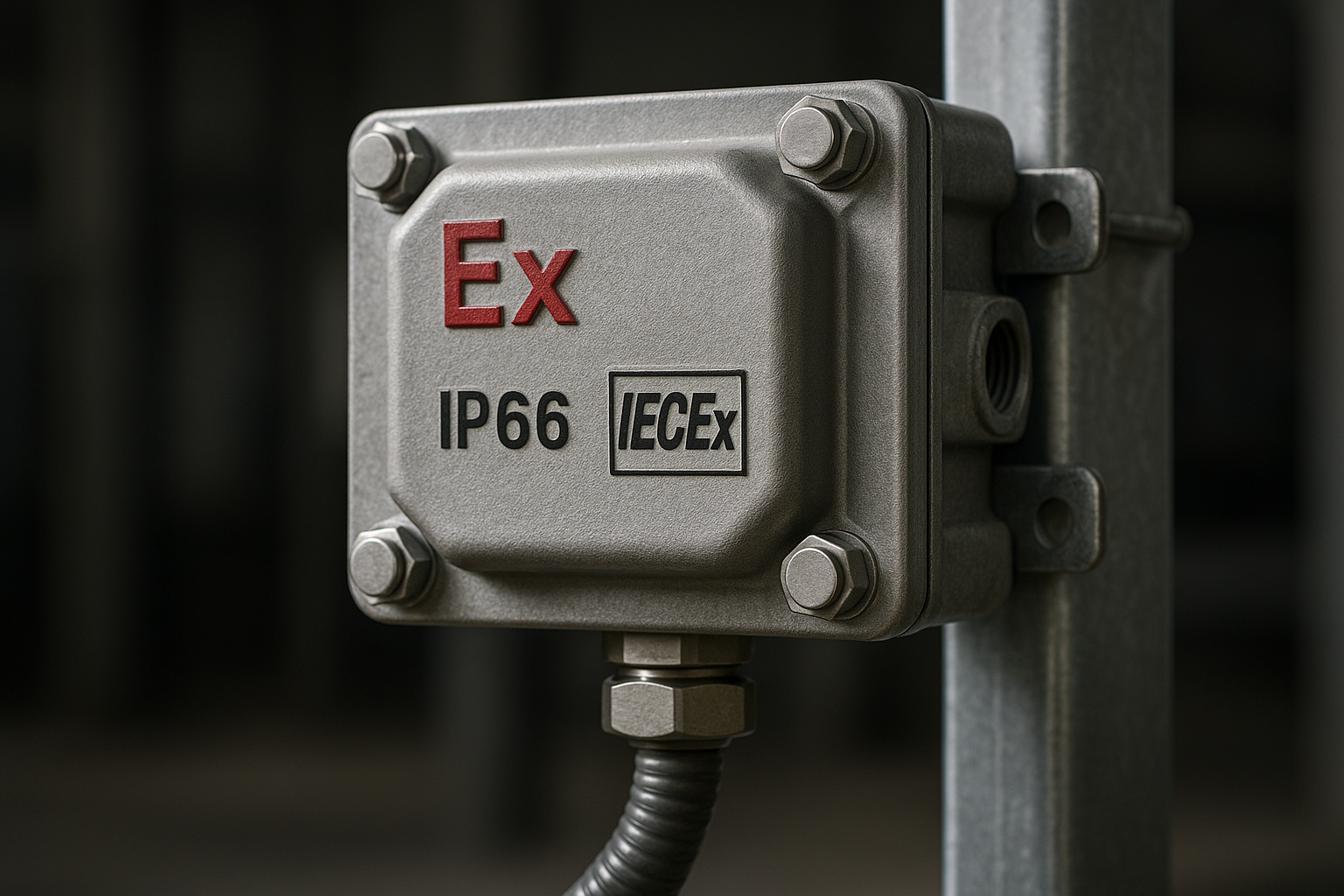

















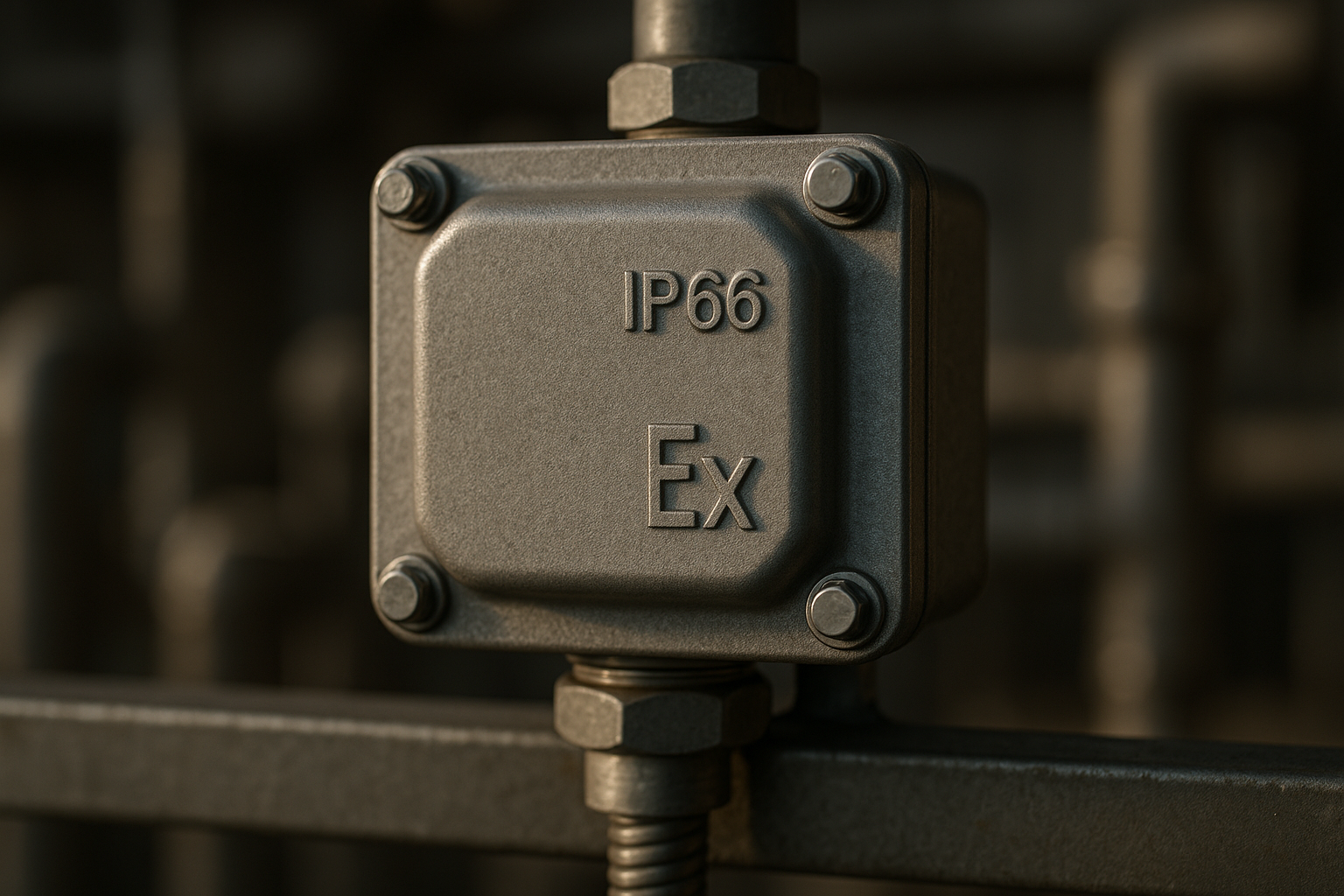
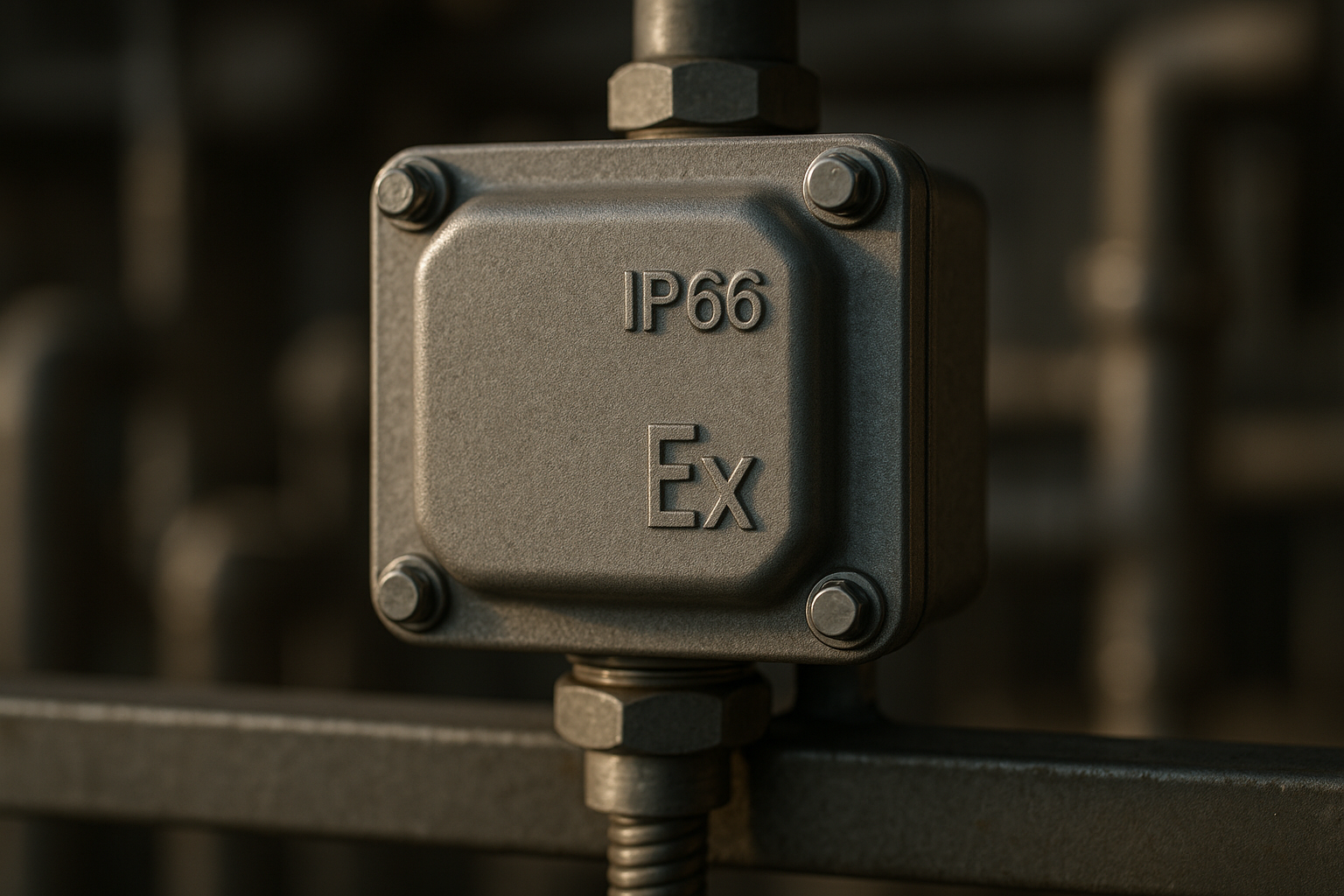
Ingress Protection (IP) ratings are a shorthand engineers use to describe how well equipment resists intrusion from dust and water. In hazardous (Ex) areas—where explosive atmospheres may be present—understanding IP codes is essential for selecting enclosures, luminaires, junction boxes and other devices that must maintain their safety function in harsh conditions. This practical guide explains IP codes, clarifies common misinterpretations, and provides actionable selection and installation guidance for hazardous-area projects.

What IP Ratings Mean for Ex Equipment
IP codes consist of two digits (and sometimes an additional letter). The first digit indicates protection against solids (dust), while the second indicates protection against liquids (water). For hazardous installations, the right IP rating ensures that dust ingress cannot reach ignition-capable components, and that water (or condensation) won’t compromise electrical integrity or corrosion-resistant seals.
- First digit (0–6): protection against solids — e.g., 6 = dust-tight.
- Second digit (0–9K): protection against liquids — e.g., 6 = powerful water jets; 9K = high-pressure, high-temperature washdown.
- Optional letters: additional information (e.g., ‘F’ for oil resistance in some schemas).
Expand Your Hazardous Area Knowledge
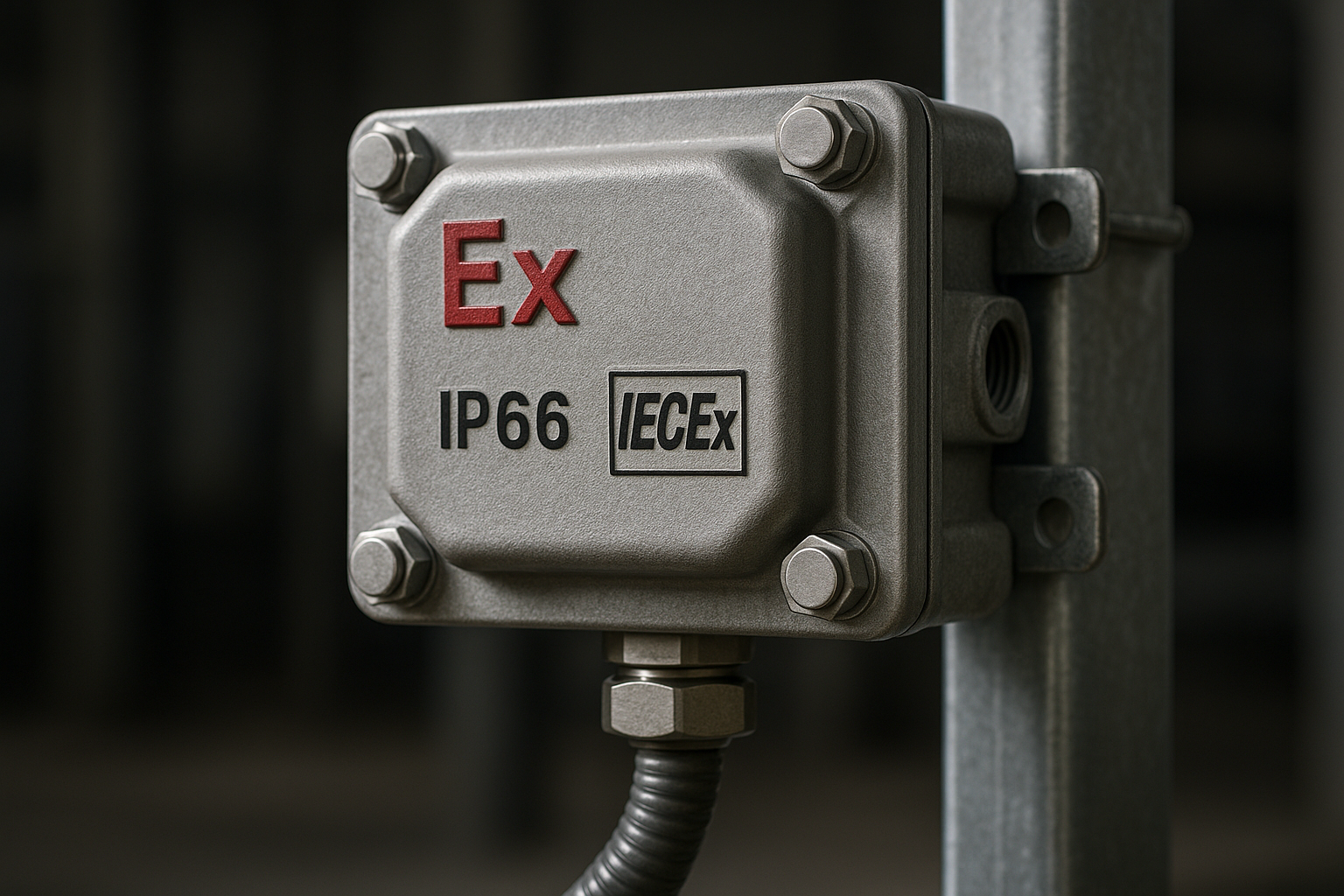
Master the complexities of equipment certifications to ensure complete site compliance. Explore our in-depth guide on understanding ATEX and IECEx markings.
Access the Certification GuideHow to Choose the Right IP Rating for Your Site
Choosing an IP rating for hazardous areas depends on the environment, cleaning regimes, and expected contaminants. Below is a simple decision workflow to help you match IP classes to site conditions.
- Assess environmental hazards: dust types (conductive or non-conductive), liquid exposure (splash, jets, immersion), and chemical vapors.
- Match operational needs: outdoor exposure, washdown frequency, and temperature cycles.
- Specify a conservative IP rating and validate with vendor datasheets and certification marking (ATEX/IECEx/UL).
Comparative Table: IP-Rated Intrinsically Safe Devices
| Product | Specifications | Certification | Link |
|---|---|---|---|
| Cressa LED Explosion Proof Flood Light Lighting | 150W; 20,250 Lumens; IP66 | Class I Div 1 & 2; ATEX/IECEx | Shop Now |
| Nightstick XPR-5580G Lantern Portable Lighting | Dual-Light Tech; IP67 Waterproof | ATEX, IECEx, MSHA; Class I Div 1 | Shop Now |
| Nema Enclosures Explosion Proof Box Enclosures | Stainless Steel; IP66 NEMA 4/4X | Class I Div 1 & 2; ATEX/IECEx | Shop Now |
Secure Operations with Rugged Ex-Rated Gear
Equip your facility with industrial-grade, highly rated ingress protection solutions designed for extreme environments. Browse our comprehensive catalog of certified explosion-proof equipment.
Browse Explosion-Proof EquipmentPractical Installation and Maintenance Tips
Even the correct IP rating won’t help if installation and maintenance compromise enclosure integrity. Follow these good-practice steps when installing or servicing equipment in Ex zones.
- Use manufacturer-certified cable glands and maintain torque settings to preserve seals.
- Inspect sealing surfaces and gaskets during scheduled maintenance—replace gaskets showing compression set or cuts.
- Specify IP and chemical-resistance classes for areas with corrosive atmospheres or oil contamination.
- For washdown areas, prefer IP69K or specified high-pressure washdown ratings and compatible gland assemblies.
- Document IP-related checks in inspection records and include photos of label markings.
Related Resources
FAQs
Is IP67 always better than IP66 for hazardous areas?
Not necessarily. IP67 guarantees protection against temporary immersion, while IP66 covers powerful water jets. Choose based on the specific exposure scenario—immersion risk vs. high-pressure cleaning—and consult vendor certs for Ex compatibility.
Do IP ratings replace ATEX/IECEx certifications?
No. IP ratings address ingress protection; ATEX/IECEx confirm construction and safety for explosive atmospheres. Equipment for Ex zones must have the appropriate Ex certification in addition to the IP rating.
How do I verify the IP rating on installed equipment?
Check the manufacturer’s datasheet and the marking label on the device. During inspections, photograph the rating plate and keep the datasheet in your asset record.
What IP rating should I use for offshore platforms?
Offshore environments typically need at least IP66 to resist spray and salt ingress; many operators specify IP67 or IP69K for equipment exposed to heavy weather and washdown. Also ensure corrosion-resistant materials.
Can a contractor change cable glands without affecting the IP rating?
Only if the replacement glands are equivalent or better and installed per manufacturer torque and sealing instructions. Use certified Ex-rated glands and record the change in maintenance logs.
Conclusion
IP ratings are a vital part of specifying safe, reliable equipment for hazardous areas, but they are only one piece of the puzzle. Combine correct IP classes with Ex certifications, proper installation practices, and ongoing inspection procedures to maintain safety and compliance. When in doubt, choose the more conservative rating for critical assets and keep comprehensive documentation to support audits.