


























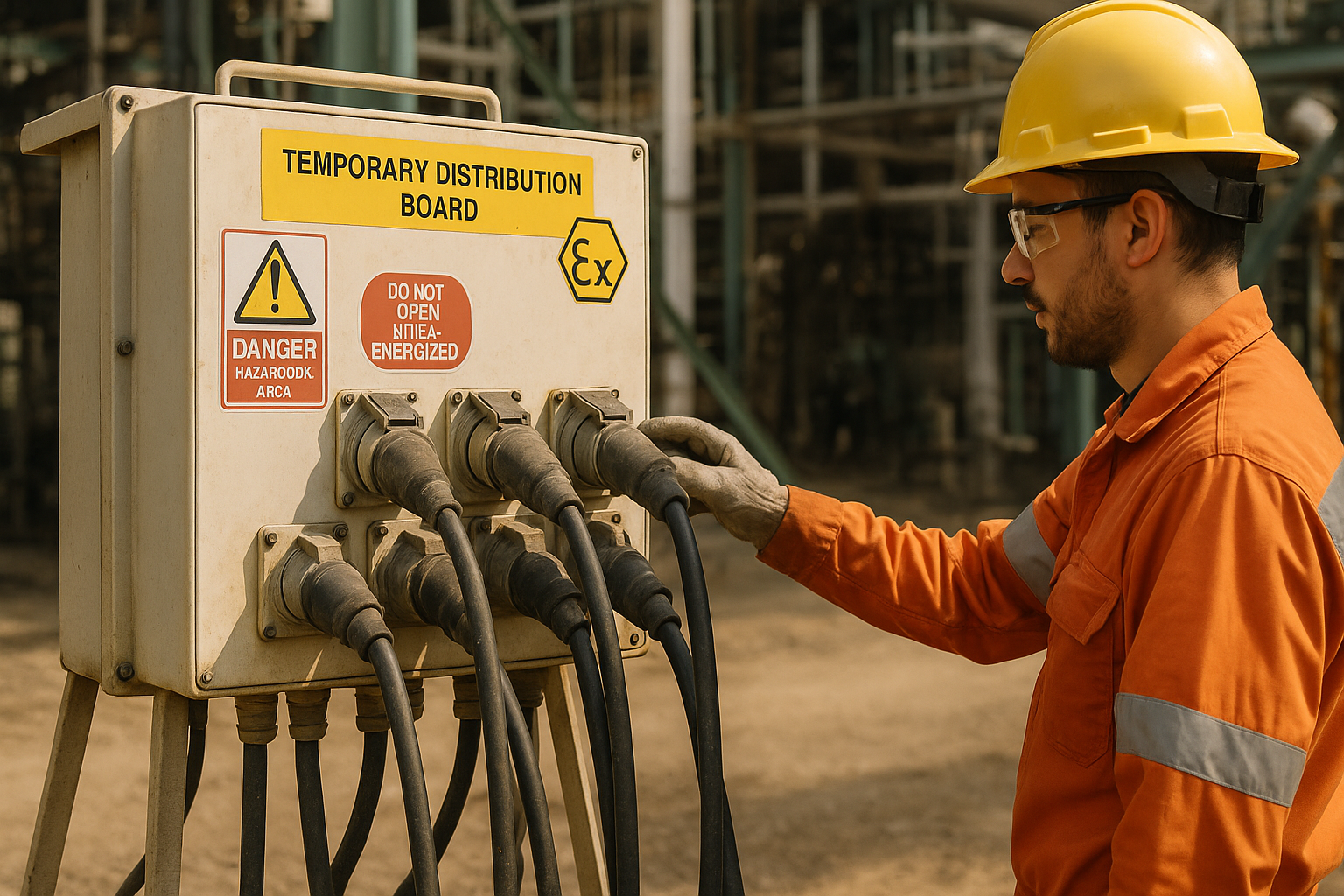
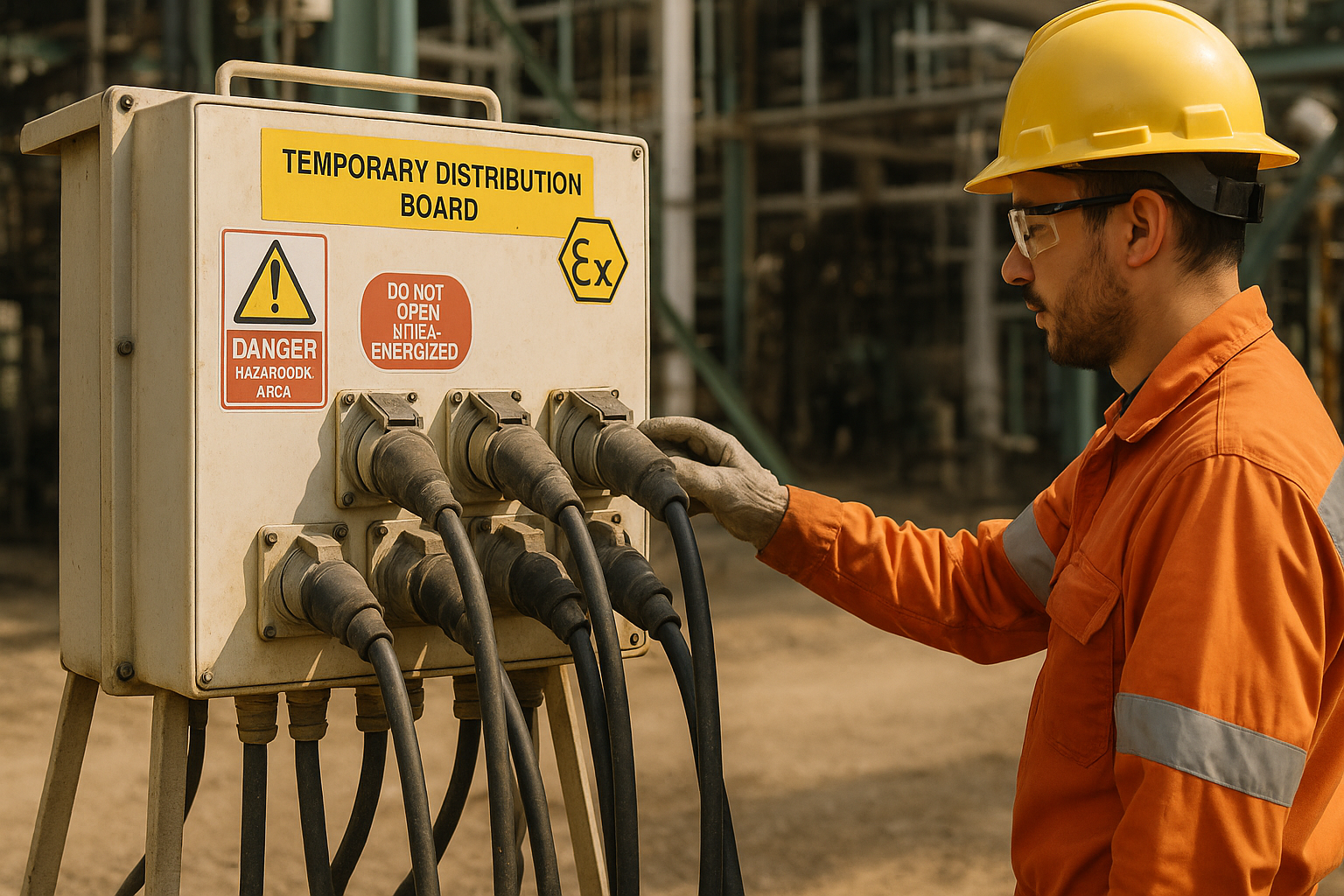
Temporary power is common during shutdowns, turnarounds, and construction work — but in hazardous (Ex) areas it introduces additional ignition risks if not designed and managed correctly. This article lays out practical design principles, product choices, and inspection routines to keep temporary power distribution safe and compliant in classified zones.
Master Hazardous Area Cable Selection
Ensuring the integrity of your temporary power setup starts with the right connections. Learn how to select the correct cable glands for your specific Ex-zone requirements.
Read the Selection GuideKey considerations before deploying temporary power
Before placing a temporary distribution in service, teams must assess site hazards and define controls. The following checklist helps project and safety teams prepare.
- Confirm area classification (Zone 0/1/2 or Zone 20/21/22) and identify permissible equipment types.
- Plan cable routing to minimize mechanical damage and avoid ignition-source proximity.
- Define grounding/earthing strategy and bonding connection points for the temporary installation.
Design and selection steps for temporary power in Ex zones
Follow a sequential design process to ensure safety and maintain certification boundaries.
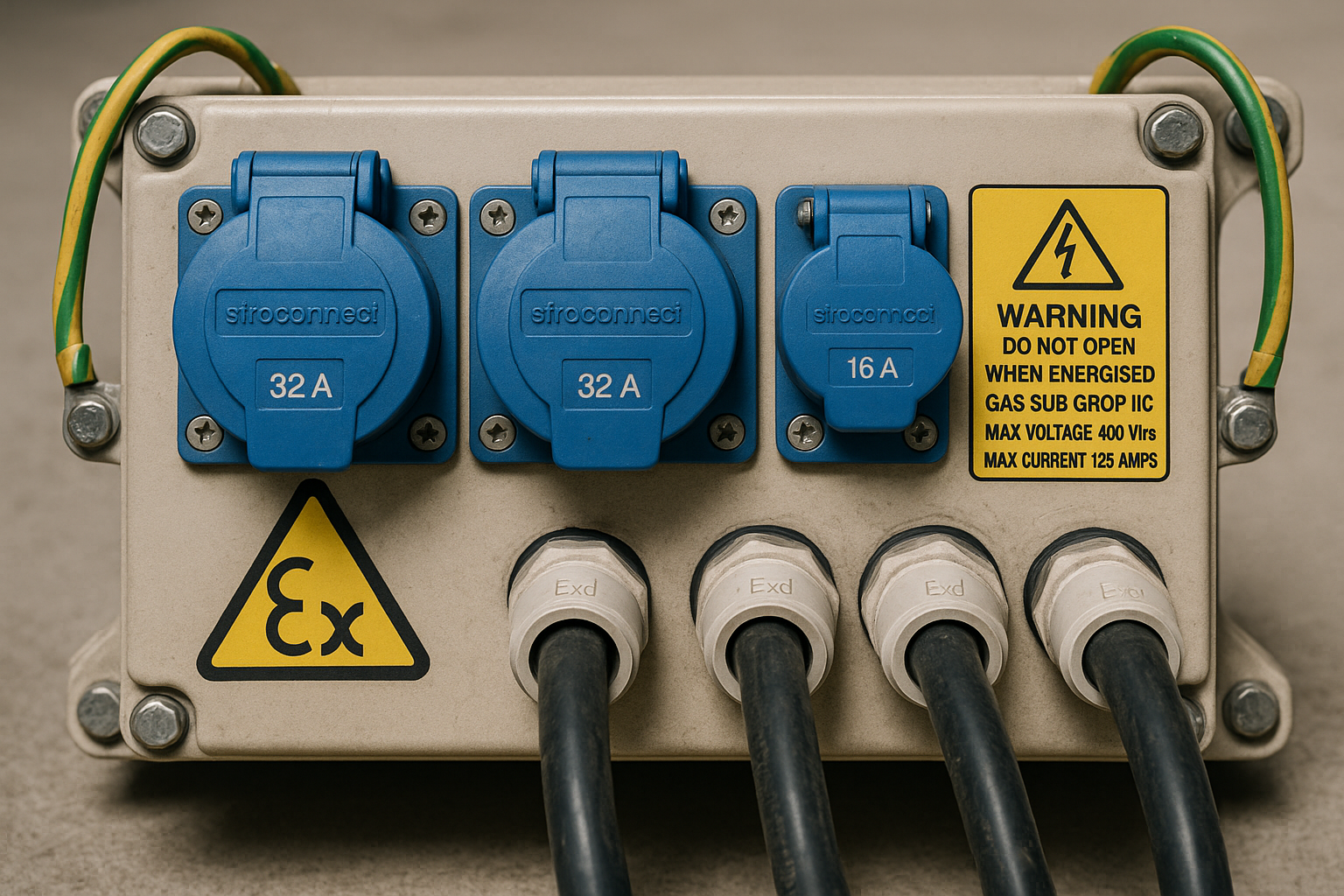
- Specify Ex-rated distribution boards and portable panels with appropriate certifications (IECEx/ATEX/UL) and the correct IP rating for the environment.
- Select cable glands, plugs, and connectors rated for the zone and compatible with cable armour and conductor sizes.
- Design overcurrent protection, RCDs and isolation points that respect both electrical safety and intrinsic safety/Ex zoning principles.

Product Comparison
| Product | Price | Action |
|---|---|---|
| Explosion Proof Control Panel TLH214AG3 CC | $4,665.60 | View Details |
| Explosion Proof Cable Gland ATEX IP68 – 1/2″ NPT | $37.32 | View Details |
| GameChanger Hazardous Location Cable | $25.32 | View Details |
Certified Connectivity for Temporary Power
Don’t compromise safety with unrated accessories. Explore our full inventory of IECEx and ATEX-certified cable glands and connection kits designed for industrial environments.
Shop Certified Cable GlandsInstallation best practices
Installation quality directly affects safety. Use the following practical measures when setting up temporary power.
- Secure temporary panels on stable, non-combustible supports and protect against impact or tipping.
- Maintain separation between temporary cabling and process lines carrying flammable materials.
- Ensure all glands are correctly torqued, and bonding/earthing straps are visible and accessible for inspection.
- Label temporary panels clearly with area classification, fed circuits and test dates.
- Use lockable enclosures or barriers to prevent unauthorized access to distribution equipment.
Testing, inspection and handover
Temporary installations must be treated like permanent assets for testing and documentation.
- Pre-energization: perform continuity, insulation resistance, earth resistance and polarity checks and record results.
- Commissioning: confirm RCD trip characteristics and overcurrent settings match cable ratings and loads.
- Daily/weekly checks: visual inspection of cable condition, gland seals, and evidence of overheating or water ingress.
FAQs
Can I use a standard temporary generator in a Zone 2 area?
Only if the generator and its distribution equipment are placed outside the classified boundary or if the equipment is certified for the zone. Portable generators often must be located in a safe area and feed Ex-rated distribution via suitably certified cable runs and glands.
How often should temporary power setups be inspected?
Perform a full commissioning test before energization, then daily visual checks and weekly functional checks during continuous use. Document inspections in the site permit-to-work records.
Do I need IECEx/ATEX-certified cable glands for temporary setups?
Yes — in classified areas use glands and components rated for the zone. Even temporary work requires components that do not reduce the level of protection required by the area classification.
What are the earthing requirements for temporary distributions?
Temporary distributions must have a dedicated, low-impedance earth connection. Bonding between panels and structure should use appropriately sized straps and be verified by earth resistance testing before use.
Can I daisy-chain temporary distribution boards?
Daisy-chaining increases risk of overloading and complicates fault-finding. Where multiple panels are needed, design a single upstream distribution with correctly rated feeders and protection, rather than chaining multiple portable boards.
Conclusion
Temporary power in hazardous areas is achievable without increasing risk when careful design, certified equipment and disciplined inspection regimes are applied. Specify Ex-rated distribution equipment, use certified glands and connectors, verify earthing and protection settings, and document every step from commissioning through decommissioning. Good planning reduces both safety risk and operational disruption during shutdowns and temporary works.
