Uncategorized
Battery Replacement Best Practices for Ex-Certified Equipment
Replacing batteries in Ex-certified (intrinsically safe) equipment requires a tighter process than general-purpose devices. Maintenance engineers, technicians, and reliability teams must preserve the device’s intrinsic safety characteristics, maintain ingress protection (IP), and ensure documentation and traceability so the original certification remains valid. This guide is a practical, step-by-step resource that covers permitted battery types, torque and sealing checks, IP considerations, a field-ready on-site procedure, a labeled safety checklist you can print, and guidance on documentation to preserve certification records.
Master Intrinsically Safe Battery Safety
Improper battery handling is a leading cause of certification voidance. Read our deep dive into the importance of battery safety for intrinsically safe environments.

Why correct battery replacement matters
Battery replacement affects several safety and compliance dimensions that are critical in hazardous environments. A non-conforming battery or a poorly reassembled compartment can cause overheating, sparks, or loss of sealing — any of which may increase ignition risk or render the device non-compliant with ATEX/IECEx/CSA/UL requirements. The main reasons to follow a strict, recorded process are:
- Preserve certification: Using the right battery and following manufacturer assembly instructions helps ensure the device remains within the parameters covered by its Ex certification.
- Maintain IP rating: Proper gasket seating, correct torque, and intact cable glands preserve ingress protection and prevent dust, water or vapor entry that could change electrical/thermal behavior.
- Avoid risky substitutions: Different chemistries, cell counts, or modified packs can alter voltage/current limits and thermal runaway characteristics—never retrofit unsupported batteries.
On-site battery replacement procedure
Below is a field-tested, step-by-step procedure you can adopt as a standard operating method. Always cross-check with the device manufacturer’s service manual and your site permit-to-work procedures before starting.
- Plan and authorize: Schedule the replacement during a planned maintenance window. Confirm permit-to-work/isolation paperwork and that the device is removed from service or taken to a designated maintenance area.
- Use correct PPE and ESD controls: Wear intrinsically safe PPE as required (gloves, FR clothing, eye protection). Use ESD wrist straps and ESD-safe mats or tools when handling battery packs and PCBs.
- Confirm replacement battery: Verify the replacement battery’s part number, chemistry, voltage and manufacturer against the device’s approved list. Do not accept generic or modified packs.
- Inspect the device before opening: Check the battery compartment cover, screws, O-rings/gaskets, and cable glands for visible damage or corrosion. Photograph the compartment for records if any damage exists.
- Open compartment carefully: Use manufacturer-specified drivers and preserve screw order and orientation. Keep removed screws and small parts in a clean container to avoid contamination.
- Remove and inspect the old battery: Note serial/lot numbers and wear signs (bulging, leaks, discoloration). Dispose of defective cells per hazardous waste rules.
- Check sealing elements: Measure O-ring condition (no cuts, flatness, or compression set). Replace O-rings/gaskets and cable gland seals when in doubt — they are inexpensive compared with certification risk.
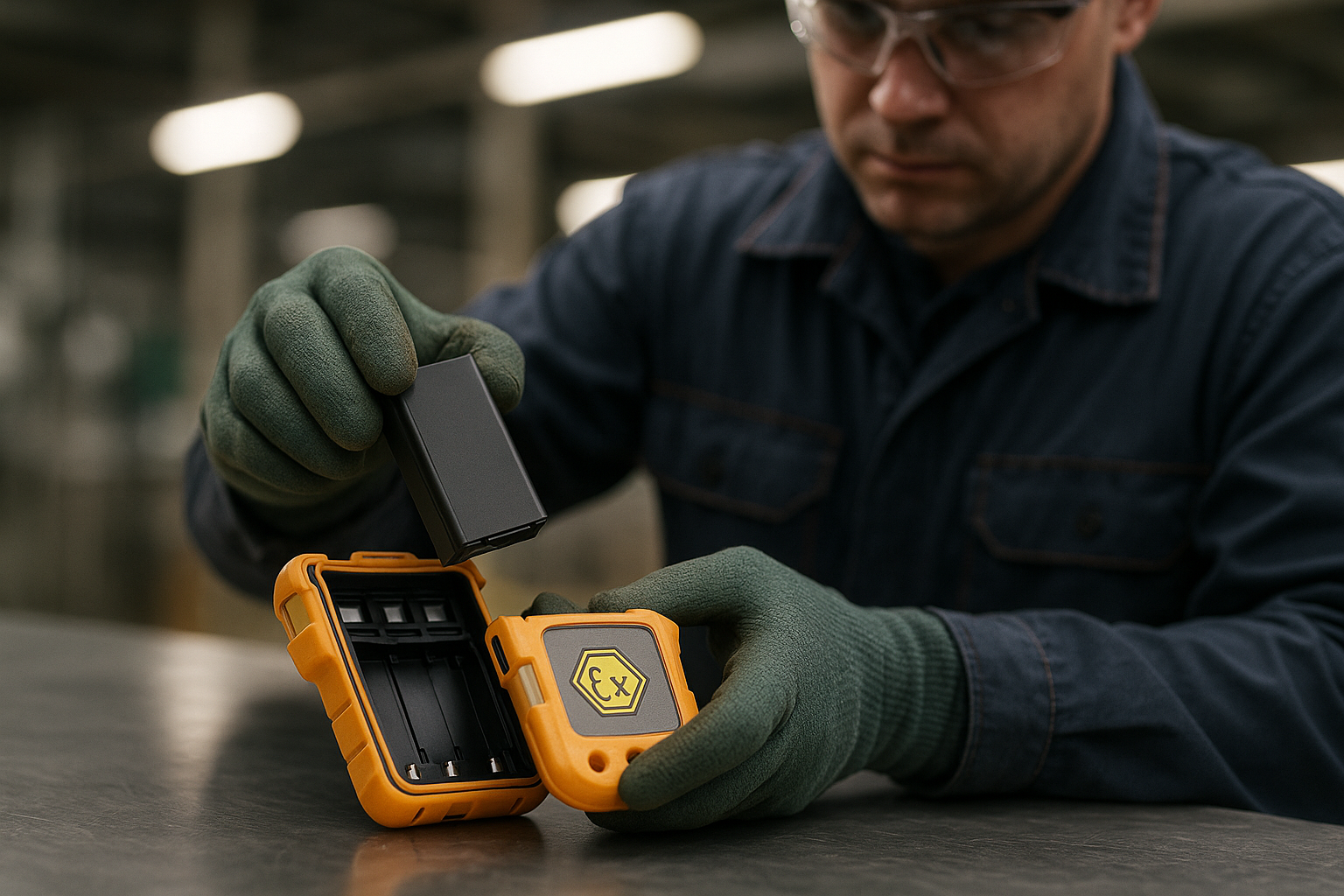
- Install the new battery: Insert the battery so contacts align naturally; avoid forcing connectors. Confirm polarity and seating. If the pack has a protective film, remove it per instructions.
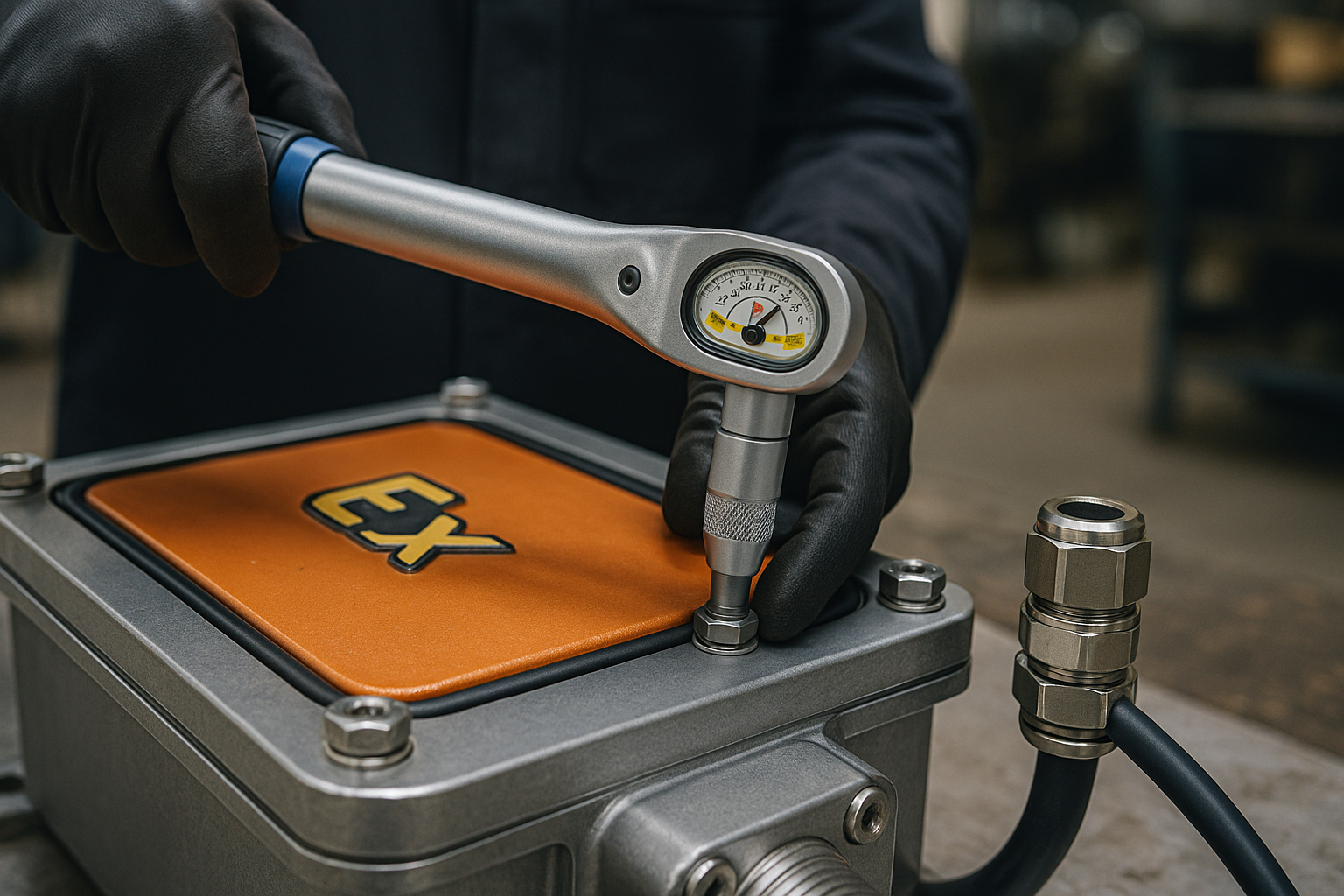
- Torque and sealing checks: Use a calibrated torque wrench to tighten screws to the manufacturer-specified torque value. Typical small detector cover screws are often in the 0.5–2.5 N·m range — always follow the device spec. Ensure the gasket compresses evenly and the gap is uniform around the housing.
- IP rating considerations: Visually confirm the gasket compression and cable gland positions. If your site procedure allows, perform a light bench ingress check (non-destructive) such as a controlled spray or simple water ingress check per local protocol. For full IP re-certification, use lab testing.
- Functional verification: Power up, run self-tests and sensor zero/span checks (for detectors). Verify alarms, LED indicators, logging, and wireless comms where applicable.
- Document and label: Record battery part number, serial/lot, date/time, technician name, torque values used, any seal replacements, and upload photos to your CMMS and the device’s certification file. Affix a service label showing replacement date and next scheduled check.
- Return to service: Only sign the device back into service when all tests pass and records are completed. If any anomaly is found, quarantine the unit for further investigation.
Battery replacement safety checklist
- Work permit/authorization checked and signed
- Correct battery part number and chemistry confirmed
- PPE, ESD mat, and ESD wrist strap in use
- Gaskets/O-rings inspected and replaced if damaged
- Torque wrench calibrated and torque values recorded
- Cable glands and seals inspected and reseated
- Functional self-test and calibration checks completed
- Photos and serial/lot numbers recorded in CMMS
- Service label applied with date and technician initials
Secure Certified Power for Your Fleet
Don’t risk ignition with unapproved power cells. We stock a full range of OEM-authorized, Ex-certified batteries for MSA, Dräger, Honeywell, and more.
Comparative Table: Common replacement batteries for portable Ex devices
Comparative Table: Common replacement batteries for portable Ex devices
| Product | Category | Certification | Price | Internal Link |
|---|---|---|---|---|
| Gizmo I.S. Battery Pack (additional spare) | Intrinsically Safe Battery | ATEX Zone 0, 1, 2 / Class I Division 1 | $75.82 | View Details |
| Zebra BTRY-MC93-NI-01 Battery for MC9300 | Intrinsically Safe Battery | Class I Division 2 / Non-Incendive | $246.24 | View Details |
| i.safe MOBILE Battery for IS530.x | Intrinsically Safe Battery | ATEX Zone 1/21 / Class I Division 1 | $114.00 | View Details |
Related Resources
Chat for a Quote
Call: 832-699-6726
FAQs
Can I use a standard commercial battery in my Ex device?
No. Only manufacturer-approved, Ex-compatible batteries that match the device’s certification and electrical characteristics should be used. Using standard consumer batteries may invalidate certification and create hazard risks.
How important is torque on battery compartment screws?
Very important. Correct torque ensures uniform gasket compression and maintains IP and Ex sealing. Use a calibrated torque wrench and record the values used for traceability.
What are the permitted battery types for Ex devices?
Most Ex devices specify manufacturer-approved Li-ion or NiMH battery packs designed and tested with the device. Permitted types are listed in the device manual and certificate. Never retrofit with custom packs or unsupported chemistries.
How do I preserve certification when replacing a battery?
Use approved parts, follow the manufacturer’s replacement procedure exactly, record all replacement details, replace any damaged seals with OEM parts, and store documentation in the device’s certification file.
Do I need a lab IP re-test after every battery replacement?
No. For routine replacements done per manufacturer instructions, visual checks and functional tests are standard. Formal IP re-testing in a lab is typically required only after structural repair, modification, or failed field checks.
Conclusion
Battery replacement for Ex-certified equipment is a compliance-critical activity. Use only approved batteries, follow correct PPE and ESD controls, inspect and replace seals when necessary, apply manufacturer torque values, and maintain thorough documentation in CMMS and device certificates. Implement the checklist above as a mandatory step in your maintenance workflow to reduce risk, maintain uptime, and preserve certification traceability.