

























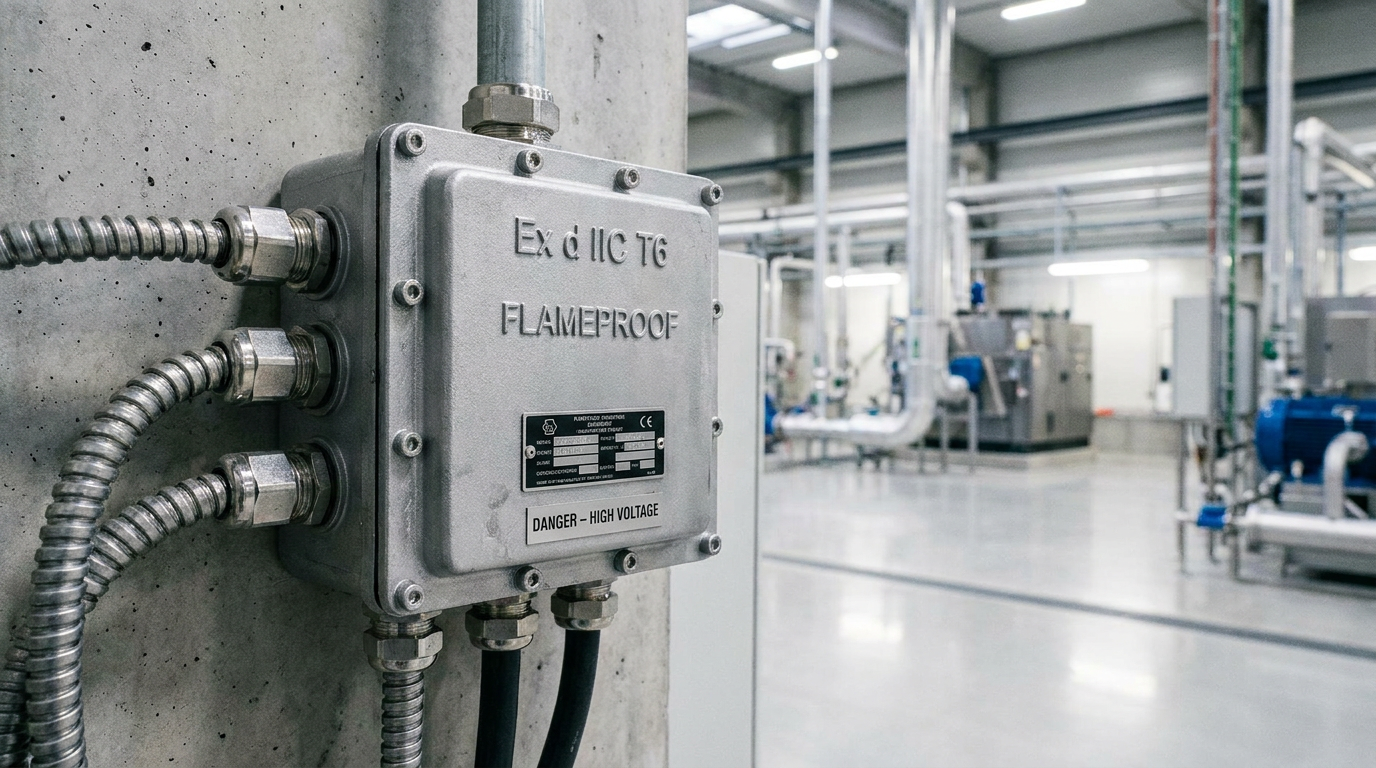
Selecting the correct electrical equipment for a hazardous area is a task governed by stringent rules and a deep respect for safety. However, when the environment is not only classified as hazardous due to flammable gases or dusts but is also persistently saturated with oils, lubricants, and hydraulic fluids, the selection process enters a new realm of complexity. This dual-threat scenario presents a formidable challenge: you must protect against the immediate, explosive danger of an electrical spark while simultaneously defending against the slow, insidious chemical attack that can silently dismantle your safety measures over time. A standard flameproof junction box, certified to contain an internal explosion, may be rendered completely ineffective if its materials cannot withstand the corrosive and degrading effects of the hydrocarbons it is bathed in day after day. This makes the choice less about simply matching a Zone rating and more about a deep, forensic investigation into material science, chemical compatibility, and long-term operational resilience. A failure to appreciate this distinction is a gamble with catastrophic potential, where the integrity of your entire safety system can be eroded by a threat you may not have even considered.
Master Hazardous Area Material Compliance
Protect your facility from structural degradation. Deepen your understanding of chemical integrity and discover the critical materials required to secure electronic enclosures in volatile, hydrocarbon-rich environments.
Read the Material Selection GuideA Deep Dive into Choosing Flameproof Junction Boxes for Oily and Hazardous Locations
Selecting a flameproof junction box for any hazardous area is a task that demands precision and a thorough understanding of safety standards. However, when the operational environment is not only potentially explosive but also persistently oily, the complexity of this decision multiplies significantly. This scenario introduces a dual threat: the immediate risk of ignition from an electrical fault, which the flameproof (Ex d) enclosure is designed to contain, and the long-term, insidious threat of chemical degradation from contact with oils, lubricants, and hydraulic fluids. A failure to account for the latter can completely undermine the protection offered by the former, leading to a catastrophic failure over time. Therefore, choosing the right junction box transcends a simple check of its ATEX or IECEx certification; it becomes a deep exercise in materials science, environmental analysis, and long-term risk management. The core challenge lies in ensuring that the enclosure’s integrity, designed to withstand an internal explosion, is not slowly and silently compromised by the very substances it is surrounded by day in and day out.
- The first and most critical consideration in this specialised selection process is the material of the enclosure itself.
- An alternative to stainless steel is marine-grade aluminium, which is often treated with a protective coating like an epoxy or polyester powder coat.
- Beyond the main body of the enclosure, the integrity of the sealing gasket is an element that is frequently overlooked yet absolutely vital in oily environments.

The Collaborative Brains Trust: Pinpointing Who Selects Flameproof Junction Boxes in Oily Environments
The selection of a flameproof junction box for an environment saturated with oils, greases, or other hydrocarbons is not a task for a single individual operating in a silo. It is a critical decision that sits at the nexus of electrical safety, chemical compatibility, and long-term operational reliability. Entrusting this responsibility to one person, or to the wrong person, is a direct pathway to premature equipment failure, costly downtime, and, most alarmingly, a catastrophic safety incident. The reality is that the “who” is not a person, but a process—a collaborative effort involving a multi-disciplinary team of experts, each bringing a unique and indispensable piece of the puzzle. This decision-making process is less like a solo performance and more like a symphony, where the electrical engineer, the process engineer, the safety officer, and the maintenance manager must all play their parts in perfect harmony to create a safe and resilient outcome. Misunderstanding this collaborative necessity is a common but dangerous oversight in many industrial facilities.
- The most obvious and central figure in this process is the Electrical or Instrumentation Engineer.
- This is where the Process or Chemical Engineer’s expertise becomes indispensable.
- Layering onto this technical foundation is the critical perspective of the Health, Safety, and Environment (HSE) Officer or Compliance Manager.

The Dual-Threat Defense: Choosing Explosion-Proof Junction Boxes for Hydrocarbon Zones
| PRODUCT | CATEGORY | SPECIFICATIONS | PRICE |
|---|---|---|---|
|
Explosion Proof Junction Box for DETECT-A-FIRE Units
View Details
|
Junction Box | Heavy duty construction, designed specifically to house and protect DETECT-A-FIRE units in hazardous industrial zones. | $550.00 |
|
KX-EX10CB433 Explosion Proof Junction Box SS304 / SS316L
View Details
|
Junction Box | Premium 304 or 316L stainless steel, extreme corrosion resistance, ideal for highly corrosive and oily environments. | $900.00 |
|
KX-EX10CB444 Explosion Proof Junction Box SS304 / SS316L
View Details
|
Junction Box | Robust explosion-proof casing, high-grade SS304/SS316L options, maximum protection against long-term chemical degradation. | $1,050.00 |
Secure Your Environment with Certified Enclosures
Don’t let industrial oils silently compromise your electrical assets. Explore our robust catalog of ATEX and IECEx certified explosion-proof junction boxes engineered to deliver lasting durability under harsh chemical stress.
Browse Explosion-Proof Junction BoxesRelated Resources
FAQs
What exactly makes an environment “oily,” and why does it present such a unique challenge for flameproof junction boxes?
An “oily environment” in an industrial context is not just about the occasional spill; it refers to a persistent presence of hydrocarbons that can take many forms. The challenge they pose to a flameproof (Ex d) junction box is twofold. Firstly, the oil mist or vapor can contribute to the hazardous atmosphere classification itself. Secondly, and more insidiously, the oil acts as a chemical agent that relentlessly attacks the enclosure’s components.
Beyond the basic Zone rating, what are the most critical material and design specifications to scrutinize for oily environments?
While obtaining the correct ATEX, IECEx, or other relevant certification for the specific hazardous zone is the absolute, non-negotiable first step, it is not the final word in oily environments. You must look deeper into the material specifications. The choice of enclosure body material is paramount. For ultimate peace of mind and longevity, 316L stainless steel is the gold standard.
What are the real, long-term risks of using a standard-specification flameproof box in an oily area to save on initial costs?
This is a scenario where a short-term saving can lead to catastrophic long-term consequences. The failure process of an unsuitable enclosure in an oily environment is gradual and deceptive, which makes it even more dangerous. The most dangerous risk, however, relates directly to the flameproof protection concept. In the event of an internal short circuit or fault that causes an ignition, the enclosure may fail to contain the explosion.
How often should flameproof junction boxes in oily environments be inspected?
The frequency of inspection should be determined by a risk assessment, but it is generally recommended to inspect them more frequently than boxes in non-oily environments. A typical inspection interval might be every 6 to 12 months, but this could be shorter depending on the severity of the environment.
Can I use any certified cable gland with a flameproof junction box in an oily environment?
No, the cable gland must also be certified for the hazardous area and be made of a material that is resistant to the oils in the environment. Using an incompatible cable gland can compromise the entire system.
Conclusion
Ultimately, the journey to selecting the correct flameproof junction box for an oily and hazardous environment is one of diligence, foresight, and collaboration. It requires moving beyond the surface-level specifications of a datasheet and embracing a holistic view that prioritizes long-term integrity over short-term cost savings. The decision cannot rest on the shoulders of a single engineer but must be a concerted effort, blending the electrical expertise of the instrumentation team, the chemical knowledge of process engineers, the regulatory oversight of the safety officer, and the practical, real-world wisdom of the maintenance department. The key takeaway is that the dual threat of explosion and chemical degradation must be met with a dual-front defense. This means rigorously scrutinizing not only the flameproof certification but also the fundamental material composition of the enclosure and, just as critically, its sealing gasket. Opting for superior materials like 316L stainless steel or chemically-resistant GRP, paired with high-performance gaskets like FKM (Viton), is not an over-specification; it is a strategic investment in unwavering safety and operational continuity. This upfront investment pays dividends over the entire lifecycle of your facility by preventing catastrophic failures, minimizing costly unplanned downtime, and fostering a culture where the protection of people and assets is truly paramount.
