


























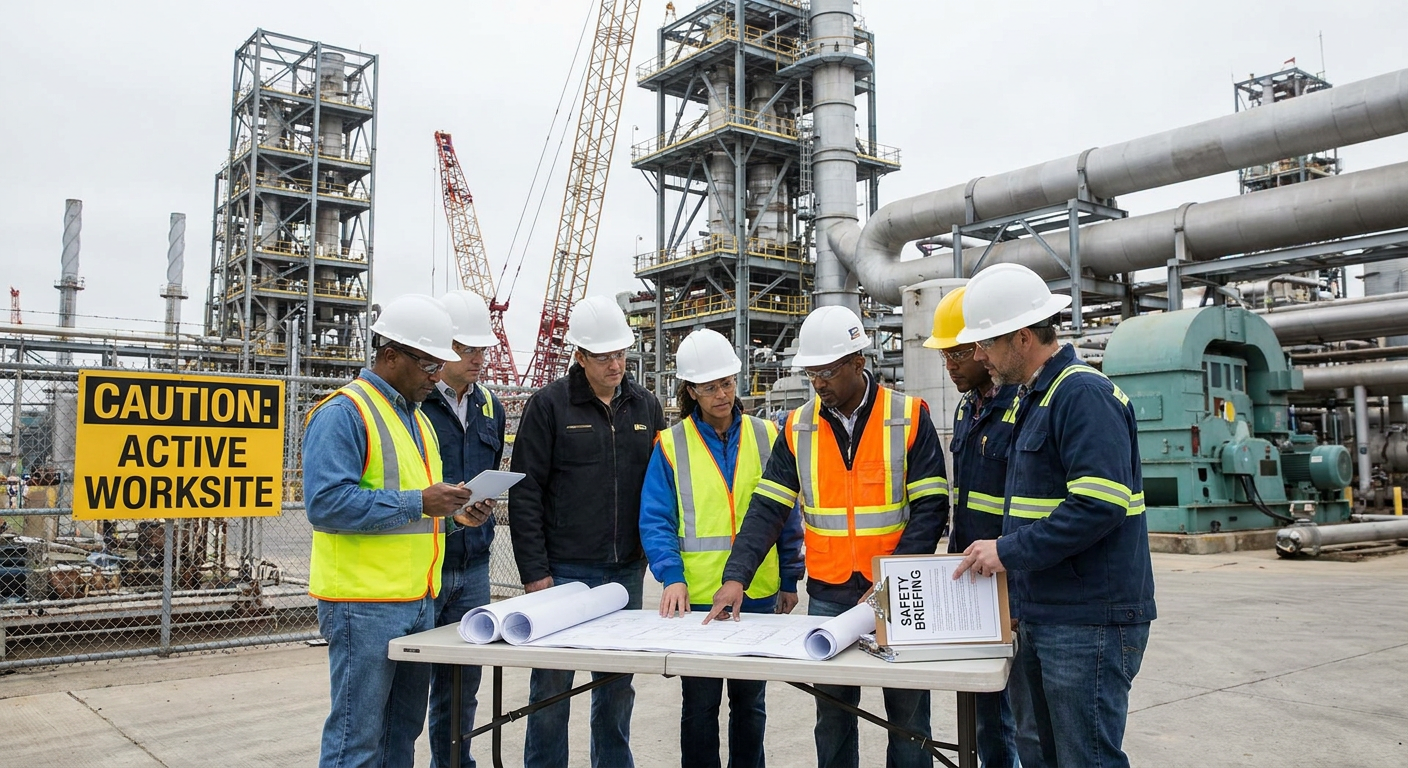
Bringing an external team into any operation introduces a new set of variables. When that operation is situated within a hazardous area—an environment defined by the potential presence of explosive gases, volatile vapours, or combustible dusts—those variables can carry catastrophic weight. The process of managing contractors in these high-stakes settings transcends typical procurement and oversight; it becomes a fundamental pillar of process safety, operational integrity, and corporate responsibility. It is a discipline where a minor oversight in paperwork can lead to a major incident on the plant floor, and where the difference between a successful project and a disaster often lies in the meticulous planning and unwavering diligence that happens long before any work begins. This comprehensive guide is designed to illuminate the critical path of contractor management in hazardous environments. We will journey through the entire lifecycle, from the initial, forensic-level vetting of potential partners to the continuous, on-the-ground supervision and the final evaluation that strengthens your system for the future. We will dissect the intricate web of responsibility, pinpointing who is accountable for what, and explore the profound benefits—from legal fortification to enhanced efficiency—that a robust program delivers. Whether you are a project manager, a safety professional, or a senior leader, this guide provides the blueprint for transforming your contractor engagement from a source of potential risk into a cornerstone of operational resilience.
Master Hazardous Area Compliance
Managing external teams requires a deep understanding of explosion protection standards. Read our comprehensive comparison of NEC, IEC, and ATEX standards to ensure your contractors meet global safety requirements.
Read the Standards Comparison GuideNavigating the High-Stakes World of Contractor Management in Hazardous Area Projects
When we talk about major industrial projects, particularly those situated in what are classified as hazardous areas, the conversation inevitably and rightly turns to safety, precision, and compliance. These environments—think oil and gas refineries, chemical processing plants, offshore platforms, grain mills, or pharmaceutical manufacturing facilities—are defined by the potential presence of flammable gases, vapours, mists, or combustible dusts. An errant spark, an incorrect procedure, or a moment of miscommunication in these locations doesn’t just lead to project delays or budget overruns; it can trigger catastrophic events with devastating consequences for human life, the environment, and the asset itself. It is within this high-stakes context that the discipline of contractor management transcends its typical administrative function and becomes a cornerstone of operational integrity and risk mitigation. At its core, contractor management in hazardous area projects is the systematic and holistic process by which an organisation selects, prepares, monitors, and evaluates external companies and their personnel to perform work safely and compliantly within these uniquely dangerous environments. It is a far more rigorous, detailed, and safety-obsessed process than what one might encounter in general construction or standard commercial operations, acting as a critical shield against a vast spectrum of potential disasters.

The Web of Responsibility: Pinpointing Who Manages Contractors in Hazardous Areas
When delving into the intricate world of contractor management within hazardous area projects, the question of “who is in charge?” is both profoundly simple and deceptively complex. The simple answer is that it’s not a single individual but a carefully constructed, multi-layered system of responsibility. The complex reality is that for this system to function and prevent catastrophic failures, each layer must be robust, clearly defined, and flawlessly executed by specific roles. It’s a shared duty, a chain of command where each link is as critical as the next. Think of it less as a single captain steering the ship and more as a highly trained bridge crew, each with a specific console, all communicating constantly to navigate treacherous waters. The ultimate accountability often rests at the top, but the practical, day-to-day management is a dynamic and collaborative effort distributed among several key figures, each bringing a unique and indispensable perspective to the table. Failure to understand and properly resource this web of responsibility is not just a project management oversight; it is a direct invitation for risk to permeate the project’s very foundation.
- Client/Asset Owner: Sets the safety culture and performance standards, and is the ultimate duty holder.
- Principal Contractor/Project Manager: Translates client requirements into a tangible on-the-ground reality, and coordinates all subcontractors.
- HSE Manager/Advisor: Verifies, validates, and provides expert guidance on safety and compliance.
- Technical Authority/Hazardous Area Engineer: The ultimate gatekeeper of technical integrity for all equipment and installation practices.
- Contractor’s Supervisor/Foreman: The last and most vital link in the management chain, responsible for direct, continuous, and hands-on supervision.

Contractor Safety Equipment: Updated Compliance Selection
| Product Name | Category | Key Certification | Price |
|---|---|---|---|
| Nightstick XPP-5422G Dual-Light Flashlight View Details | Lighting | Class I Div 1, ATEX, IECEx | $40.75 |
| Senko SI-100C Fixed Gas Detector View Details | Gas Detection | Ex d IIC T6 / IP65 | $361.00 |
| Sensear SM1P02 Ex Series Two Way Radio Headset View Details | Communication | ATEX / IECEx / TIA-4950 | $1,510.00 |
Equip Your Contractors with Certified Protection
Don’t leave site safety to chance. Ensure every external technician is outfitted with Class I, Division 1 certified tools and equipment designed specifically for volatile environments.
Browse the Full ShopFAQs
Why is contractor management so much more critical in hazardous areas compared to general industrial sites?
The primary danger in hazardous areas is often invisible, and a single spark can trigger a disaster. Contractor management in these zones is about meticulously managing every potential source of ignition and every breach of containment.
What should I look for during the contractor pre-qualification stage for a hazardous area project?
Look for documented proof of successfully completed projects in similar hazardous environments, their HSE management system documentation, their incident and near-miss records, and their insurance coverage.
How can I verify the competency of individual contractor personnel, not just the company itself?
Insist on a system for verifying and documenting the competency of every single contractor employee. Look for internationally recognized personnel competency schemes, such as the IECEx Certificate of Personnel Competence (CoPC) or the CompEx scheme.
What are the essential on-site management practices for contractors in hazardous zones?
A robust and rigorously enforced Permit to Work (PTW) system, continuous supervision, daily toolbox talks, and an unambiguous stop-work authority are all essential.
Who holds the ultimate legal and safety responsibility when contractors are on site?
Responsibility is shared, and ultimately, the site operator or owner cannot fully delegate their duty of care.
Conclusion
The journey through the complexities of contractor management in hazardous areas ultimately leads to a single, powerful conclusion: it is not a standalone function, but the very heart of a proactive safety culture. It is a continuous, cyclical process that demands unwavering commitment from every level of an organisation, from the boardroom that sets the policy to the frontline supervisor who enforces it. We have seen that success is not born from a single checklist or a generic induction video, but from a deeply ingrained system that begins with the forensic vetting of partners, solidifies expectations through legally and technically robust contracts, and maintains vigilance through active, on-the-ground supervision and open communication. The question is never simply “who is doing the work?” but rather “how are we, as a unified team, ensuring this work is done without incident?” This approach transforms the client-contractor relationship from a transactional exchange into a genuine safety partnership, where shared knowledge, mutual respect, and a collective responsibility for preventing harm become the primary drivers of every decision.
